
When adding an awning to your home, it is not just about shade or protection from the elements—it is also about enhancing the overall character of your house. Awnings can become a natural extension of your property’s architecture when chosen thoughtfully, blending style with functionality. However, making the right choice requires paying attention to design details such as colour, shape, scale, and material. A poorly matched awning can look out of place, while a carefully selected one can elevate curb appeal and create harmony. This article explores how to match your awning with your home’s architectural style to ensure that both aesthetics and practicality align seamlessly.
1. Consider the Architectural Style of Your Home
The first step in choosing an awning is identifying the architectural style of your house. Traditional homes, such as Georgian or Victorian designs, often feature ornate details, symmetrical structures, and rich colour schemes. In this case, a fabric awning with stripes or muted, classic tones can work well to echo the home’s heritage charm. On the other hand, modern or minimalist properties tend to favour clean lines and understated features, making sleek metal or retractable awnings in neutral colours a better fit. Mediterranean-style houses, often marked by arches and terracotta roofs, can benefit from curved awnings in earthy shades that reflect the warmth of the design.
Many suppliers, such as Final Touch Blinds & Shutters, offer options that align with various architectural styles, ensuring that your choice complements your home’s unique character. By observing these elements, you ensure the awning naturally extends the existing character rather than clashing with it. Matching architecture is not about copying every detail but finding subtle connections that bring cohesion.
2. Pay Attention to Scale and Proportion
Even a beautifully designed awning can look awkward if the scale is wrong. A large awning installed over a small window or doorway can overwhelm the space, drawing unwanted attention and disrupting the visual balance of your home. Conversely, an awning that is too small can seem insignificant and fail to serve its purpose effectively. The key is to align the awning’s size with architectural features like windows, doorways, and rooflines.
For wide terraces or patios, broader awnings with extended coverage work well, while smaller casement windows may only need slim, tailored designs. Proportion also involves depth—the projection of the awning should feel balanced against the façade. Think of the awning as a natural frame for the area it covers, complementing both height and width without overpowering the structure. Getting the proportion right ensures your awning looks like it belongs to the home’s original blueprint.
3. Choose Colours That Complement the Exterior
Colour choice plays a major role in ensuring your awning harmonizes with your home’s architecture. If your house features a brick exterior with earthy tones, then a warm-coloured awning—like deep reds, browns, or soft oranges—can create a cohesive appearance. Homes painted in neutral shades, such as whites, greys, or creams, offer more flexibility, allowing bold awning colours to stand out without appearing mismatched. For example, a navy or forest green awning can provide contrast against a light façade while maintaining elegance.
Striped patterns may also suit certain styles, especially if they echo other decorative features such as shutters, trims, or garden furniture. However, it is important not to overdo the contrast, as overly vibrant or clashing colours can feel disconnected. Think of your awning colour as a continuation of your home’s palette, reinforcing rather than competing with its existing tones. A balanced colour scheme instantly creates visual unity.
4. Select Materials That Reflect the Home’s Character
The material of your awning is another important factor in architectural harmony. Fabric awnings, with their soft textures and wide range of patterns, are versatile and work well with traditional, rustic, or vintage homes. Canvas in muted shades, for instance, can complement a countryside property or cottage, while striped acrylic fabric might be ideal for a coastal home. Metal or aluminum awnings, by contrast, lend themselves to more contemporary properties where durability and sharp, clean finishes are valued.
Wood-framed awnings, though less common, can also be considered for homes with natural design elements, like timber siding or log cabin styles. Beyond aesthetics, materials should be chosen with practicality in mind. Durable, weather-resistant fabrics or metals not only look appropriate but also ensure longevity, reinforcing the functional role of the awning. Matching material with architecture is as much about practicality as it is about design continuity.
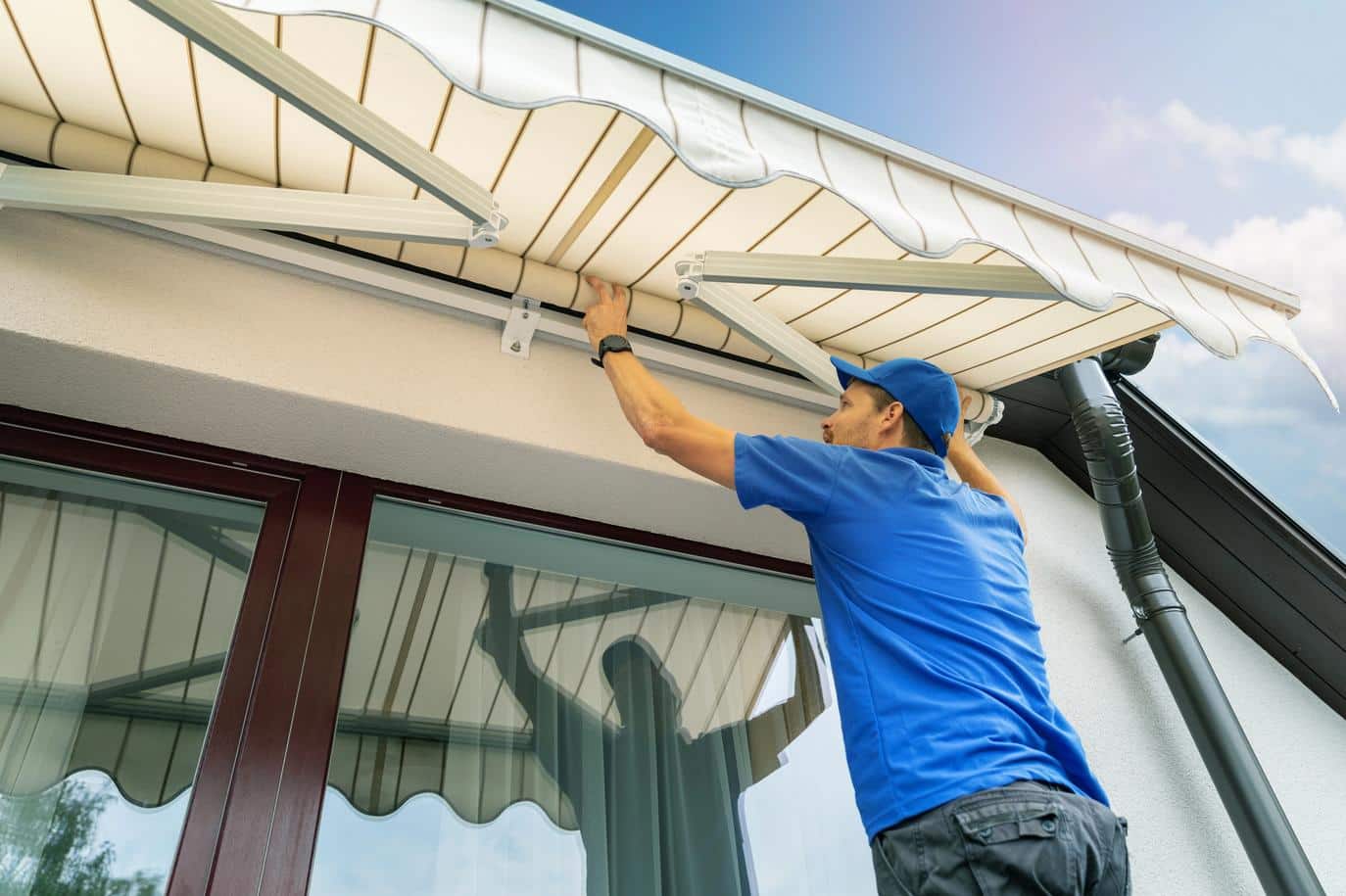
5. Align with Rooflines and Structural Details
One of the subtler but essential considerations when matching an awning to your home is its alignment with rooflines and other architectural features. If your home has a sloping roof, an awning with a similar angle can echo the design, creating continuity across vertical and horizontal planes. Flat-roofed homes, on the other hand, benefit from streamlined, retractable awnings that reflect their geometric simplicity.
Paying attention to structural details such as window trims, balconies, or arches also makes a big difference. For instance, a home with arched windows may look more cohesive with curved awnings rather than angular ones. Similarly, a property with bold horizontal lines may call for an awning that emphasizes width rather than height. This approach ensures the awning feels like a continuation of your home’s design language rather than a detached accessory. Such subtle alignments tie the overall look together.
Conclusion
Matching an awning with your home’s architecture is not about making a quick choice—it is about paying attention to style, scale, colour, material, and functionality. When these elements are carefully considered, the awning becomes more than just a source of shade; it transforms into a seamless extension of your property’s personality. Life at home feels more cohesive when every element contributes to the overall design story, and a thoughtfully chosen awning can play a meaningful role in that narrative.


