
Mastering the intersection of clinical medicine and legal standards demands an intricate balance of technical depth and narrative precision. In high-stakes medical malpractice and personal injury disputes, the outcome often hinges on the ability to transform dense clinical data into a coherent story that a jury can grasp. Without a professional guide, the vital nuances of a patient’s journey can easily become lost in a sea of confusing terminology and contested evidence.
A qualified physician expert witness serves as this essential guide, bridging the gap between biological facts and legal standards. By applying years of clinical experience and rigorous academic training, these experts provide the objective insights necessary to resolve disputes with precision. Their involvement ensures that every medical detail is scrutinized and presented with the professional integrity required to uphold the truth in the courtroom.

Bridging the Gap Between Clinical Medicine and Legal Standards
Litigation involving medical nuances demands a level of clinical precision that far outweighs mere courtroom drama. Judges and juries face an avalanche of clinical jargon that can fog the truth. Medical malpractice and personal injury disputes have grown in complexity, blending nuanced physiology with contested timelines. While attorneys argue the intricacies of law, physicians operate within the complex realities of biology.
The gap between these worlds is sharp. Bridging it demands more than just medical knowledge; it requires a precise translation into courtroom logic. Without that critical bridge, facts often fracture and confusion spreads. This frequently leads to verdicts that lean on unfortunate misunderstandings rather than verifiable evidence. That’s where a medical expert witness steps in, cutting through the noise with tested insight.
Maximizing the Impact of Medical Expert Witness Testimony
Beyond simply interpreting charts, a seasoned expert witness prioritizes educating the court through clinical insights that empower decision-makers without appearing patronizing. To ensure a comprehensive evaluation of the case, the expert performs several critical analytical tasks. These responsibilities are essential for building a foundation of clinical truth:
- Parse medical records to identify discrepancies.
- Weigh treatment protocols against established standards of care.
- Frame opinions that can withstand aggressive cross-examination.
These structured efforts provide the clarity needed to illuminate the facts for the jury. A fact witness recounts what occurred, but a medical expert illuminates why those events matter, prioritizing clinical clarity over technical obscurity. Objectivity is not optional. Bias erodes credibility instantly. Precision in both language and reasoning is the currency that earns trust inside the courtroom.
Vetting Physician Experts: Establishing Clinical Credibility
True credibility rests on verifiable evidence rather than self-proclaimed authority. Board certification serves as an unmistakable hallmark of clinical mastery within a specialized field. Identifying the right specialist requires looking beyond basic qualifications to find specific clinical markers. Several factors significantly enhance the credibility and impact of their courtroom presence:
- Subspecialties that refine relevance in rare or technical cases.
- Extensive years in active clinical practice to ground opinions in reality.
- Peer-reviewed publications that demonstrate academic leadership.
- Prior testimony experience to ensure composure under pressure.
These credentials ensure that the chosen expert brings both technical depth and practical authority to the proceedings. The right physician expert witness is vetted until there’s no room for doubt.

Crafting Clear, Impactful Medical Opinions
Clinical opinions lacking robust reasoning inevitably collapse under legal scrutiny. Rather than a routine administrative task, reviewing case files represents a targeted hunt for the decisive facts.
Expert witnesses must also select relevant clinical studies to sidestep distractions. Presenting the resulting opinion in a tight arc—covering the statement, evidence, and limitations—signals a level of discipline that commands respect. Plain language cuts through courtroom fatigue. Excessive jargon serves as a trap—an attempt to project sophistication that ultimately alienates the audience. Every sentence should carry its weight, pushing the fact finder toward understanding, not confusion.
Fostering Effective Attorney–Physician Collaboration
Fostering a productive partnership between legal and medical professionals begins with an unvarnished, transparent conversation. A successful partnership relies on establishing clear operational boundaries from the outset. Attorneys and physicians should implement the following strategies to maintain project momentum:
- Set realistic deadlines that survive the grind of discovery.
- Agree on medical record organization before files arrive in chaotic stacks.
- Utilize templates for document exchange to save hours.
- Schedule regular check-ins to keep strategy and testimony aligned.
By adhering to these collaborative standards, both parties can ensure the message remains sharp and relevant throughout the trial. A witness locked in an ivory tower will miss the pulse of the trial. Collaboration keeps the expert relevant and the message sharp.
Upholding Ethical and Procedural Standards
Ignoring comprehensive conflict checks invites systemic disaster for any expert witness. Far from being a mere footnote, confidentiality serves as the foundational pillar of professional testimony. Once an expert is sworn in, every statement must meet the strict standards of admissible testimony. This typically requires adherence to Rule 702 or its specific jurisdictional equivalent. Transparency about methodology protects against claims of bias or fabrication. Courts reward honesty and punish shortcuts. In this field, cutting corners is not just risky—it’s professionally fatal.
Leveraging Technology in Presenting Medical Evidence
Strategic visual aids possess the unique power to dismantle hours of exhaustive testimony by making the complex instantly accessible. Modern litigation often requires more than verbal descriptions to reach a jury effectively. Several digital tools are now standard for translating clinical complexity into obvious facts:
- Medical animations that recreate physiological events.
- 3D anatomical models for spatial clarity.
- Annotated imaging to highlight specific injuries or abnormalities.
- Digital exhibits that strip away confusion from surgical procedures.
When these tools are coordinated with trial technologists, they become a seamless and bulletproof extension of the expert’s testimony. Technology doesn’t replace expertise; it amplifies it.
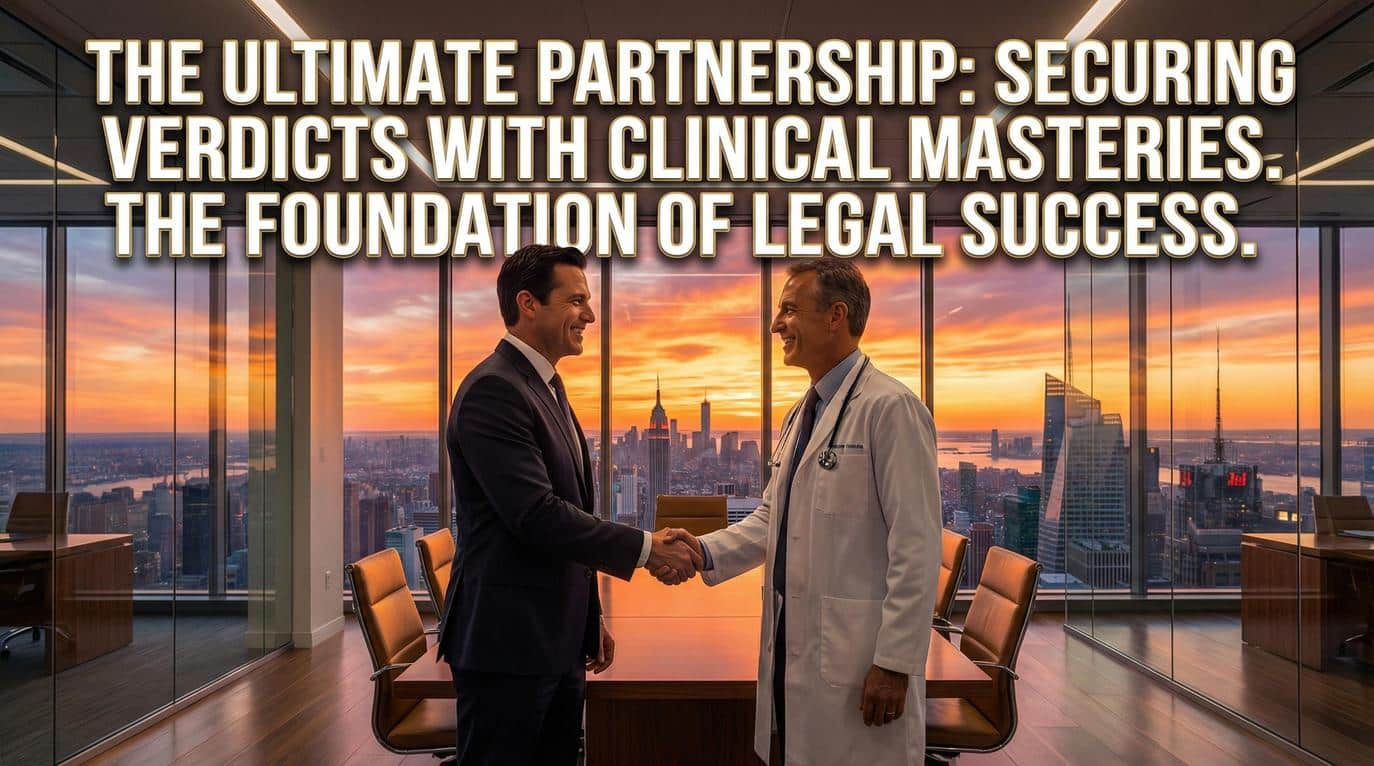
Securing Legal Success Through Clinical Masteries
Committing to a physician expert witness enhances a legal strategy far beyond simple procedural compliance; it represents a dedicated pursuit of clinical clarity and justice. As medical cases become increasingly complex, the demand for experts who can visualize pathophysiology and survive rigorous cross-examination continues to grow. These professionals do more than provide testimony—they offer a foundation of clinical mastery that allows legal teams to build stronger, more persuasive cases based on verifiable science.
The final strength of any medical malpractice claim or personal injury litigation rests squarely on the depth and quality of the expert’s clinical insight. By prioritizing stringent vetting and fostering genuine collaboration, attorneys can ensure that their medical evidence is both admissible and impactful. In a field where the smallest clinical detail can shift a verdict, having a seasoned medical expert on your side remains an indispensable asset for any trial team.
Common Questions Regarding Medical Expert Testimony
What is the primary role of a medical expert witness?
Their primary duty is to educate the court by translating complex medical records and treatment protocols into clear, admissible evidence.
How do physician experts handle complex clinical jargon?
Expert witnesses bypass technical traps by using plain language and visual aids to ensure judges and juries understand the medical facts.
Why is board certification vital for expert testimony?
Board certification serves as a baseline for credibility, proving the expert has achieved mastery in their specific clinical field.
Can medical animations improve jury understanding?
Yes, high-quality animations and 3D models translate intricate surgical procedures into obvious visual evidence that resists confusion.
What standards govern medical expert witness testimony?
Most jurisdictions follow Rule 702, which requires testimony to be based on sufficient facts and reliable scientific methodologies.


