
In the modern world of material science, inspiration often comes from an unexpected source—nature. For centuries, humans have looked to the natural world for solutions, marveling at the resilience and efficiency that living organisms display in their design. From the microscopic structures of seashells to the intricate patterns in plant leaves, nature has long perfected the ability to create strength and durability. Now, researchers are keenly focused on harnessing these natural designs to enhance our own materials—particularly polymers, which are used in everything from packaging to medical devices and construction.
Polymers are basically long chains of molecules linked together, creating materials that can be as soft as rubber or as tough as steel. Recently, a wave of research has shown how mimicking natural patterns can significantly boost the toughness and resilience of polymers. This groundbreaking line of exploration promises to revolutionize industries by producing materials that are not only stronger but also potentially more sustainable.
These advancements were made by researchers at Beckman at the University of Illinois through innovative uses of frontal polymerization, allowing them to mimic the patterned structures of resilient natural organisms. Under the leadership of Cecilia Leal, the team leveraged this technique to delicately replicate and enhance the structural integrity of polymers. Their efforts are not only revolutionizing the material’s toughness but also paving the way for more sustainable industrial applications.

Understanding Nature-Inspired Patterning
Nature-Inspired Patterning is the idea of replicating the complex structures found in natural organisms in man-made materials. This concept, also known as biomimicry, takes cues from patterns and shapes that have evolved over millions of years to create strength, flexibility, and endurance. For instance, consider how a spider’s web can absorb energy without breaking, or how a honeycomb offers immense strength with minimal material.
In today’s research arena, scientists are dedicated to replicating beneficial natural patterns within synthetic substances, such as polymers. This endeavor frequently employs 3D printing technology alongside specialized chemical reactions. These techniques enable the creation of intricate structures that closely resemble those found in the natural world.
Harnessing Biomimicry for Smarter, Stronger Polymers
This approach is revolutionizing how we think about building materials, allowing for the creation of polymers with tailored properties that help them withstand stress and strain much better than traditional options. Intricate mimicry not only enhances the material’s mechanical properties but also offers opportunities for innovative designs that were previously constrained by traditional manufacturing processes.
By embracing this strategy, industries across various sectors can develop products that are lighter yet stronger, leading to not only improved performance but also significant cost and resource savings. As these biomimetic techniques become more refined, we may begin to see materials that adapt in real-time to environmental changes, unlocking a new realm of possibilities in smart material technology.

The Science Behind Polymer Toughness
At the heart of these advancements is a process known as frontal polymerization. This method exploits a chemical reaction that moves or spreads like a wave front through a resin—this is similar to how a wildfire might spread across a field, but much more controlled. Through this method, researchers effectively mimic the clustering and layering found in natural structures, which results in significantly tougher materials.
What’s particularly fascinating about this process is that it doesn’t require the intensive energy inputs traditionally used in manufacturing, such as heat and pressure. Instead, it needs a simple trigger and then capitalizes on the energy released during the polymerization process itself. This not only makes the method efficient but also greener, aligning with the broader goal of creating sustainable materials.
Frontal Polymerization: Pioneering Localized and Efficient Manufacturing
Frontal polymerization is particularly advantageous because of its ability to create complex architectures within the material, often resulting in composites with superior mechanical properties and better performance in extreme conditions. The inherent simplicity and rapid nature of this process also open doors for on-site manufacturing, reducing transportation costs and carbon footprints associated with traditional supply chains. As this technology matures, it holds the promise of transforming how we approach manufacturing, potentially leading to a resurgence of more localized, energy-efficient production techniques.
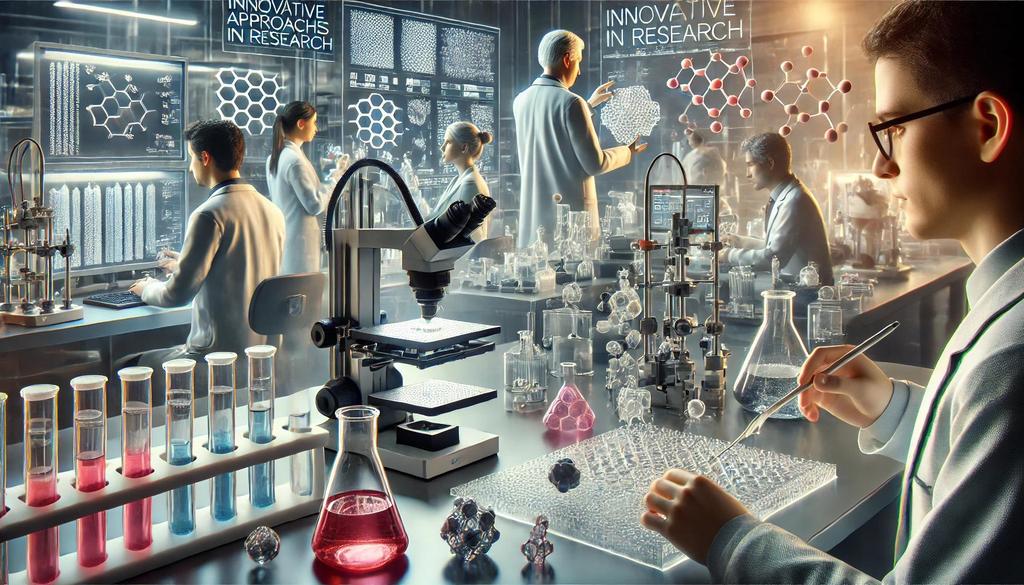
Innovative Approaches in Research
Innovation in polymer research is reaching new heights, thanks to these nature-inspired approaches. One standout method includes using controlled patterning—where scientists systematically introduce variations in polymer material properties during its synthesis. This is akin to having zones within the material that are inherently different, thereby allowing the polymer to exhibit diverse properties like flexibility at one end and rigidity at another.
Recent studies have demonstrated the ability to harness these traits through meticulous control over the polymer’s reaction environment. For example, varying the temperature and the rate at which the polymerization occurs can create areas within the material that are either crystalline or amorphous (a non-crystalline, more disordered structure). These different zones can drastically change the performance attributes of the material, allowing customization for specific uses.
Adaptive Polymers Leading Material Science into a New Era
As this field of research continues to evolve, the potential applications seem almost endless, spanning from the construction of safer cars to more adaptive sporting equipment and even more resilient electronic devices. Each innovation not only promises better performance but also points toward a future of smarter, more responsive material production.
These advancements are not just about creating better versions of materials we already have—they offer entirely new ways to think about what materials can do, paving the way for future breakthroughs and industries we have yet to imagine.
Tailored polymers can be designed to have specific reactive properties, allowing them to change in response to external stimuli like heat, light, or moisture, which could revolutionize fields such as wearable technology and environmental sensors. The customization at the micro-level significantly reduces waste and enhances efficiency, making it possible to produce only what’s needed with minimal environmental impact. As researchers continue to push the boundaries, we stand on the brink of a new era in material science, one where the line between organic and synthetic becomes increasingly blurred, offering unprecedented solutions to some of the world’s most pressing challenges.

Current Applications and Breakthrough Technologies
The practical applications of nature-inspired polymer research are already beginning to emerge across diverse fields, bringing about a wave of innovative technologies.
Lightweight Nature-Inspired Aerospace Polymers Boost Efficiency
One key area is the development of materials for aerospace engineering, where weight is a critical factor. By integrating polymers that mimic the lightweight yet sturdy patterns found in nature, aerospace components can become both lighter and stronger, enhancing fuel efficiency and overall performance.
Flexible Construction Polymers for Resilient and Durable Infrastructure
In construction, these advanced polymers are creating opportunities for more durable and resilient building materials. Imagine skyscrapers and bridges with materials that flex rather than break under stress, much like how trees bend in the wind. This adaptability can extend the lifespan of structures while reducing maintenance costs.
Biocompatible Polymers Enhance Prosthetics and Implants in Healthcare
The medical field is also witnessing transformation through these innovations. Biocompatible polymers, structured similarly to natural tissue, are being developed for use in prosthetics and implants. These materials not only mimic the mechanical properties of bone and cartilage but also promote healing, leading to faster recovery times and improved patient outcomes.
Smart Polymers for Use in Consumer Products
In the realm of consumer products, these polymers are revolutionizing everything from packaging solutions to personal protective equipment, offering enhanced durability and reduced environmental impact. Electronics industries are also benefiting, with polymers enabling more flexible, resilient devices that are better suited for today’s dynamic technological demands. By utilizing these smart materials, manufacturers can not only improve existing products but also innovate entirely new categories, ultimately transforming the way consumers engage with everyday technologies.

The Future of Materials Engineering
Looking ahead, the impact of nature-inspired polymer research is expected to be profound and far-reaching. The future of materials engineering is likely to shift towards methodologies that prioritize sustainability and efficiency—core benefits of frontal polymerization techniques.
These nature-based approaches could fundamentally change how materials are produced, moving away from traditional manufacturing processes that often consume large amounts of energy and resources. This shift could help industries reduce their carbon footprints, aligning with global objectives to combat climate change.
Smart Polymers Can Reshape Urban and Environmental Resilience
As research progresses, the ability to fine-tune polymer properties on a microscopic level opens up new possibilities for customization. This could lead to the creation of smart materials that respond dynamically to their environments—think of coatings that adjust to different weather conditions or textiles that enhance comfort by regulating temperature and moisture.
Such advancements will likely spur innovation across various sectors, leading to products that are not only more functional but also longer-lasting, thus contributing to a circular economy model. With heightened consumer awareness and demand for eco-friendly products, this technology may become a cornerstone in achieving more sustainable consumption patterns. The integration of these smart materials into infrastructure and urban planning could pave the way for cities that are more resilient to climate change, optimizing resource use while enhancing the quality of life for their inhabitants.

Challenges and Considerations
While the potential of nature-inspired polymers is thrilling, the path forward is not without its challenges. One major hurdle is the scalability of these innovative manufacturing processes. Developing methods that can be applied consistently and economically on a large scale remains a priority.
Integration of these technologies into existing manufacturing systems poses logistical and financial challenges. Industries need to navigate the costs of transitioning to new production methods and technologies, which can be significant, especially for large-scale operations.
Safety and Sustainability: Environmental Impact of Advanced Polymers
Another critical consideration is the environmental impact of the materials themselves. While the manufacturing processes may be more sustainable, the end-of-life implications of these new polymers need thorough evaluation to prevent ecological harm.
To truly harness their potential, comprehensive life-cycle assessments must be conducted to ensure that these materials do not inadvertently contribute to pollution or waste. Collaborative efforts among scientists, manufacturers, and policymakers will be essential to developing recycling and disposal methods that mitigate any negative environmental effects. Continuous innovation will be required to address potential health and safety risks, ensuring that these polymers are as safe as they are groundbreaking.

Innovating with Nature: Unleashing the Potential of Bio-Inspired Polymers
The blending of nature’s wisdom with technological innovation is ushering in an era of remarkable advancements in the field of materials science. The journey from conceptual theories to practical applications demonstrates the astounding potential of nature-inspired designs in strengthening polymers. As these materials find their way into everyday products and industrial applications, they promise not only enhanced performance but also increased sustainability.
Looking forward, continued collaboration across scientific disciplines will be key to overcoming current challenges and pushing the boundaries of what these materials can achieve. In doing so, we are not just replicating the strength of nature; we are learning to work alongside it, creating a future where technology and the natural world coalesce in harmony. The promise of this research lies not only in the polymers it creates but also in the sustainable path forward it helps delineate for material engineering, industries, and the environment alike.


