
Neurostimulation, or electrical brain stimulation, is a sort of electrotherapy used to activate a neuron or neural network in the brain by exciting its cell membrane with an electric current. It’s not a new technique, but it has evolved significantly in recent years. Numerous studies have found uses for it to treat various conditions and even to improve creativity. The following are just a few examples.
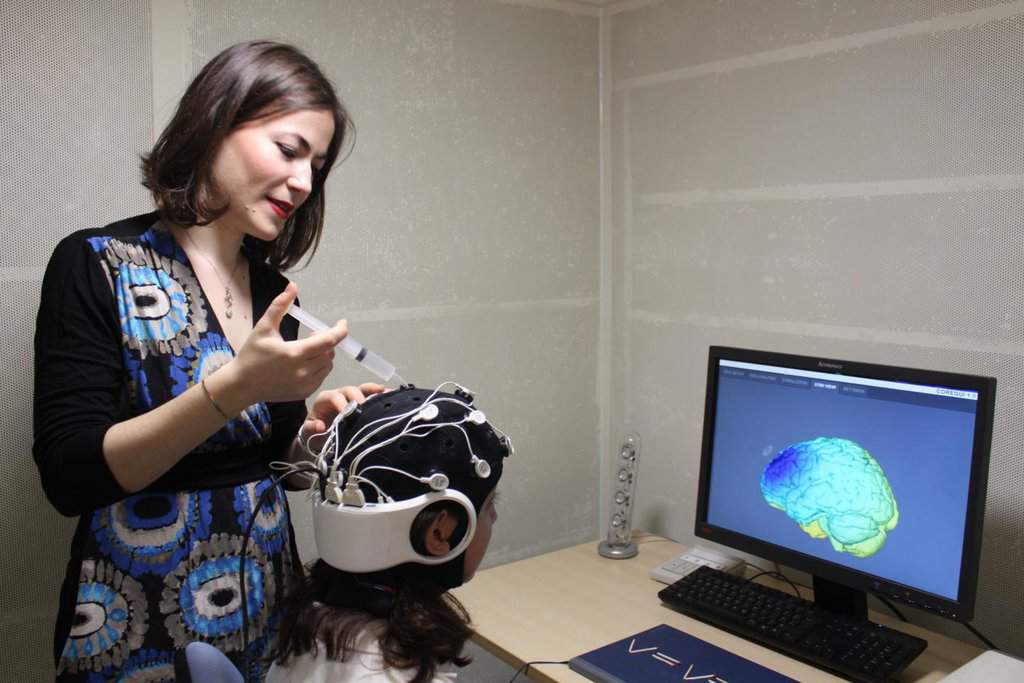
Neurostimulation Enhances Motor Skill Learning in Older People
Our ability to learn new motor skills – like a sport, dance, or musical instrument – diminishes with age. Fortunately, EPFL researchers showed that non-invasive electrical brain stimulation could help individuals with impaired learning capacities, such as those caused by aging, regain optimal motor skill development. In addition, the participants in their study were able to master physical skills more quickly after neurostimulation treatment.
Professor Friedhelm Hummel of EPFL’s School of Life Sciences, who holds the Defitech Chair of Clinical Neuroengineering, said:
“As learning is crucial for continuously adapting and staying integrated into daily life, improving these impaired functions will help to maintain the quality of life as we age, especially in view of the constant increase in life expectancy seen worldwide.”
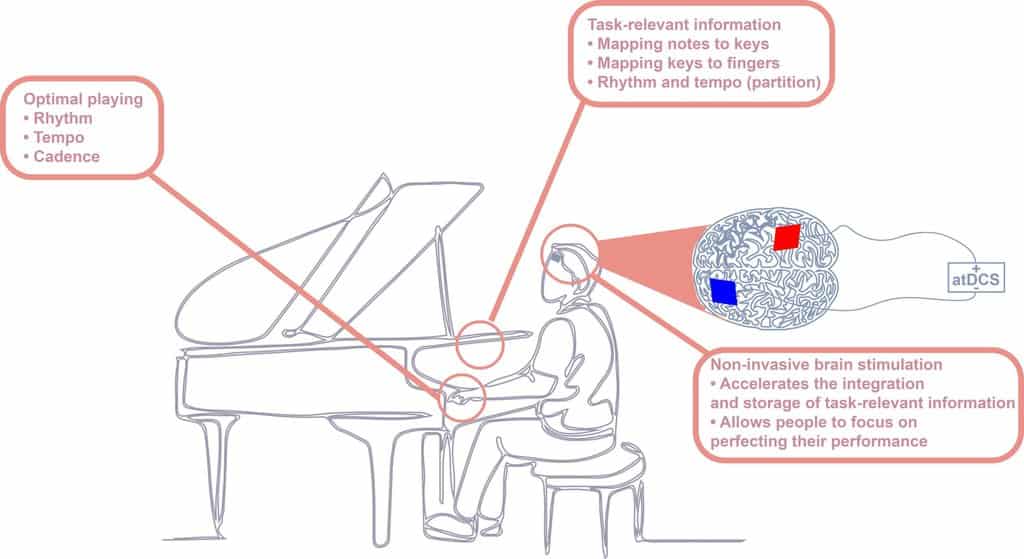
Every daily task involves a series of little movements and activities that we conduct on autopilot. However, learning a new sequential motor ability takes time and effort. This study reveals how anodal transcranial direct current stimulation (atDCS) can assist elderly individuals in learning new sequential movement patterns faster and more efficiently. atDCS stimulates specific brain regions with a gentle electric current.
Professor Hummel continued:
“Recent studies have shown we can enhance motor skill acquisition by applying non-invasive brain stimulation to the motor cortex, with anodal transcranial direct current stimulation (atDCS) attracting both academic and commercial interest in recent years due to its unobtrusiveness, portability, and affordability.”
Neurostimulation enhanced the speed-accuracy tradeoff and expedited the development of efficient motor chunks, with half of the older participants developing these structures within the first training session.
Therefore, the study demonstrates that neurostimulation can partially restore motor skill acquisition in people with impaired learning mechanisms. It works by facilitating the retention of task-relevant information, lowering mental burden, and optimizing mechanical execution.
These researchers improved our understanding of age-related motor skill deficiencies and presented a non-invasive technique to recover them. Their findings offer new prospects for treatments to correct impairments caused by aging or neurological disorders like stroke.
Neurostimulation Enhances the Ability to Grasp Mathematical Concepts

If you found math class challenging, you only needed a jolt of electricity to the brain! Since the 1930s, electroconvulsive therapy (ECT) has been used to treat severe depression. But researchers in the last decade found that neurostimulation can also boost math performance for up to six months after treatment without affecting other cognitive abilities.
Again, tDCS was the technology of choice for this particular study.
Wellcome Research Career Development Fellow Roi Cohen Kadosh of Oxford’s Department of Experimental Psychology said:
“We’ve shown before that we can temporarily induce dyscalculia [with another method of brain stimulation], and now it seems we might also be able to make someone better at math. Of course, electrical stimulation will most likely not turn you into Albert Einstein, but if we’re successful, it might be able to help some people to cope better with maths.”
The findings could lead to treatments for the 20% of people with moderate to severe numerical difficulties, say the Oxford researchers that conducted the study. This includes victims of dyscalculia, stroke, or degenerative illness. For example, the study could help people who can’t read product labels or count change in a shop. In addition, poor numeracy is associated with unemployment, low income, depression, and low self-esteem.
Neurostimulation to Improve Learning and Memory

Two other studies show that neurostimulation can improve memory and learning when applied to specific brain regions. However, for these enhancements, a different form of neurostimulation is required. Instead of tDCS, where magnetic pulses generated from outside the body stimulate the brain, Deep Brain Stimulation (DBS) is employed, which involves implanted electrodes. Therefore, it is an invasive procedure and not practical for real-world application to individuals just looking to boost their IQ.
For these studies, the researchers invited participants who already had electrodes implanted in their brains for epilepsy treatment.
The University of Pennsylvania Neurostimulation Study
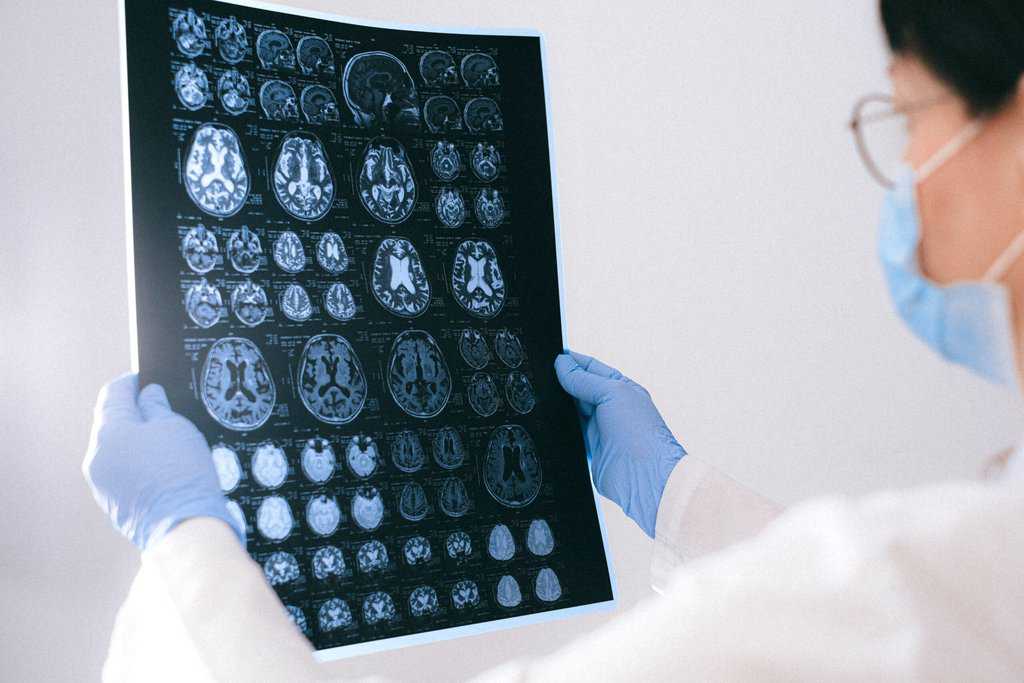
According to the University of Pennsylvania study, electrical stimulation to the brain’s left side improved learning and memory by up to 15%. For this study, the researchers employed real-time monitoring of a patient’s brain activity. As the patient observed and tried to absorb a list of words, a computer tracked and recorded brain patterns and prompted a harmless, unfelt electrical pulse when they were least likely to remember the new information.
Lead author Youssef Ezzyat, a senior data scientist in the University of Pennsylvania’s School of Arts and Sciences psychology department, said:
“During each new word the patient viewed, the system would record and analyze brain activity to predict whether the patient had learned it effectively. When the system detected ineffective learning, that triggered stimulation, closing the loop.”
Professor of psychology Michael Kahana, and RAM program principal investigator, said:
“By developing patient-specific, personalized, machine-learning models, we could program our stimulator to deliver pulses only when memory was predicted to fail, giving this technology the best chance of restoring memory function. This was important because we knew from earlier work that stimulating the brain during periods of good function was likely to make memory worse.”
Daniel Rizzuto, now Chief Executive Officer of Nia Therapeutics but then director of cognitive neuromodulation at Penn, concluded:
“Now we know more precisely where to stimulate the brain to enhance memory in patients with memory disorders, as well as when to stimulate to maximize the effect.”
The researchers feel this neurostimulation could be beneficial, especially for people with Alzheimer’s disease and traumatic brain injuries.
The Mayo Clinic Neurostimulation Study
The Mayo Clinic study found that low-amplitude stimulation to the brain’s lateral temporal cortex, by the temples and ears, improved word recall. In addition, one patient said it was easier to visualize the words, which helped him remember.
Many brain illnesses create considerable memory problems. Medication and behavioral therapy are often ineffective. These findings could lead to memory and cognition stimulation devices.
The Boston University Neurostimulation Study
Rob Reinhart, a neuroscientist at Boston University, applied non-invasive neurostimulation via electrodes placed on the scalp to enhance the minds of older adults whose memories were slipping.
His experiments focused on working memory, the part of our brains that kicks in when we make decisions or find our car keys. Reinhart says this can begin to decline as soon as our late twenties because parts of our brain start to separate and become uncoordinated. This constant disconnect can cause apparent cognitive decline when a person reaches 60 or onward.
He found a way to mend severed circuits using two brain functions through his studies. The first is “coupling,” where distinct brain rhythms work together like a well-managed orchestra. The second is “synchronization,” which is when the theta rhythms are in sync. Both of these decline with age, affecting memory. His technique was very successful, essentially rewinding memory function by fifty years.
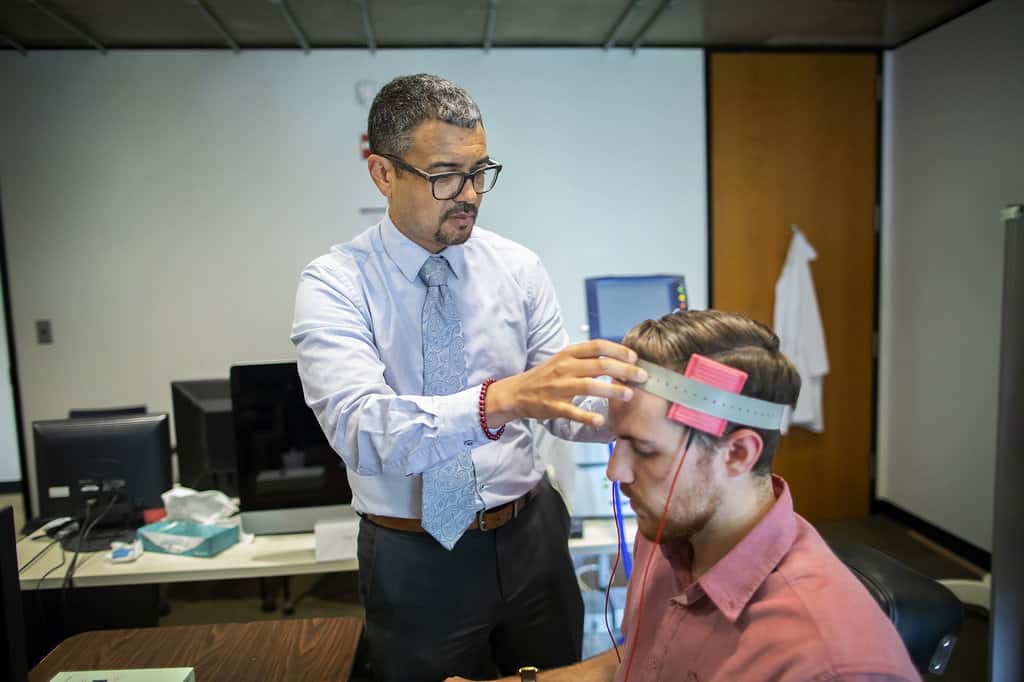
During the experiments, the younger participants performed better than the older ones before neurostimulation. Then, Reinhart performed 25 minutes of gentle scalp stimulation adjusted to each patient’s neuronal pathways. After 50 minutes, the participants were re-tested, and the performance differential between the groups disappeared. Furthermore, Reinhart improved memory in young subjects who had done poorly.
Reinhart said:
“We showed that the poor performers who were much younger, in their 20s, could also benefit from the same exact kind of stimulation. So we could boost their working memory even though they weren’t in their 60s or 70s.”
Reinhart aims to continue investigating how brain stimulation might improve human brain circuitry, focusing on Alzheimer’s patients. He’s excited since the discoveries open up new research and therapy options.
Neurostimulation for Severe Anorexia Nervosa
Psychotherapy can often help people with eating disorders like severe anorexia nervosa. But unfortunately, in treatment-resistant cases, the condition can be fatal. For those individuals, Deep Brain Stimulation may help.
Three scientists at the Krembil Neuroscience Centre of Toronto Western Hospital collaborated on this promising study with Toronto General Hospital’s eating disorders program.
During an awake procedure, each of the six female participants had a set of electrodes implanted via the top of their skull and into an area of their brain considered to govern mood, anxiety, reward, and body perception.
Nine months later, three participants had the highest and longest-lasting weight gains since being anorexic. Four of the women also experienced a newfound control of mood swings, anxiety, emotion regulation issues, binge-eating cravings, and anorexic obsessions and compulsions. In addition, two of them completed an inpatient eating disorders program, which they couldn’t do before.
Neurostimulation for Depression

Researchers from Germany’s Bonn University Hospital demonstrate that Deep Brain Stimulation does wonders for acute depression. Their approach targeted the medial forebrain bundle—a bundle of nerve fibers connecting the limbic system to the prefrontal cortex.
The region is involved with the brain’s reward system and is therefore responsible for feelings of euphoria. In the Bonn trial, six of seven severely depressed test subjects showed a significant improvement in symptoms within days of starting treatment.
In a different study conducted over several years at Emory University, researchers showed that Deep Brain Stimulation of the Subcallosal Cingulate offers a robust antidepressant effect. In addition, participants had treatment-resistant depression, which hasn’t responded to previous treatments.
DBS is currently U.S.-approved to treat back pain, migraines, essential tremors, epilepsy, Parkinson’s disease, and obsessive-compulsive disorder. The Emory researchers hope to add depression to the list and help those who are suffering because other therapies don’t work.


