
Some bacteria have become resistant to antibiotics. This is one of the big problems of our day and age. Meanwhile, the development of new antibiotics is decreasing. So, as drug-resistant infections are on the rise, medicine production to stop the infections is on the decline. The balance is off the scale. The situation is so dire that the number of new FDA-approved antibiotics dropped 90 percent over the last three decades.
Now more than ever before the world could use a new strategy in the fight against increasingly wily bacteria. Realizing this, a group of Stanford chemists devised a possible solution: a small molecular attachment that helps conventional antibiotics penetrate and destroy their targets. Their study has been published in the Journal of the American Chemical Society.
R8 And MRSA
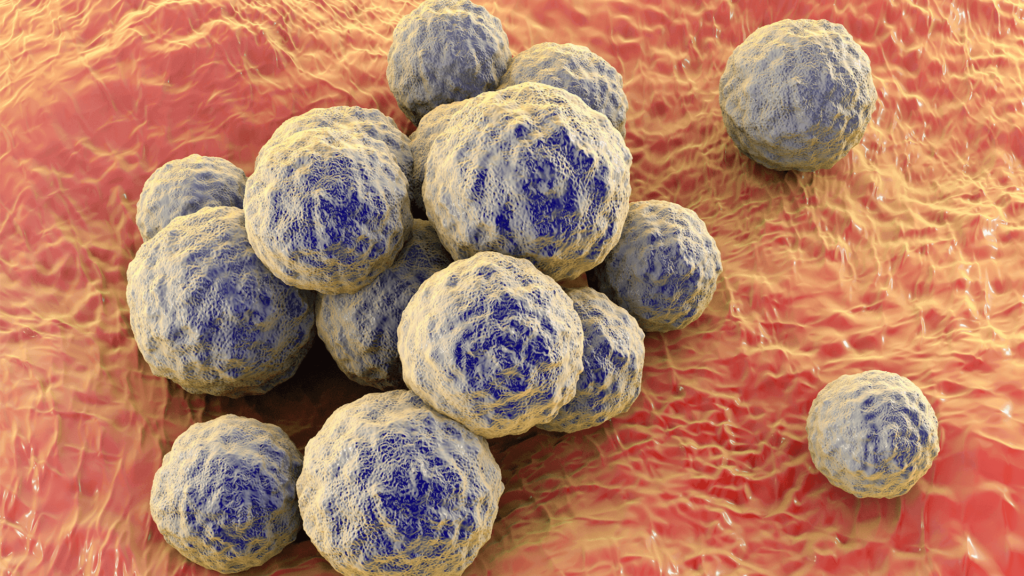
Alexandra Antonoplis, a graduate student in chemistry and co-lead author with fellow chemistry graduate student Xiaoyu Zang explained how the attachment, known as r8, helps guide antibiotics through a bacterium’s outer defenses and encourages them to linger. That penetration and tenacity help kill bacteria that doctors would otherwise struggle to stop. One such hard to kill form of bacteria is methicillin-resistant Staphylococcus aureus (MRSA).
MRSA often begins on the skin. It causes more than half of hospital-related infections in Asia and the Americas, and it is the leading cause of death among antibiotic-resistant infections. This new approach could be good news for public health officials who have struggled with how to deal with antibiotic-resistant infections like MRSA.
Experiments conducted by Antonoplis, Zang, and their advisers, Lynette Cegelski, an associate professor of chemistry in the School of Humanities and Sciences, and Paul Wender, the Francis W. Bergstrom Professor of Chemistry, proved that adding r8 to vancomycin – a first-line defense against MRSA – made the new drug hundreds of times more effective. The researchers believe the same strategy could apply beyond MRSA to other drugs and infections.
Wender, who is also a member of Stanford Bio-X, the Stanford Cancer Institute, and Stanford ChEM-H, said:
“You don’t have to invent a new drug. You just have to fix the problems with existing drugs.”
Outdated
The current first-line treatment for MRSA has been in use since 1958 with no new improvements. Cegelski who is also a member of Stanford Bio-X and Stanford ChEM-H, said:
“It’s a global health problem, and we need new treatment strategies, because of the increasing emergence of bacteria that are resistant to antibiotics and the limited number of antibiotics in our pipeline.”
The antibiotic vancomycin is the first-line treatment. Sure, it can keep MRSA from spreading in some cases by preventing the construction of new bacterial cell walls, thus preventing the bacteria from reproducing. However, it is largely useless against two of the bacteria’s key defenses; which are:
- MRSA has a tendency to form biofilms, colonies of the bacteria embedded within a protective membrane that drugs have a hard time penetrating.
- MRSA bacteria can lie dormant for extended periods, during which time vancomycin doesn’t work – meaning doctors need an antibiotic that can stick around until MRSA bacteria start to wake up.
The Solution
The Stanford team modified the current first-time treatment rather than designing a new antibiotic from the ground up. They enhanced vancomycin with r8 to help it break into a biofilm and stick around long enough to attack cells once they awaken. They dubbed this new version V-r8.
Testing
Lab Dish
- They pitted both V-r8 and vancomycin against MRSA in a free-floating state and in biofilms.
Mice
- Mice infected with MRSA were treated with both V-r8 and vancomycin.
Results
- Both vancomycin and V-r8 were able to kill off most of the bacteria when they were floating around freely in a liquid.
- In biofilms, V-r8 was around 10 times more effective, which means that V-r8 was able penetrate a biofilm and kill bacteria inside.
- V-r8 clung to MRSA bacteria twice as well as vancomycin.
- V-r8 was vastly more effective at entering MRSA cells, which suggests it could hang around long enough to kill dormant cells.
- In mice, V-r8 killed about 97 percent of bacteria after five hours, about six times more effective than vancomycin without the r8 attachment.
Conclusion
As wonderful as these results are, their new antibiotic will not be headed straight to the clinic, even for testing – that is likely still years away. Nevertheless, the study does suggest a new way to build antibiotics: by modifying existing antibiotics with synthetic components to give them new abilities, such as the capacity to break through biofilms.
“This was just the first effort,” Cegelski said. Next, the team plans to test the drug-modifying strategy in other bacteria. They hope to find similar results and a way forward in dealing with antibiotic resistance.


