
We may have been underestimating the effectiveness of the ocean’s carbon sinking abilities. In fact, the oceans are absorbing twice as much carbon than we previously thought. The big blue waters that cover most of our planet absorb billions of metric tons of carbon dioxide yearly, scientists said. They play an essential role in regulating how much of the greenhouse gas is in the atmosphere. And now a new study by a team of scientists at Woods Hole Oceanographic Institution (WHOI) suggests our ocean’s “biological pump” has been absorbing double the amount of carbon than we’d known.
On land, trees absorb the gas to use it for photosynthesis. In the ocean, phytoplankton does the same thing to produce food and energy to survive. When microscopic organisms get eaten by zooplankton or die, their remnants get pulled deeper into the depths of the ocean, taking their carbon stores along with them. As they sink to the bottom, they become buried in sediment or eaten by more massive marine creatures.

This simple natural process helps eliminate around a third of the CO2 emitted through human activity. However, the WHOI scientists believe the process is pulling a lot more than that. They came to this conclusion by re-evaluating the way the euphotic zone is calculated. The Euphotic region is the section of the upper ocean layer penetrable by sunlight.
WHOI geochemist Ken Buesseler said:
If you look at the same data in a new way, you get a very different view of the ocean’s role in processing carbon, hence its role in regulating climate.
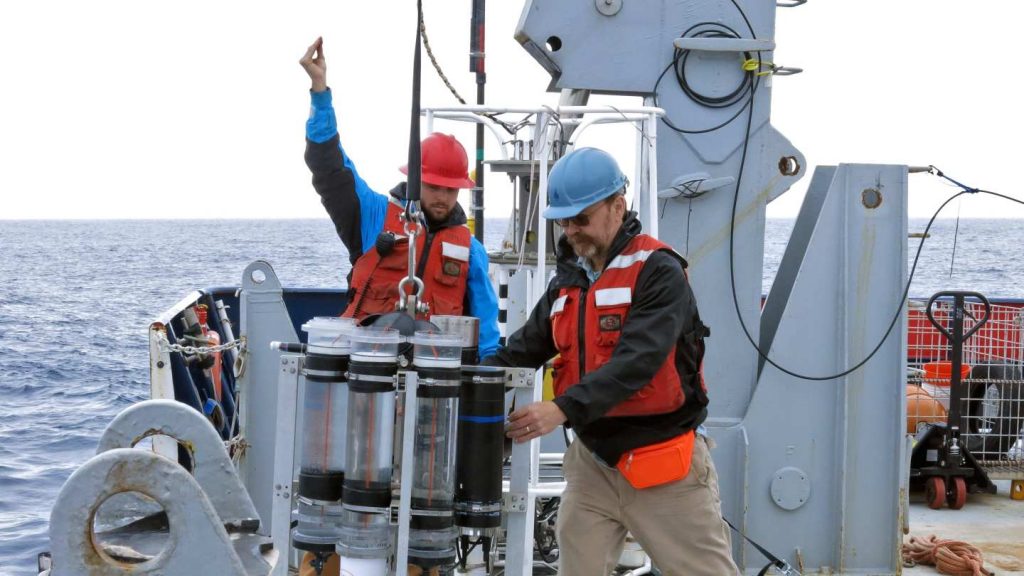
The team’s modeling used data gathered from chlorophyll sensors rather than relying on measurements taken at fixed depths, as previous research has. The chlorophyll sensors reveal the presence of the phytoplankton and therefore represent the actual edges of the euphotic zone. The analysis found that the depths of this boundary vary, and by taking this into account, they concluded that the oceans are absorbing twice more carbon than people think. The research has been published in the journal PNAS.
Buesseler concluded:
Using the new metrics, we will be able to refine the models to not just tell us how the ocean looks today, but how it will look in the future. Is the amount of carbon sinking in the ocean going up or down? That number affects the climate of the world we live in.
However, our oceans do absorb more than just CO2. In two somewhat related studies, we reported on just how much heat the oceans may be absorbing, and how an overabundance of CO2 has caused mass toxic algae growth. An international team of researchers had calculated that the oceans collectively absorb heat at a rate of 5 atom bombs per second. In the Canary Islands, another team found that toxic algae blooms happen when CO2 in the water reached high levels.
So while one positive may be that a large mass of CO2 is sunk into our oceans, two negatives may be how quickly they are heating up and the overall marine life which could be lost prior to the CO2 sinking. As tends to be the case with ecosystems, a delicate balance is often required to ensure a harmonious environment.
Using this method of modeling ocean carbon sink could lead to more accurate climate models and facilitate the setting of global climate policies. However, further studies of the mid-ocean “twilight zone” are required to better understand the biological carbon pump’s role in regulating climate.


