
With hydrogen fuel, there are no carbon emissions—sounds great, right? Unfortunately, there’s a downside. Most hydrogen fuel is made from fossil fuels. It’s possible to make hydrogen from purified water, but it costs a lot of money and uses water that we could be drinking instead. But now scientists have figured out a way to skip this costly water purification part of the process and convert seawater into usable hydrogen. This research is published in the journal PNAS.
How Do They Make Hydrogen From Water?
The electrodes in water allow hydrogen to be formed through a chemical reaction. When electricity is run through water, it splits the hydrogen and oxygen, giving you a pure, zero-emission fuel source.
Making Hydrogen With Seawater
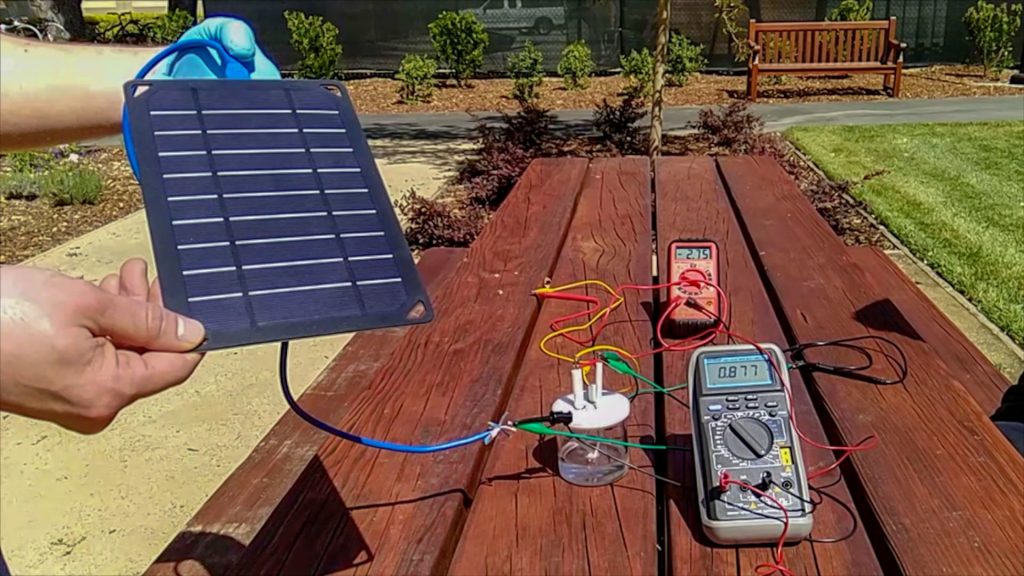
Freshwater is extremely valuable, especially as climate change could soon worsen droughts globally. Therefore, generating hydrogen from freshwater sources is inevitably a bad idea, and it puts too much of a strain on those who need it. That’s why some clever scientists from Stanford University developed a new method of producing hydrogen from seawater instead.
Seawater contains a positive electrode that attracts chloride, quickly decaying the metal. To tackle this problem, the scientists added a new metal coating so the electrode could last longer. A similar challenge has driven the development of SS-H2 “super steel,” a corrosion-resistant alloy that could replace expensive titanium in seawater-based hydrogen production. The team was able to use 10 times more electricity with its device, generating hydrogen even faster than before. As a bonus, they made their design environmentally friendly and energy-efficient and powered it with solar cells. A newer lab device takes a different route to the same chloride problem, using hydrazine breakdown to dodge chlorine chemistry while releasing hydrogen, as covered in this solar leaf that makes hydrogen from contaminated seawater.
Hydrogen Fuel Use
Hongjie Dai, a chemistry professor at Stanford, said, “Right now, the need for hydrogen is still relatively limited because the so-called hydrogen economy hasn’t taken off yet, although it’s in its early growing stage. You could imagine there would be more demand for hydrogen.”
The research is at an early stage; for now, it’s simply demonstrating that the technology could work at all. Eventually, the fuel could widely be used in transportation from cars to airplanes. And since the process produces oxygen, it could be used on submarines, supplying the ship with fuel and oxygen for the people within the vessel. Divers could benefit from the technology too, in a device to replace an oxygen tank or power the diver’s gear.
The good thing about fuel cells is that they can store more energy than batteries while avoiding some of their environmental challenges. Additionally, you can find a generator refueling service if you run out of fuel. In the past, hydrogen production was expensive and would destroy the environment, which made it unsustainable, but with this new technique, there’s already an environmentally friendly way to produce clean hydrogen.
Dai explains, “Hydrogen potentially is the next generation of power for energy devices because the energy density is actually higher than batteries. Meaning that when you refuel, you can drive for a longer distance. Or you can power heavier devices.”
Hydrogen-Powered Vessels
- Hydrogen-powered cars are already on the roads around the world
- A hydrogen-powered train is now running in Germany
- A hydrogen-powered ferry is coming to San Francisco this year
- Hydrogen-powered cargo ships are currently being designed in Norway
- The first regional hydrogen-electric airplane is being developed by a startup in Singapore
Dai said, “If in the future hydrogen-powered vehicles or other machines are really taking off, you would need a lot of hydrogen, and then you would start to think about where you get that hydrogen.”
In the future, ships running on hydrogen fuel cells will be able to make their own fuel directly from the ocean with the help of renewable energy such as solar panels or wind turbines. That’s impressive! Until then, for the hydrogen economy to thrive, there will be engineering and infrastructure challenges to solve along the way.


