
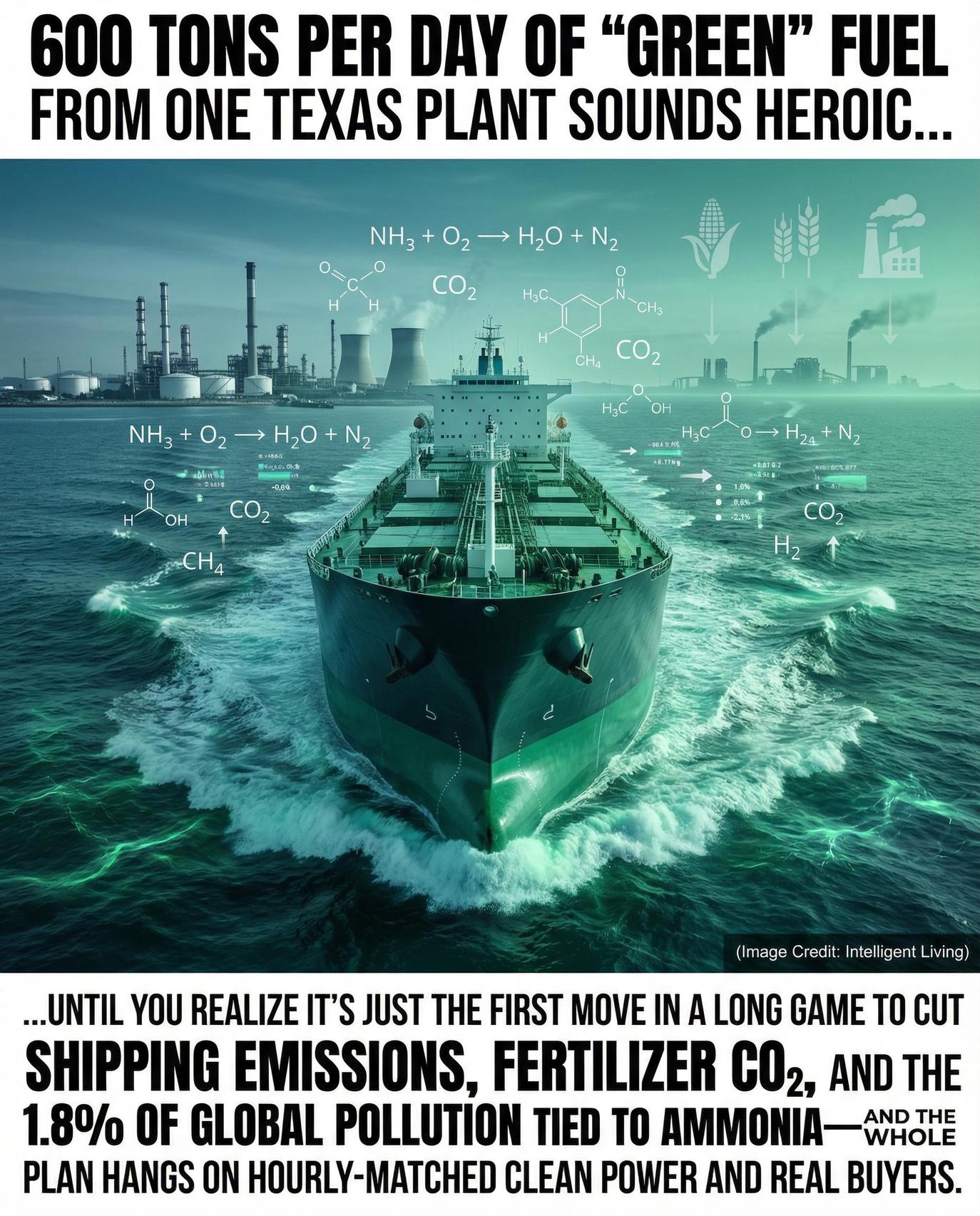
Green hydrogen and green ammonia are often discussed in abstract terms, though some researchers are pursuing far simpler approaches, such as recovering ammonia directly from human urine using solar-powered electrochemical systems, alongside broader global industrial pathways to zero emissions. Towering gigawatts of clean power, millions of tons of fuel, and long-term climate targets often remain marooned in the realm of distant, abstract theory. The Texas Green Ammonia Project makes that story concrete by attaching real companies, numbers, and dates to an export-scale green fuel plant on the Gulf Coast.
Developer Synergen Green Energy wants to build a 600-ton-per-day green ammonia facility on the Texas coast that would ship low-carbon molecules to industrial and maritime users in Europe and Asia. The plan combines high-capacity electrolyzers from Electric Hydrogen, a dynamic ammonia synthesis loop from Topsoe, and large new solar and wind assets that would feed both the grid and the plant. The project is still in development, but its design choices already offer a useful lens on where the green ammonia industry actually stands.
Crucially, this plant does not exist yet. What exists today is a front-end engineering and design agreement, a preferred technology stack, and a timeline that points toward a final investment decision in 2026 and initial operations around 2028. Seeing the project as a test rather than a finished success raises more precise questions. What needs to go right for a 240-megawatt electrolyzer build to work at export scale, what could go wrong, and what does this effort say about the reality of green ammonia today?
Key Specifications: The Texas Green Ammonia Export Facility
- Planned capacity of 600 tons per day of green ammonia, or about 210 thousand metric tons per year, produced on the Texas Gulf Coast for export to maritime and industrial users.
- Hydrogen supplied by 240 megawatts of Electric Hydrogen HYPRPlant electrolyzers (two 120-megawatt units) paired with a flexible Topsoe ammonia loop.
- Final investment decision targeted for 2026 and first operations around 2028, contingent on financing, permits, interconnection, and long-term offtake agreements.
Project Milestones: Announced Goals vs. Future Commitments
Ambitious clean energy projects often win attention long before any steel is in the ground. Early coverage regarding large-scale electrolyzer awards for Synergen’s Texas facility has already underscored the scale and export focus of this project. Deciphering the true scope of this Texas venture requires distinguishing firm commitments from lingering uncertainties.
Two 120-Megawatt Plants for a 240-Megawatt System
On the hydrogen side, the most concrete piece is the agreement between Electric Hydrogen and Synergen to center the design on two identical 120-megawatt HYPRPlant units. Together they make up 240 megawatts of electrolyzer capacity that will convert purified water and clean electricity into hydrogen.
Modular Electrolyzer Design and Risk Reduction
The project is not betting on a bespoke, first-of-its-kind electrolyzer design. It is leaning on a standardized product that Electric Hydrogen wants to replicate at multiple sites. Each HYPRPlant bundles electrolysis stacks, power electronics, cooling, water treatment, and controls into a single large building block. That modular approach is meant to reduce engineering risk and shorten build times.
Timeline From FEED to FID and Operations
At this stage, the project sits in front-end engineering and design. Synergen has set its sights on a final investment decision by 2026, marking the next critical gateway for the facility.
Navigating the Path from FEED to Commercial Operations
If everything proceeds as planned, the plant aims to start operating around 2028. That schedule assumes that permits are secured, interconnection and grid upgrades are resolved, contracts for clean power are in place, and customers in Europe and Asia sign binding ammonia offtake agreements. In other words, the technical configuration is only one part of the story. Market conditions and policy signals will be just as important in deciding whether the project crosses the finish line.
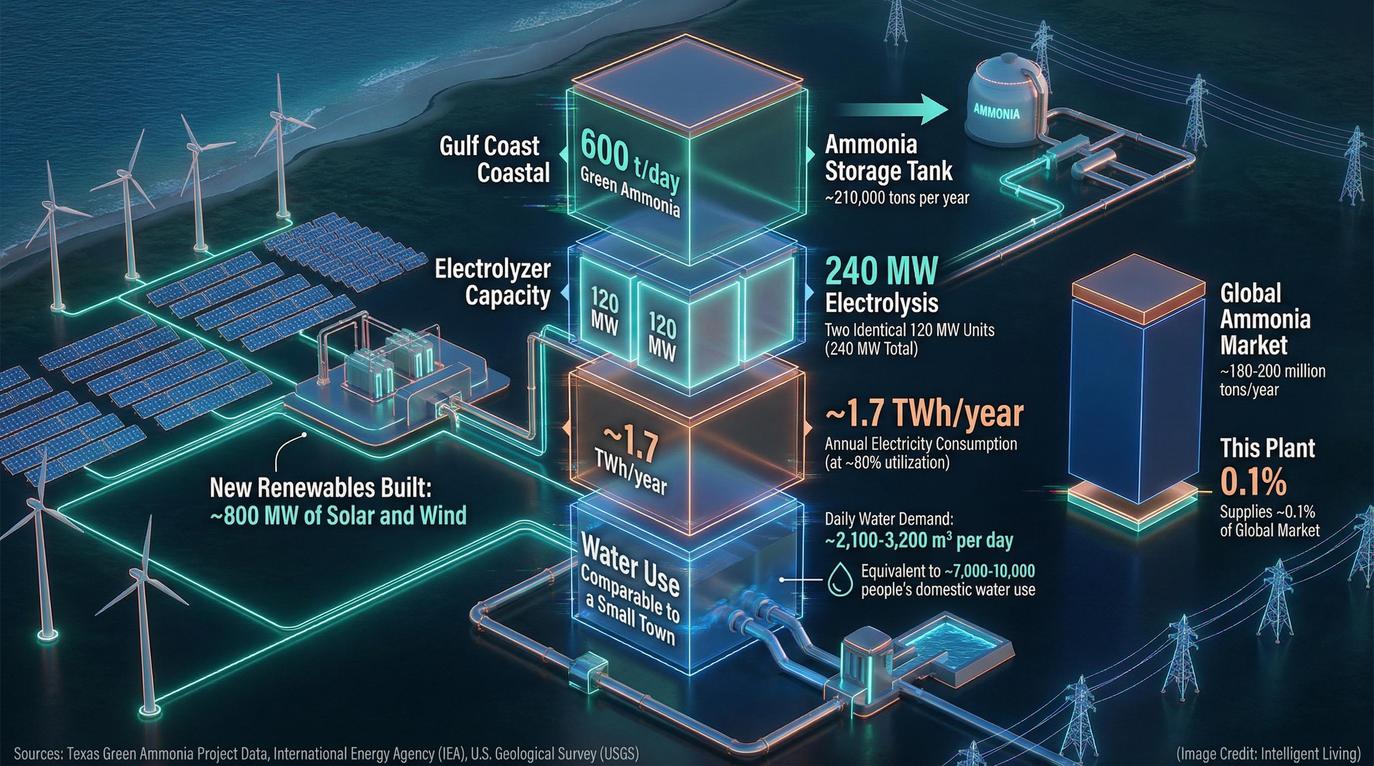
Industrial Scale: Visualizing 240 Megawatts of Electrolyzer Capacity
Green hydrogen projects often lean on large numbers that can be hard to translate into real-world terms. Understanding what 240 megawatts of electrolyzers actually means helps keep this project grounded in physics rather than only in financial models.
HYPRPlant in Plain Language
Each HYPRPlant is a large-scale electrolyzer system that takes in electricity and purified water and produces hydrogen gas and oxygen. Massive electrolyzer deployments, including Australia’s Pilbara 500-megawatt solar hub for green hydrogen and iron, demonstrate the vital role that affordable solar and firming play in project economics. Visualizing the scale of this project becomes easier when considering its massive annual electricity demand. Electric Hydrogen’s published specifications indicate that a single 120-megawatt unit can produce tens of tons of hydrogen per day when running at full output, with plant-wide electricity use in the range of roughly 49 to 54 kilowatt-hours per kilogram of hydrogen. The system can ramp output quickly, changing its draw by about one megawatt per second to follow variable solar and wind.
With two units, the Texas project would have enough hydrogen production capacity to feed a world-scale ammonia plant rather than a small pilot facility. The equipment is modular in the sense that it is built from standard components and shipped largely assembled, but the overall installation remains a very large industrial asset.
Electricity Demand, Water, and Local Constraints
While efficiency metrics in kilowatt-hours per kilogram often seem detached, translating them into annual electricity demand provides a much clearer picture of the plant’s scale. If the 240-megawatt electrolyzer system runs at high utilization and requires roughly 49 to 54 kilowatt-hours per kilogram, annual power use would reach into the low terawatt-hour range. That is comparable to the output of a dedicated mid-sized power plant that exists mainly to run the electrolyzers.
Managing Resource Loads and Infrastructure Constraints
Electrolysis also needs water and cooling. Typical systems consume around 9 liters of purified water per kilogram of hydrogen before additional process and cooling needs are counted, so large plants consume hundreds to thousands of cubic meters of water per day.
For a coastal industrial site, this volume is manageable but certainly not trivial. It affects local water planning, interacts with drought risks, and requires robust treatment and recycling systems. Heat from the process must also be rejected or repurposed, which influences choices about air cooling, water cooling, and potential heat recovery. These demands on electricity, water, land, and grid capacity highlight why a 240-megawatt electrolyzer build is a substantial new industrial load that must be planned and managed.

Technological Integration: Adapting Ammonia Loops to Variable Clean Power
If electrolyzers are the front end of the system, the ammonia synthesis loop is the back end that turns hydrogen into a tradable product. This part of the plant has different preferences and constraints, and those differences create real challenges when the power supply is variable.
Why Ammonia Plants Prefer Steady Operation
Conventional ammonia plants are designed to run at stable output for long periods. High-temperature, high-pressure reactors and tightly integrated heat recovery systems work best when conditions do not change rapidly. Consequently, a hydrogen feed that ebbs and flows with the availability of solar and wind creates a fundamental engineering hurdle for traditional loops.
For the Texas project, this tension is central. The facility cannot credibly claim to be green if it quietly leans on fossil power each time renewable output dips. At the same time, it cannot be economical if the ammonia loop is constantly starting, stopping, or running far from its design point. The plant needs a way to reconcile the rhythm of the power system, the behavior of the electrolyzers, and the needs of the chemical process.
How a Dynamic Ammonia Loop Tries to Bridge the Gap
Topsoe’s dynamic configuration is engineered to absorb fluctuations in hydrogen input with a resilience that conventional designs simply lack. In practice, that involves hardware and controls that support flexible turndown and faster but controlled ramping while maintaining product quality.
One benefit of a more flexible loop is that it can reduce the amount of hydrogen storage required to buffer the ammonia plant from every small fluctuation upstream. Storage is capital-intensive and technically challenging for hydrogen. If the synthesis loop can absorb some of the variation directly, the overall system can be simpler and more cost-effective.
Operational flexibility may become even more important as clean hydrogen tax credit rules tighten. As hourly matching of clean power becomes the standard under the United States 45V framework, operators will have to show that hydrogen production aligns closely with verified clean electricity. A dynamic ammonia loop gives the Texas project more room to keep running on a mostly renewable profile rather than defaulting to fossil backup whenever clouds pass over the solar field.
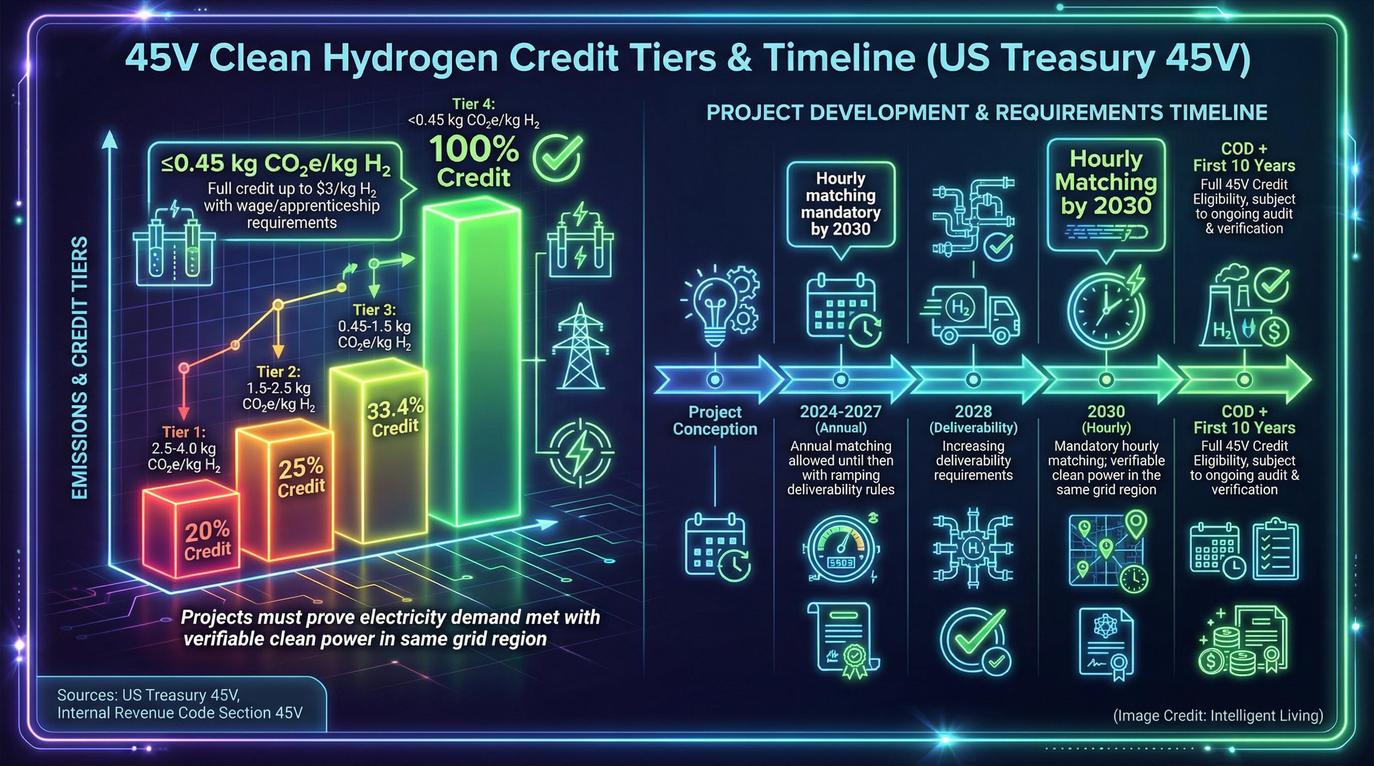
Regulatory Hurdles: Navigating 45V Compliance and Clean Hydrogen Standards
The Texas Green Ammonia Project is not just an engineering story. In the United States, the clean hydrogen production tax credit known as 45V has become a central part of the business case for electrolyzer projects. Those rules set a high bar for what counts as low-carbon hydrogen and create a proof burden that projects must meet to be treated as genuinely clean, especially as green hydrogen supply chains mature and move toward export-scale hubs.
Time Matching and Deliverability
Compliance with the United States 45V framework requires developers to navigate increasingly rigorous standards. These rules ensure that the hydrogen produced is genuinely low-carbon rather than just a product of accounting.
Specifically, projects must account for:
- Hourly Time Matching: Showing that clean electricity was available in the exact hours of hydrogen production.
- Geographic Deliverability: Verifying that clean power is physically deliverable to the electrolyzers within the same grid region.
- Independent Verification: Utilizing robust data systems to link every kilogram of hydrogen to specific power plants and intervals.
The shifting regulatory landscape is pushing developers toward new membrane-free electrolysis approaches designed around renewables.
Evidence and Trust
Fulfilling these mandates hinges on robust data systems. Synergen must link every kilogram of hydrogen to specific power plants, precise time intervals, and local grid regions to satisfy regulators and investors alike.
If the project can satisfy that proof burden, it will stand as a reference case for export-scale green ammonia that genuinely meets a tight carbon standard. If it cannot, it risks being seen as another example of green branding that depends more on creative accounting than on real emissions reductions.
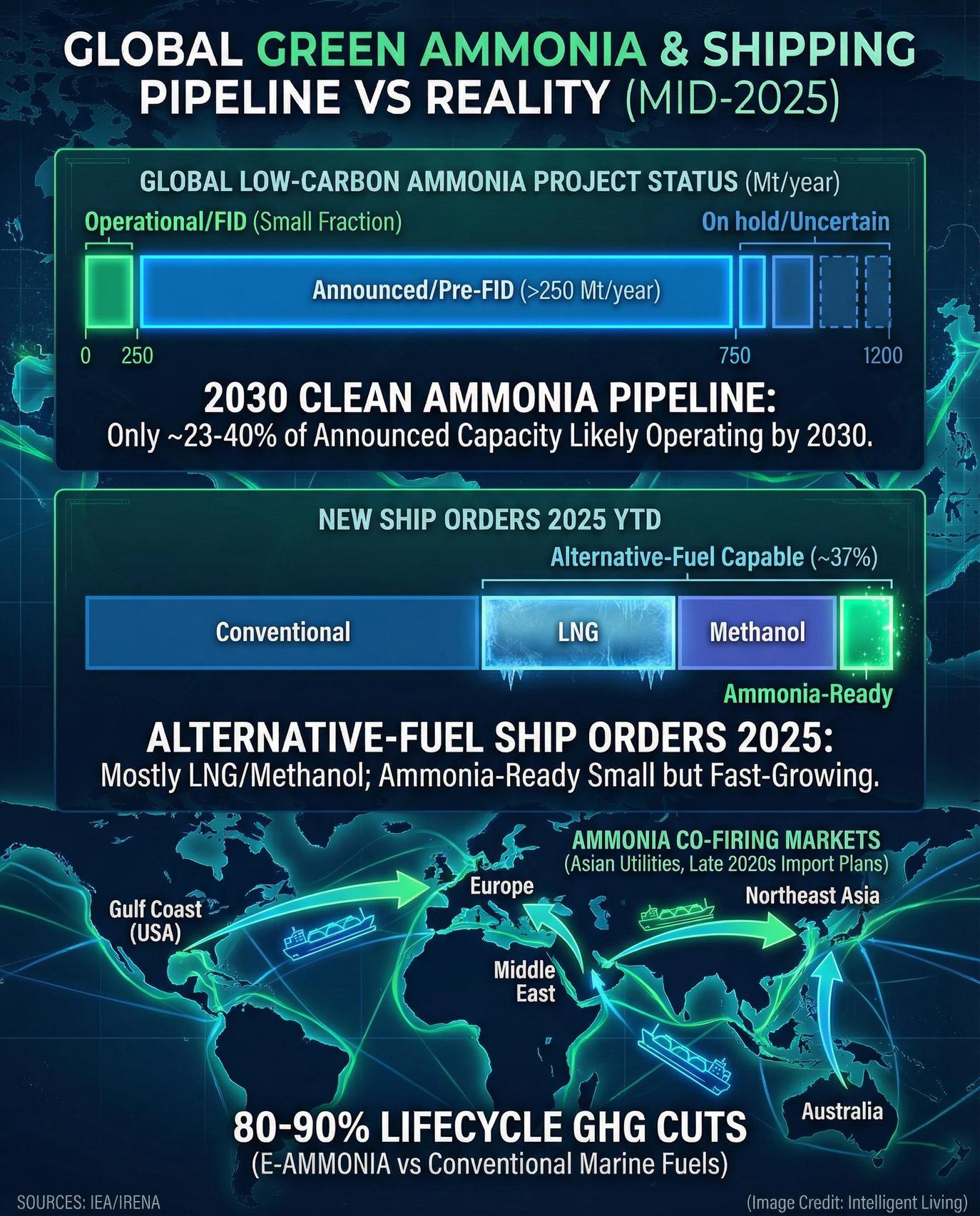
Commercial Viability: Global Market Demand and the Texas Gulf Coast Advantage
A plant of this size only makes sense if there are credible buyers, especially in shipping where carriers are already exploring hydrogen-based propulsion and bunkering. Identifying potential buyers and the strategic importance of the Gulf Coast reveals the underlying commercial logic of the facility.
Maritime and Industrial Demand
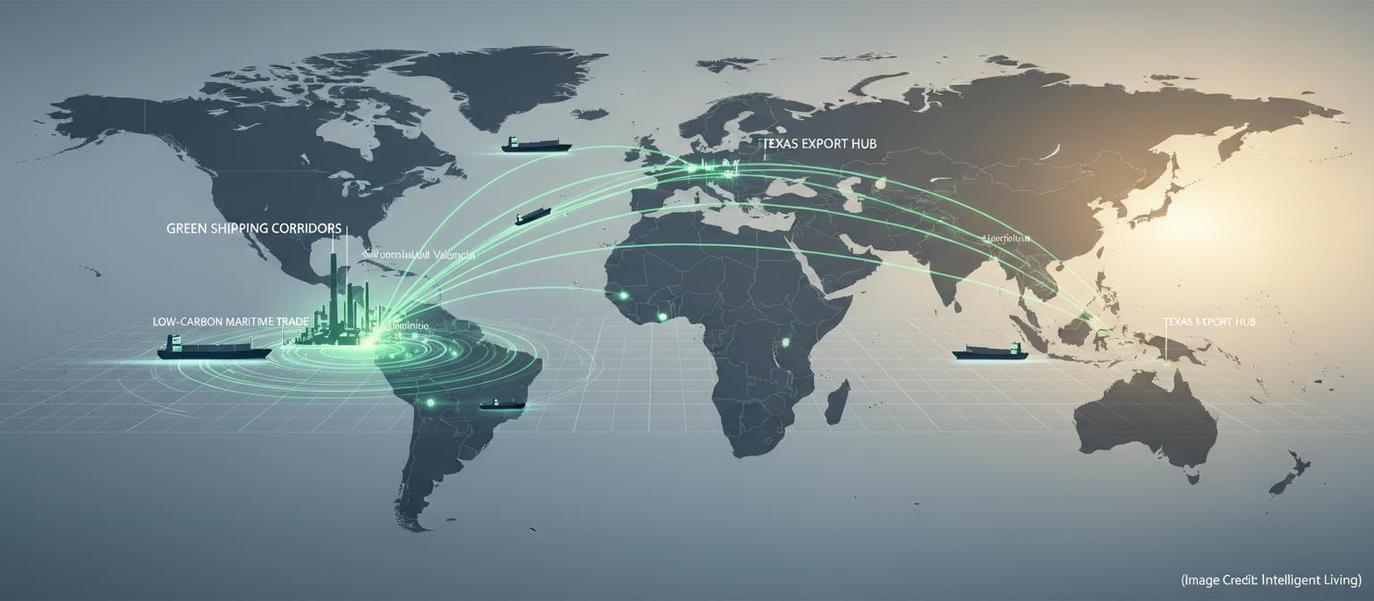
The primary markets Synergen is targeting lie overseas. Maritime shipping faces growing pressure to cut emissions, while industrial sectors in Europe and parts of Asia—including fertilizer, refining, and steel—face tightening climate policies.
Key drivers for international ammonia demand include:
- Advanced Synthetic Fuels: Regulators are advancing synthetic fuel development to provide viable alternatives to conventional marine bunkers.
- Regional Export Corridors: Emerging markets in Africa are developing export-oriented hydrogen and ammonia corridors through new renewable build-outs.
- Policy Incentives: Ongoing debates surrounding maritime fuel levy structures add critical policy pressure to accelerate fuel switching.
This shifting landscape positions green ammonia as a versatile solution for both heavy industry and global logistics. In that landscape, green ammonia serves as both a fuel and a hydrogen carrier. Ports that invest in ammonia import and storage infrastructure could supply cleaner fuel to certain vessels and lower-carbon feedstock to nearby industry. This dual role is one reason analysts treat ammonia as a cornerstone of emerging green fuel systems and increasingly describe it as a fuel of the future for shipping and power generation.
Why the Texas Gulf Coast?
Texas is already a titan in the production of conventional ammonia and industrial chemicals. The Gulf Coast provides a ready-made ecosystem of deep-water ports, sprawling storage caverns, pipelines, and a veteran workforce. Building a green ammonia plant there allows developers to leverage strategic modular fabrication partnerships to scale the facility rather than starting from scratch.
Positioning the Texas Green Ammonia Project within this familiar trading system helps Synergen shift a portion of an existing market toward lower-carbon products instead of inventing a brand-new commodity. Long-term offtake agreements with shipping companies and industrial buyers will be the real test of whether that shift is compelling enough to support a final investment decision.
Strategic Impact: Assessing Risks and Future Signals for Green Ammonia
Environmental and Safety Integrity
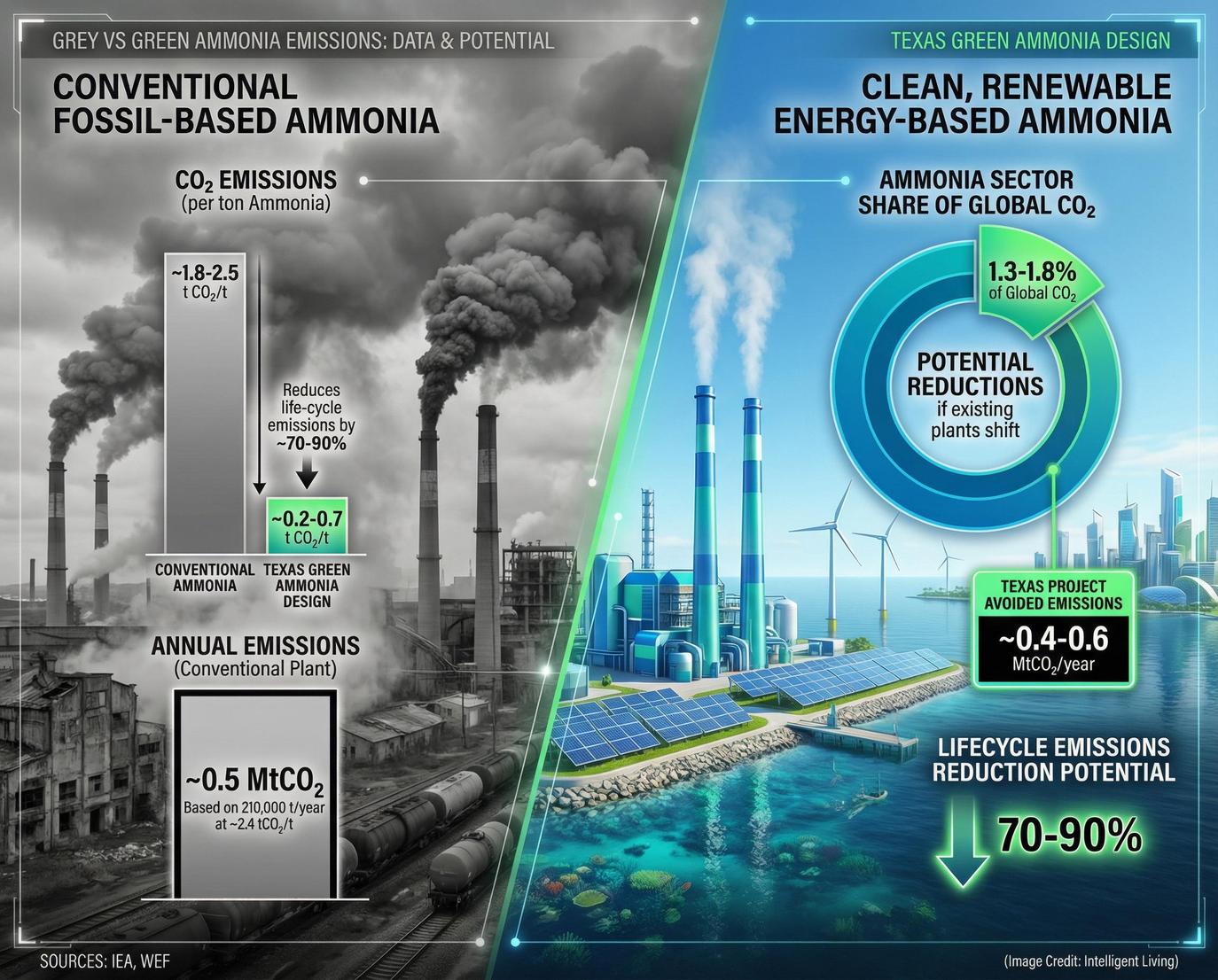
Green ammonia holds the potential to slash carbon footprints compared to traditional methods—provided the hydrogen is truly clean—though its adoption brings a unique set of challenges. This potential is demonstrated by on-farm hydrogen production currently emerging in the agricultural sector.
When used as a fuel, ammonia contains no carbon that can form carbon dioxide. However, combustion can still generate nitrogen oxides and, under some conditions, nitrous oxide, a powerful greenhouse gas. Mitigating these pollutants requires careful engine design, after-treatment, and monitoring so that air quality benefits keep pace with climate benefits.
Ammonia is also toxic and corrosive, which means communities near storage tanks, pipelines, and terminals already live with some level of risk from existing infrastructure. Scaling this infrastructure for fuel requires uncompromising safety protocols, transparent disaster planning, and meaningful engagement with the surrounding community.
Environmental integrity, however, hinges on more than just local safety. If electrolyzers are not powered by verifiable clean electricity, the lifecycle emissions of so-called green ammonia can approach those of conventional production. Truly clean output depends as much on rigorous power sourcing and data transparency as it does on high-tech process equipment.
What Success or Failure Would Signal for 2026 to 2030
If the Texas Green Ammonia Project reaches a positive final investment decision in 2026, it will become an early reference plant for export-scale green fuels. This milestone arrives at a time when commercial scaling of synthetic fuels is already shifting industry expectations.
Demonstrating high utilization of its 240 megawatts of electrolyzers using mostly verifiable clean power is critical. Strong performance from the modular ammonia loop under variable conditions would lower perceived risk for similar projects, support more investment in factory-built electrolyzers, and help move green fuels from bespoke one-offs toward repeatable products.
If the project stalls or suffers major cost overruns, it will expose the persistent constraints holding the sector back. These hurdles highlight the reality of building export-oriented green fuel plants at a meaningful scale.
The primary industry-wide challenges include:
- Permitting and Grid Access: Navigating slow permitting processes and worsening grid congestion.
- Policy Volatility: Managing the uncertainty of evolving regulatory frameworks and tax credits.
- Offtake Reliability: Securing long-term agreements with buyers in an unproven market.
- Infrastructure Strategy: Overcoming the same system-level hurdles that define integrated hydrogen pipeline networks and broader national energy strategies.
Whether the Texas project succeeds or fails, it will serve as a definitive lesson in what it actually takes to scale the green hydrogen economy.
How a Texas Green Ammonia Hub Changes Daily Life (and How It Doesn’t)
While a 240-megawatt electrolyzer on the Texas coast might seem far removed from daily life, its success or failure will reverberate through the global energy transition. If it succeeds, the plant will help show that cleaner fuels for shipping and heavy industry can move through major hubs like the Gulf Coast, influencing how everyday goods are made and transported even if consumers never see green ammonia directly.
At the same time, this single project will not transform energy bills, replace all fossil fuels, or make hydrogen cars mainstream. Instead, it represents one piece of a much larger system. Green ammonia is a targeted tool for specific high-impact uses, serving as a specialized solution rather than a universal replacement for the global energy mix.
For readers tracking the progress of the energy transition, the most useful milestones to watch include:
- FID 2026: Whether the project reaches a definitive final investment decision by its targeted date.
- 45V Compliance: How the developer justifies its clean power strategy under strict U.S. tax credit rules.
- Offtake Disclosures: Whether binding agreements with major shipping or industrial customers are publicly secured.
Together, these indicators will provide a far clearer view of the future of green ammonia than any single press release or technology announcement.
Expert Insights: Frequently Asked Questions on Texas Green Ammonia
Will this Project on Its Own Change Global Shipping Emissions?
No, even if it operates successfully, this plant would only supply a small share of lower-carbon ammonia to specific routes and act as an early proof of concept within emerging collaborative maritime infrastructure rather than acting as a standalone solution.
How Much Cleaner Is Green Ammonia Than Conventional Ammonia?
Significantly, provided the hydrogen is produced with verifiable low-carbon power and indirect emissions are tightly controlled, and when it is paired with broader liquid fuel decarbonization strategies across multiple sectors.
What is the production capacity of the Texas Green Ammonia Project?
The facility is designed to produce 600 tons per day of green ammonia, totaling approximately 210,000 metric tons per year, specifically for export to international maritime and industrial markets.
Which technology is being used for the 240 MW electrolyzer system?
The project utilizes two 120 MW HYPRPlant units from Electric Hydrogen, which are paired with a flexible Topsoe ammonia synthesis loop to handle variable renewable energy inputs.
How does the project comply with 45V clean hydrogen tax credit rules?
Synergen plans to meet 45V requirements by securing verifiable clean power that satisfies strict time-matching and geographic deliverability standards within the Gulf Coast grid region.
Why is the Texas Gulf Coast ideal for green hydrogen exports?
The region offers deep-water ports, existing pipeline networks, and a skilled workforce, allowing the project to leverage established logistics infrastructure for global distribution.
When will the Texas green ammonia plant start operations?
Following a targeted final investment decision in 2026, the project aims to begin initial operations around 2028, contingent on final permits and offtake agreements.


