
In the fast-evolving world of automobiles, Toyota has consistently stood out as a beacon of reliability and innovation. Known globally for breaking new ground with its hybrid technology nearly three decades ago, with the Prius in October of 1977, Toyota is now spearheading the next chapter in automotive evolution: the widespread adoption of electric vehicles (EVs) and the development of revolutionary solid-state battery technology.
This transformation is not just about keeping up with the times—it’s a visionary step towards a cleaner, more sustainable future. With its reputation firmly rooted in quality and innovation, and through strategic partnerships with pioneers like BYD, Toyota is setting the stage for a fundamental shift not only in how we think about transportation but also in how cities might operate in the future.
The journey is a multi-faceted one, involving breakthroughs in battery technology, strategic alliances, and ambitious projects such as Toyota’s “Woven City,” a prototype city designed to integrate cutting-edge technologies into daily living. These efforts align with growing global demands for sustainability and technological advancement, promising to reshape our world for the better.
This article dives deep into Toyota’s ambitious plans, exploring how the company is not just a participant in the EV race but a leader aiming to redefine the future of mobility and urban living.
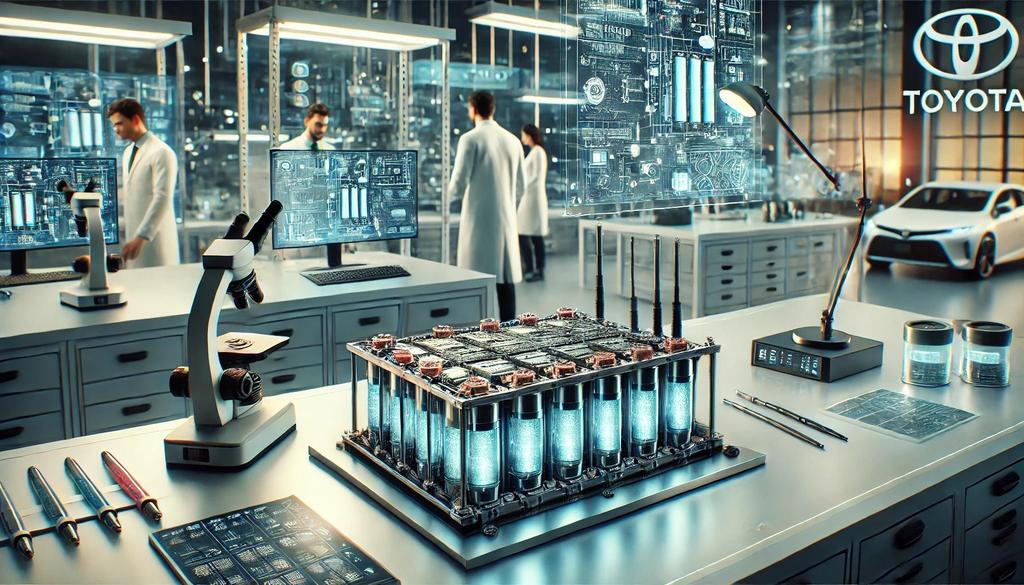
Toyota’s Solid-State Battery Development
A Game-Changer for Electric Vehicles
The evolution of battery technology is crucial for the advancement of electric vehicles (EVs). At the forefront of this evolution is Toyota, a company known for its reliable and innovative automobile solutions. Toyota’s recent focus has been on developing solid-state batteries, which experts believe could revolutionize the EV industry.
What Makes Solid-State Batteries Different?
Traditionally, electric vehicles have used lithium-ion batteries containing a liquid electrolyte. In contrast, solid-state batteries use a solid electrolyte. This seemingly small change offers several potential benefits. For one, solid-state batteries can store more energy and charge faster than their liquid-based counterparts. Indeed, Toyota’s solid-state battery can theoretically provide up to 745 miles on a single charge and fully recharge in as little as ten minutes.
The shift to solid-state technology also promises greater safety. Because these batteries are less likely to leak harmful chemicals or catch fire, they offer an improved safety profile for users. Additionally, their smaller, lighter design allows vehicles to be more efficient and offers automakers more freedom in design. For instance, with a reduced battery size, cars can have more spacious interiors or better aerodynamics.
Challenges in Solid-State Battery Development
However, developing solid-state batteries is not without its challenges. One major hurdle is durability. Over time, repeated charging and discharging can cause the solid electrolyte to form cracks, which degrade the battery’s performance. Toyota and its partner, Idemitsu Kosan, have been working to create materials that are flexible and resistant to these issues.
There’s also the challenge of manufacturing these advanced batteries at scale. Currently, the production processes are complex and costly, requiring ultra-dry environments that make mass production difficult and expensive. Despite these hurdles, Toyota is determined to push forward, aiming to start limited production by 2025, with mass production targeted for around 2030.

Toyota’s Collaboration with BYD and Other Innovations
A Strategic Partnership with BYD
In addition to its focus on solid-state batteries, Toyota has teamed up with BYD, a leading Chinese automaker, to develop battery electric vehicles specifically for the Chinese market. This partnership focuses on vehicle development and includes the joint creation of onboard batteries for these new EVs.
BYD is a significant player in the battery technology arena, known for its efficient and cost-effective solutions. Toyota hopes to leverage BYD’s technology, like their DM-i hybrid system, to enhance its offerings in hybrid vehicles and make them more affordable and efficient, especially in markets like China, where cost competitiveness is crucial.
Influencing Toyota’s Manufacturing Approach
The collaboration with BYD has also influenced Toyota’s approach to manufacturing. While Toyota is traditionally known for its meticulous and efficient production methods, it has learned a great deal from BYD’s fast-paced and flexible manufacturing techniques. This learning has helped Toyota incorporate innovative approaches such as giga casting and the use of autonomous vehicles within its assembly lines—methods that promise to enhance efficiency and reduce costs in the production of new EV models.
Together, these efforts are part of Toyota’s broader strategy to lead in the EV market, not just in Japan but globally. By 2027, Toyota aims to launch new models built on this collaborative innovation, hoping to capture significant market share in the growing electric vehicle sector.

Beyond Batteries: Toyota’s Future Cities and Sustainable Practices
Woven City: A Living Laboratory
Imagine a city where the traffic jams vanish, pollution is a thing of the past, and technology seamlessly integrates into everyday life to enhance it. Welcome to Toyota’s Woven City, a pioneering project that sets the stage for what cities of the future could look like. Nestled at the foot of Mount Fuji in Japan, this city is more than just a plan on paper; it’s an ambitious, living, breathing experiment designed by Toyota to test and demonstrate how advanced technologies might be integrated into urban environments.
What is Woven City?
Woven City is conceived as a “living laboratory,” where cutting-edge technologies will be trialed in real-world conditions. The city is set to spread across 175 acres and initially serve as a home and workplace for 2,000 residents, including Toyota employees and visiting researchers. This experimental ecosystem is envisioned as a bustling hub where autonomous vehicles, smart homes, and artificial intelligence coexist harmoniously to improve urban living.
Layout and Infrastructure
The city will feature “streets” designated for various modes of travel: one for faster autonomous vehicles, another for pedestrians on foot, and yet another for slower, personal mobility scooters and bicycles. This multi-modal approach aims to reduce traffic congestion and promote efficient, clean transportation. Only zero-emission vehicles, like Toyota’s e-Palette, a self-driving vehicle, will be used for public and goods transport.
Sustainability Focus
All buildings in the Woven City are planned to be constructed from sustainable materials. The structures will incorporate traditional Japanese wood joinery, and each will be powered by renewable energy sources like rooftop solar panels and hydrogen fuel cells, ensuring the city operates as carbon-neutral as possible. Such initiatives are expected to boost the city’s sustainability and serve as models for other urban areas around the world.

Connected Living: Housing and Health
Smart Homes
In the Woven City, houses will do more than provide shelter. Equipped with advanced robotics and sensor-based artificial intelligence, these homes are designed to support long-term wellness and care for residents by monitoring their health, assisting with daily tasks, and seamlessly managing energy use. Imagine a home that subtly adjusts the temperature as you sleep or reminds you to take your medicine.
Community and Interaction
Public spaces are fundamental to Woven City’s design, encouraging community interaction and fostering social connections. Toyota has ensured that parks, gardens, and public squares will be central features, promoting physical health through active lifestyles and mental well-being through community interaction. Hydroponic gardens offer residents easy access to fresh produce, reinforcing an ethos of self-sustaining living.

Toyota’s Innovation in Manufacturing and Technology
Learning from Partnerships
Toyota’s collaboration with BYD and other tech partnerships revolutionized its EV offerings and profoundly impacted its manufacturing and technological processes. Toyota has committed to improving its manufacturing lines by adopting BYD’s efficient methods, such as giga-casting processes and autonomous vehicle integration, into their assembly lines. These advances allow for faster production with higher precision and lower costs, exemplifying how industry partnerships can drive technological growth.
Pioneering Battery Technology
Toyota’s move toward solid-state batteries represents a commitment not just to improving vehicle performance but also to adopting manufacturing methods that are sustainable and scalable. Overcoming production challenges is crucial for these batteries to reach their full potential, a process that involves innovative thinking and design. The direction Toyota is heading—the ability to mass-produce solid-state batteries—marks another step towards a future where electric vehicles are the norm rather than the exception. BYD is advancing its own solid-state ambitions in parallel, with production set to begin in 2027. Read our full breakdown of BYD’s solid-state battery roadmap.
The Road Ahead: Global Impact and Market Implications
Embracing an Electric Future
Toyota’s robust plans and ongoing projects such as Woven City and solid-state battery technology represent more than technological innovations; they embody a broader vision for a sustainable, interconnected future. By progressing in these areas, Toyota continues to push towards a more sustainable future, setting an example for industries across the globe and laying the groundwork for a new era of cleaner, more efficient vehicles.
A Shift in Consumer Expectations
As these innovations roll out, consumer expectations will likely shift towards demanding more sustainable and technology-enhanced living environments and products. Toyota’s advancements are about providing cutting-edge technologies and improving the quality of life for individuals and communities. The successes in these areas will drive further adoption of sustainable practices and technologies worldwide, reinforcing Toyota’s role as a leader in this transformative era.

Toyota’s Road Ahead: Global Impact and Market Implications
Embracing an Electric Future
The automotive industry is in the midst of a paradigm shift, and at the heart of this transformation is Toyota, a company traditionally known for its reliable combustion engines and pioneering hybrid vehicles. As the world gravitates toward electric vehicles (EVs) for a sustainable future, Toyota has taken significant strides to ensure it’s not just part of this evolution but leading it with innovation and foresight.
Toyota’s Global Strategy
Toyota’s commitment to building a sustainable future is evident in its comprehensive strategy, which includes the development of solid-state batteries, collaboration with industry leaders like BYD, and initiatives like the Woven City. By investing in these areas, Toyota is not only seeking to enhance its product offerings but also aims to set a benchmark for eco-friendly innovation in the automotive sector.
The company’s plan to mass-produce solid-state batteries by 2027 is a substantial part of this strategy. These batteries promise longer ranges and faster charging times compared to current lithium-ion batteries. This innovation is expected to significantly enhance the appeal of EVs by addressing common concerns about range anxiety and charging downtime, making them more practical and accessible to a broader audience.
Moreover, Toyota’s collaboration with BYD highlights its approach to leveraging strengths and expertise from different markets to propel forward. BYD’s DM-i hybrid technology provides Toyota with a cost-competitive edge crucial for markets like China, where price sensitivity is paramount.

A Shift in Consumer Expectations
Meeting Consumer Needs
As Toyota and other automakers roll out these advancements, consumer expectations for vehicles and urban living are evolving rapidly. Consumers today are not only interested in the technical specifications of a vehicle; they’re also deeply concerned about environmental impacts and the overall sustainability of the products they buy.
Toyota’s vision, articulated through projects like the Woven City, represents a response to these shifting demands. This initiative aims to create a blueprint for future cities prioritizing sustainability, integration with nature, and enhanced quality of life through technology. Consumers are increasingly expecting brands to deliver more than just products—they want solutions that align with broader environmental and technological advancements.
Driving Market Trends
Toyota’s efforts in developing solid-state batteries and setting new benchmarks in smart city development are likely to influence market trends substantially. As these technologies become more mainstream, they will drive further adoption of green practices and encourage automakers worldwide to innovate. Toyota’s strategic approaches, such as embracing partnerships to overcome technological hurdles, serve as a model for others striving to enter or compete in the rapidly growing EV market.
Furthermore, projects like the Woven City could redefine urban planning, showing how sustainable and interconnected systems can reduce pollution, increase efficiency, and improve the well-being of urban residents. This real-world application of technology not only propels Toyota as a leader in auto innovation but also as a significant influencer in global sustainability efforts.

Challenges and Opportunities for Toyota
Navigating the Challenges
While the potential of these advancements is vast, Toyota also faces several challenges. Scaling up the production of solid-state batteries requires overcoming significant technical and logistical hurdles. Ensuring these batteries are economically viable and can be produced at scale is crucial for them to compete with entrenched lithium-ion technologies.
Moreover, adapting these innovations across different global markets requires navigating regulatory environments, cultural preferences, and local market demands. Toyota’s ongoing partnerships and its focus on research and development are fundamental strategies to address these varied challenges successfully.
Looking Forward to Opportunities
Despite these hurdles, the opportunities for Toyota and the wider industry are immense. Successfully implementing its solid-state battery technology could transform how vehicles are powered and influence energy storage in numerous sectors. Toyota’s comprehensive strategy of integrating transportation with broader urban systems can redefine consumer experiences and expectations in an increasingly digital and interconnected world.
As Toyota continues on this road, it sets a promising path for other automakers to follow. Its innovative strides in technology and sustainability aim to benefit not just individual consumers but the global community as a whole, providing a roadmap for future developments in the automotive industry and beyond.
By aligning its goals with consumer demands and environmental needs, Toyota is not only adapting to the current trends but also actively shaping the future of transportation and sustainable living. Whether through cutting-edge batteries or the smart cities of tomorrow, Toyota’s journey is a clear indicator of a brighter, cleaner, and more connected world ahead.

Toyota’s Visionary Innovations for the Future of Electric Vehicles and Urban Living
As we conclude this exploration of Toyota’s journey into the realms of electric vehicles and futuristic city planning, one theme is clear—Toyota is not just preparing for the future; it is actively shaping it. By pioneering solid-state battery technology, Toyota is addressing some of the most significant challenges faced by electric vehicles today, such as long charging times and limited range. These advancements could make EVs a more viable and attractive option for consumers worldwide, leading to broader adoption and setting new industry standards.
Toyota’s strategic collaborations, like those with BYD, highlight its pragmatic approach to innovation. By leveraging the strengths of international partners, Toyota accelerates its technological advancements while ensuring its solutions are well-suited to diverse global markets.
Moreover, the vision of Woven City epitomizes Toyota’s commitment to integrating cutting-edge technology with sustainability to enhance human living experiences. By designing a city that acts as a living laboratory, Toyota is not only testing its innovations but also proposing real-world applications for future urban planning.
As we navigate this transition to a more sustainable and interconnected future, Toyota stands as a beacon of innovation and responsibility. Its efforts are not solely about staying ahead in a competitive industry; they are about contributing to the creation of a healthier planet and more vibrant communities. Toyota’s path is a roadmap for the future—a vision of what is possible when determination meets innovation. As the road unfolds, we can expect Toyota to continue leading the charge, driving us forward into a new era of smart, sustainable living.
In essence, Toyota is driving change—one innovation at a time, for a future we can all look forward to.


