
Alaska has experienced record high temperatures and disastrous wildfires this summer. As this overheating has been something reoccurring and steadily increasing over the recent years, a team of researchers led by the Department of Energy’s Lawrence Berkeley National Laboratory (Berkeley Lab) questioned what would happen if such events become even more frequent? Specifically, how might that impact America’s northernmost forests?

Using a well-tested ecosystem model called ecosys, the team projected that the combination of climate change and increased wildfires will cause the iconic evergreen conifer trees of Alaska to get pushed out in favor of broadleaf deciduous trees, which shed their leaves seasonally. One of the researchers said that the study included many steps to confirm that the results from ecosys were valid. “We evaluated model performance against many current observations of forest cover and carbon cycling measurements, and against long-term changes under natural climate variation,” he said.
Upon evaluation of the ecosys results, they predicted that by the year 2100 the relative dominance of evergreen conifer trees (black spruce) will decline by 25% and non-woody herbaceous plants such as moss and lichen will decline by 66%, while broadleaf deciduous trees (aspen) will become dominant, nearly doubling in prevalence. Such a drastic alteration in vegetation will surely have reverberations for the entire ecosystem and climate. The research has been published in the journal Nature Plants.
Zelalem Mekonnen, a Berkeley Lab postdoctoral fellow who was the first author of the study, said:
Expansion of the deciduous broadleaf forests in a warmer climate may result in several ecological and climatic feedbacks that affect the carbon cycle of northern ecosystems.
Co-author William J. Riley, a senior scientist in Berkeley Lab’s Earth & Environmental Sciences Area, said:
We predict the forest system will remain a net sink for carbon, meaning it will absorb more carbon than it emits. But will it be more or less of a sink? Our next study will quantify the carbon and surface energy budgets. This study focused more on how vegetation types are expected to change.
How would tree type affect the ecosystem processes? Deciduous broadleaf trees lose their leaves every year. Evergreens do not. If there are more deciduous trees there will be more rapid microbial decomposition and increased transpiration (the loss of moisture through leaves) – both of which could increase climate change.
Although, if there are fewer evergreen trees that don’t shed their leaves, there will be a higher surface reflectance as the snow will be exposed to the sunlight – a situation which could have a cooling effect. Then there’s also the fact that deciduous trees are less flammable than evergreen trees. Overall, the researchers predicted modest effects on net carbon budgets. They plan to analyze the effects of these processes on climate change further in future work.
Wildlife will also be affected. Mekonnen explained:
Broadleaf deciduous trees have a large canopy which covers underlying vegetation, potentially decreasing herbaceous plant cover. Those plants, especially moss, are very important forage for wildlife.
Arctic Amplification
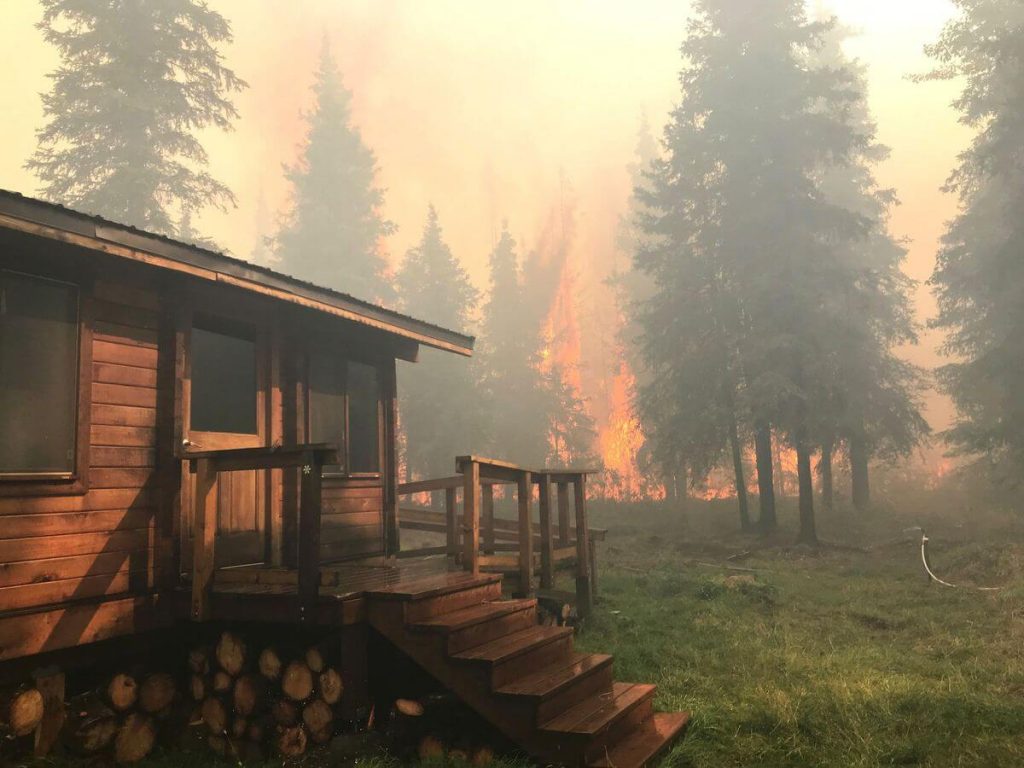
The northern latitudes are being affected by climate change more so than the rest of the world due to the phenomenon of Arctic amplification – a positive feedback that causes temperatures to rise faster than the global average. Meaning that as the world heats up globally, there could be much larger increases for the Arctic. Whether or not this will cause an increase in fires is uncertain. However, models of four different scenarios found that wildfires could increase up to 150%.

As of this summer, more than 200 individual wildfires have been burning across the state and threatening more than a thousand structures and forcing hundreds of Alaskans from their homes, reported the Alaska Interagency Coordination Center. A total of around 2.5 million acres burned across the state with at least 84 homes and businesses destroyed, reports EcoWatch.
Why Deciduous Could Take Over
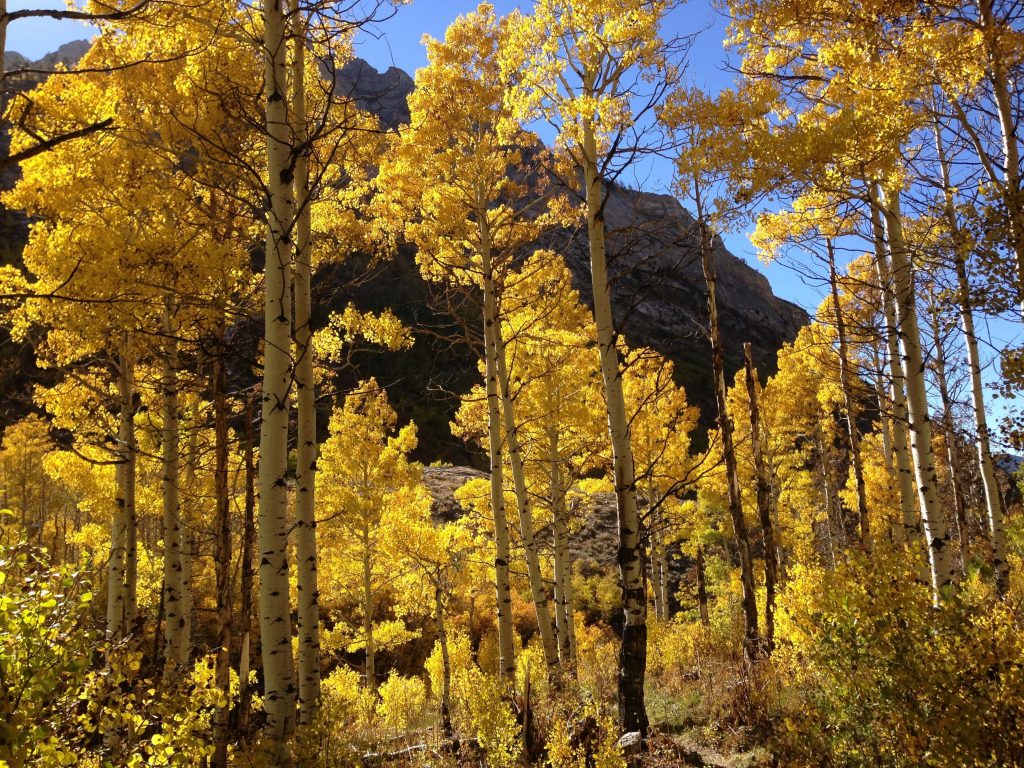
A couple of main reasons why the researchers predict deciduous plants will do so well is because fires cause an increase in soil nutrients which deciduous plants favor, and deciduous leaves decompose faster resulting in a more rapid carbon turnover. Riley explains:
Fires deepen the active layer, which is the zone of soil that remains unfrozen. That leads to an increase in soil nutrients available for plants. Increases in soil nutrients favor deciduous plants, which is one reason why we predict they will do so well under a warming climate. Higher deciduous tree cover has happened under previous climates; paleoecological studies of the last 10,000 years suggest that Alaskan forests have undergone similar shifts in dominant tree species.
Another factor that favors broadleaf deciduous over evergreen conifer trees is that their leaves decompose more rapidly, leading to more rapid carbon turnover, which determines the available nutrients in the ecosystem. As you get more rapid turnover, you get more deciduous plants. It’s a self-reinforcing mechanism.
Other reasons for deciduous dominance in a future warmer climate includes their dominance in post-fire seedling regeneration and their ability to grow quickly, thus out-competing evergreens for light.
Conclusion
Climate change and increased fire combined are required to produce broadleaf deciduous trees’ dominance, the study found. The model found that if warming occurred without the increase of fires – or vice versa – evergreen conifers will remain the dominant Alaskan tree type through the 21st century.


