
Establishing a global presence via the recent AliExpress overseas launch claim for the Unitree R1 signals a massive shift in distribution. Unitree’s R1 is pivoting from trade-show prototypes toward a retail listing that mirrors the acquisition of consumer electronics. As this humanoid robot enters a standard checkout flow, the conversation moves from theoretical access to the practicalities of testing an affordable bipedal platform in unpredictable, real-world environments.
Market accessibility at the sub-$5K Unitree R1 price signal transforms that financial hurdle into a realistic choice for a small lab, a school, or a startup. Investing in a humanoid robot once demanded enterprise-scale funding or a science-fiction budget. A pivot toward the physical provides the embodied AI infrastructure necessary for teams to move beyond simulations and test control code against the physical realities of gravity.
Researchers often ask, “How do you program a Unitree R1 robot?” when looking for a compact humanoid development body that balances cost with capability. R1 hardware allows for hands-on human-robot interaction and specialized bipedal gait and stability research without the logistical friction of high-end enterprise procurement. As the cheapest humanoid robot available for global shipping, the R1 provides a tangible entry point for teams moving from digital agents to physical deployments.

Analyzing the AliExpress Listing and the Unitree R1 Snapshot
The Impact of the Global Humanoid Robot Price Floor
Next week, Unitree expects to debut the R1 for international buyers through AliExpress, marking a pivotal moment for global robotics distribution. Broader international expansion is implied but not yet confirmed, as neither company had publicly verified the listing details at the time of reporting.
The purchasing pathway differentiates this headline from typical robotics news. A price point in the sub-$5K range brings humanoids into the same conversation as high-end laptops, camera rigs, and other creator hardware.
Price compression is consistent with the cost-curve story Reuters highlighted when describing how manufacturing-cost declines pushed Unitree’s R1 price lower than earlier models. The accessibility shift builds on a pattern already visible in the sub-$6K Unitree R1 price signal for everyday builders, establishing a real-world benchmark for humanoid platforms that move beyond a handful of elite institutions into classrooms, maker spaces, and small teams that learn by building.
Primary Specifications for the Compact Humanoid Development Body
Evaluating the Unitree R1 requires a look at its fundamental physical and financial parameters. For context on how viral demos compare to real performance, see our analysis of Chinese robot authenticity and industrial use. These metrics define its utility as a compact humanoid development body and clarify its role in the current affordable bipedal platform market:
- Pricing: Unitree’s R1 specification table lists $4,900 for the R1 AIR and $5,900 for the standard R1 configuration.
- Dimensions: Standing 123 cm tall, the unit weighs between 27 and 29 kg, facilitating easier transport than full-sized industrial models.
- Flexibility: Models offer 20–26 degrees of freedom (DOF), allowing for complex gait and stability testing.
- Power: Typical runtime averages one hour, requiring teams to plan focused testing cycles.
- Unconfirmed Details: International warranty terms, localized repair support, and final cross-border shipping costs remain provisional.
Mastering these hardware limits ensures a smoother integration of the chassis into any large-scale embodied AI infrastructure, bridging the gap between raw data and physical action.

What You Actually Get for a Sub-$5K Humanoid
Defining the R1 as a High-Value Development Chassis
Think of the R1 as a rugged, compact humanoid development body rather than a finished consumer appliance. Unitree R1 serves as a platform that gives developers a real bipedal chassis with enough articulation to test balance, gait, and interaction without buying an industrial humanoid.
Assessing Degrees of Freedom (DOF) for Nuanced Motion
Engineers prioritize degrees of freedom (DOF) as a key metric for evaluating bipedal gait and stability. DOF is simply the number of joints the robot can move independently. More DOF generally means more nuanced motion, but it also means more control complexity, because the software has to keep more joints stable while the robot shifts weight.
Leveraging Software Interfaces for Joint-Level Control
Developers choose this platform primarily for its robust software interfaces and joint-level control options. Unitree’s R1 joint map and control interface notes point to why this price tier attracts experimenters: a known joint layout, sensor inputs, and controllable surfaces that software teams can iterate on without inventing their own hardware stack.
Simulation-first habits explain why many “effortless” videos exist at all, as the messy falls and tuning happen before anyone hits record. The fastest path for many teams is to prototype in simulation before anything touches a real floor, and the company’s ROS tooling makes that workflow tangible through Unitree ROS simulation packages for joint-level control.
Managing Battery Constraints and Iteration Cycles
One hour of battery runtime forces developers to prioritize high-impact testing over long-duration simulations. Short runtimes naturally narrow development goals, forcing a robotics lab to spend an afternoon improving walking stability while postponing manipulation experiments because every fall, every recovery, and every recharge cycle eats into iteration speed.
How Standardized Marketplaces Accelerate Robotics Adoption
Unifying checkout and payment systems allows AliExpress to bring humanoid robots to an international audience previously locked out of the market. Checkout standardization makes complex technology like humanoid robots accessible to a broader international audience.
Validating Authentication through AliExpress Brand+ Frameworks
AliExpress says Brand+ includes product authentication plus qualified free shipping and returns in its Brand+ product authentication and returns rules. Prospective early buyers often share the same anxiety: if a unit arrives damaged, is the return process real, and does support exist after the excitement fades?
Navigating Cross-Border Shipping and Post-Purchase Support
Delivery speeds for cross-border shipping often collide with reality, as Alibaba has described a premium fulfillment approach for select items through its AliExpress Choice service explanation, a reference point for how marketplace logistics get packaged when a platform wants shoppers to trust international delivery. With a roughly 27–29 kg humanoid, return shipping and repairs are not a trivial detail; they are part of the effective price.
Identifying Critical Gaps in International Maintenance Plans
Even if the marketplace assurances are real, the high-stakes details remain practical. How is a complex mechanical device supported when a joint drifts out of calibration? What does a repair cycle look like for international buyers? A marketplace can reduce purchase friction, but it cannot replace engineering support.
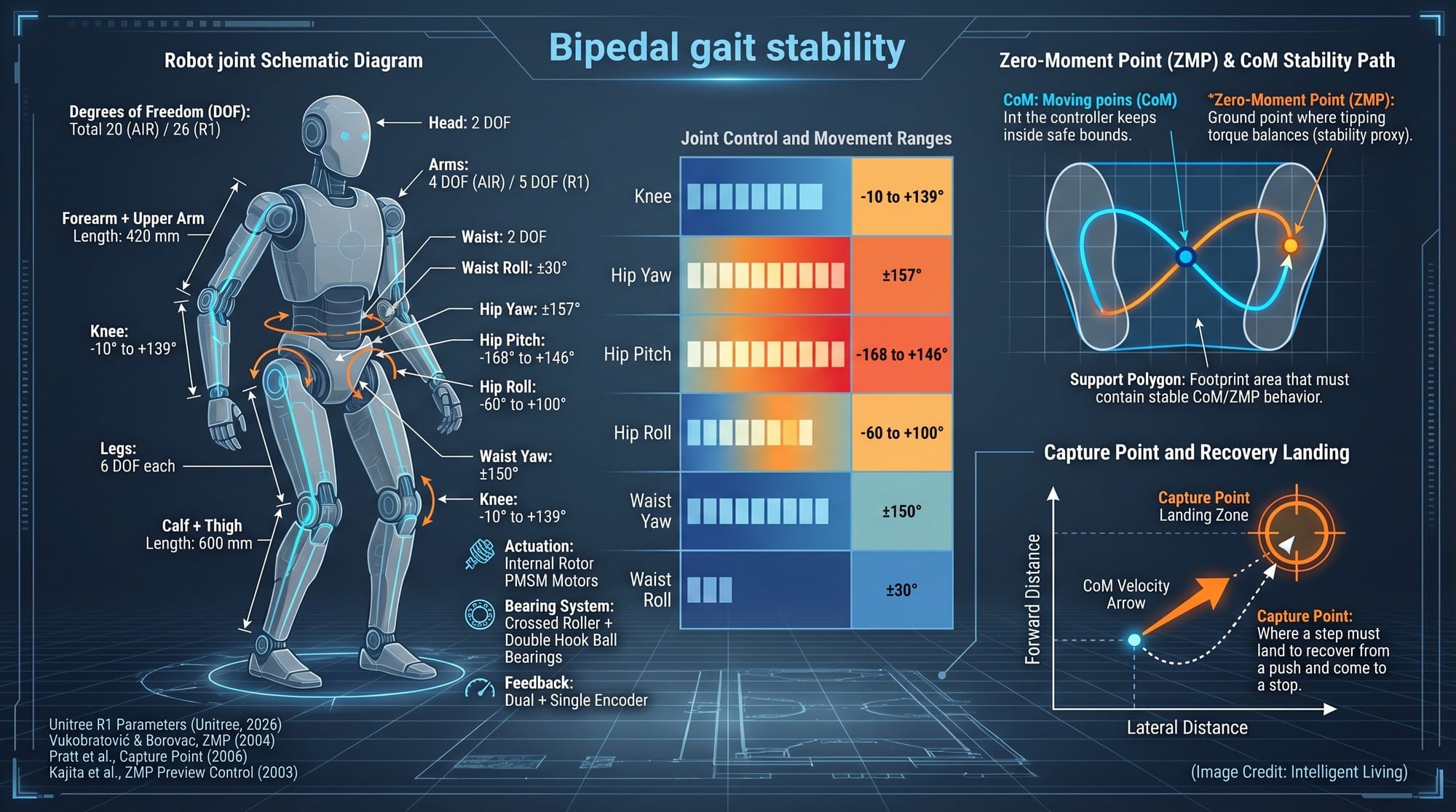
Understanding Bipedal Gait and Stability in the R1 Infrastructure
A Practical Model for Integrated Robotics Control Systems
Unitree R1 humanoids are easiest to understand as three systems that have to cooperate in real time: a motion system, a sensing system, and a control system.
Synchronizing Motion, Sensing, and Control Architectures
The R1 operates through a triad of synchronized architectures that must communicate at high frequencies. System hardware components must remain synchronized to ensure stable bipedal gait and stability during operation:
- Motion System: High-torque motors and joints provide the necessary axes for movement.
- Sensing System: Integrated cameras and microphones allow the robot to perceive people and obstacles.
- Control System: Software logic fuses sensor data to output high-frequency joint commands.
Mastering the interplay between these systems is the primary challenge for those learning how to program a Unitree R1 robot for complex environments.
Prioritizing Reliable Bipedal Gait Over Choreographed Stunts
Taking a single step is easy; the true engineering challenge lies in repeating that motion reliably across diverse surfaces and shifting battery levels. Reliability requires evaluating repeatable capability rather than relying on curated video demonstrations.
Walking is only half the story. Hands and touch are still the bottleneck for many real tasks, and the visuo-tactile sensing approach behind newer robotic hands shows why “grasping reliably” is a different engineering problem than “moving impressively.”
Utilizing ROS Simulation Packages for Embodied AI Training
Research ecosystems benefit from the material Unitree has published, including datasets and tooling, through its open-source embodied AI resources. Embodied AI research thrives on high-quality data and open-source research datasets, which helps explain why the ecosystem keeps compounding even when individual robots still have practical limits. A complementary direction is human action pretraining at internet scale, as shown by the open-source Light-O1-Preview whole-body model, which learns motion priors from human video rather than teleoperation.
7 Early Uses That Make Sense for a Sub-$5K Humanoid
Deploying an affordable humanoid robot allows teams to close the gap between digital theory and physical reality. The following applications represent the most immediate opportunities for organizations utilizing the R1 platform today:
- STEM Education: Schools can move beyond simulation work to run hands-on biped experiments.
- Interaction Prototyping: Testing voice, vision, and timing in physical environments reveals latency issues that labs often miss.
- Gait Research: The compact frame offers a safe, low-cost way to study walking stability and recovery.
- Agent Integration: ROS2-oriented agent control becomes tangible when AI outputs translate into real joint commands.
- Motion Design: Short motion routines help teams communicate what they are building, even when the underlying software is still early.
- Curriculum Pilots: Students learn the impact of friction and motor saturation by comparing controllers to real hardware performance.
- Embodied AI Testing: Teams can iterate on perception and planning loops in real-time, identifying the AI pipeline bottlenecks that often disrupt deployments.
Transitioning embodied AI from theory to practice allows the R1 to become a foundational tool for industrial and academic innovation. Factory parts sequencing trials focus on narrow, repetitive tasks as seen in factory parts sequencing trials long before anyone talks about general-purpose labor.
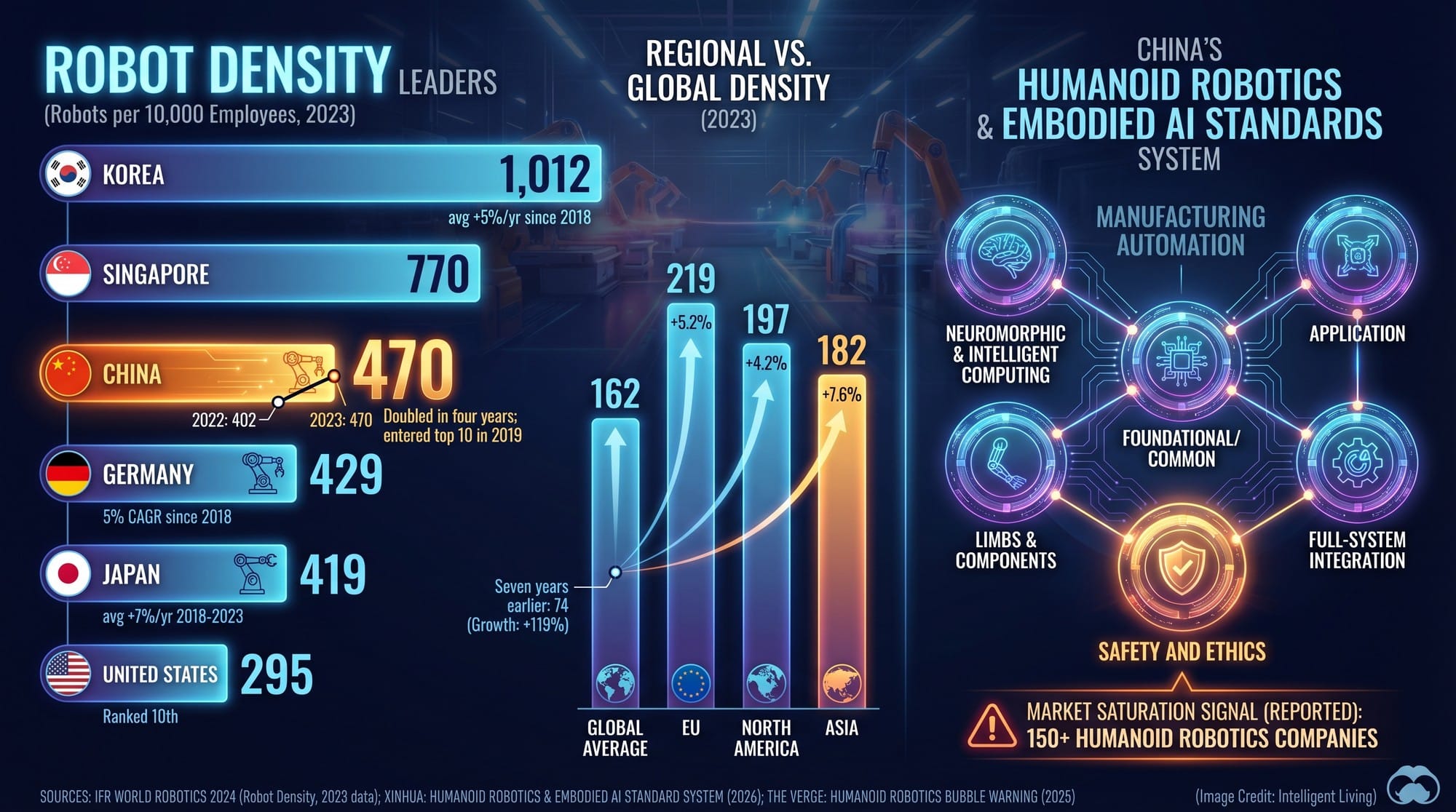
Limits, Hype, and the China Humanoid Robot Scale-Up
Distinguishing Hardware Platforms from Autonomous Workers
Owning a bipedal chassis differs significantly from managing a reliable autonomous worker in a live factory environment. The R1 can be a powerful platform for education, prototyping, and controlled demos, but it is not a plug-and-play household helper or a ready factory employee.
Affordable humanoids are essentially ongoing software projects. Long-term value comes from safe, repeatable programming, as seen in the framing of the R1 as an early-stage platform.
R1 hardware platforms function as evolving software projects where the real value comes from custom gait programming. Expectation gaps manifest quickly in real-world spaces. A school gym with slick flooring creates different friction coefficients than a laboratory, turning every minor wobble into a critical safety decision.
Industrial-grade deployments demand ‘always on’ design priorities that favor battery-swapping and low maintenance over raw mobility. Systems like the battery-swapping method that enables 24/7 humanoid duty cycles show how “always on” design requires infrastructure, service networks, and predictable maintenance.
The Bigger Trendline: China is Turning Humanoids into Infrastructure
The R1 story sits inside a larger acceleration cycle: standards, capital, and manufacturing scale are pushing humanoids from isolated demos toward repeatable pilots.
Implementing National Humanoid Robot Standard Systems
Industry standards are the essential, if overlooked, components that turn prototypes into things other people can buy, test, and compare. State media recently detailed a national standard system for humanoid robots and embodied AI. This framework explicitly incorporates safety and ethics throughout the product lifecycle, as noted in the national humanoid robot standard system summary.
Monitoring Global Robot Density and Automation Trends
Industrial pull constitutes a separate layer, where AI-powered manufacturing pilots are tied to economic pressures and competitive automation.
Adoption intensity is measurable, not mystical, and the global robot density trendline from the International Federation of Robotics makes comparison possible across regions. Metrics matter because humanoids eventually live inside the same operational world as industrial robots.
Industrializing Data Collection through Robot Schools
Training pipelines are also becoming a competitive advantage. The rise of robotic training schools shows why data collection, repetition, and standardized evaluation can move faster than one-off laboratory research.
Mitigating Hype in the Rapidly Evolving Robotics Market
Even with momentum, the market is susceptible to a robotics bubble. Fast iteration can also produce copycat models and rushed deployments.
Factory-level context helps keep that hype in check. The global automation density leaderboard provides a grounded way to think about where humanoids would actually fit if they become reliable enough to matter.
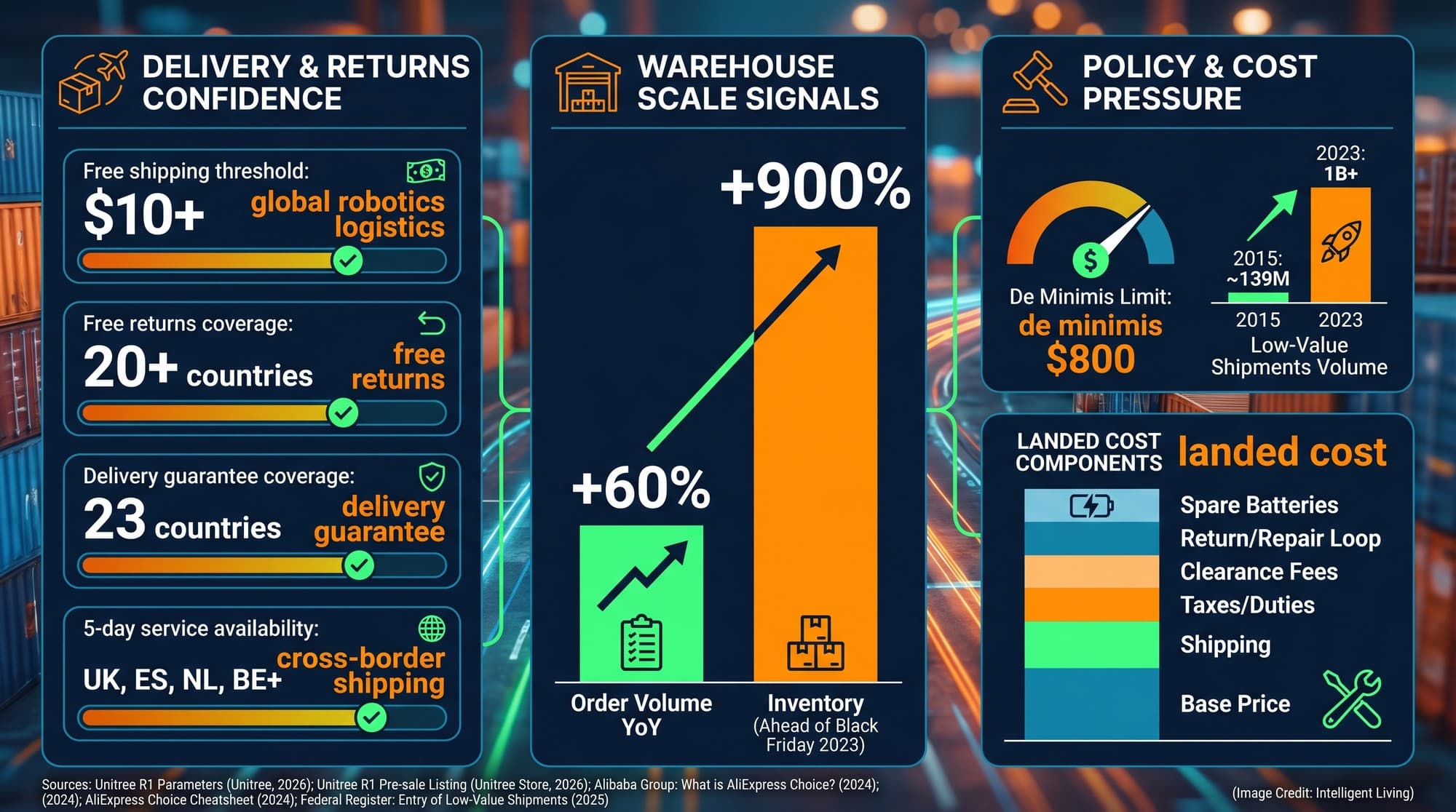
Key Indicators for the Future of Global Robotics Logistics
Future Milestones for the Unitree R1 Ecosystem
As the AliExpress robotics listing matures, several key signals will determine the R1’s long-term success in the international market:
- Global Logistics Timing: Establishing confirmed shipping dates and final localized pricing.
- Support Infrastructure: How Unitree manages cross-border repairs and warranty claims for complex joints.
- Software Cadence: Regular updates to the developer documentation hub that stabilize the interface for long-term projects.
- Landed Costs: The impact of VAT, import duties, and carrier fees on the sub-$5K price signal.
- Consumable Availability: Access to spare batteries and wear items to maintain device longevity.
Monitoring these factors is essential for any organization integrating the R1 into their development pipeline. These operational details will ultimately define whether the robot remains a novelty or becomes a staple of global embodied AI infrastructure.

Navigating the Global Humanoid Robot Price Floor
The emergence of an affordable bipedal platform like the R1 suggests a major psychological shift for the robotics community. High-end development bodies are no longer restricted to elite institutions, allowing smaller organizations to experiment, iterate, and even fail without risking six-figure investments. While the R1 isn’t a “plug-and-play” household helper, it serves as a critical bridge for those refining bipedal gait and balance research in controlled settings.
Deploying the Unitree R1 successfully requires moving beyond the hype of viral clips to address the messy, physical gap between simulation and reality. As the price floor drops, the focus moves from the hardware itself to the software and safety frameworks that make these machines useful. This checkout moment isn’t just about buying a body; it is about accelerating the learning curve for the next generation of engineers building the future of embodied AI.
FAQ: Unitree R1 and the AliExpress Robotics Listing
How much does the Unitree R1 cost on AliExpress?
The R1 AIR lists for $4,900, while the standard R1 model is approximately $5,900, creating a new price floor for humanoid development platforms.
Is the Unitree R1 a household robot?
The R1 is best classified as a compact humanoid development body for researchers and educators, rather than a finished consumer household product.
What is the battery life of the R1 humanoid?
Unitree specifies a runtime of roughly one hour, which is designed for focused testing and development sessions rather than continuous labor.
What do degrees of freedom (DOF) mean for robots?
DOF refers to the number of independently controlled joints; the R1 features 20–26 DOF to enable nuanced bipedal gait and motion.
Can I buy the Unitree R1 for a school lab?
Yes, the sub-$5K price point specifically targets STEM classrooms and university labs looking to test bipedal motion and human-robot interaction.


