
A well-conducted fatal car accident investigation can be the silent witness that strengthens your compensation claim significantly. You have a much higher chance of being awarded maximum compensation when the judge and jury see that the accident happened for no fault of yours.
Investigation is key to uncovering evidence that helps you prove this to them.
Moreover, a thorough investigation can identify critical factors such as mechanical failures, road conditions, and other parties’ potential negligence. This information can paint a clearer picture of the events leading up to the incident. Your legal team can craft a compelling narrative to support your case by leveraging expert testimonies and forensic evidence. In essence, a meticulous investigation is the cornerstone of establishing irrefutable proof that can sway the judge and jury in your favor.
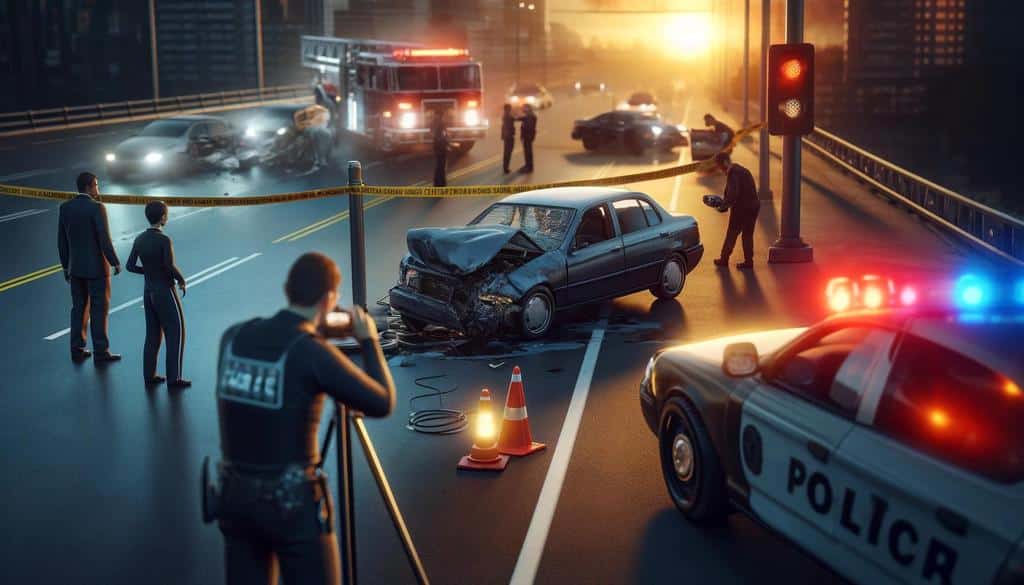
Why Investigations Need to Be Done
Here are the core reasons why investigations need to be done in a car accident case:
Identifying Fault
In an accident, there has to be a liable party who is responsible for shouldering, or perhaps a part of, the damages. A detailed investigation gathers evidence like witness statements, police reports, and accident scene analysis to pinpoint this at-fault party.
Establishing Fault
Who is responsible for the accident? Investigations gather evidence to pinpoint the at-fault party. This is crucial for holding them accountable and ensuring your compensation comes from the right source. According to the National Highway Traffic Safety Administration (NHTSA), human error is a contributing factor in over 57% of all car accidents.
Understanding Accident Dynamics
Investigations go beyond simply identifying fault. They delve into the “how” and “why” of the accident. Reconstruction specialists analyze factors like speed, weather conditions, and driver behavior to understand the sequence of events. This detailed picture helps build a strong case and justifies your claims for damages.

Who Conducts Car Accident Investigations?
You might encounter several parties involved in the investigation process. Here are a few of them:
Law Enforcement
Police officers typically arrive at the scene to secure the area, document the accident details, and interview witnesses. Their report is a key piece of initial evidence.
Insurance Companies
Both your insurance company and the at-fault driver’s insurance company will likely conduct their own investigations. These investigations assess the damage, determine liability, and ultimately influence the compensation offered.
Independent Investigators
You might consider hiring an independent accident reconstruction specialist in complex cases involving serious injuries or disputed liability claims. These experts offer a neutral perspective and utilize specialized techniques to analyze the accident scene and contributing factors.

What Evidence is Gathered During the Investigation?
The primary reason an investigation is conducted is to gather evidence to back or counter whatever claim is being made. Your lawyer gets evidence from law enforcement agencies and then uses them to conduct an investigation. The findings they get from this investigation are what they can use to prove to the court that you deserve to be granted full compensation.
Here are the most common types of evidence gathered in a car accident investigation:
Police Reports
The initial police report serves as a foundational document, detailing the accident scene, witness statements, and preliminary findings on the cause.
Witness Statements
Witnesses can provide crucial insights into what transpired before, during, and after the accident. Their statements can corroborate the cause and establish fault.
Accident Scene Photos
Detailed photographs of the accident scene, damage to vehicles, skid marks, and surrounding conditions offer a visual representation of the events.
Vehicle Damage Reports
These reports document the extent of damage to all vehicles involved, which can help determine the force of impact and support repair cost claims.
Traffic Camera Footage
If available, traffic camera footage from the accident location can provide invaluable visual evidence of the events leading up to the crash.
Black Box Data (Event Data Recorders)
Modern vehicles are equipped with event data recorders (EDRs), also known as black boxes. These devices can capture data on vehicle speed, braking, and steering inputs in the moments leading up to the accident.
While not always available or admissible in court, EDR data can be a powerful tool for accident reconstruction. And with this reconstruction, your lawyer can prove to the court that you, having played no part in causing the accident, deserve the full compensation that you’re asking for.

Accountability in Car Accident Claims
In the tapestry of car accident claims, the thread of meticulous investigation weaves substantial narratives that hold the negligent accountable. The significance of these investigations is unequivocal, forming the backbone of any compelling compensation claim. With each piece of evidence meticulously analyzed—from police reports to black box data—the truth emerges, bolstering your position in the eyes of the court. Ultimately, thorough investigations not only clarify the dynamics of each crash but also pave the way for rightful compensation, ensuring that justice is served.


