
Electric vehicle charging has long felt like a test of patience for many drivers. You pull into a public station during a road trip, glance at the battery percentage, and calculate how long the detour will take. Winter conditions complicate these estimates, as freezing temperatures deplete range and drag down charging speeds. These daily frustrations sit at the center of a major CATL EV battery breakthrough aimed at redefining how we move.
CATL’s recently unveiled high-efficiency battery roadmap introduces a long-range Qilin pack targeting roughly 1,000 kilometers, or about 621 miles, alongside an upgraded Shenxing lithium iron phosphate battery that recharges from 10% to 98% in a staggering 6 minutes and 27 seconds under ideal conditions. The same announcement also ties the Naxtra sodium-ion platform to late-2026 mass delivery.
The announcement does more than add impressive numbers to a spec sheet. CATL is pushing hard to solve range anxiety, improve winter performance, and expand your options beyond traditional lithium-ion batteries. For anyone who has hesitated over electric car charging time, these breakthroughs turn electric driving into a seamless part of a busy routine rather than a logistical hurdle.
Decoding the CATL EV Battery Technology Roadmap
Quick Facts About CATL’s New Battery Push
These announcements land at the intersection of three everyday EV worries: how long charging takes, how much range drops in cold weather, and whether battery materials stay affordable as demand grows. This guide maps the primary claims of the CATL rollout, detailing fast-charging LFP chemistry and long-range pack targets.
These technical details provide essential answers for questions like “How fast can CATL’s new battery charge?” and “Will sodium-ion batteries work better in winter?”
- CATL introduced an upgraded Shenxing battery that is reported to charge from 10% to 98% in under seven minutes under specific conditions.
- Automotive analysis of the Shenxing battery charging performance confirms that reaching a 98% charge in 6 minutes and 27 seconds relies on massive peak C-rates.
- CATL unveiled a new-generation Qilin battery targeting approximately 621 miles of range on a single charge.
- Mass delivery of CATL’s sodium-ion Naxtra battery platform is planned for the fourth quarter of 2026.
- CATL and Changan announced what they describe as the world’s first mass-production sodium-ion passenger vehicle, expected to reach the market in mid-2026.
- Independent research into sodium-ion battery winter performance highlights how salt-based chemistry maintains ion movement in deep cold, though real-world testing remains vital.
Manufacturers are finally narrowing the gap between refueling and recharging, ensuring your car stays dependable even in sub-zero winters.
While these numbers are impressive, your actual experience depends on the whole system working together. Here is what separates a viral breakthrough from the charging speed you actually feel:
- The peak power output of the charging station you use.
- Your battery’s internal temperature at the start of the session.
- The way the charging curve slows down as your pack nears full capacity.
Understanding these factors helps you plan your road trips more effectively.

What CATL Just Announced
The 2026 roadmap pairs next-generation cells with the Choco-Swap #26 architecture. This 800V system gives you two ways to get moving again:
- Supercharge your battery in a few minutes.
- Swap for a fresh pack in under two minutes.
Shenxing LFP Fast Charging Targets the Waiting Problem
LFP packs are famous for their stability and long-term durability, even if they historically offered less energy density than nickel-based alternatives.
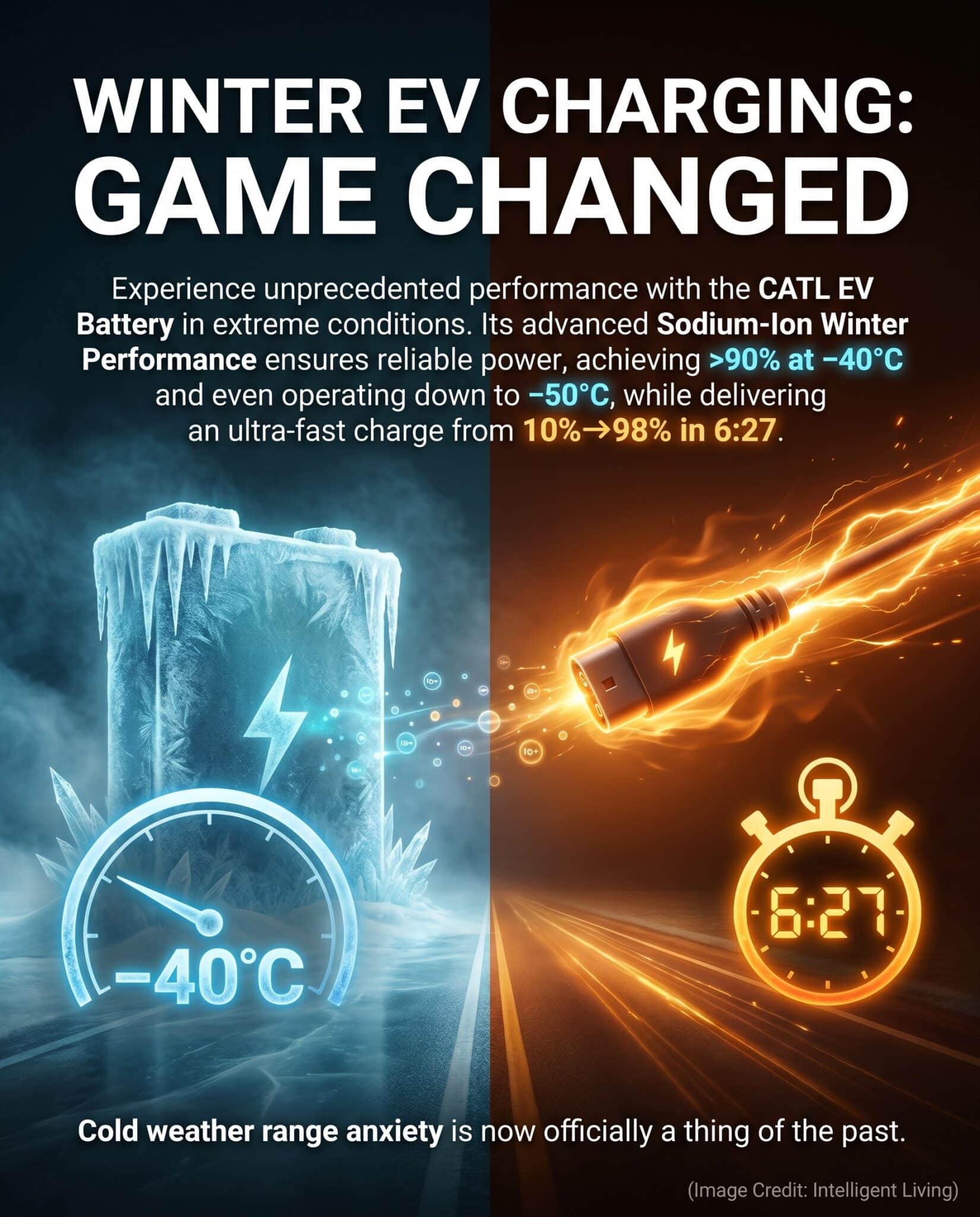
CATL’s third-generation Shenxing battery fixes the density problem by focusing on extreme speed. During controlled tests, the cells moved from a 10% to 80% charge in just 3 minutes and 44 seconds. Under the same conditions, reaching a near-full 98% charge took only 6 minutes and 27 seconds.
That kind of charging speed matters most when it fits real routines. A driver leaving work late, seeing a low battery, and choosing between a stressful detour or a quick stop is the moment ultra-fast charging is trying to fix.
Qilin Long-Range Packs Aim at Fewer Stops on Highway Days
Alongside Shenxing, CATL introduced a new-generation Qilin battery aimed at longer-range electric vehicles. A 621-mile range from a lightweight 625 kg pack makes your vehicle more efficient and easier to handle on the road.
Treat range claims as targets rather than guarantees. Real-world driving involves hills, speed, and freezing cabin heaters, all of which use power. Despite these variables, the shift toward longer ranges means you can enjoy the confidence of highway travel without constant planning.
Naxtra Sodium-Ion Targets Cold Weather and Material Resilience
The third pillar is CATL’s sodium-ion Naxtra battery. In CATL’s Naxtra sodium-ion passenger-car rollout, the company said it plans to begin mass delivery of sodium-ion batteries in late 2026, with a passenger vehicle developed in partnership with Changan expected to reach the market around mid-2026. CATL reports that its sodium-ion cells reach up to 175 watt-hours per kilogram and are designed to operate in extreme cold conditions.
Looking at these three pillars reveals a layered strategy rather than just a single headline. CATL is building an ecosystem that addresses speed, distance, climate, and cost all at once.

The Strategic Impact of Ultra-Fast Charging and Winter Range Reliability
Accelerating Adoption through 7-Minute EV Charging Speeds
Most people aren’t afraid of driving an electric car; they’re afraid of being stuck at a charger. That fear of the ‘long wait’ remains the single biggest hurdle to mass adoption.
Fast charging has been inching toward single-digit minutes for years, as the development of five-minute batteries continues to shape consumer expectations for next-generation technology. Electric vehicle charging time has consistently shaped consumer perception. Even drivers who rarely exceed 40 miles per day still picture the worst-case scenario: standing beside a charger while the clock ticks down.
The Psychological Shift of Near-Full Battery Replenishment
Recharging from empty to nearly full in seven minutes changes your daily psychology. It turns a charging stop into a brief coffee break rather than a major disruption to your schedule. A commuter pulling into a highway service plaza during a busy morning could imagine topping up in the time it takes to grab coffee rather than planning around a half-hour delay.
Critical Variables Influencing Real-World Charging Performance
However, these numbers always require real-world context. Charging speed depends on several variables, including the station’s power output, the vehicle’s battery management system, and thermal controls.
Why does your charging speed change? It’s helpful to think of a battery like a sponge. When it’s empty, it can soak up water (power) quickly. As it gets full, you have to slow down to make sure you don’t spill or damage the material. This is why:
- Your charging speed peaks between 10% and 50%.
- The system slows down as you reach 80% to protect the battery’s health.
- Extreme cold or heat forces the vehicle to manage temperature first, which can delay your stop.
A detailed analysis of Shenxing battery charging curves highlights why LFP chemistry supports more consistent power delivery compared to nickel-rich packs.
This context highlights why maintaining the health of high-voltage battery systems remains a priority, especially when managing the risks of lithium plating during winter fast-charging sessions.

Solving the Cold-Weather Puzzle with Climate-Resilient Chemistry
If you’ve ever watched your battery percentage drop rapidly during a sub-zero commute, you know the frustration. Freezing temperatures are the traditional enemy of EV range. Battery chemistry slows when temperatures drop, reducing effective range and sometimes limiting charging speed.
Why Do Traditional EV Batteries Lose Range in Freezing Temperatures?
Sodium-ion batteries offer a potential alternative. The Naxtra sodium-ion rollout timeline suggests that passenger vehicle deployment will begin by late 2026, offering an alternative to traditional lithium-based systems. How do these systems differ? While traditional packs rely on lithium ions moving between electrodes, sodium-ion batteries use abundant sodium as the primary charge carrier.
One reason researchers pay attention to sodium is that its ions can move more freely in cold-thickened electrolyte, potentially reducing winter range loss and improving low-temperature charging behavior. In practical terms, that can mean fewer surprises on a subfreezing morning when an EV is expected to handle school drop-off, errands, and the drive home without a midday scramble. That chemistry is also proving capable of extreme charging speeds: one 2026 sodium metal cell design reached a full charge in about four minutes, a result we break down in our guide to sodium battery fast charging.
Engineering Resilience through Sodium-Ion Charge Carriers
The transition toward salt-based power follows several milestones, including the commercial release of salt-based batteries aimed at improving temperature resilience. This is evidenced by the partnership on solid-state and sodium-ion research between Chery and CATL to tackle safety and cost concerns.
This chemistry is built for the cold, retaining up to 90% of its usable capacity even at temperatures as low as -40°C. This ensures more predictable winter driving. Whether you are a delivery driver navigating icy city streets or a family leaving a frozen parking lot, you can expect fewer range surprises compared to traditional lithium-ion technology.
The first mass-produced sodium-ion passenger vehicle targets a pure-electric range exceeding 400 kilometers. As the supply chain matures, CATL expects these figures to reach 500 to 600 kilometers for pure-electric models. Range targets still need testing on actual roads, but CATL is clearly building batteries that can handle harsh, freezing climates.
The Real Bottleneck: Charging Infrastructure and Chemistry Trade-Offs
The Catch is the Charger
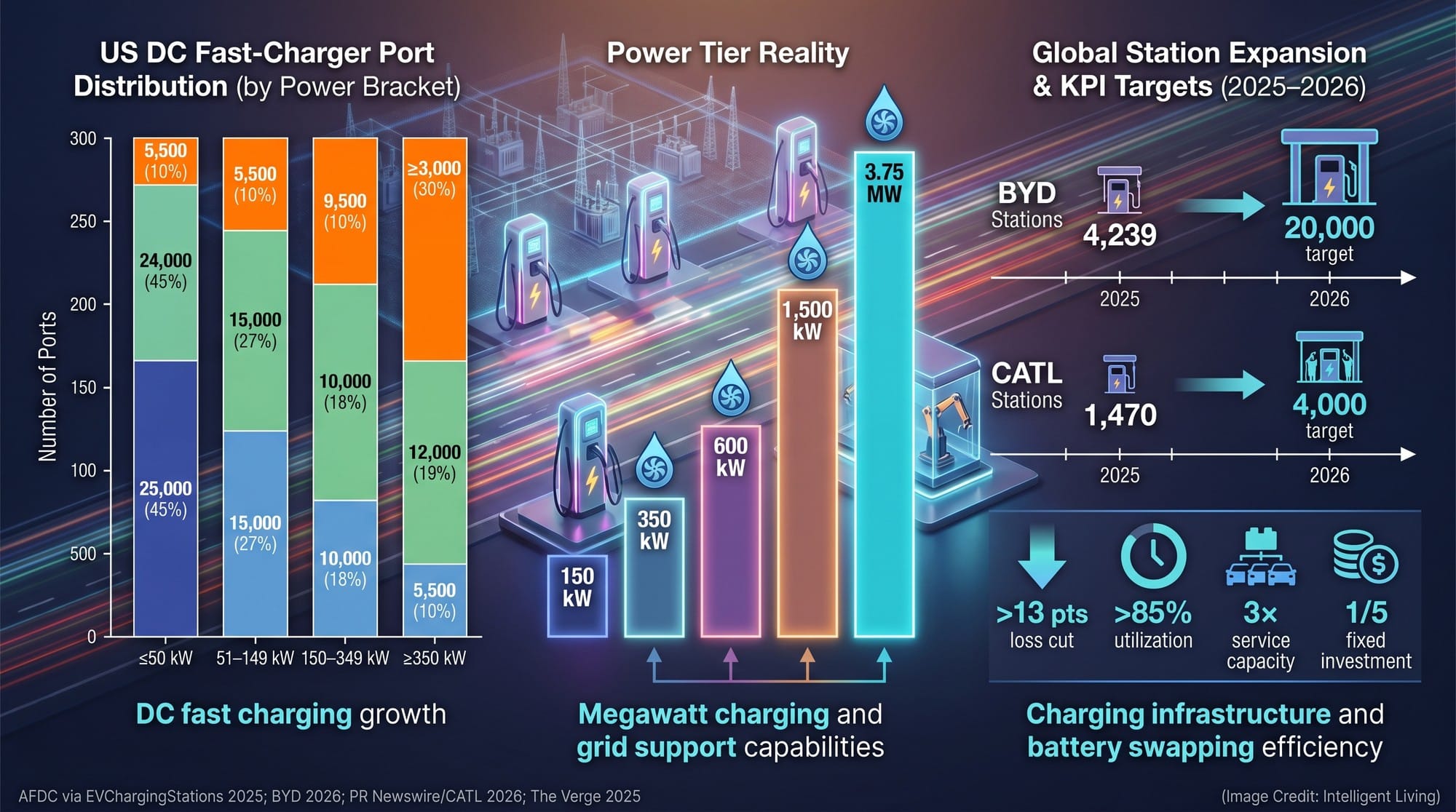
A seven-minute battery is only half the battle. To actually feel that speed, you need a charging network that can deliver the power. Public charging infrastructure must supply extremely high power levels safely and consistently, and that requires more than a bigger number on a charger screen.
Megawatt-Class Charging Is Not Everywhere
Ultra-fast charging requires more than just a capable battery. It demands sustained power delivery and advanced heat removal to avoid stressing the pack.
In many regions, however, the infrastructure is still catching up. Today’s public fast chargers often operate at lower peak power or share loads between stalls. This means a busy station might feel slower even if your vehicle is equipped with the latest CATL breakthrough.
Why Stations Need Cooling, Storage, and Grid Support
Ultra-fast charging also concentrates demand into short bursts, which is why integrating battery swapping with renewable energy can help stabilize the local power grid by shifting the charging load to off-peak hours.
Competition is also driving innovation, with BYD recently demonstrating high-speed flash-charging systems that rival CATL’s performance under specific testing conditions. The simple reality is that batteries are getting faster, and charging networks are being pushed to evolve in parallel.

Why Sodium-Ion Is Not a Lithium Killer Yet
It is tempting to frame sodium-ion batteries as a complete replacement for lithium-ion technology. That narrative oversimplifies the current state of the industry.
Balancing Energy Density with Material Sustainability
The excitement surrounding sodium stems from its abundance and global distribution. The global push for sodium becomes even more critical as the long-term supply of lithium remains a moving target shaped by mining timelines and geopolitics.
Despite these benefits, trade-offs remain. Sodium-ion batteries typically offer lower energy density than nickel-based lithium chemistries. Lower energy density affects vehicle weight and overall range, meaning the technology must be carefully matched to the right application.
Manufacturing Scale and the Roadmap to Market Maturity
Manufacturing at scale takes time, and current data shows that sodium-ion production capacity still lags significantly behind established lithium technologies.
Sodium-ion technology is a complement to lithium-ion, not a total replacement. It is ideal for entry-level vehicles, stationary storage, and drivers in freezing climates where energy density is less critical than reliability. Meanwhile, lithium-based chemistries may continue to dominate long-range or high-performance segments. For a comprehensive look at the chemistry, the cell-by-cell comparison with lithium-ion, and the biggest 2026 breakthroughs, see our sodium-ion battery technology guide.
For drivers, the distinction matters. The future of electric vehicle battery technology is likely to involve multiple chemistries optimized for different priorities rather than a single universal solution.

What CATL’s Battery Push Could Mean for Everyday Drivers
Seven Ways CATL’s Battery Push Could Affect Drivers
The fastest way to understand this news is to translate it into ordinary choices. Is the next EV purchase easier to live with, easier to charge on a trip, and less stressful in winter? Those questions are the real SEO and voice-search heart of the story because they match how people actually look for EV battery answers.
Even small improvements add up. A shorter charging stop can change a family trip, and a more stable winter range can change whether an EV feels dependable for workday schedules.
- Shorter Charging Stops: If compatible high-power chargers become widespread, ultra-fast charging could reduce highway stop times dramatically. Innovations in software-controlled pulse charging ensure these speeds don’t compromise long-term battery health.
- More Confidence in Winter: Sodium-ion batteries may help stabilize range in freezing temperatures, easing cold-weather anxiety.
- Expanded EV Choices: Automakers may tailor battery chemistry to different vehicle types, from city cars to long-distance crossovers.
- Pressure on Charging Networks: Public infrastructure will face increased demand for higher power output and smarter grid integration.
- Greater Supply Chain Flexibility: Sodium’s abundance could reduce exposure to lithium price volatility in certain segments.
- Intensified Industry Competition: Rival manufacturers will likely accelerate their own battery innovation timelines.
- Broader Energy Impact: As battery technology improves, applications extend beyond cars to grid storage, data centers, and emerging electric mobility systems.
How does this affect your next car purchase? It’s best to see these changes as practical upgrades to your daily life. Depending on where you live, you might feel the impact through better charging stations first or through a more affordable winter-ready vehicle.

Mapping the Evolution of the Global Electric Vehicle Market
CATL’s latest battery announcements suggest that the next phase of electric vehicle development will focus on removing practical barriers rather than simply increasing theoretical range. Fast charging addresses time. Sodium-ion chemistry addresses cold weather and material supply concerns. Extended-range Qilin batteries address long-distance travel expectations.
Transitioning toward Application-Specific Battery Solutions
The industry is no longer trying to prove that electric cars work. Instead, it is focusing on providing the right tool for the job—whether that’s a long-range cruiser for road trips or a winter-ready commuter for snowy climates.
Advancements in the progress of solid-state batteries mirror this trend, as the industry chases various trade-offs for safety and performance. CATL’s next step is a sulfide-based solid-state battery targeting 500 Wh/kg and a 2027 pilot line.
The conversation is no longer about whether electric cars can compete with gasoline. Instead, the focus is shifting toward how different battery chemistries solve specific everyday challenges. The move toward specialized chemistry signals a maturing market.
The Transition of Battery Technology into Strategic Infrastructure
Solving the bottlenecks of speed, cost, and climate allows CATL to turn the EV into a resilient, everyday default rather than just a high-tech alternative.
Batteries are also becoming bigger than cars. As batteries spread into power systems and data centers, managing strategic supply chain risks becomes essential for ensuring energy security.
As battery makers, automakers, and charging providers align around speed, resilience, and infrastructure, electric mobility may feel less like a compromise and more like a natural default. The technology is no longer chasing novelty; it is chasing normalcy.

CATL EV Battery Breakthrough Signals a New Era for Fast-Charging Electric Vehicles
The unveiling of a 621-mile range platform alongside near-seven-minute charging reflects a shift toward high-speed EV adoption that could redefine the global market. While real-world testing and infrastructure readiness remain critical, the direction is unmistakable. CATL is moving beyond experimental promises to offer a multi-chemistry strategy that addresses speed, distance, and climate resilience simultaneously. This approach ensures that whether you are navigating a sub-zero commute or a cross-country highway, there is a battery optimized for your specific journey.
As these technologies transition from tech-day demonstrations to mass production, electric mobility will feel less like a series of compromises. The integration of sodium-ion winter resilience and high-density Qilin packs signals a market that has finally matured. If you’re thinking about switching to an electric car, the question is no longer whether it can keep up with your life. Instead, you can focus on picking the battery tech that best fits your home, your commute, and your environment.
Frequently Asked Questions About CATL’s New EV Battery Technology
1. How fast can CATL’s new battery charge in the real world?
CATL’s third-generation Shenxing LFP battery is designed to charge from 10% to 98% in roughly 6 minutes and 27 seconds. While these results were achieved in controlled demonstrations, real-world speeds will depend on the availability of high-power charging infrastructure and vehicle thermal management.
2. Does the 621-mile EV range hold up in winter?
The 621-mile (1,000 km) range is the target for the high-density Qilin pack under specific testing standards. While all batteries experience some range loss in freezing weather, CATL is pairing this with Naxtra sodium-ion technology specifically engineered to maintain higher capacity and faster charging in extreme cold.
3. What makes sodium-ion batteries better for cold weather?
Sodium ions move more freely through electrolytes in low temperatures compared to lithium ions. This allows sodium-ion batteries to operate effectively at temperatures as low as minus 50 degrees Celsius, significantly reducing the ‘range anxiety’ typically associated with winter EV driving.
4. When will the Naxtra sodium-ion battery be available?
CATL plans to begin mass delivery of the Naxtra sodium-ion platform in the fourth quarter of 2026. A passenger vehicle developed with Changan is expected to reach the market as early as mid-2026, offering a more affordable and climate-resilient alternative to traditional lithium-ion models.
5. Will ultra-fast charging damage my EV battery life?
CATL’s Shenxing battery is designed for extreme speed. Previous research into high-performance electrode design demonstrates why managing internal resistance is the primary hurdle for ultra-fast charging. Their internal tests suggest that the Shenxing battery can maintain over 90% capacity even after 1,000 full charging cycles, ensuring long-term durability despite the high charging speeds.


