
American households in 2025 are redefining interaction within their living spaces. No longer defined solely by voice commands or remote controls, the modern smart home is evolving into a proactive partner that anticipates needs before they are spoken.
Ambient intelligence drives this transformation, turning static rooms into context-aware environments. By seamlessly integrating sensors and AI, these systems learn from daily routines to enhance comfort and efficiency without requiring constant user input.

Defining Ambient Intelligence: Beyond Simple Automation
Ambient intelligence transforms physical spaces into dynamic environments that actively sense and respond to human activity.
While legacy smart automation demands user commands, ambient intelligence functions autonomously in the background. Integrated sensors, AI-driven analytics, and context-aware systems actively adapt the environment to human behavior.
Navigating Privacy and Cybersecurity Risks
Ambient intelligence delivers significant value, streamlining daily life and enhancing home comfort. However, there are growing concerns surrounding data privacy and cybersecurity.
With recent research exposing alarming vulnerabilities in Internet of Things (IoT) devices, prioritizing security through encryption, secure networks, and tools like a VPN for iPhone is essential for protecting mobile access. Proactive management of these concerns allows homeowners to safely leverage these technologies while mitigating serious cyber risks.
Smart Home Adoption Trends in 2025
Smart home technology saturated US markets rapidly over the last few years. In 2025, as many as 63% of US households have at least one smart home device, reflecting mainstream adoption. Mainstream adoption creates a solid foundation for ambient intelligence to expand as awareness increases and technology improves.
Maximizing Comfort and Efficiency Through Adaptive Tech
Ambient intelligence can improve life at home in many ways. This technology defines modern living, aligning capabilities with the universal goal of optimizing energy usage and reducing bills. Efficiency-focused features currently dominate home design trends. Ambient intelligence enhances these capabilities by:
- Creating a more comfortable environment through adaptive climate control.
- Making automated adjustments based on real-time usage data.
- Reducing utility costs by eliminating energy waste.
Growing consumer interest in reducing environmental impact and lowering utility costs positions ambient technology for widespread integration.
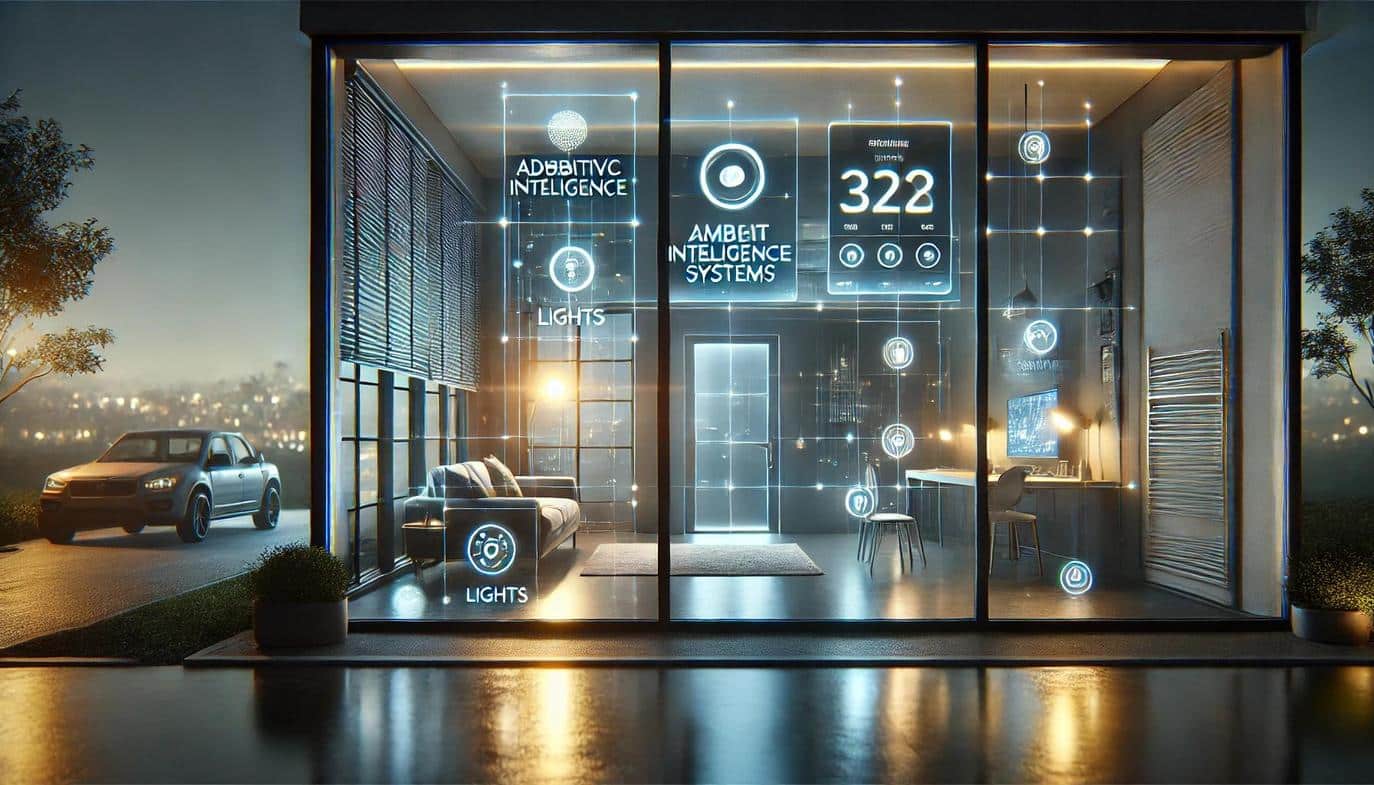
The Future of Adaptive Living: Proactive Environments
Smart environments transcend remote control, creating spaces that intuitively support their inhabitants. Homeowners leveraging ambient intelligence enjoy convenience and sustainability previously considered impossible, simultaneously reducing their environmental footprint.
Deep integration of these systems in daily life increases the necessity for robust security. Prioritizing robust cybersecurity measures ensures that the benefits of a truly intelligent home—comfort, efficiency, and peace of mind—remain the focus of this technological evolution.
Common Questions About Ambient Intelligence
How does ambient intelligence differ from traditional smart homes?
Traditional smart homes rely on direct commands from users, such as tapping a phone or speaking to a voice assistant. Ambient intelligence, conversely, operates proactively by using sensors and data to adjust lighting, temperature, and security automatically based on context and behavior.
Can context-aware environments truly reduce energy bills?
Yes, by learning your schedule and preferences, these systems eliminate waste. For example, they can adjust the thermostat when a room is empty or lower blinds during the hottest part of the day, ensuring energy is used only when necessary.
Is privacy at risk with always-on sensors?
Privacy remains a critical consideration for any connected technology. While ambient systems rely on data to function, risks can be mitigated by using encrypted networks, secure passwords, and reputable devices that prioritize user data protection.
What are the essential devices for an ambient smart home?
Essential components of an ambient setup include motion sensors, smart thermostats, adaptive lighting systems, and a central AI hub that processes data to coordinate these devices seamlessly.
Will this technology work in homes that are older?
Most modern ambient intelligence devices can easily be added to older homes, so they can enjoy the same smart features as new ones.


