
Yes, greener roads can make motorcycle commuting safer when environmental improvements also address road hazards. Effective drainage, well-maintained pavement, and carefully placed vegetation can improve road conditions while preserving visibility. However, adding greenery alone does not guarantee safer journeys for motorcyclists.
For daily commuters, road conditions matter as much as a route’s appearance. Slippery road markings, standing water, uneven surfaces, and obstructed views around bends can increase the risk of losing control, especially during bad weather. Sustainable road design must consider these challenges to protect riders.
Following motorcycle safety tips can help commuters respond to changing conditions, but riders cannot control every hazard they encounter. Combining responsible riding practices with eco-friendly road design and regular maintenance can help create safer commuting routes while supporting environmental goals.
The upgrades that help most are the ones that remove hazards without adding new ones.
Better Drainage
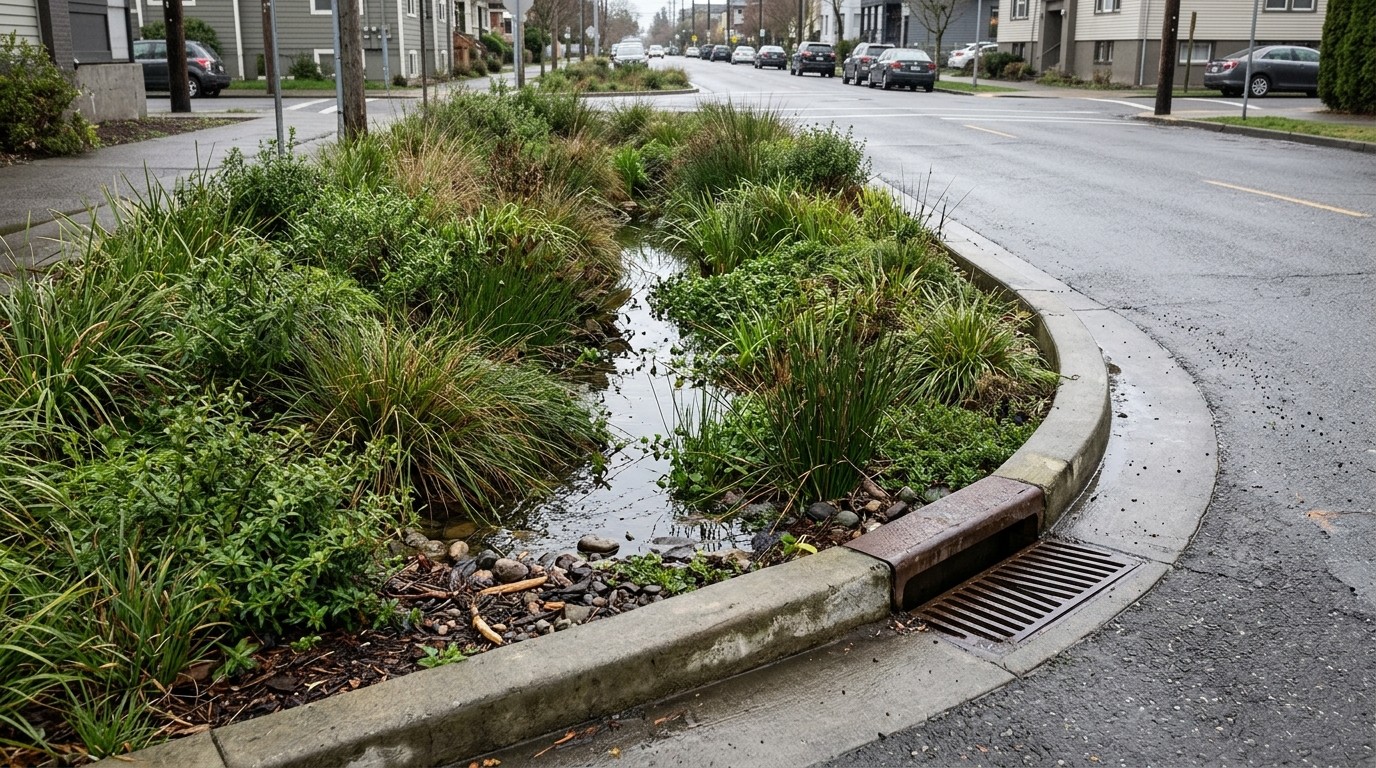
Standing water is a good example. A wet patch can cut traction right when you’re braking, turning, or changing lanes.
The Federal Highway Administration’s guidance on roadway drainage points out that water ponding in wheel ruts is especially dangerous for motorcycles and bicycles and that ponding at intersections can be a problem because vehicles may need more distance to stop.
It also notes that storm drains clogged with leaves can cause ponding during and after storms.
Rain gardens and planted drainage areas can take real pressure off a stormwater system, but only if they steer water away from the riding surface. If runoff ends up pooling near a junction or along the road’s edge, the green feature has become a hazard.
Careful Placement of Roadside Trees
Trees give shade, absorb carbon, and make an urban street nicer to be on. The trouble starts when they’re planted where they block the view at a junction, hide a sign, or drop branches and debris onto the road.
Roots can also lift and crack pavement over the years. So planners need to think about where each tree goes, how much root space it needs, and whether a rider can still see oncoming traffic clearly.
Use of Sustainable Road Materials
Recycled materials and lower-carbon paving can reduce the environmental cost of building a road. But “eco-friendly” isn’t the same as “safe on a motorcycle.” Surface texture, drainage, durability, and skid resistance all still count.
Road markings need a look too. Some painted or raised surfaces turn slippery when wet, especially when a rider is leaning through a turn.
The Federal Highway Administration’s motorcyclist safety resources cover engineering issues that affect riders, including pavement design, road geometry, and maintenance.
How Can Cities Make Greener Roads Safer for Motorcyclists?
The hard part is balancing environmental goals against the needs of the people who use the road every single day.
A well-designed street might include the following features.
- Roads should drain properly so rain doesn’t sit in the middle of a lane or leave riders trying to steer through puddles.
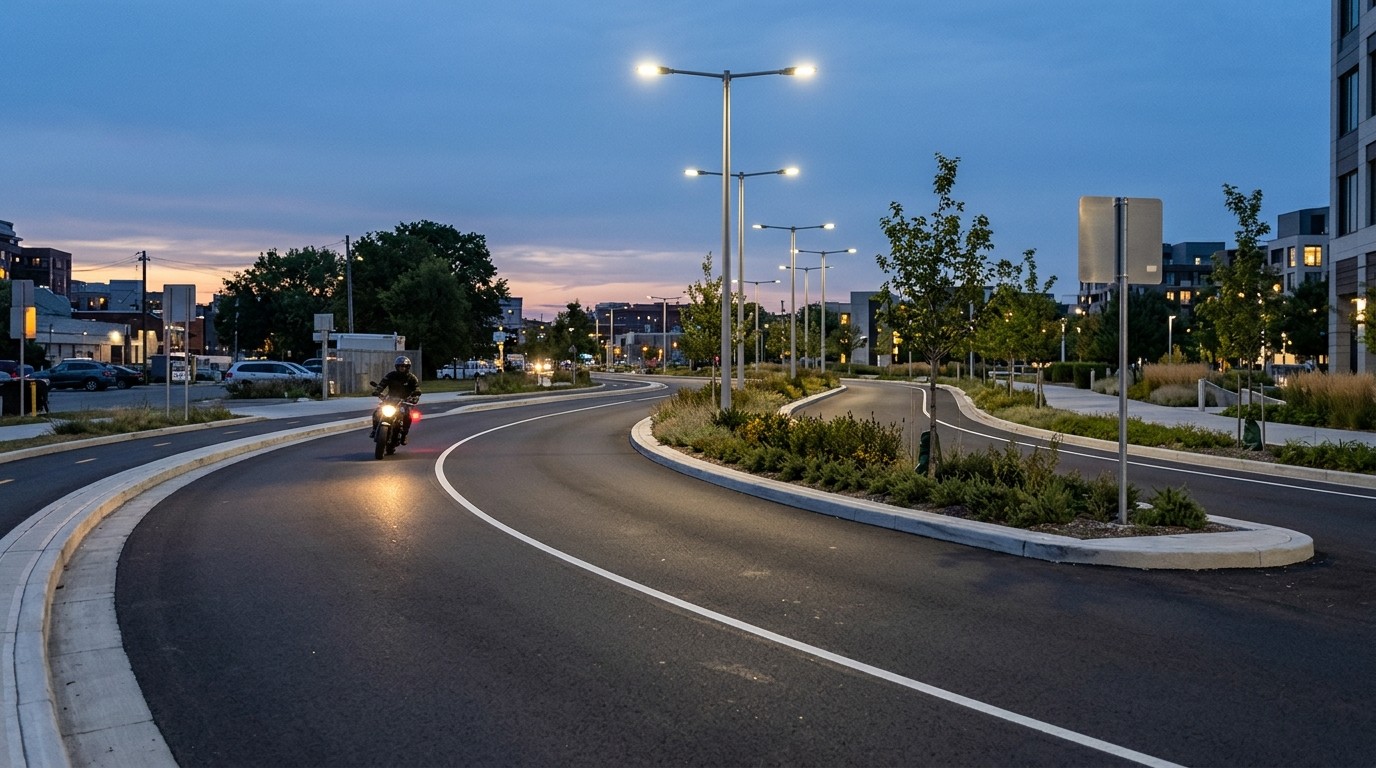
- Curves should be easy to see coming, and the road markings should still be visible when it’s dark.
- Trees and plants along the roadside are fine, but they shouldn’t block a rider’s view or leave them with nowhere to go if something goes wrong.
- Potholes, loose stones, and broken road edges can catch a rider off guard. Fixing them early can save someone a nasty fall.
- Riders need to see what’s ahead of them. Decent street lighting and signs that aren’t hidden or hard to read can help with that.
These improvements work best when motorcycle safety is part of the plan from the start, not something bolted on after the road is built.
Quick Takeaways
- Greener roads can be a good thing for riders, as long as safety isn’t overlooked in the process.
- Puddles can be a real problem on a motorcycle, especially when you need to brake or take a corner.
- Trees and plants along the road need a bit of thought. If they block a rider’s view or push roots through the pavement, they can cause problems.
- Using greener materials is great, but the road still needs to give tires enough grip and cope with rain, heat, and everyday traffic.
- Faded road markings, sharp bends, and potholes can make a regular commute harder than it needs to be.

