
When old water pipes fail, they cause hidden leaks, water damage, and costly structural repairs throughout your home. Fixing these issues early prevents major property damage and keeps your family safe. Before a pipe suddenly bursts, look out for the early warning signs that your plumbing is wearing out.
Neglecting these early warning signs can quickly lead to ruined walls, warped floors, and expensive emergency plumbing bills. Recognizing the signs of internal pipe decay allows you to choose whole-home repiping early and prevent a minor leak from turning into a disaster.
To protect your living space from costly water damage, it helps to understand how regional environmental factors, local soil conditions, and physical wear affect your home plumbing infrastructure.
Regional Climate, Soil Types, and Real Plumbing Challenges
How quickly your home infrastructure breaks down depends on your local environment. Every region has different obstacles that can wear down buried pipes:
- Coastal Areas: Saltwater intrusion caused by rising sea levels becomes a problem in coastal areas such as Miami. Salt accelerates corrosion and eats away at copper and steel pipes far more quickly than ordinary water would.
- Dry and Clay-Heavy Soils: In rapidly developing regions such as Phoenix or Houston, prolonged dry spells cause clay-filled soils to contract and form deep fissures as well as move away from foundations. During intense rainfall, these soils expand, causing mechanical stress on underground pipes.
- Below-Freezing Climates (The Frost Belt): Severe temperature variations between winter and summer cause soils in the northern part of the country to freeze and thaw in cycles, causing buried service lines to break under compression and expansion of the ground.

The 8 Warning Signs Your Home Needs Whole Home Repiping
Delaying repair of major pipe leaks causes significant structural damage and expensive emergency charges. Be aware of these eight definite signs that your home may need a complete repipe:
- Discolored, Rusty Water: If you notice a rusty, yellowish, or reddish-brown color in your tap water after the tap has been left unused overnight, your galvanized steel or iron pipes are rusting from within.
- Frequent Low Water Pressure: Mineral deposits and internal corrosion inside old supply pipes restrict the steady flow of water to your bathrooms and kitchen.
- Sudden Increase in Water Utility Bills: When you experience an unexpected increase in your monthly bills without changing your daily water consumption habits, there is likely a slow hidden leak somewhere in your house.
- Low-Frequency Vibration in Pipes: If you hear banging sounds or pipe vibrations when closing the taps, your pipes may be loose, worn, or under excessive pressure and may need supports or a pressure regulator.
- Musty Smell or Mold Patches: Persistent damp spots, buckled baseboards, or unexplained mold growth on drywall indicate a small leak is damaging your house structure. Learning the smart steps to take when pipes burst can help you limit damage while you arrange repairs.
- Corrosion on Pipe Joints: Seeing green stains on copper pipes or rust flaking on exposed basement pipes suggests that hidden pipes inside the walls are corroding in the same way.
- Recurring Pinhole Leaks: If you keep patching leaks, only for new ones to form within weeks, it is a sign that all your pipe walls have become equally thin and are nearing the need for replacement.
- Your Home Is Over 40 Years Old: If your house was built with galvanized steel, polybutylene, or aging copper plumbing, those materials are likely at or past the end of their expected service life.
Modern Solutions for Long-Term Property Protection
Protecting your home from aging infrastructure requires more than quick patches. Consider these modern upgrades:
- Professional Pressure and Camera Checks: Have a certified plumber test your incoming water pressure to ensure it stays at or below 80 PSI, as required by most U.S. plumbing codes, and run a camera through your main lines to spot rust and blockages early.
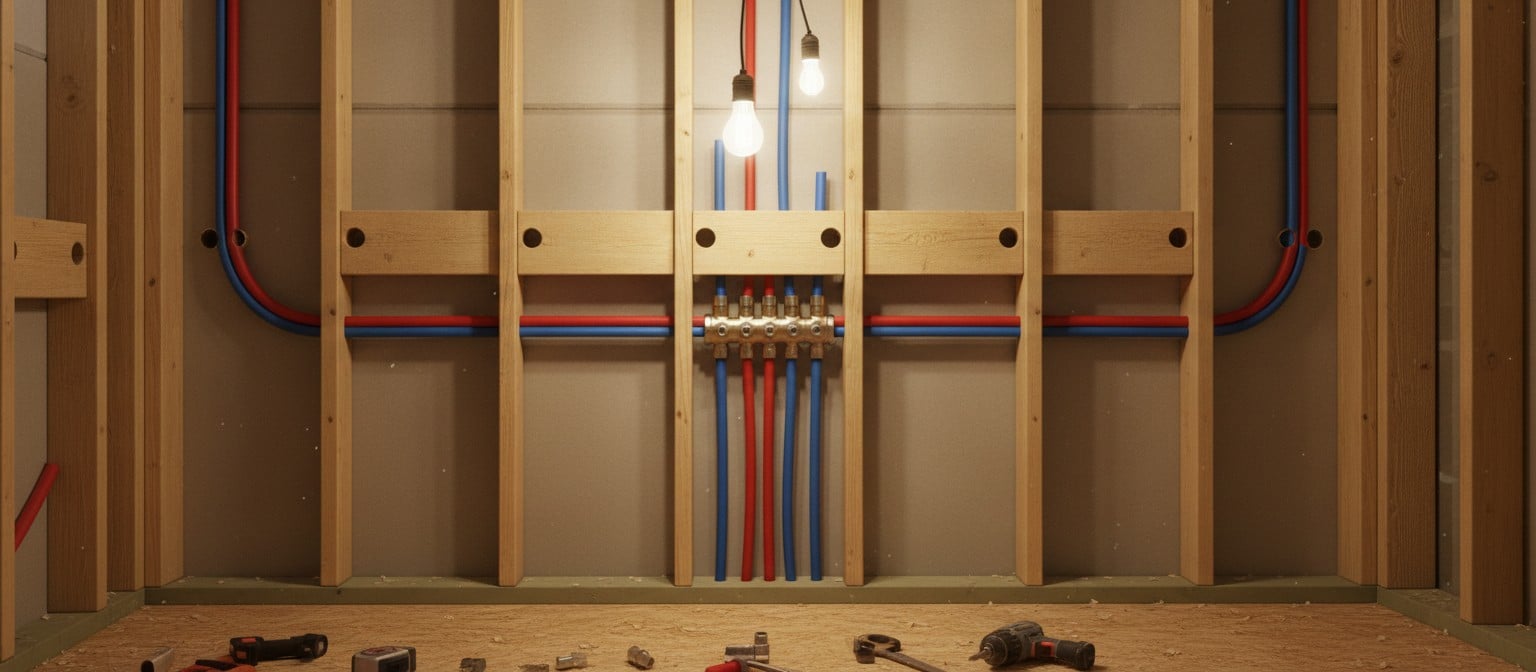
- Upgrading to PEX Tubing: Replace old metal pipes with flexible, corrosion-resistant cross-linked polyethylene (PEX) tubing to secure a durable, long-lasting water supply.
- Protecting Custom Finishes: Hire plumbing professionals who specialize in finished homes to route new lines carefully through walls and utility chases without damaging custom tile, hardwood floors, or architectural details.
- Adding Smart Leak-Detection Shutoff Valves: Install a sensor on your main water line that tracks water use around the clock. If it detects a hidden leak or a pipe break, it shuts off the water automatically and sends an alert straight to your phone.
- Installing Whole-Home Water Filters: Put a filter and water softener where the water line enters your house. This traps sand, sediment, and heavy minerals before they flow through your indoor pipes, reducing internal buildup and protecting your faucets and appliances.
Conclusion
Protecting your home from aging plumbing means looking past quick patch jobs. By checking your water pressure, inspecting your hidden pipes, and upgrading to durable materials like PEX tubing, you can prevent costly leaks. Taking these steps today keeps your home safe and protects its value for years to come.


