
Do you ever look up at the night sky and find yourself in awe of its splendor? Have you ever wondered what secrets lie among the planets, moons, asteroids, and other celestial bodies that make up our solar system? Join us as we take a journey deep into space to explore our understanding of this fascinating phenomenon. From planetary orbits and gravity to life beyond Earth – get ready to unlock the mysteries behind one of humanity’s most remarkable accomplishments: an intimate comprehension of our own celestial neighborhood!
Exploring the Planets
The universe is a vast and wondrous place, and exploring its many planets is a fascinating endeavor. The eight planets in our solar system each hold unique characteristics that make them distinct from one another. Mercury, the smallest planet, boasts the shortest year; Venus, the hottest planet, is shrouded in thick clouds. Our very own Earth is the only known planet to support life, while Mars, the “Red Planet,” may have once held ancient microbial life. Giant Jupiter has the most moons of any planet, while ringed Saturn is the second-largest planet. Ice giant planets Uranus and Neptune have a bluish tinge due to their icy compositions. These planets, each with its own set of interesting features, make for a fascinating subject of study for scientists and everyday space enthusiasts alike.
Solar Eclipse
When the moon aligns between the sun and the Earth, temporarily blocking the sun’s light, that’s a solar eclipse. A solar eclipse is a captivating astronomical event. This celestial phenomenon can be categorized into three types: total, partial, and annular. During a total solar eclipse, the moon covers the entire disk of the sun, casting a shadow upon some regions of the Earth and briefly transforming day into night. A partial solar eclipse occurs when the moon, sun, and Earth are not perfectly aligned, and only a portion of the sun is obscured. An annular eclipse, often referred to as a “ring of fire,” happens when the moon is at its farthest from the Earth and does not cover the sun completely, leaving a bright outer ring visible. Witnessing a solar eclipse is a truly unique and awe-inspiring experience, reminding us of the vastness and wonder of our solar system.
Unveiling Asteroids
Asteroids have captured the fascination of astronomers and scientists as they provide insights into the formation of our solar system. These rocky bodies are remnants from the creation of our planetary system and have been orbiting the sun for billions of years. They are small, rocky, irregularly shaped objects ranging from just a few meters to hundreds of kilometers across. Interestingly, asteroids are not just present in our solar system but have been discovered in other parts of the galaxy. As we continue to explore the vastness of the universe, the study of asteroids will undoubtedly continue to play a crucial role in our understanding of their evolution.
Understanding Comets
Comets have been captivating humans for centuries. In ancient times, they were often viewed as omens of impending doom or messages from the heavens. As our understanding of astronomy and the solar system has grown, so has our knowledge of comets. These icy bodies are composed of rock, dust, and frozen gases and are believed to originate from the Kuiper Belt, a region beyond Neptune’s orbit. By studying comets, we can learn more about the early history of our solar system, including the materials that formed it and the conditions under which the planets were created. Comets can also provide valuable insights into the processes that drive celestial objects, such as the formation of craters and the composition of the solar wind. As our knowledge of comets continues to expand, we will undoubtedly gain an even greater understanding of the universe that surrounds us.
Appreciating Meteors
As you gaze up at the night sky, you may catch a glimpse of a shooting star or meteor. But did you know that not all meteors are the same? There are various types, each originating from different sources. For example, meteoroids come from asteroids or comets, and they become meteors when they pass through the Earth’s atmosphere. There are also fireballs, which are brighter and larger than regular meteors. While most meteors burn up in the atmosphere, some manage to land on Earth and are then called meteorites. While it may seem like meteors are rare occurrences, they actually pass through the atmosphere quite frequently – in fact, hundreds of tons of cosmic debris enter Earth’s atmosphere every day! It’s truly amazing to think about the incredible phenomena happening in the sky above us.
Discovering Exoplanets
The universe has always captivated humans, and the search for exoplanets has been no exception. In recent years, astronomers across the globe have been investing heavily in detecting planets outside of our solar system. Dubbed exoplanets, these planets orbit stars beyond our sun. The search for these planets uses a variety of methods, including analyzing the light from stars to detect any telltale dimming or wobbling. The discovery of exoplanets has deepened our understanding of the universe and raised the possibility of finding life beyond Earth. With new techniques and telescopes constantly being developed, the search for exoplanets is a field of scientific discovery that continues to fascinate and astound.
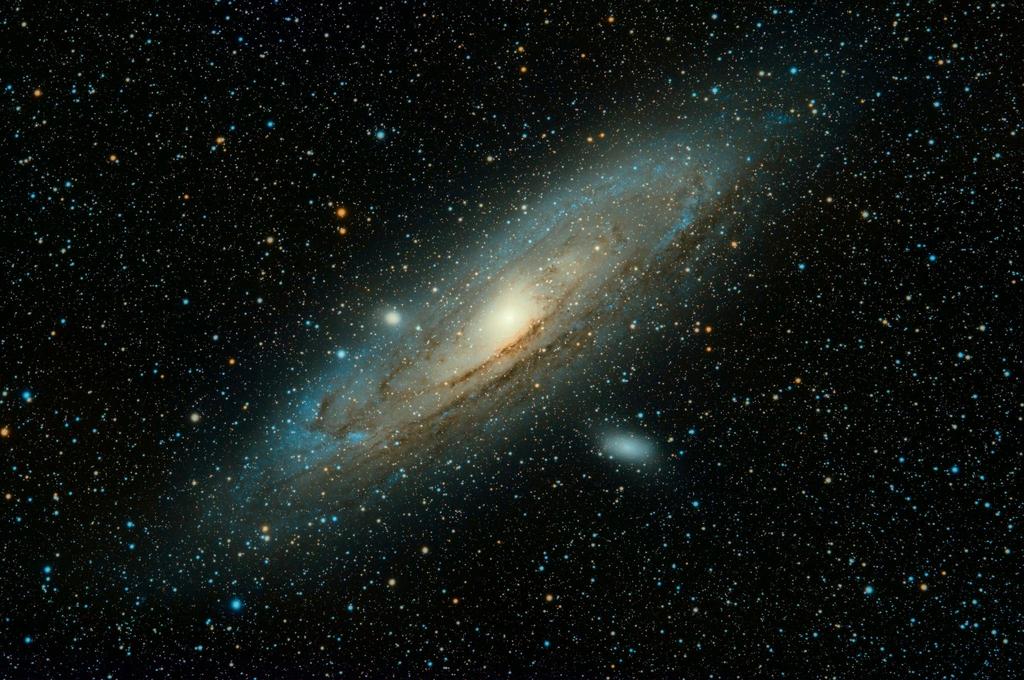
The grandeur of the solar system is nothing short of inspiring. Taking a closer look at each planet and the celestial bodies associated with them brings to light how seemingly small details can have a major impact on our universe. It only stands to reason that there is more out there for us to discover. We may never know the true size of our solar system, but what we do know is that there’s much to explore and appreciate beyond it. Take this journey of discovery with us, and be sure to share your newfound cosmic knowledge with loved ones! Who knows – you may make history by uncovering an exoplanet or, better yet, discovering extraterrestrial life! The possibilities are truly endless. Now, get researching and exploring – your future findings await.


