
Global population growth, economic development, and technological advances are driving a dramatic demand for modernized infrastructure worldwide, not only in big cities but also in towns. As reported by McKinsey, the very definition of infrastructure is expanding and evolving, shaped by changes within individual verticals (such as transport, energy and power, water, telecommunications, and public buildings) and by the new ways they intersect.
Infrastructure is no longer limited to the physical spaces in which we live, work, and socialize but also includes elements that enable newer assets such as artificial intelligence, renewables, and EVs. It is vital to take these new needs into account when building towns that serve current populations as well as those of future generations.

The Characteristics of Traditional vs Modern Infrastructure
Traditional infrastructure comprises large structures such as highways, dams, and airports, all of which take a long time to build and represent significant investments. They also tend to be highly regulated by the government and linear in nature. For instance, water systems run from reservoirs to individual users’ taps. These structures are built using long-established technologies, many of which run on fuel-based energy.
Modern infrastructure differs in that it is increasingly tech-enabled rather than purely asset-heavy. It is often market-driven rather than government-owned, decentralized and modular, and involves operating rather than capital expenditure. It is also built using scalable, disruptive, and sustainable technologies, often through low-carbon, circular-economy, and environmentally friendly means. Traditional and modern infrastructure are intersecting in ways they never have before. For instance, smart grids now integrate renewable energy with conventional power networks and enable digital monitoring; water utilities are combining legacy pipe systems with sensor-based leak detection; and transportation networks are merging physical road systems with real-time traffic and logistics platforms.
Why Modern Towns Need Upgrading
There are various issues indicating a need for upgrades in modern cities and towns. These include the aging of global infrastructure, the rise of digital technologies such as AI, and the global transition to cleaner energy. One challenge standing in the way of change is labor shortages, which are causing big delays and cost increases in infrastructure projects during both the construction and operational phases.
Another problem is underinvestment. A large percentage of the US’ core infrastructure, including roads, bridges, and the electric grid, was built in the mid-20th century. Roadways, sidewalks, and paved surfaces can benefit from upgrades. These days, tasks such as modern pavement management are data-driven and lifecycle-focused. They help private and public clients utilize their budgets more efficiently, lower their carbon footprint, and boost long-term safety.
Bridging the Capital Productivity Gap
Low productivity and high costs mean that towns must improve how infrastructure is delivered rather than simply focusing on cost savings. For instance, schools can be built using standardized modular construction, enabling them to adapt as school needs grow and change.
Housing should also transition from a slow, custom-built process into a scalable system. Currently, many towns are facing housing shortages, rising construction costs, and limited competition among contractors. These issues can be addressed by encouraging prefabricated housing, which reduces construction time and costs while improving quality control. Doing so boosts their bargaining power, lowers their per-unit costs, and allows them to attract top-quality vendors.
Shifting to Tech-Powered Capabilities
Towns often lack the budget needed to embark on large-scale building projects, but that doesn’t mean they can’t make big advances—particularly in technology. Their modernization strategies must focus on smart retrofitting of existing assets, the use of digital overlays, and prioritizing software. Aging pipelines, for instance, are an existing issue in many towns across the USA. Rather than replacing pipes, towns can embrace efforts such as installing leak-detection sensors, relying on smart water meters, digitizing asset maps, and employing predictive-maintenance software to reduce expenditure on repairs.
Funding will be required for both tech upgrades and necessary infrastructure renovation and construction. McKinsey notes that vital investment can be obtained through public-private partnerships, energy performance contracts, and green bonds for smaller towns. Towns can also consider infrastructure-as-a-service, paying for individual services through long-term contracts with providers instead of buying infrastructure such as streetlights, EV charging stations, or microgrids outright.
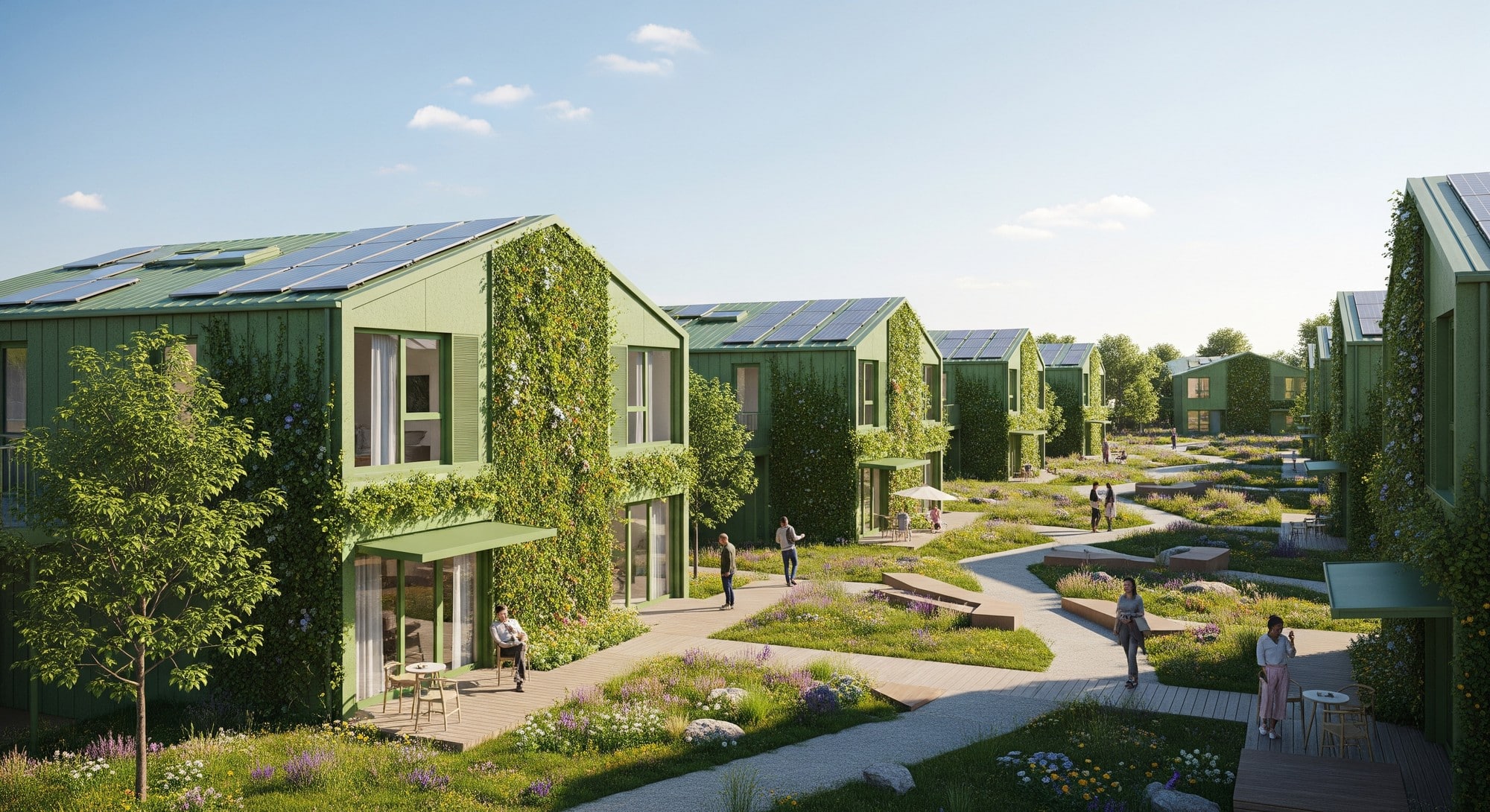
Modernizing towns requires a different approach from that used in large cities. Because towns typically operate with smaller tax bases and borrowing capacity, the focus should be on technological upgrades rather than on expensive building projects. Specific strategies, including infrastructure-as-a-service, meanwhile, are a vital way to ensure towns have key features without having to build, buy, or even maintain them. Regional procurement is another powerful way to boost bargaining power and reduce costs.


