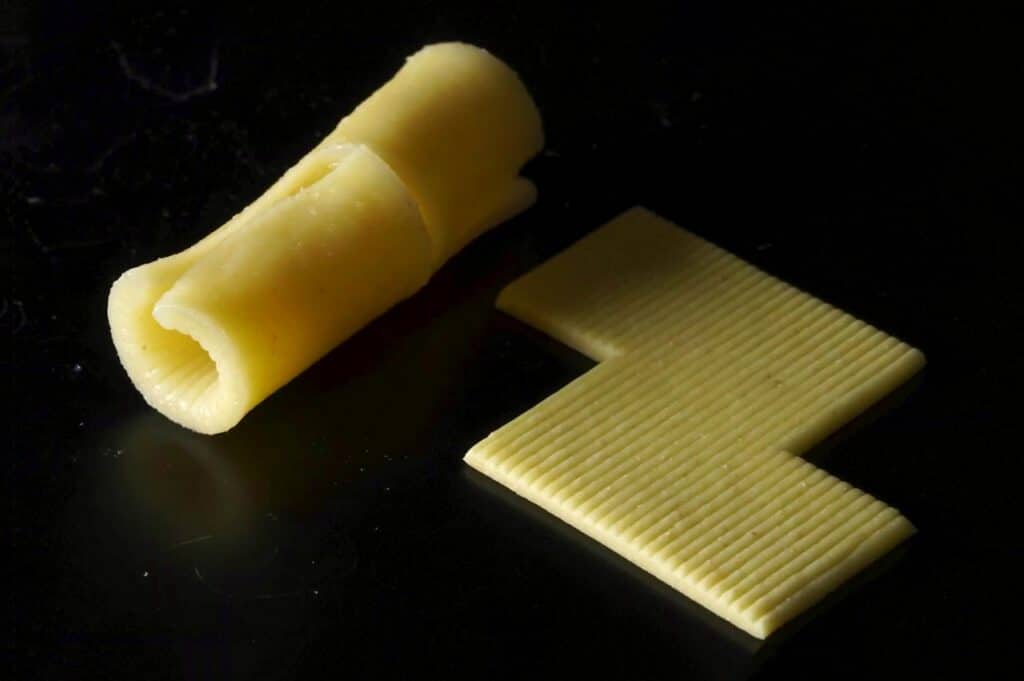
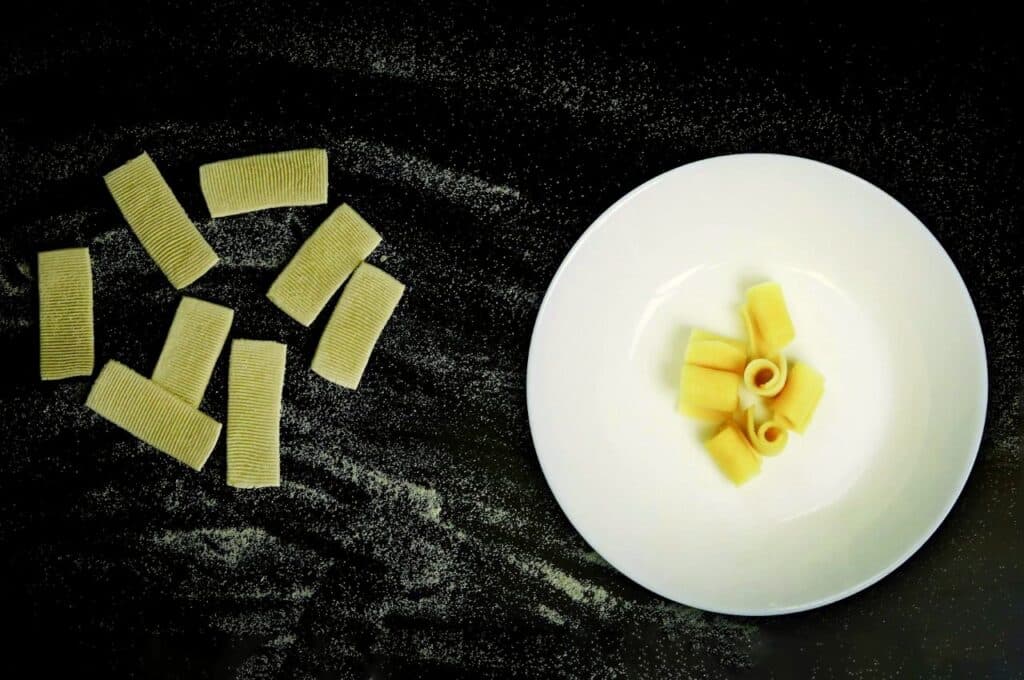
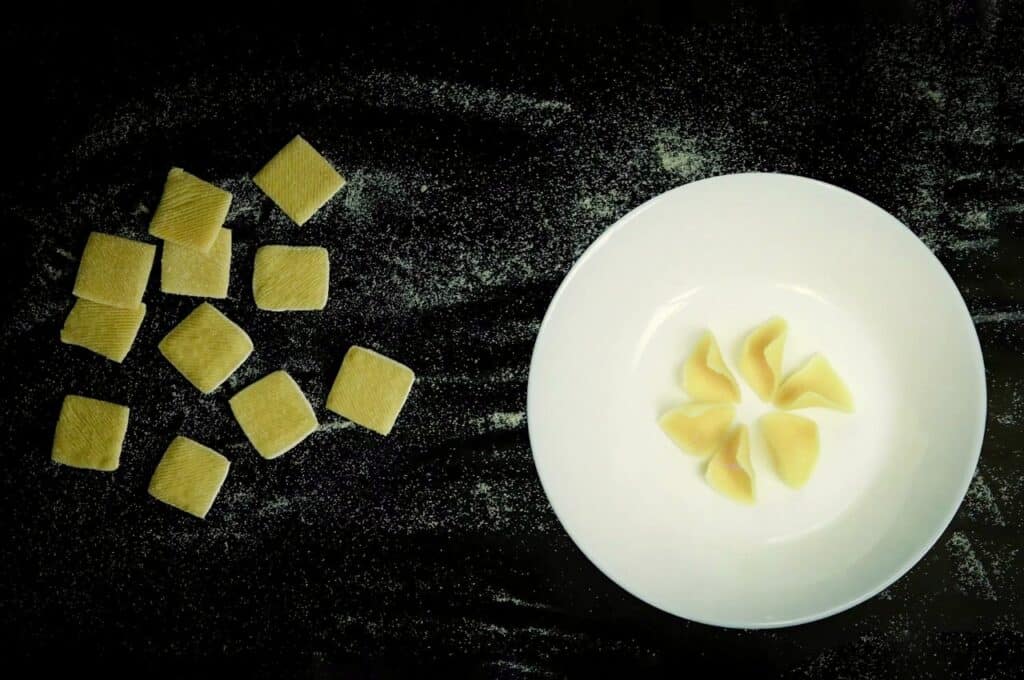
Scientists at Zhejiang University City College and Carnegie Mellon University have figured out how to make pasta more ‘efficient.’ 3D pasta may hold more sauce, but they have environmental downfalls. They need extra packaging to fit their distinct shapes, making them harder to transport and leading to waste. Pasta that could lie flat when packaged and transformed into a 3D form when cooked could solve those problems.
The team used principles similar to origami and soft robotics to make new pasta shapes that start as flat sheets of dried dough and morph into a 3D design when boiled in water. How does the pasta morph into different shapes? Unique ridges are pressed into the pasta shapes, causing it to warp in different directions when the dough absorbs water and enlarges. The distinctively calibrated ridge depth and spacing, along with the pasta’s overall shape, result in spectacular designs, like a box, bamboo, or helix shape.
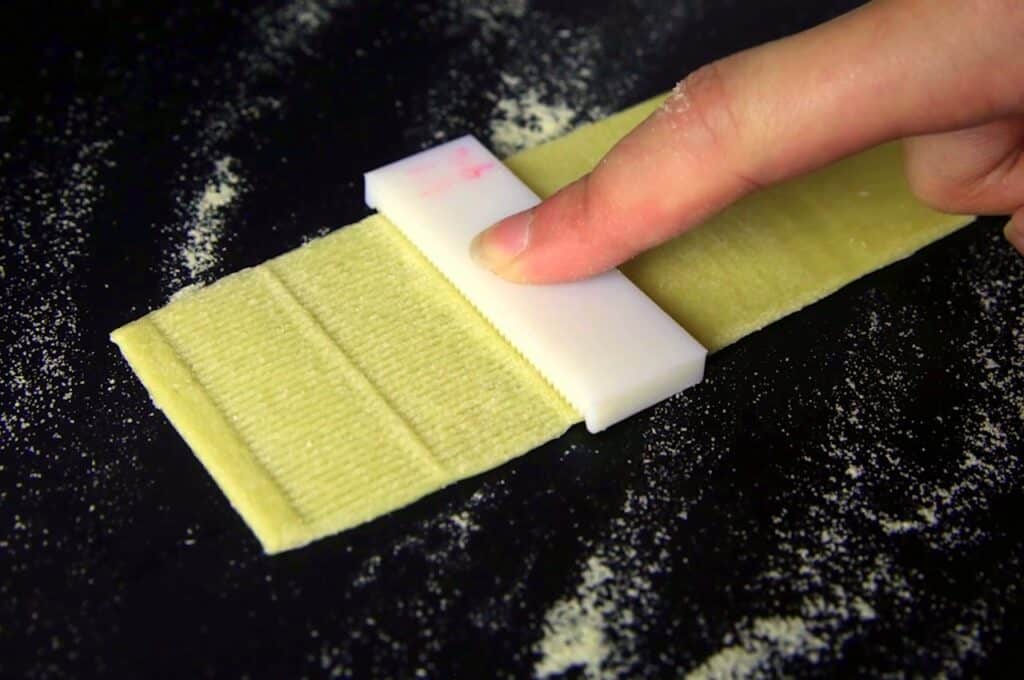
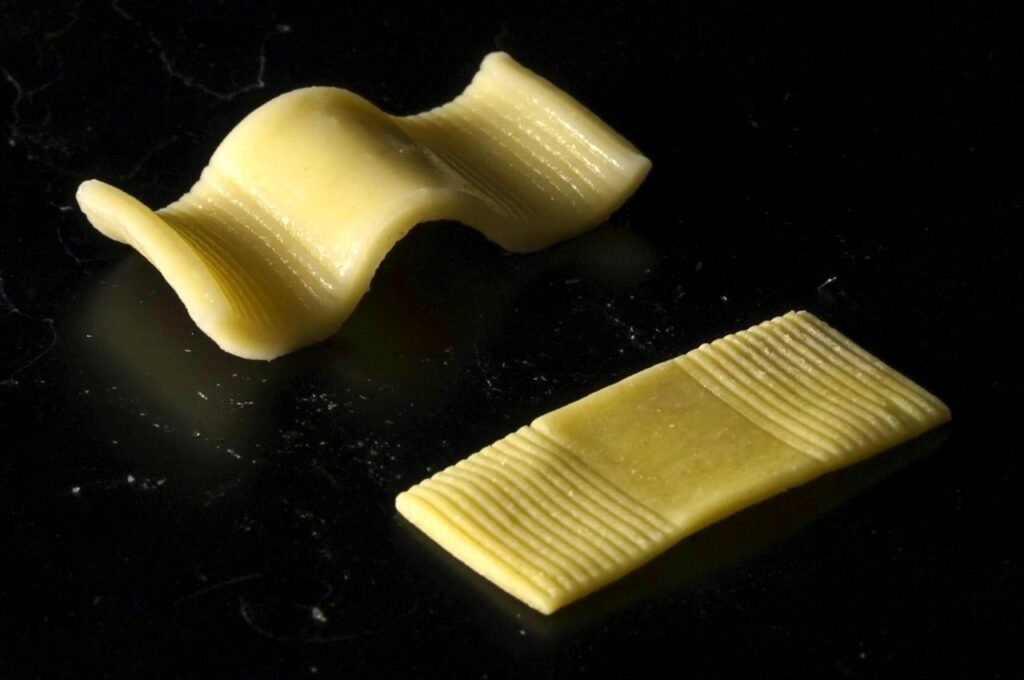

The team explained:
This mechanism allows us to demonstrate approaches that could improve the efficiency of certain food manufacturing processes and facilitate the sustainable packaging of food, for instance, by creating morphing pasta that can be flat-packed to reduce the air space in the packaging.
The new pasta shapes are a mix of classic designs – like fusilli, garganelli, ziti – and unusual forms that redefine the cuisine. All forms are ideal for performing two tasks – holding the sauce and tasting fantastic. Overall, all of the pasta shapes have one thing in common; they start as a flat and thin, scored sheet of dough that transforms into a 3D form when cooked.