
If you are searching for DIY vs. professional exterior painting in Seattle, you are likely trying to decide whether to paint your home yourself or hire a contractor. In Washington State, this decision is not just about saving money—it directly affects durability, weather resistance, and long-term maintenance costs.
Seattle’s climate is one of the biggest challenges for exterior painting. Constant rain, moisture-heavy air, and short dry seasons make exterior surfaces harder to prepare and paint correctly. While DIY painting may seem cost-effective upfront, professional application often delivers significantly longer-lasting results due to proper surface prep, moisture sealing, and climate-specific paint selection.
This guide breaks down the real cost differences, durability expectations, risks, and when hiring professionals becomes the smarter investment for Washington homeowners.
DIY vs Professional Exterior Painting Seattle: Key Differences Explained
The DIY vs professional exterior painting Seattle debate usually comes down to three factors: cost, durability, and risk.
DIY exterior painting typically includes:
- Homeowner purchases materials and tools
- Limited surface preparation
- Manual labor without professional equipment
- No warranty on results
Professional exterior painting includes:
- Full surface inspection and repair
- Pressure washing and sanding
- Primer application for moisture protection
- Weather-specific paint selection
- Warranty-backed workmanship
Core difference:
DIY focuses on short-term savings, while professionals focus on long-term performance in Washington’s wet climate.
Cost Comparison: DIY vs Professional Exterior Painting Seattle
Cost is usually the first reason homeowners consider DIY painting.
For a broader perspective on exterior painting investments, house painting cost guides break down national averages and key price factors.
Average Seattle cost breakdown:
DIY Exterior Painting:
- Paint and materials: $600 – $1,500
- Tools and equipment: $200 – $800
- Hidden costs (repairs, mistakes): unpredictable
Professional Painting:
- Small home: $3,000 – $6,000
- Medium home: $6,000 – $12,000
- Large home: $10,000 – $20,000+
What most homeowners overlook:
- Scaffolding rental costs for multi-story homes
- Weather delays increasing project duration
- Repainting sooner due to improper application
In Seattle, poor prep work often leads to repainting within 3–5 years for DIY projects, while professional jobs typically last 7–10 years.
Durability Differences in Washington’s Climate
Washington’s climate heavily impacts exterior paint performance.
Environmental challenges:
- Heavy rainfall for 8–9 months per year
- Constant moisture exposure
- Mold and mildew growth risk
- Limited drying windows
DIY painting often struggles because homeowners underestimate surface moisture levels before painting.
Professional advantage:
Professionals use moisture-resistant primers, high-performance coatings, and proper curing techniques designed specifically for Pacific Northwest conditions.
Surface Preparation: The Most Important Step Most DIY Projects Miss
Surface preparation determines up to 80% of exterior paint success.
Research from Purdue University Extension reports that paint properly applied to a well-prepared surface can achieve a service life of up to 10 years, while inadequate preparation is the leading cause of early coating failure.
DIY limitations:
- Inconsistent pressure washing
- Skipping crack and wood repair
- Insufficient sanding of old paint layers
- No moisture testing before painting
Professional approach:
- Full inspection of siding and trim
- Moisture meter testing
- Repair of damaged wood or siding
- Controlled surface priming for adhesion
For homeowners unsure about preparation standards, many rely on professional exterior painting services to ensure the foundation layer is correctly prepared before any paint is applied.
Weather Timing: Why Seattle Makes DIY Painting Harder
Seattle’s unpredictable weather creates major challenges for DIY painters.

Ideal painting conditions:
- 50°F to 75°F temperature range
- Low humidity days
- 48–72 hours of dry weather after application
These conditions are rare and difficult to plan for without experience.
Professional scheduling advantage:
Experienced contractors monitor weather patterns and schedule painting windows strategically, reducing risks of:
- Paint washout from sudden rain
- Improper curing
- Blistering and peeling
Paint Quality and Material Selection Differences
Not all exterior paints are designed for Seattle’s climate.
DIY paint choices:
- Often based on price or brand familiarity
- Limited understanding of resin quality
- Generic exterior paints
Professional-grade materials:
- Acrylic latex paints designed for moisture resistance
- Mildew-resistant coatings
- UV-stabilized finishes for long-term durability
Professional painters, such as those at HELLO Painting, typically select coatings based on siding type, exposure level, and long-term weather resistance rather than cost alone.
Time Investment: DIY vs Professional Painting
Time is often underestimated in DIY projects.
DIY timeline:
- Small home: 5–10 days
- Medium home: 10–20+ days
- Weather delays: unpredictable
Professional timeline:
- Small home: 2–4 days
- Medium home: 4–7 days
- Large home: 1–2 weeks
Professional crews work efficiently with multiple painters, equipment, and weather planning systems that significantly reduce downtime.
Safety and Equipment Considerations
Exterior painting in Seattle often requires working at height and handling large surfaces.
DIY risks:
- Ladder falls on uneven terrain
- Improper scaffold setup
- Paint exposure without safety gear
- Electrical hazard near exterior wiring
Professional safety standards:
- OSHA-compliant equipment
- Stabilized scaffolding systems
- Harness and fall protection for multi-story homes
Safety becomes a major factor for homes with steep roofs or two-story siding common in Seattle neighborhoods.
When DIY Exterior Painting Makes Sense
DIY can still work in specific situations.
Suitable conditions:
- Single-story home
- Minor touch-up work
- Good weather forecast for several days
- Experience with painting tools
However, even in these cases, durability is typically shorter compared to professional work.
When Hiring Professionals Is the Better Choice
Hiring professionals is recommended when:
- The home has weather-damaged siding
- Multiple stories or complex architecture
- Long-term durability is a priority
- Previous paint has failed due to moisture
This is where experienced contractors deliver better long-term value than DIY approaches.
Real Cost Perspective: Long-Term Value
While DIY appears cheaper initially, repainting cycles often increase total cost over time.
Example:
- DIY repaint every 3–4 years
- Professional repaint every 7–10 years
Over 10 years, professional painting often becomes more cost-efficient due to fewer repaint cycles and reduced maintenance issues.
Contractor Insight: Seattle Painting Trends
Field experience across Seattle shows:
- Moisture damage is the #1 cause of paint failure
- Homes near coastal areas degrade faster
- Older wood siding requires specialized priming
- DIY failures often involve poor surface prep
This is why many homeowners eventually transition from DIY attempts to professional repainting solutions.
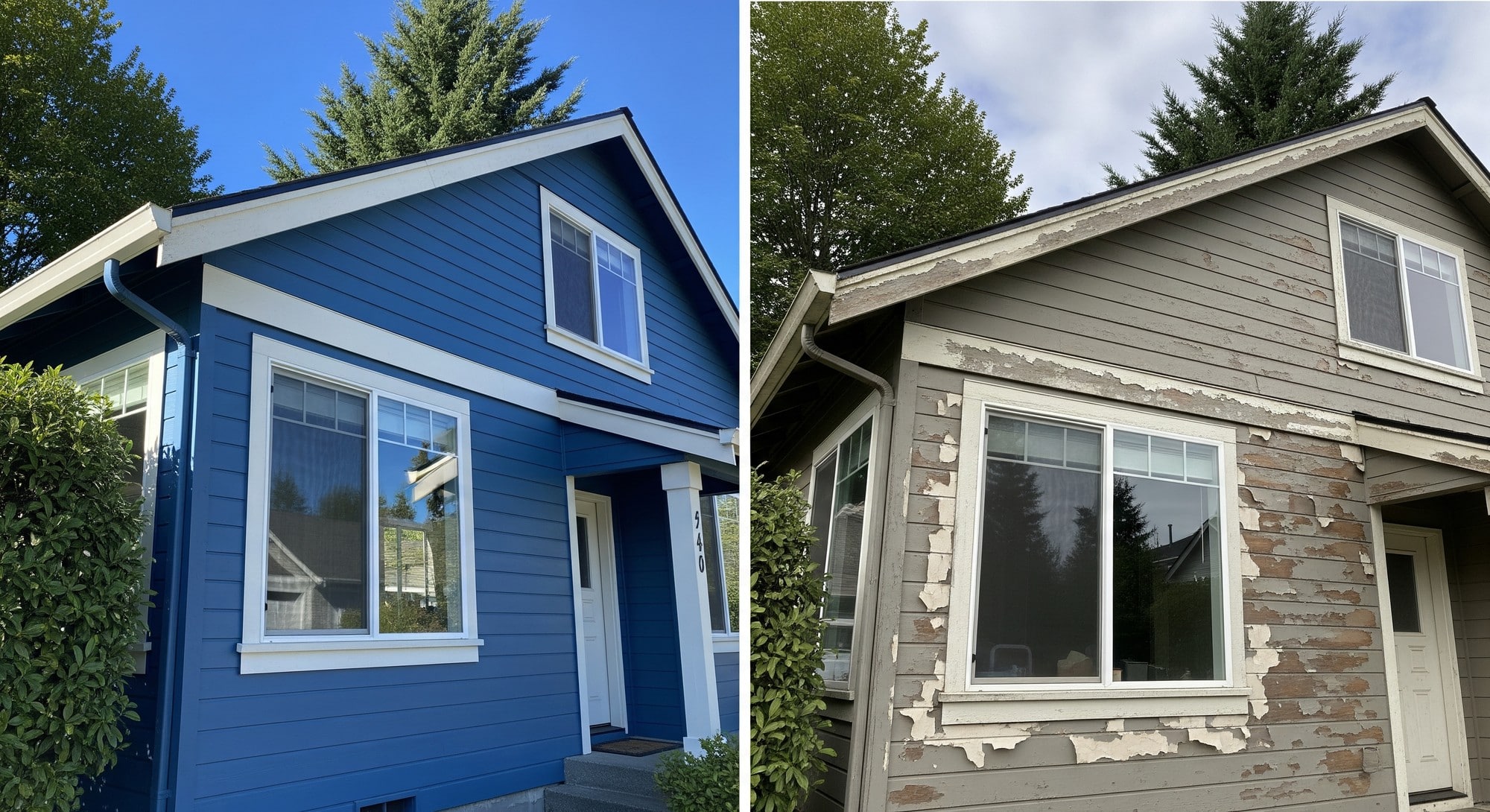
Conclusion
Choosing between DIY and professional exterior painting in Seattle comes down to more than budget—it is about long-term durability in a challenging climate. While DIY painting may reduce upfront costs, it often leads to shorter paint lifespan, weather-related failures, and higher long-term expenses.
In contrast, professional services ensure proper surface preparation, climate-specific material selection, and application techniques designed for Washington’s wet conditions. For homeowners seeking lasting protection and fewer repaint cycles, professional painting remains the more reliable investment in the DIY vs professional exterior painting Seattle decision.
FAQ Section
1. Is DIY exterior painting worth it in Seattle?
DIY painting can be worth it for small touch-ups or single-story homes. However, Seattle’s wet climate often reduces paint lifespan if proper preparation and weather timing are not followed, making professional work more durable in most cases.
2. How long does professional exterior paint last in Washington?
Professional exterior paint jobs typically last 7–10 years in Seattle when high-quality materials and proper surface preparation are used. DIY jobs often last 3–5 years due to inconsistent application and weather exposure.
3. What is the biggest mistake in DIY exterior painting?
The most common mistake is poor surface preparation. Skipping pressure washing, sanding, and priming leads to premature peeling, especially in Seattle’s moisture-heavy climate.
4. How much does professional exterior painting cost in Seattle?
Professional exterior painting usually costs between $3,000 and $20,000 depending on home size, condition, and complexity. Multi-story homes and damaged siding increase the total cost.
5. Can Seattle weather ruin a paint job?
Yes. Rain, humidity, and temperature fluctuations can ruin improperly timed paint jobs. Professional painters schedule work based on weather conditions to ensure proper curing and adhesion.


