
Boldly moving forth into a new technological era, Samsung has emerged as a formidable leader in the NAND memory market—a sector crucial for powering advancements in artificial intelligence (AI) and automotive technology. With the surge in demand for high-performance data storage and processing capabilities, Samsung’s strategic innovations have not only bolstered their market dominance but also catalyzed significant sociotechnological shifts. This article explores how Samsung is reshaping the industry with its cutting-edge solutions, setting new benchmarks for AI applications and smart automotive systems.
As we delve into Samsung’s market strategies and technological innovations, we’ll uncover how the company is leveraging its advancements in NAND technology to address the growing needs of AI systems and automobiles. By understanding these developments, we can better appreciate the broader impacts on industries and the potential future pathways this evolving technology will soon navigate.

The Evolution of NAND Technology in the Industry
NAND technology, a type of flash memory, plays a pivotal role in today’s digital age. From smartphones to high-speed computing, NAND chips provide the non-volatile memory necessary for devices to store and retrieve data quickly and reliably—essentially keeping your data safe even when the power is off. Over the years, innovations in NAND technology have dramatically increased data storage capacities and reduced costs, making high-speed data access more accessible to consumers and industries alike.
From Basic Storage to High-Density Solutions
Originally developed as a more affordable alternative to DRAM (Dynamic Random-Access Memory), NAND technology has seen a remarkable transformation. Early NAND chips provided basic storage, but with the increasing demands for more data handling in tech devices, companies like Samsung have pioneered high-density solutions. This has culminated in advancements like the V9 and V10 NAND chips, which stack multiple layers to increase data capacity without expanding the chip’s physical footprint.
By stacking layers of memory cells vertically—a concept known as 3D NAND—manufacturers can significantly enhance data storage capacities. This shift from traditional planar NAND allows companies to fit more memory onto a single chip, breaking previous barriers in memory scaling. Such technological leaps are crucial for accommodating the vast amounts of data generated by modern AI applications and other data-intensive processes in today’s digital devices.
Samsung’s Breakthroughs in the NAND Landscape
Samsung, as a frontrunner in this technological expansion, continues to innovate. They’re on the verge of releasing a groundbreaking 400-layer NAND chip, promising to push the storage limits to new heights and potentially break the 200TB barrier for ultra-large capacity SSDs (Solid State Drives). Such innovations position Samsung at the forefront of semiconductor technology, enabling AI systems to operate more effectively by providing faster and larger data processing capabilities.
These advancements underline the importance of NAND technology as a backbone for modern data processing needs, emphasizing Samsung’s commitment to setting industry standards. The growing sophistication of NAND chips is a testament to how far technology has come, continuously evolving to meet and exceed the demands of our increasingly digital world.
Samsung’s efforts are not just about leading the market; they represent a significant global push toward more efficient, high-capacity, and reliable memory solutions that are critical in this era of exponential data growth. As developments continue, the influence of these technologies will likely perpetuate across various sectors, catalyzing further innovation and economic growth worldwide.
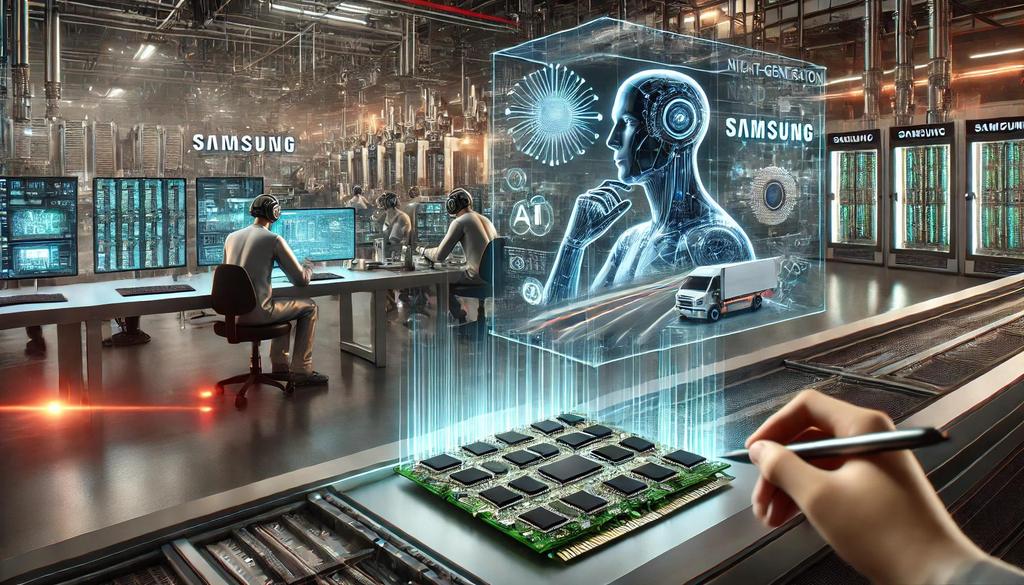
Samsung’s Strategic Data Storage Innovations
In the dynamic fields of technology and electronics, staying ahead requires relentless innovation and strategic thinking. Samsung has exemplified this approach, continuously pushing the boundaries of what’s possible with NAND technology. This has enabled the company to solidify its place as a global leader, particularly in the burgeoning sectors of artificial intelligence (AI) and automotive technology. Let’s explore how Samsung’s strategic innovations are shaping the industry landscape.
Dominance in the NAND Market
Samsung’s prowess in the NAND market is not a recent development but the result of decades of innovation and strategic foresight. Since the early 2000s, Samsung has led the charge in memory technology, consistently introducing products that set new industry standards. Their recent innovations, including the ninth-generation V9 NAND, illustrate their commitment to maintaining this leadership. This chip specifically targets applications in AI and cloud computing where the demand for high-capacity, efficient storage solutions is ever-growing.
The company’s forward-thinking approach is evident in its development of a 400-layer NAND chip—a record-breaking feat in the field. Samsung maximizes storage capacity per chip by designing chips with more layers, facilitating the rapid storage and retrieval of larger volumes of data. This leap in technology supports ultra-large capacity SSDs crucial for data-intensive operations in AI and enterprise servers, which require faster data access speeds and higher storage capabilities.

Role of Samsung Data Storage in AI and Automotive Applications
Samsung’s contributions to the AI and automotive sectors have significantly impacted how these industries operate. In the AI realm, the integration of high-capacity NAND storage technology allows for rapid processing of vast amounts of data—a critical component in developing sophisticated AI models capable of learning and adapting in real-time. This ability is essential as AI systems become increasingly integral to various applications, from simple consumer electronics to complex data analytics tools used in enterprises.
In the automotive sector, Samsung has pioneered the use of NAND technology to support the development of smart, connected vehicles. For instance, Samsung’s advancements in solid-state batteries are expected to revolutionize electric vehicles (EVs) by providing up to 621 miles of driving range and charging capabilities that dramatically reduce downtime. Such technology catalyzes the shift toward more sustainable transportation solutions, marking a significant step forward in the automotive industry.
Samsung’s innovations are not limited to product development; they extend into strategic partnerships and collaborations. The company actively collaborates with major automakers like Hyundai and General Motors, integrating their NAND technology into next-generation vehicle systems. This cooperation aims to enhance vehicle performance, safety, and energy efficiency, aligning with broader industry trends toward electrification and automation.
Collaborative Efforts and Future-Forward Strategies
Recognizing the transformative power of collaboration, Samsung also partakes in global partnerships to bolster its AI and automotive technology strategies. Through ventures like the Global AI Infrastructure Investment Partnership, companies like Samsung are able to push large-scale initiatives to enhance AI infrastructures and technological ecosystems that support innovation and industry growth globally.
Furthermore, Samsung’s collaboration with tech giants and fellow innovators like NVIDIA highlights their commitment to leveraging collective expertise and resources. This cooperation not only enhances their technological capabilities but also ensures that Samsung stays at the frontier of AI and automotive advancements.
Samsung’s strategic innovations reflect a comprehensive approach to advancing technology. By leading the charge in memory innovations and forming pivotal collaborations across industries, Samsung is well-positioned to dictate the future trajectories of AI and automotive technologies. These efforts not only strengthen their market position but also contribute to shaping a technologically advanced and efficient future.

Recent Samsung NAND SSD Advancements and Releases
Samsung stands out with its recent breakthroughs in NAND technology—paving the way for the next generation of digital data storage. The company’s relentless pursuit of innovation ensures that its products not only meet consumer demands but also set new industry standards for performance and efficiency.
Highlights of Cutting-edge Samsung Releases
One of the most significant announcements from Samsung is the introduction of the BM1743 SSD, which showcases unprecedented capacity with its 61.44 TB storage capability. This giant leap in storage technology capitalizes on Samsung’s seventh-generation QLC V-NAND innovation, which enhances bit density while simultaneously reducing costs.
These storage capabilities are not just impressive in terms of size. The BM1743 SSD also promises improved reliability and power efficiency, appealing to data centers that require robust storage solutions to support massive data loads and AI-powered operations. This aligns perfectly with industry needs, as data volumes continue to grow exponentially—the call for more efficient, higher-capacity storage solutions has never been louder.
Pioneering AI Integration
Samsung is making significant strides in integrating its NAND technology with artificial intelligence (AI), focusing on enhancing data processing capabilities to meet future demands. By leveraging AI, Samsung aims to improve the efficiency and performance of data-driven applications, enabling faster decision-making and more intuitive technological solutions across various sectors.
This approach demonstrates Samsung’s commitment to innovation in the AI landscape. It also reflects their strategic insight into anticipating and fulfilling future technological needs, ensuring their position at the forefront of the increasingly vital AI market.

The Role of AI Technologies Integrating with NAND
Artificial intelligence (AI) and NAND technology go hand-in-hand in today’s digital infrastructure, where the efficient processing and storage of large datasets are critical. Samsung’s innovations in NAND have paved the way for more seamless integration with AI technologies, opening up new possibilities for enhanced data handling and smarter technological applications.
Enhancing AI Capabilities with Advanced Storage
AI technologies rely heavily on vast amounts of data to function effectively. With high-density NAND chips like those developed by Samsung, AI systems are able to access and process data much faster than before. This rapid data handling is crucial for applications ranging from machine learning models to real-time data analytics, where speed and accuracy are paramount.
For instance, sophisticated AI frameworks such as NVIDIA’s NVLM 1.0 can more effectively utilize the increased data bandwidth provided by advanced NAND technologies. This model merges language and image processing, demonstrating remarkable versatility in handling complex tasks across various sectors—from academic research to practical applications in industries like healthcare and finance.
Collaboration and Integration for Greater Impact
Strategic collaborations further amplify Samsung’s efforts in integrating AI with NAND technology. The company works closely with tech giants like Microsoft and NVIDIA, ensuring that their NAND innovations support and enhance AI infrastructures worldwide.
Such partnerships highlight the interconnected nature of technology, where advancements in one area drive progress in another, leading to comprehensive solutions that push industries forward holistically. By merging cutting-edge storage solutions with advanced AI models, Samsung is setting the stage for AI systems that are not only more powerful but also more efficient and reliable.
Future Implications of AI and NAND Synergy
Looking ahead, the continued integration of AI with NAND technology promises to revolutionize countless sectors by enabling smarter, more efficient systems. This synergy will likely lead to new breakthroughs in areas such as autonomous vehicles, where large-scale data processing is essential, and in enterprise technologies that handle complex data transactions.
Samsung’s forward-thinking approach positions the company at the forefront of these transformations, ensuring that their technologies continue to drive the capabilities of AI, unlocking potential across diverse applications and industries. By advancing AI capabilities through strategic integration with high-performance NAND, Samsung remains a pivotal player in shaping a future where intelligent systems redefine what’s possible in our everyday lives.

The Sociotechnological Shift and Future Use Cases
In our fast-paced world, technological advancements often lead to significant changes in how societies operate. Samsung’s groundbreaking NAND developments are not just about enhancing technical capabilities; they are about ushering in a new era of social and technological advancements. These shifts are already beginning to shape industries and pave the way for future use cases that could redefine our daily lives and business operations.
Impact on Industries and Employment
The integration of Samsung’s advanced NAND technology into various industries signals a shift toward more data-driven and efficient operations. Industries such as automotive and healthcare are experiencing transformations as they adopt AI-powered solutions that rely heavily on high-capacity data storage. For instance, Samsung’s innovations are pivotal in supporting the data demands of smart vehicles and AI-powered healthcare systems, which require real-time data processing to improve safety features and patient outcomes.
This technological shift is expected to create new job opportunities, particularly in tech and manufacturing sectors tasked with producing these sophisticated memory solutions. As demand for Samsung’s NAND technology grows, so too will the need for skilled professionals who can support its development and application across diverse sectors.
Societal Benefits and Technological Advancements
Samsung’s advancements in NAND technology hold promise for substantial societal benefits, particularly in enhancing connectivity and convenience. For example, the expansion of capabilities in AI and cloud computing can significantly impact how businesses operate and individuals communicate, making processes faster and more interconnected.
Moreover, the environmental benefits cannot be overstated. By increasing storage efficiency, these technologies help reduce energy consumption, contributing to sustainability goals. Samsung’s collaboration on initiatives aiming to improve data center efficiency further emphasizes their commitment to environmentally friendly innovations.
Future Use Cases in Everyday Life
Future technological developments will significantly benefit from Samsung’s NAND technology. For one, the rise of autonomous vehicles will depend heavily on high-capacity, swift-processing memory solutions to handle the massive data inflow necessary for real-time navigation and safety decisions.
In everyday electronics, we can expect smartphones and personal devices to become more powerful, offering better performance and storage without compromising on speed or efficiency. These evolutions will expand beyond personal use, penetrating industries like retail and education, where enhanced processing capabilities can lead to richer consumer experiences and more personalized learning environments.
Samsung’s strategic foresight positions their NAND technology as a cornerstone in the potential revolution across various sectors. As these technologies evolve, they promise not only to reshape markets but also to improve our everyday lives through smarter, more connected digital ecosystems.

Samsung’s Strategic Leadership: Redefining NAND Technology for Future Innovation and Societal Impact
Samsung’s leadership in the NAND market reflects a strategic vision that aligns technological advancement with real-world applications. Their innovative spirit has not only driven significant progress in AI and automotive technologies but has also set the stage for broader socio-economic impacts. The ability to store and process vast amounts of data efficiently is crucial for the next wave of digital transformation, and Samsung is at the helm of this evolution.
The strategic innovations discussed here emphasize the intertwined nature of technological progress and societal change. Samsung’s dedication to pushing the limits of what NAND technology can achieve highlights a commitment to driving industries forward while also addressing contemporary challenges through sustainable practices and smart solutions.
As Samsung continues to innovate, their advancements hold the promise of paving the way for a new era of efficiency, connectivity, and intelligence across countless applications. By setting benchmarks that redefine technology’s potential, Samsung is not only leading the semiconductor landscape but also shaping a future where technology contributes more significantly to society’s growth and prosperity.
This exploration of Samsung’s journey in the NAND market portrays a future rich with possibilities, where technology seamlessly integrates into our lives, elevating both the way we work and the way we live.


