
A fundamental shift is occurring in thermal storage, diverging from the current focus of energy news on batteries that return electrons to the grid. Energy storage that retains energy as heat, delivering it precisely when buildings and factories need hot water, steam, or hot air, represents the major development in heating. This fundamental concept is effective due to simple physics.
A large, insulated vessel filled with sand makes this entire system possible. The sand efficiently soaks up surplus wind and solar electricity, holds temperatures at high levels, and subsequently feeds district or industrial systems at a fraction of the cost of short-duration lithium storage. With Finland’s first commercial sand battery proving the concept in a working district network, the economics of thermal storage earned significant global attention.
The shift is underway across thermal storage more broadly. Projects that store heat in bricks, rock, or concrete continue to carve out market niches poorly served by lithium, and a newer approach using solid carbon blocks heated to 2,400 degrees Celsius is now targeting heavy industry. This context helps frame the discussion, as sand batteries are engineered for utility-scale infrastructure rather than consumer electronics. They are an infrastructure play that sits beside heat pumps and industrial electrification.
Building on the principle of the MIT thermal battery for industrial heat, this article provides a comprehensive analysis of the practical cost structure, technical fit-for-purpose, and long-term application of sand batteries in the global energy transition.

Key Metrics: Sand Battery Thermal Storage at a Glance
Sand thermal energy storage offers superior performance based on the cost-effectiveness of heat, rather than electrical round-trip efficiency. NREL’s modeling places sand as a storage medium in a cost range of about 4 to 10 dollars per kilowatt-hour of stored heat, with durations reaching into hundreds of hours.
- Typical operating temperature: roughly 500 to 600°C with designs that can go higher.
- Real-world reference: 8 MWh at 200 kW in Kankaanpää, Finland, delivering heat into a district network.
- Newer town-scale unit: 10 MW of heating power serving a small Finnish municipality.
- Primary use: district heating and industrial process heat, not electricity regeneration.
- Storage horizon: from daily balancing to multi-week and seasonal in large, well-insulated volumes.
- Materials: sand or sand-like granular media in a steel enclosure with internal heat exchangers and fans.
Core Advantage: Why Thermal Storage Wins on Cost and Long Duration
Lithium-ion batteries are optimized for fast, short bursts of electrical power. Heating systems, however, require a different balance of functional output, prioritizing volume and duration. District networks and factories need large amounts of thermal energy delivered steadily and cheaply.
When the end-use is heat, the right question changes from “How many electrons do I get back?” to “How many useful kilowatt-hours of heat can I deliver per dollar over long durations?” That is the metric where sand excels. Its abundance of materials and simple steelwork keep capital costs down while thermal losses are manageable at scale. A plain-language overview of the advantages of storing renewable energy as heat explains the core physics and system benefits.
The Seasonality Factor: Storing Heat for Cooler Weeks
Seasonality introduces a significant benefit. Large hot-sand vessels lose heat slowly, especially when they are well insulated and placed near the loads they serve. This capability allows energy operators to shift summer solar or windy-night electricity into cooler weeks, a core benefit of seasonal storage. In places with long winters, a city-scale heat store can flatten fuel use without chasing the near-perfect electrical efficiency that drives up costs in conventional batteries.

Technical Mechanism: How High-Temperature Sand Batteries Function
A sand battery is a high-temperature thermal storage solution. Picture a tall, insulated steel tank filled with hundreds or thousands of tons of sand.
Electric heaters warm recirculating air. This air flows through internal tubing and porous regions in the sand bed, allowing the sand mass to capture sensible heat at high temperature. Later, that hot air transfers energy through heat exchangers to water or process air, delivering it into a district loop or an industrial line.
The reference project in western Finland demonstrates an 8 MWh, 200 kW installation using roughly one hundred tons of sand inside a 4-meter by 7-meter enclosure. Larger units scale the cross-section and improve airflow to increase power. Finland’s latest installation reports about 10 megawatts of heating capacity that can supply water between roughly 60 and 400°C for town service.
Sand is technically attractive because it is cheap, non-toxic, and stable at high temperatures, supporting the core promise of low-cost heat delivery. System performance depends heavily on several factors: the evenness of heat movement through the bed, the precise sizing of fans and ducts, and the final construction quality of the heat exchangers. Those are classic engineering problems rather than materials bottlenecks, which helps explain the cost profile.
Cost Comparison: Analyzing Heat Storage Economics vs. Lithium-Ion
Cost Advantage: Comparing Sand Duration to Lithium Electrical Price
Thermal storage flips the cost lens, placing sand as a medium in a low single-digit to low-teen dollars per kilowatt-hour band for stored heat at durations that reach hundreds of hours, according to NREL’s analysis. Lithium-ion batteries in the same comparison are quoted around 300 dollars per kilowatt-hour and are optimized for one to four hours of electrical discharge.
The comparison is not direct. Nevertheless, the data confirms that when the output is heat, simple media can be more economical across long durations, even with lower round-trip efficiency.
Dual-Use Designs That Push Costs Even Lower
Researchers and industry partners are exploring advanced thermal storage solutions that perform two jobs at once. One ARPA-E-supported pathway combines a hot-sand vessel with silica purification, which generates part of the revenue from selling upgraded silica while the vessel simultaneously performs long-duration heat storage.
Early project notes from SolarPACES describe scenarios where the effective thermal storage cost falls below ten dollars per kilowatt-hour because the co-product offsets capital and operating costs.
Where Lithium Still Rules, and Where Sand Wins
Lithium’s strengths remain decisive when the grid needs fast, precise power over short periods or when space is very limited. Sand wins where the demand is steam, hot water, or hot air and where hours to weeks of storage matter more than electrical round-trip efficiency.
That is why the first market beachheads are district heating and industrial process heat. Recent coverage explores concrete thermal batteries that capture industrial waste heat.
Seasonal Storage Capability: Shifting Solar Energy Across Weeks
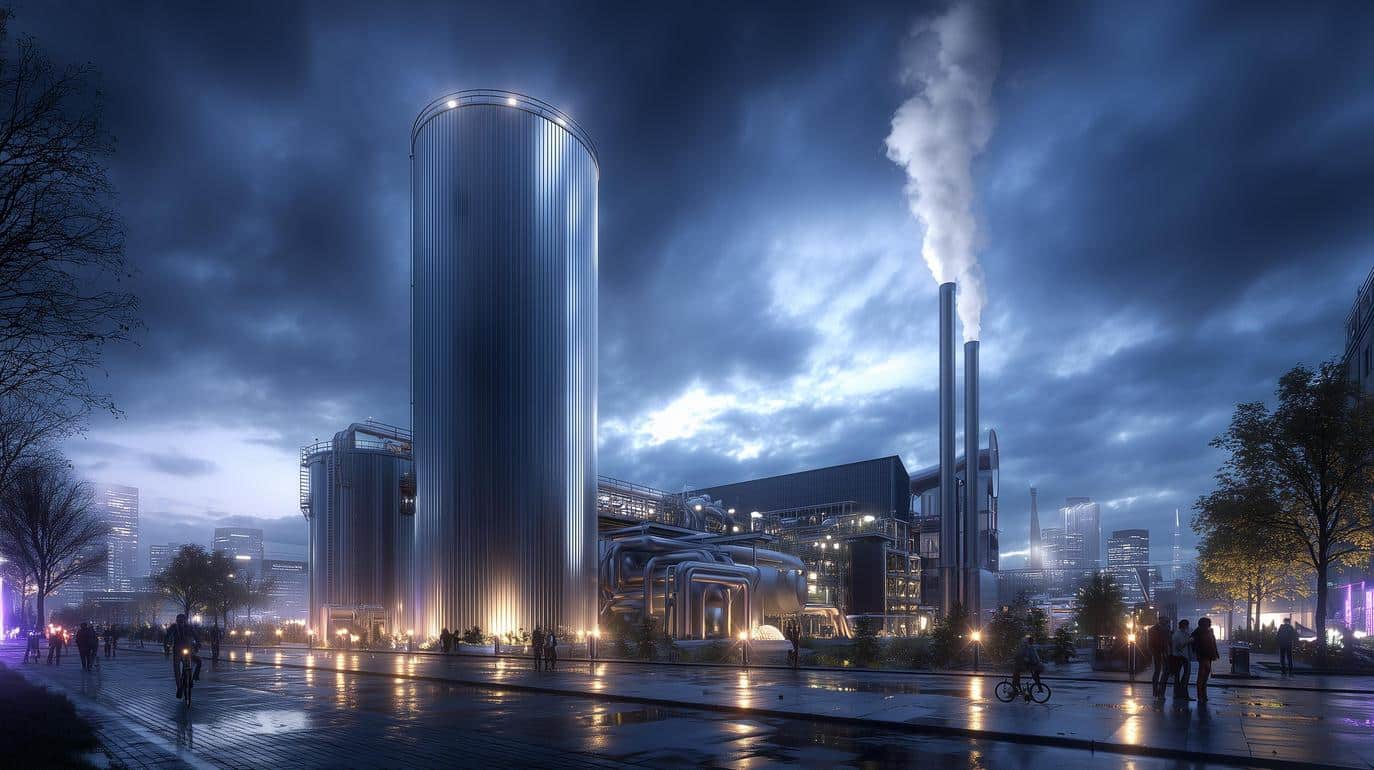
The potential for seasonal storage makes sand batteries resemble time machines. In northern Europe, long winter nights create a gap between renewable generation and heating demand. Large, well-insulated sand vessels can absorb inexpensive summer solar or windy-night electricity, hold it at a high temperature, and release useful heat weeks later.
Finland’s early district installations demonstrated daily and weekly balancing first, subsequently advancing toward longer durations as tanks scaled and insulation improved. The principle is straightforward. When the store is large enough, the surface-to-volume ratio falls, thermal losses shrink, and the calendar starts to bend in your favor.
Global Modeling: Applying Seasonal Logic to North Africa
Modeling from North Africa confirms this same thermal storage logic operates effectively in different climates. Regions such as Libya experience significant solar resources with winter heating needs that still matter in certain climates and elevations.
Simulations show that hot-sand storage can capture mid-season surplus and shift it into colder weeks without exotic materials or complex chemistries. Storage choices can be mapped to real-world demand profiles in a survey of renewable energy storage solutions for electrical engineers that outlines where each option fits.
Urban Integration: The Thermal Storage Role in Decarbonizing Cities
Retiring fossil fuel boilers requires cities to establish a reliable, affordable heat delivery backbone that operates at scale. Sand batteries functionally align with this urban requirement. They sit at the intersection of district heating, waste-heat recovery, grid flexibility, and geothermal power, absorbing electricity when prices dip and releasing heat on demand.
The technology is designed to complement lithium, not compete with it, in terms of electrical round-trip efficiency, supporting the ambitious goals of net-zero cities. It complements it by meeting thermal demand directly, which is why planners often consider sand alongside iron-air batteries designed for multi-day grid support and other long-duration options to cover different parts of the system.
This shift aligns with the rise of clean energy hubs that repurpose legacy infrastructure into low-carbon heat networks.
Complementary Systems: A Family of Thermal Batteries
Cities also benefit from a range of complementary thermal energy systems rather than relying on a single tool. Brick-based systems for industrial lines, concrete modules that harvest waste heat, and rock-filled silos for power-to-heat can share the same networks and design language. All of these systems share a core philosophy: simple media, durable steelwork, and smart controls that treat heat as a first-class energy product, rather than a byproduct of electricity.
Deployment Scale: From Centralized District Pipes to Home Use
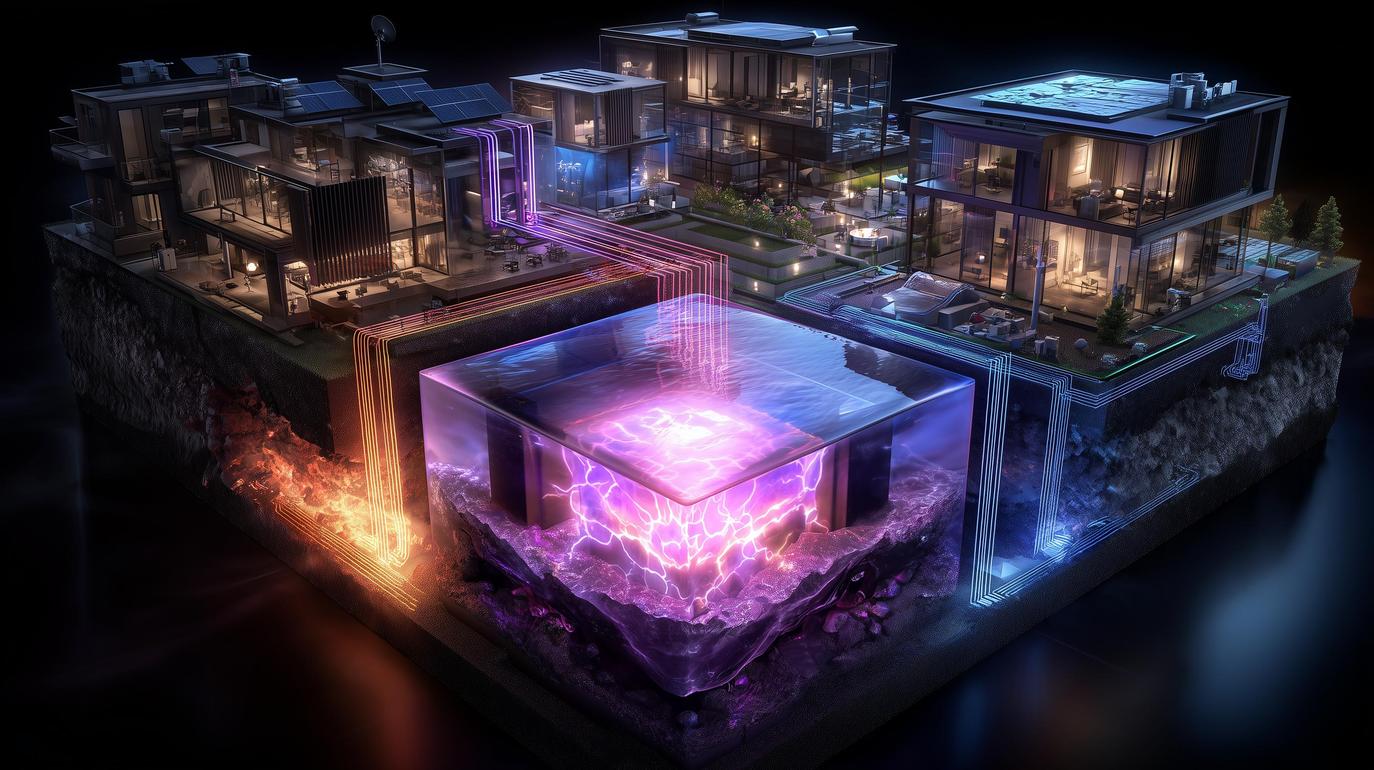
Most households will likely encounter sand storage through shared infrastructure first. District networks, campus systems, and multi-unit buildings can allocate space for large vessels and spread the cost of piping, fans, and controls. That is why the earliest commercial projects sit beside municipal heat plants rather than suburban garages.
Vendors are now advancing home-scale concepts, advertising systems rated in the tens of kilowatts for large, efficient houses with room for a separate thermal sand battery vessel. The physics of heat storage is not the barrier. It is the combination of footprint, installed cost, and the integration work needed to get heat in and out smoothly.
As equipment prices fall and more buildings electrify, community-level sand stores paired with geothermal heat pumps and solar will likely reach neighborhoods sooner than a tank in every basement.
Remaining Challenges: Technical Risks, Integration, and Financing Hurdles
All energy systems involve inherent trade-offs. Thermal losses accumulate over very long storage periods; consequently, insulation design and siting are critically important. Heat exchangers must move large volumes of energy without relying on expensive alloys.
Integrating the technology into legacy networks necessitates new controls and tariff structures that properly value long-duration heat. Financing models must also evolve to enable utilities to recover the upfront cost of steel, sand, and civil works over long lifetimes.
Materials and environmental considerations demand careful scrutiny. Sand is abundant and non-toxic at the point of use, but the steel and manufacturing behind large tanks carry a footprint.
Fair comparison necessitates weighing those impacts against alternatives that rely on mined metals and complex chemistries. For context on the broader materials discussion, one pathway under study is lithium extraction from seawater and brine as a route to battery-grade feedstocks with lower environmental impact.

The Future of Energy Storage: Sand Batteries for Low-Cost Seasonal Heat
Sand batteries serve as a crucial complement to lithium technology, offering a direct, highly economical pathway to low-cost heat storage. Constructed from common, abundant materials, this system uniquely addresses the hours-to-seasons duration issue that drives energy demand in buildings and industry.
Efficiently storing energy in the thermal form that consumers actually use, sand batteries significantly enhance the effective output of renewables without creating undue reliability stress on the electric grid. This reality dictates a shift in how we measure the progress of decarbonization.
Megawatts of battery inverters attached to the electric grid will no longer solely track the next wave of the energy transition. Instead, success will increasingly be measured by the multi-week, gigawatt-hour capacity of hot sand and other simple media systems actively feeding district heating pipes when solar production is low and outdoor temperatures fall.
Key Questions on Sand Batteries and Long-Duration Thermal Storage
1. Are sand batteries better than lithium-ion batteries?
They are complementary. Lithium excels at short-duration electrical discharge. Sand wins by delivering low-cost heat over long durations (hours to weeks).
2. Can sand batteries store energy for months at a time?
Yes, at a large, utility scale, they can. Heat losses are low enough in heavily insulated, large-volume vessels to enable seasonal and multi-week storage for specific use cases.
3. How efficient are sand batteries compared to electrical storage?
Electrical efficiency is lower than lithium. However, the relevant metric is the high ratio of useful heat delivered per dollar invested in the system.
4. Where will the public first encounter sand battery technology?
Most people will first benefit through centralized district heating networks, campus systems, or industrial applications, rather than small systems in single-family basements.
5. What makes sand preferable to materials like bricks or concrete?
Sand is cheap, non-toxic, and stable at high temperatures (up to 600°C+). It requires classic engineering solutions rather than complex, expensive material science to scale.
6. What Other Technologies Pair Well with Sand Storage?
Heat pumps, solar photovoltaics, and long‑duration electrical storage such as silicon‑based solid‑state batteries create flexible systems that handle both the thermal and electrical sides of the transition.


