
The best approach to fence installation on a slope or hillside on Washington properties depends on grade steepness, soil conditions, drainage, and fence material. In most cases, contractors recommend either a racked fence that follows the slope smoothly or a stepped fence that uses level panels in stair-step sections. The right choice depends on appearance, privacy gaps, budget, and how steep the land is.
Washington homeowners frequently deal with sloped lots, retaining walls, hillside backyards, and uneven terrain—especially in Seattle, Bellevue, Tacoma, Spokane, and many suburban developments built on varied topography. Add Pacific Northwest rain and drainage issues, and hillside fence installation becomes more technical than flat-yard fencing.
This guide explains what experienced contractors recommend for sloped yard fences, how to compare methods, and what to expect for cost, materials, and maintenance. For homeowners researching their options, professional fence installation guidance can help clarify what to look for in a qualified contractor.
Why Sloped Yard Fence Installation Is Different in Washington
Installing a fence on uneven land is not simply a standard fence project with taller posts. Washington’s terrain creates extra challenges such as:
- Hillside erosion risk
- Saturated soil during rainy months
- Root systems from mature trees
- Retaining wall transitions
- Property line changes on irregular lots
- Wind exposure on elevated grades
That is why accurate layout and drainage planning matter before digging any post holes.
Fence Installation on Slopes and Hillsides in Washington: Two Main Methods
Most contractors use one of two installation methods:
| Method | Description | Best For |
|---|---|---|
| Racked Fence | Panels angle to follow slope | Mild to moderate slopes |
| Stepped Fence | Panels remain level in sections | Steep slopes |
| Custom Hybrid | Mix of both methods | Complex terrain |
Understanding these methods helps you choose a fence that looks intentional instead of awkward. For further details on the differences between racked and stepped approaches, Angi provides a thorough comparison of raked and stepped methods for sloped lots.
What Is a Racked Fence?
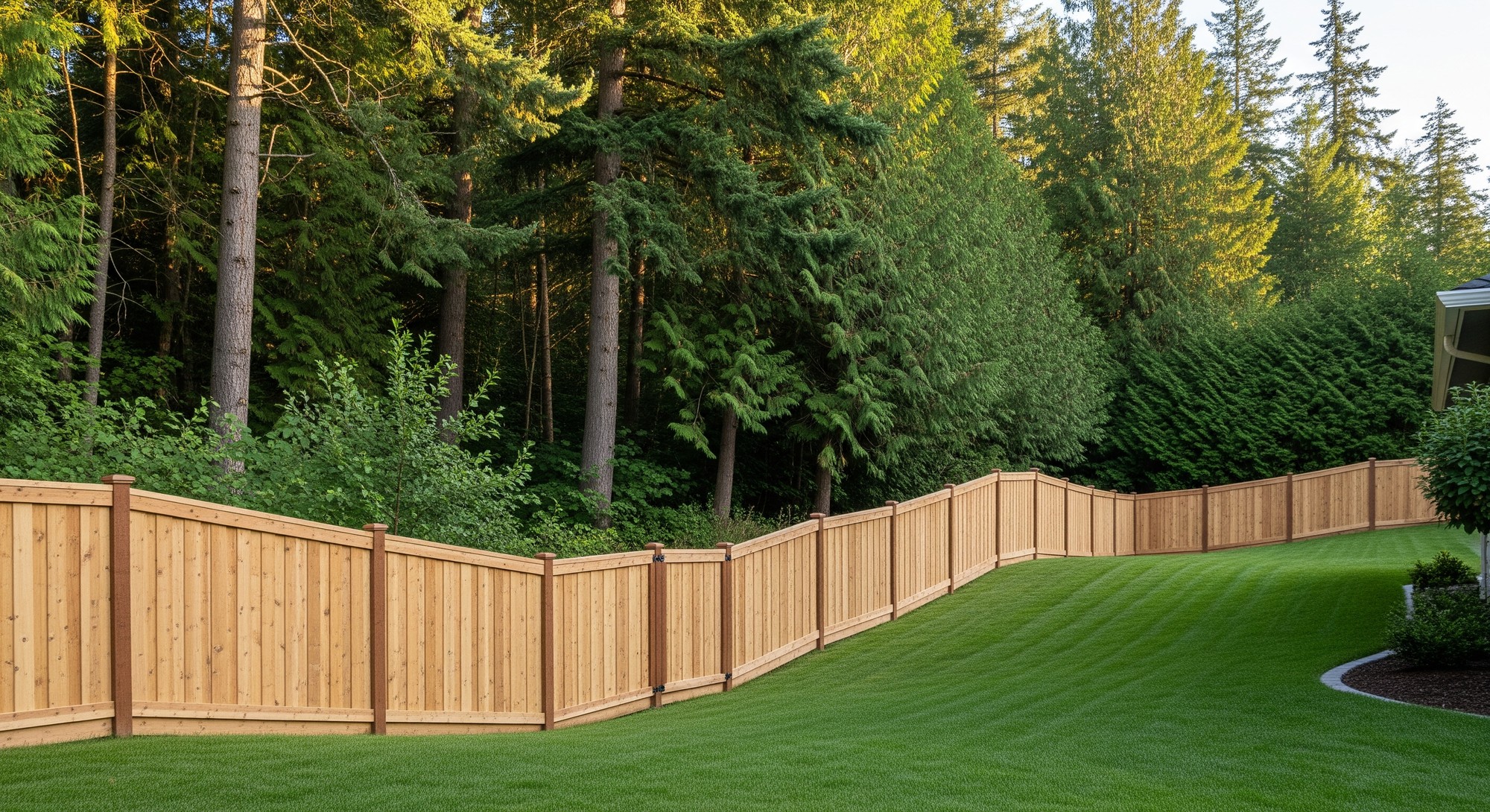
A racked fence is designed so rails and pickets angle gradually with the slope. The fence follows the contour of the land rather than creating stair-step drops.
Benefits of Racked Fencing
- Cleaner, smoother appearance
- Fewer gaps at bottom of fence
- Better for pets and privacy
- Great for moderate slopes
Best Materials
- Vinyl fence systems designed for racking
- Ornamental metal fencing
- Some custom wood panel systems
Homeowners researching fence installation on sloped yards in Seattle lots often prefer racked fencing because many city properties have gentle grade changes where smooth visual lines matter.
Limitation
Very steep slopes may exceed the angle a panel can safely rack.
What Is a Stepped Fence?
A stepped fence uses level fence panels that drop down section by section like stairs.
Stepped Designs Work Best on Steeper Grades
Each panel remains horizontal, but the next panel starts lower or higher depending on the grade.
Benefits of Stepped Fencing
- Strong structural alignment
- Works on steep hillsides
- Easier with standard prebuilt panels
- Clean symmetry on dramatic slopes
Drawback
Stepped fences can leave triangular gaps beneath panels, especially on steep grades. Those gaps may reduce privacy or pet containment unless filled.
Which Method Do Contractors Recommend?
The answer depends on slope percentage, fence type, and your priorities.
Choose Racked Fencing If You Want:
- Better bottom coverage
- Smoother visual appearance
- Moderate slopes
- Modern or seamless curb appeal
Choose Stepped Fencing If You Want:
- Strong level panel sections
- Standard wood privacy panels
- Steep hillsides
- Easier section replacement later
Choose Hybrid Design If You Have:
- Multiple grade changes
- Retaining wall transitions
- Curved lot lines
- Mixed functional needs
Many professionals first measure the grade before recommending any style.
Best Fence Materials for Hillside Properties in Washington
Not every material performs equally well on slopes.
| Material | Good on Slopes? | Notes |
|---|---|---|
| Cedar Wood | Yes | Popular, customizable |
| Vinyl | Yes | Great if rackable system used |
| Chain-Link | Excellent | Naturally adapts to grade |
| Aluminum/Metal | Excellent | Strong and elegant |
| Composite | Moderate | Heavier, needs planning |
Local Insight
Western Washington rain makes cedar, vinyl, aluminum, and galvanized materials common choices. Untreated low-grade lumber tends to fail faster on wet hillsides.

Drainage Is Critical on Hillside Fence Jobs
Many failed slope fences are not caused by the fence itself—they fail because water undermines the posts.
Contractors Usually Recommend:
- Gravel at post bases where appropriate
- Proper concrete footings
- Surface drainage away from posts
- French drains if runoff is severe
- Avoiding downspout discharge near fence lines
If water runs downhill directly against posts each winter, movement can happen faster than many homeowners expect.
For complex drainage lots, local fence contractors, including Contour Fence, often evaluate grading and runoff before finalizing fence layout.
Post Depth and Structural Considerations
Hillside fences experience more lateral pressure than flat-yard fences.
Important Factors:
- Deeper post embedment
- Larger diameter footings
- Heavier gate posts
- Wind load exposure
- Soil compaction strength
Why This Matters in Washington
Soft or wet soil conditions around Seattle, Tacoma, and coastal areas may require stronger post planting than dry inland regions.
Retaining Walls and Fence Placement
Many Washington homes already have retaining walls. Should the fence sit on top or behind the wall?
Fence on Top of Wall
Pros:
- Maximizes usable yard space
- Better privacy height
Cons:
- Engineering may be needed
- Wall condition matters
Fence Behind Wall
Pros:
- Less stress on wall
- Simpler installation
Cons:
- Reduces usable space
Older retaining walls should be inspected before mounting fencing.
Typical Costs for Sloped Fence Installation in Washington
Sloped yards usually cost more than flat lots because layout, labor, and materials are more complex.
| Project Type | Estimated Installed Cost |
|---|---|
| Mild slope wood fence | $60–$95 per linear foot |
| Steep slope wood fence | $75–$120+ per linear foot |
| Rackable vinyl fence | $70–$115 per linear foot |
| Aluminum hillside fence | $85–$140+ per linear foot |
| Custom terrain project | Varies widely |
Seattle and Bellevue labor pricing is often above smaller towns. Publishers should verify current market rates.
Common Mistakes Homeowners Make
Avoid these frequent problems:
- Choosing flat-yard panels for steep grades
- Ignoring drainage runoff
- Setting shallow posts
- Skipping property line survey
- Building too close to retaining walls
- Forgetting permit or HOA rules
- Prioritizing cheapest bid over slope experience
Slope fencing rewards experience more than speed.
How to Prepare for a Contractor Estimate
Before requesting quotes:
- Measure approximate fence length
- Take photos from multiple angles
- Note drainage issues
- Mark gates wanted
- Check HOA guidelines
- Identify pet containment needs
The more information you share, the more accurate the proposal.
Permit and Code Considerations in Washington
Rules vary by city and county. Fence height limits, corner visibility rules, retaining wall regulations, and utility setbacks may apply.
Always verify local requirements in:
- Seattle
- Bellevue
- Tacoma
- Spokane
- Snohomish County
- King County suburbs
Steeper sites may trigger extra review if near engineered walls or easements.
Maintenance Tips for Hillside Fences
Once installed, slope fences need periodic checks.
Annual Checklist
- Inspect leaning posts
- Watch soil washout
- Check gate alignment
- Remove debris buildup
- Monitor retaining walls
- Seal wood fencing as needed
- Tighten metal hardware
A small movement caught early is cheaper to fix than a full collapse.
Conclusion
The smartest fence installation on a slope or hillside in Washington starts with the terrain, not the fence style. Racked fences usually work best on moderate slopes where appearance and lower gaps matter. Stepped fences are often better for steeper grades and standard panel systems. Because Washington hillsides also bring rain, erosion, and soft soil challenges, drainage and proper post installation are just as important as the fence itself. Choosing a contractor experienced with sloped lots can save major repair costs later.
FAQ Section
1. Is racked or stepped fencing better for a sloped yard?
Racked fencing is often better for moderate slopes and a cleaner appearance. Stepped fencing is usually better for steep grades where level panels are easier to install.
2. Does hillside fence installation cost more in Washington?
Yes. Sloped projects often require more labor, deeper posts, special layout work, and drainage planning, which can increase pricing.
3. What fence material works best on hillsides?
Chain-link, aluminum, cedar, and rackable vinyl all perform well depending on slope severity and design goals.
4. Can I install a fence near a retaining wall?
Yes, but wall condition and structural loading matter. Older walls may need inspection before fence installation.
5. Do I need a permit for a hillside fence in Washington?
Sometimes. Permit needs depend on city rules, fence height, retaining walls, and exact location. Always verify locally.


