
In recent years, some single-use plastics have been replaced with biodegradable options – but even those aren’t entirely compostable. Biodegradable plastics are advertised as one solution to the pollution that is plastically bedeviling the entire world. Still, today’s “compostable” plastic bags, utensils, and cup lids don’t break straight down during typical composting and contaminate other recyclable plastic materials, creating headaches for recyclers.
The recent introduction of alternative plastics promised to rid the planet of some debris, but these materials require specific processing to break down entirely. If standard biodegradable plastics don’t reach a composting that is commercial, they won’t fully degrade. Most plastics that are compostable, primarily associated with polyester, known as polylactic acid (PLA), end up in landfills, lasting as long as forever plastics. For a broader look at how these materials compare, see this guide to biodegradable packaging materials.
Hendrik Frisch, Queensland University of Technology materials scientist, who had not been taking part in the new research, told Gemma Conroy at ABC Science:
Under other conditions like soil or marine environments, these materials often show a durability that is similar to their conventional fossil-fuel-based counterparts, causing significant environmental damage and pollution.
Research in 2015 showed just 9% of plastics worldwide are recycled—most plastics end up in landfills or, worse, scattered across the globe as pollution.
Polymer scientist Ting Xu, senior author of the study, knows that when she picks up composted soil in her mom’s and dad’s garden, it is usually full of plastic bits that haven’t fully degraded, she told Carmen Drahl at Science News. Because of this, Xu has spent over a decade already investigating how she could create plastic with enzymes that break the stubborn material.
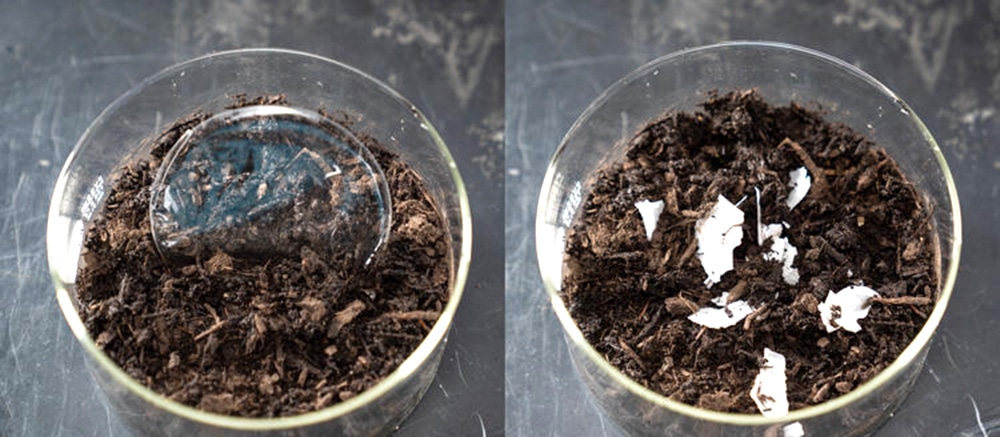
Finally, her work has culminated in a new synthetic material that degrades by as much as 98% in less than seven days in wet soil composting. The enzyme-enhanced synthetic film had similar power and flexibility as a regular plastic grocery bag.
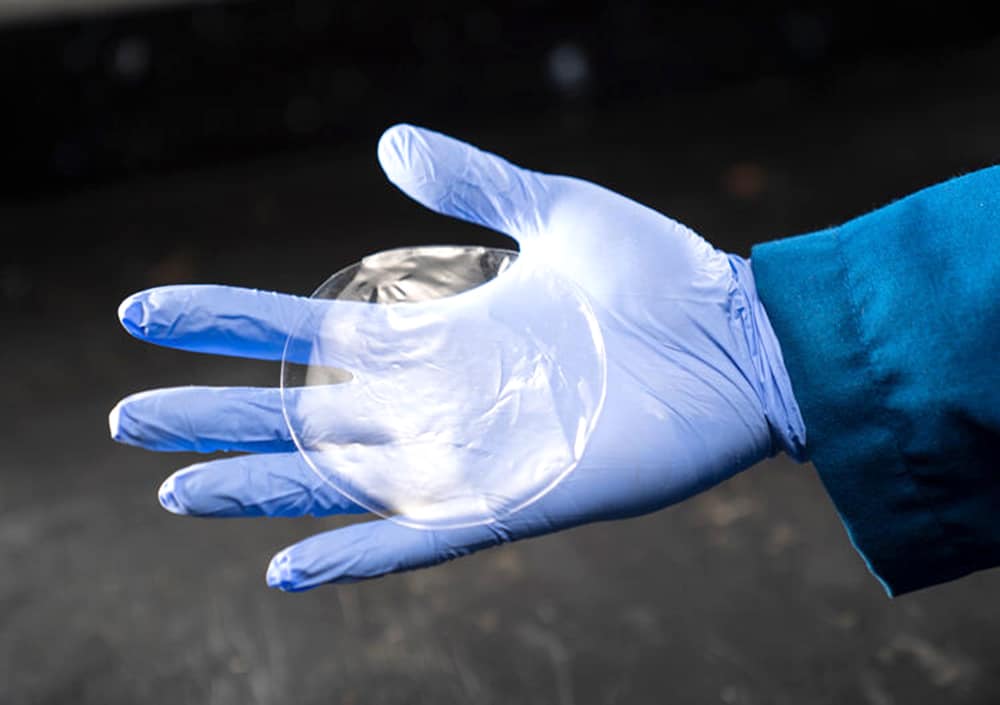
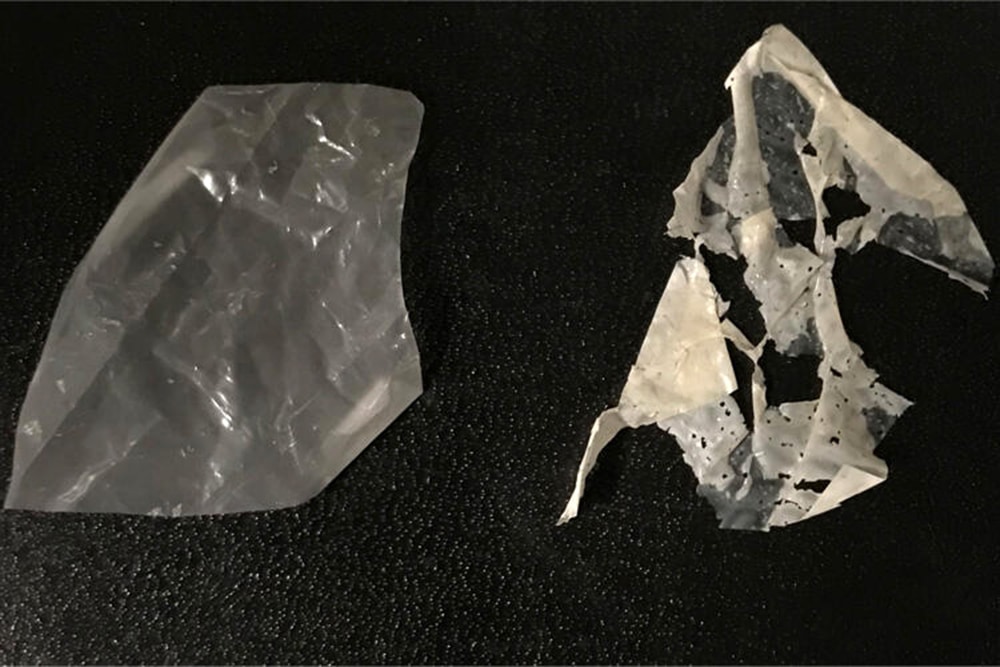
The goal is to produce plastics that are certainly compostable and replace single-use plastics, which have become especially typical amid the Covid-19 pandemic.
Xu said, “We want this to be in every food store.”
Plastics are designed to not break down during normal usage, but that also means they don’t break down after they’re discarded. The most durable plastics have a very nearly crystal-like molecular framework, with polymer fibers aligned so tightly that water can’t penetrate them. Meaning, microbes that may chew the polymers (organic molecules) can’t either.
Xu’s idea was to embed polymer-eating nanoscale straight in a synthetic or other product in a way that protects them until the proper conditions unleash them. The new plastic has a sprinkling of polymer-munching enzymes mixed in that are triggered by moisture and heat to degrade the plastic from the interior. It’s essentially self-destructing plastic.
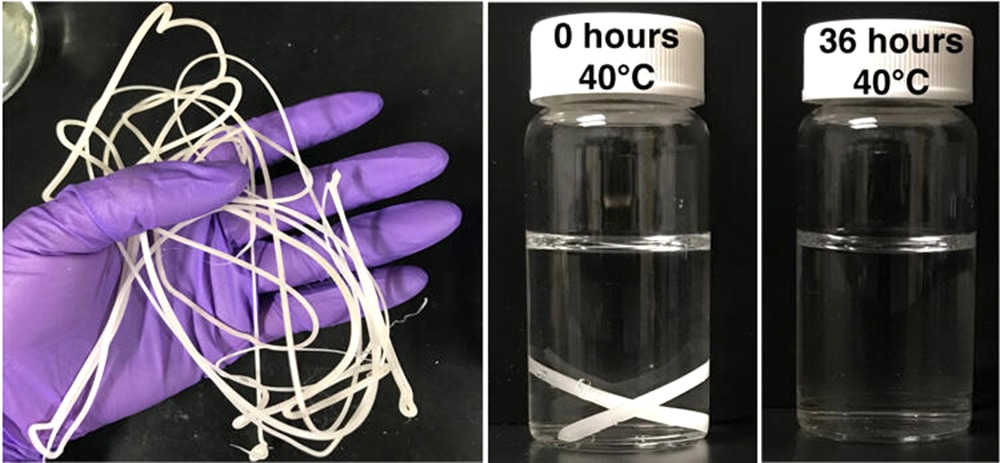

Since the enzymes are embedded throughout the material, they can thoroughly degrade it – as opposed to if they were added later. When exposed to water and heat, the enzyme shrugs off its polymer shroud and starts chewing the plastic polymer into its blocks. As for the PLA, the enzyme begins reducing it to lactic acid, which can feed the soil microbes in the compost. The polymer wrapping also degrades.
The process eliminates microplastics, a hazardous byproduct consuming the world. Microplastics have been found in milk, fruits, and vegetables, in the oceanic depths of the marina trench, in arctic snow, and so much more. The problem is so severe; one study found we are consuming a credit card size amount of microplastics weekly!
Xu said, “It is good for millennials to give some thought to this and commence a discussion that can change the way we interface with Earth. Look at all the wasted stuff we throw away: clothing, footwear, electronics like cellphones, and computers. We are taking things from the Earth quicker than we can return them. Don’t go back to Earth to mine for these materials, but mine whatever you have got, and then convert it to something else.”
Frisch informs ABC Science that the scientists have significantly more work to show if the enzymes might be applied to other kinds of plastic. Xu believes that polyolefin plastics are best turned into higher-value items, not compost, and are transforming polyolefin recycled for reuse.
Xu told ABC Science, “Enzymes are just catalysts evolved by nature to handle reactions. We should get with what nature has recently developed. if you wish to get, material to be a part of nature.”
The modified polyesters don’t degrade at lower temperatures or during brief periods of dampness, she said. For example, a polyester shirt created using this process would withstand washing and perspiration at moderate temperatures. The plastic at room temperature soaking in water for three months didn’t degrade. However, soaking it in lukewarm water does result in degradation.


