
Picture two different climates and landscapes that could not be more different. In the far north of Scotland stretches an ancient wetland known as the Flow Country. Its rolling blanket bogs hold layer upon layer of peat, quietly locking away carbon for thousands of years. In Ukraine, the sudden collapse of the Kakhovka dam in 2023 left behind an empty reservoir basin. What could have been an ecological catastrophe instead sparked something unexpected—floodplain forests and wetlands began to regenerate almost immediately, forming the early signs of a new ecosystem.
Both places tell a story about carbon and their link to climate. One is a carbon bank—storing enormous reserves that must be safeguarded. The other is a carbon flow—a living system that draws carbon from the air as it rebuilds itself. Together, they reveal how protecting old ecosystems and nurturing new ones can both drive climate resilience.
Quick Facts About Flow Country and Velykyi Luh
- Flow Country size: about 187,000 hectares of blanket bog in Caithness and Sutherland, now recognized as a UNESCO World Heritage Site in 2024.
- Carbon locked in Flow Country: roughly 400 million tonnes of carbon, more than all UK forests combined.
- Peatlands globally: cover just 3% of Earth’s land area but store twice as much carbon as all forests put together.
- Velykyi Luh area: more than 1,000 square kilometers of drained reservoir now transforming into wetlands and forests.
- Potential carbon uptake at Velykyi Luh: early estimates suggest up to 120 million tonnes of CO₂ could be stored if the area is left to regenerate.

Carbon Bank: Scotland’s Flow Country Peatlands
A World Heritage of Peat
The Flow Country gained international recognition in 2024 when UNESCO listed it as a World Heritage Site. This step acknowledged the ecological importance of the bogs not only for the UK but also for the planet. These peatlands formed over 9,000 years, layer by layer, as mosses and plants grew, died, and compressed into peat under waterlogged conditions.
How Peat Stores Carbon
Unlike forests that cycle carbon quickly through growth and decay, peat bogs accumulate and hold it for millennia. When undisturbed, the waterlogged layers prevent decomposition, locking away carbon in deep, stable reserves. Scientists estimate the Flow Country holds around 400 million tonnes of carbon—an astonishing amount for such a relatively small area of land.
Culture, Community, and Identity
Beyond carbon, these bogs shape local life. Communities in Caithness and Sutherland have long associated their identity with the land, from peat-cutting traditions to today’s conservation tourism. With heritage status, the Flow Country is poised to become a model for how protecting an ecosystem can also uplift local economies through ecotourism and stewardship programs.
Carbon Flow: Velykyi Luh’s Spontaneous Revival
Forests From Ruins
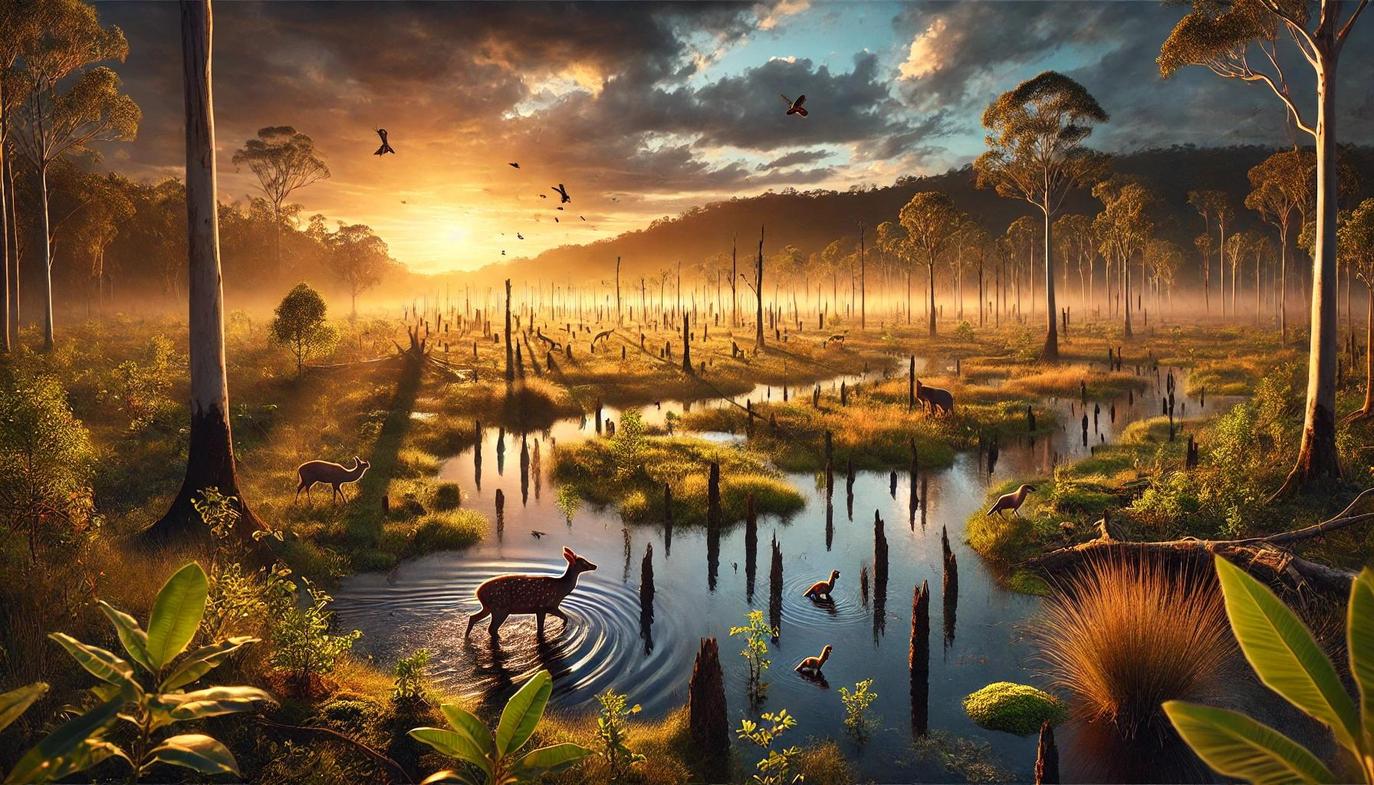
When the Kakhovka reservoir emptied in 2023, scientists feared devastation. Instead, nature acted quickly. Wetland plants and young trees began colonizing the exposed land. Within two years, vast areas were already covered in greenery. The transformation recalls the historical Velykyi Luh floodplain, a culturally significant region for centuries before it was submerged by the dam.
A Living Carbon Engine
Early analysis by Ukrainian and international researchers suggests that this new ecosystem could absorb up to 120 million tonnes of CO₂ if allowed to regenerate fully. Unlike peatlands, which guard ancient carbon stores, floodplain forests actively capture carbon year by year. Think of it as a natural engine—taking in carbon today and building the ecosystems of tomorrow.
Uncertain Futures
The promise of Velykyi Luh comes with risk. Sediments in the old reservoir may hold toxic pollutants such as heavy metals, raising long-term concerns. There is also political debate over whether to rebuild the dam, which would erase the newly formed wetlands and forests. These uncertainties make the story of Velykyi Luh as fragile as it is inspiring.
Cultural Reawakening
For many Ukrainians, Velykyi Luh is not just about ecology—it is about heritage. Known historically as a rich steppe-wetland, it was a center of Cossack culture and biodiversity. Its revival offers a chance to reconnect with history, identity, and a renewed bond between people and landscape.

Connecting Carbon Stock and Carbon Flow
Why Both Systems Matter for Climate Stability
Peatlands like Scotland’s Flow Country peatlands act as immense carbon stores. They are less about absorbing carbon each year and more about preventing catastrophic releases. If drained or burned, the carbon accumulated over thousands of years escapes into the atmosphere within decades. In contrast, landscapes such as Brazil’s Atlantic Forest restoration zones or the regenerating wetlands of Velykyi Luh in Ukraine continually draw in new carbon, building up biomass and enriching soils. These two strategies—long-term storage and active annual sequestration—are complementary. Climate stability requires both to work together.
Lessons From Global Comparisons
- Flow Country: Demonstrates the power of protection. Avoiding disturbance is far more effective than trying to rebuild peat once it is lost.
- Atlantic Forest: Shows how deliberate restoration projects can scale rapidly with policy and financial support, sequestering millions of tonnes of CO₂ each year.
- Velykyi Luh: Illustrates how nature can surprise us with self-directed recovery, even after human-engineered collapse. Its floodplain forests represent resilience and cultural renewal.
Human Benefits of Restoration and Protection
Climate value alone is not enough to secure long-term commitment. Jobs, heritage, and identity all matter. In Scotland, UNESCO designation is already supporting local pride and ecotourism. In Brazil, nurseries, planting crews, and monitoring programs create employment. In Ukraine, the revival of Velykyi Luh ties back to cultural memory, offering communities the chance to connect with a landscape once considered lost. When people see themselves reflected in the land, the case for protection grows stronger.
Looking Ahead: Safeguarding Ancient Stores While Supporting New Growth
Protecting What We Cannot Replace
Peatlands accumulate so slowly that their carbon stores are irreplaceable on human timescales. Protecting areas like the Flow Country ensures that centuries of stored carbon remain secure. Policy tools such as UNESCO designation, peat-burning restrictions, and government-backed peatland restoration projects play a direct role in this protection.
Encouraging Regeneration Where Possible
Forests and wetlands, by contrast, are more dynamic. With the right conditions—policy support, community engagement, and patient timelines—regeneration can deliver measurable climate gains within decades. Brazil’s Atlantic Forest and Ukraine’s Velykyi Luh both show that restoration not only supports climate goals but also strengthens biodiversity and rural economies.
A Shared Responsibility
The challenge ahead is not choosing between peatlands and forests, but ensuring that both receive attention. Carbon banks and carbon flows are parts of the same system. Protecting ancient stores while nurturing new sinks creates a balanced pathway to climate resilience. For readers, this translates into supporting organizations that defend peatlands, backing reforestation initiatives, and recognizing the value of cultural landscapes reborn.


