
Industrial leaders are driving a fundamental shift toward intelligent data infrastructure that bridges the gap between digital simulation and physical output. This transition marks the end of reactive manufacturing and the beginning of a simulation-first era where every variable is accounted for before a single machine moves. Modern plants are no longer static facilities; they are evolving into self-optimizing ecosystems powered by high-performance computing.
Recent developments show that the Caterpillar and NVIDIA collaboration is accelerating this transition through the implementation of AI-driven factory systems. This partnership utilizes massive data sets to create virtual replicas that mirror the complexities of the factory floor in real time. By merging heavy machinery with advanced neural networks, these companies are defining the new industrial stack for the twenty-first century.
Strategic implementation of these technologies allows manufacturers to achieve unprecedented levels of precision and safety. Predictive analytics and edge AI now provide operators with the foresight needed to manage global production complexity with ease. These advancements ensure that industrial innovation remains grounded in practical efficiency while pushing the boundaries of what autonomous systems can achieve.
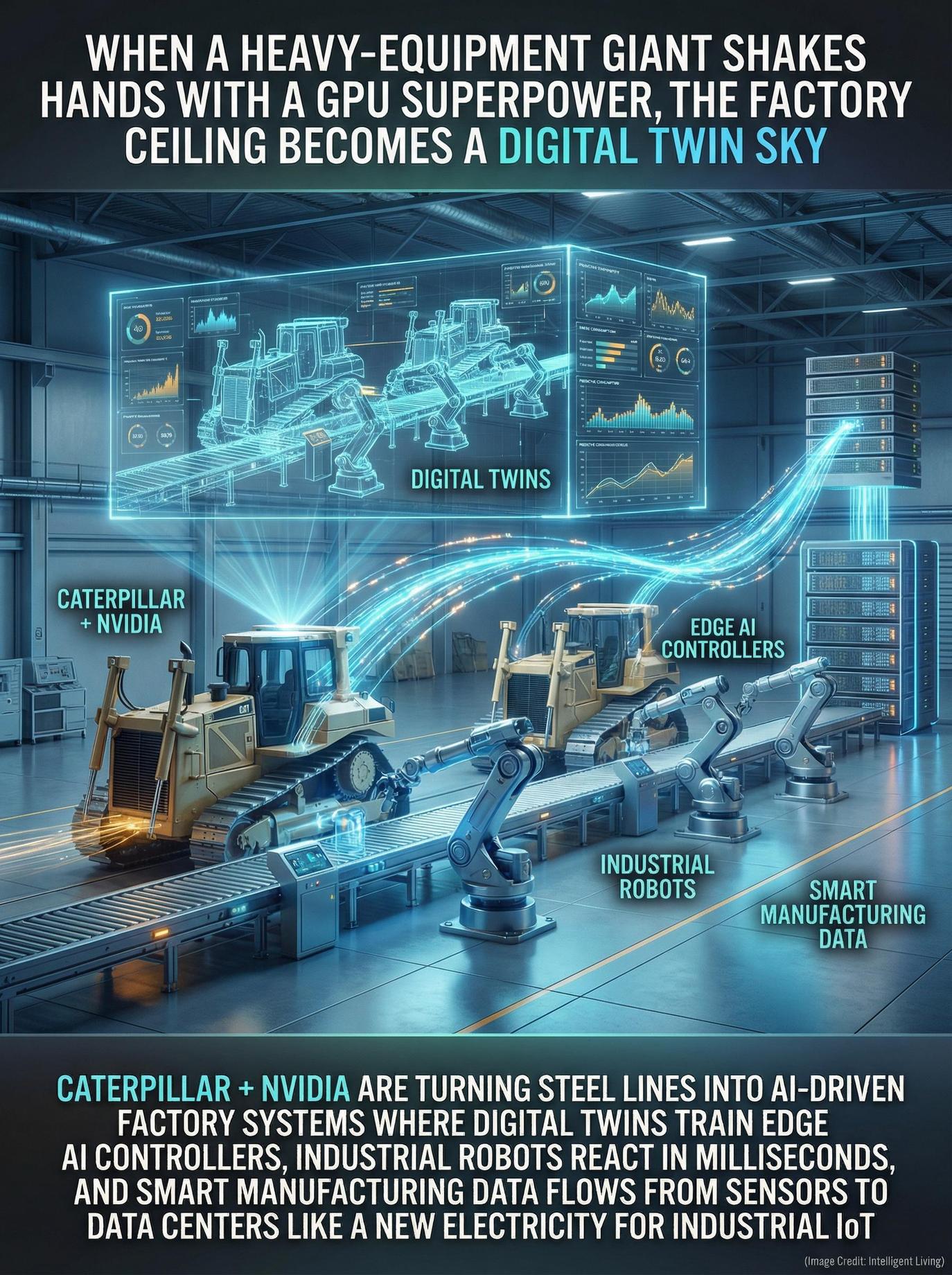
Evolution of Intelligent Manufacturing Infrastructure
Key Milestones in AI-Driven Industrial Systems
The landscape of modern production is changing rapidly as major technological players announce new frameworks for industrial intelligence. Stakeholders can use these insights to measure how quickly digital systems are evolving within their own sectors. Recent surveys on smart manufacturing competitiveness show that over 90% of producers believe these tools will determine their success in the coming years.
- Announcement Date: January 7, 2026, during CES week in Las Vegas.
- Main Focus: Expanding collaboration between Caterpillar and NVIDIA to develop AI-powered manufacturing systems and digital twins.
- Core Technologies: NVIDIA Omniverse, OpenUSD, and NVIDIA Jetson Thor.
- Caterpillar’s Data Foundation: The Helios platform, which manages more than 1.6 million connected assets and stores approximately 16 petabytes of data.
- Operational Goal: Simulate manufacturing lines digitally, test process changes, and optimize supply chain scheduling before implementation.
- Industry Context: More than 90% of manufacturers see smart manufacturing as essential for competitiveness.
- Macro Trend: Data center demand is fueling growth in Caterpillar’s Power & Energy segment, with AI workloads driving generator sales.
Understanding these core components is essential for anyone looking to integrate advanced robotics into existing factory workflows.
Strategic AI Collaboration Announced at CES 2026
At CES 2026, Caterpillar and NVIDIA outlined a plan to bring artificial intelligence directly to the factory floor. While NVIDIA has long been known for its GPU leadership in data centers, this partnership moves that capability into industrial production environments.
Caterpillar’s recent strategic announcement explains that the initiative aims to create AI-driven solutions that transform machines, job sites, factories, and supply chains. This direction highlights a growing demand for intelligent systems that can operate independently within high-stakes industrial zones.
Scalable Deployment through AI Factory Frameworks
Through the AI Factory framework, Caterpillar is building a platform that integrates data from connected equipment and factories to enable faster decision-making. The collaboration also extends into autonomous machinery, where AI inference models can be deployed directly onto equipment using NVIDIA edge computing modules. This approach allows operators to base decisions on real-time insights rather than delayed reports.
Caterpillar’s AI Factory is not a single product but a layered system. It merges large-scale cloud intelligence with on-site edge computing to manage manufacturing tasks such as production forecasting and inventory scheduling. The company describes this direction as a move toward safer, leaner, and more resilient operations.
This collaboration reflects a broader industry shift in which artificial intelligence is no longer limited to software companies or digital natives. Heavy equipment leaders are currently implementing automated frameworks to achieve several critical production goals.
- Reduce operational downtime through predictive monitoring.
- Anticipate supply disruptions using real-time logistics data.
- Optimize production lines for maximum throughput and efficiency.
The result is a fusion of heavy machinery and high-performance computing that redefines industrial innovation. By utilizing these tools, manufacturers can maintain a level of agility that was once reserved for the technology sector.
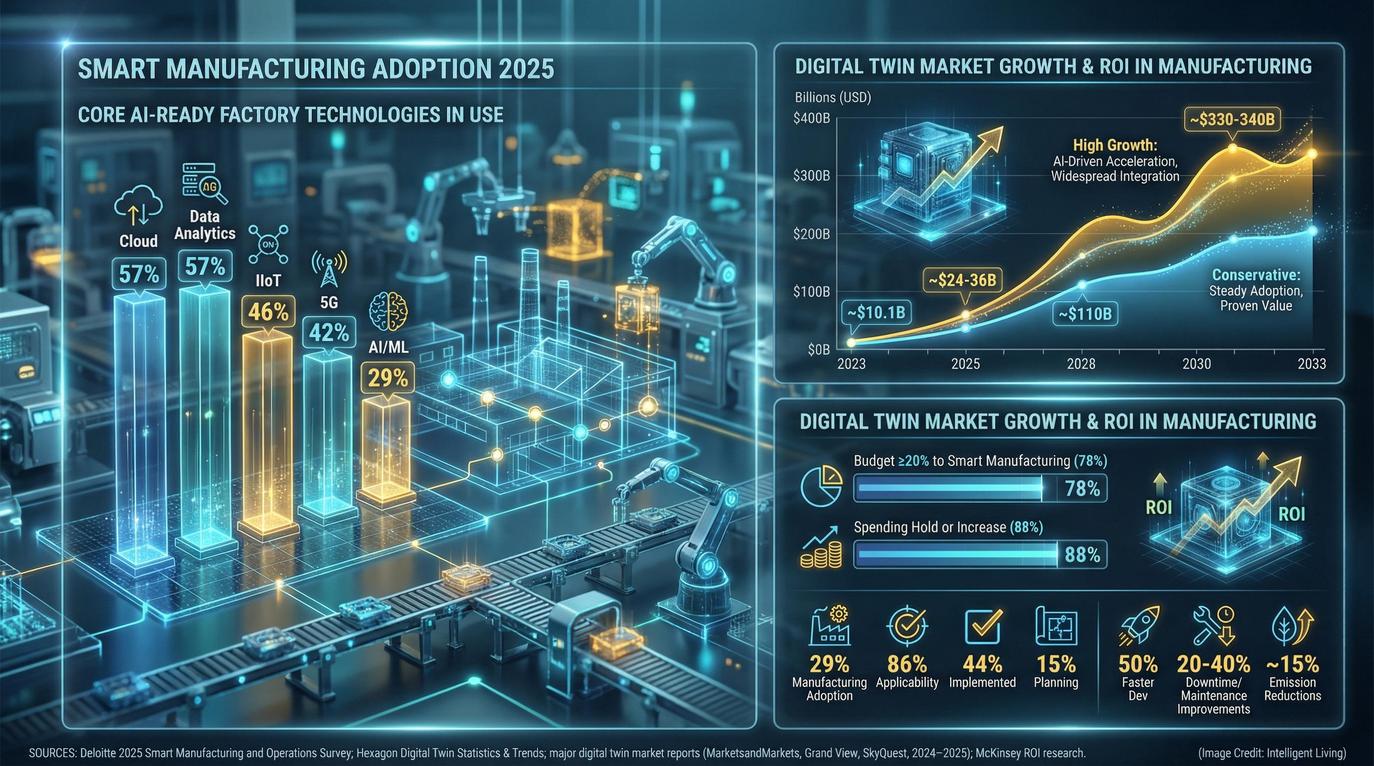
Simulation-First Manufacturing and Digital Twin Integration
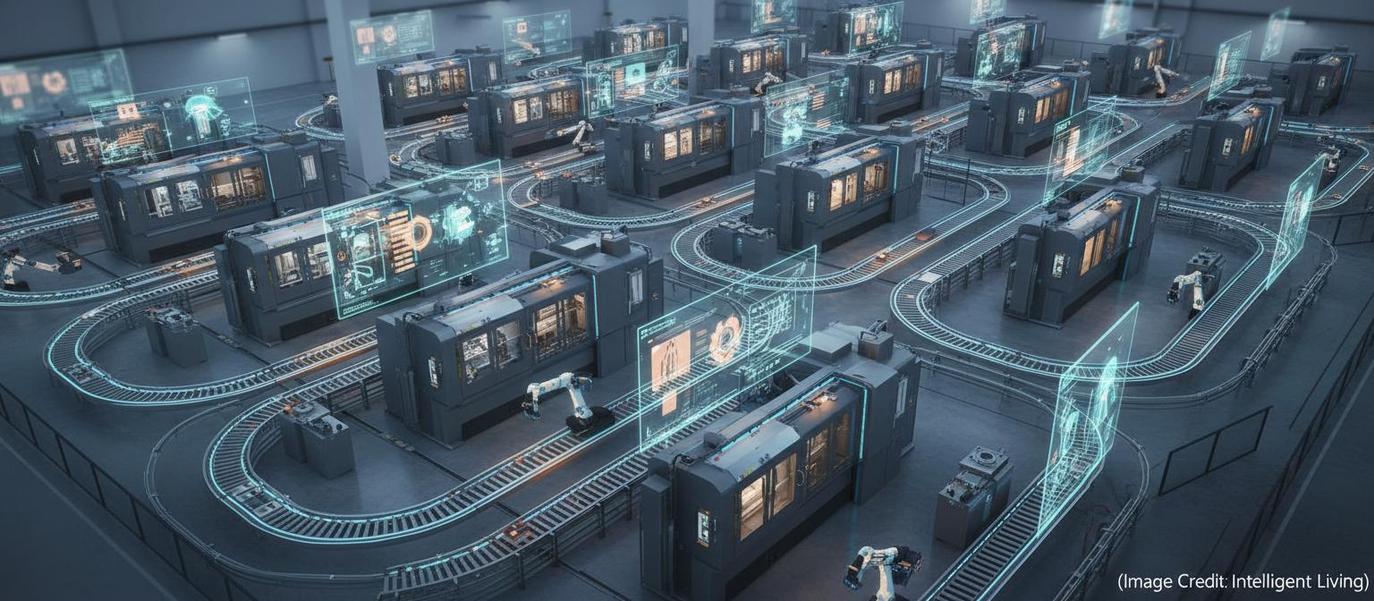
Digital twins sit at the center of Caterpillar and NVIDIA’s strategy. A digital twin is a virtual replica of a physical system, such as a manufacturing line, that uses real-world data to simulate how changes will perform before they are implemented. This concept is increasingly vital in engineering, where virtual replicas are used to simulate high-performance workflows and predict complex outcomes. By adopting this approach, industrial teams can achieve several key operational milestones that improve overall efficiency.
- Predict production outcomes with higher accuracy before physical implementation.
- Reduce costly trial-and-error processes on the factory floor.
- Shorten the path between initial design and final deployment.
Implementing these changes ensures that manufacturing operations maintain their competitive edge in the face of shifting market demands. These strategies allow for a more streamlined transition from concept to creation.
Collaborative Virtual Development with Omniverse
At several United States facilities, Caterpillar is piloting factory-scale digital twins based on detailed collaboration insights regarding the latest industrial advancements. These twins are built with NVIDIA Omniverse, a collaborative three-dimensional development platform that connects multiple design and simulation tools into a single real-time environment. Omniverse is powered by OpenUSD standards for 3D interoperability, which allows engineering teams to model, test, and iterate on everything from production line layouts to material handling systems.
This simulation-first philosophy changes how manufacturers think about efficiency. Instead of shutting down a line to reconfigure equipment, engineers can virtually adjust process parameters, visualize throughput results, and implement only the most effective changes.
Applying this method reduces downtime, minimizes waste, and improves sustainability by optimizing the use of materials and energy. These virtual adjustments allow teams to refine their operations without the financial risks associated with physical trial and error.
Digital twins also enhance collaboration across departments. Design teams, operations managers, and technicians can work together in real time to explore scenarios that would previously take weeks to test physically. The result is a smarter, faster, and more adaptable manufacturing ecosystem that operates with the agility usually associated with modern software development.

Data-Driven Intelligence within the AI Factory Layer
Behind every digital twin is a vast ecosystem of data, and Caterpillar’s data-driven platform serves as the backbone. This internal data environment integrates millions of sensors, connected machines, and production systems to provide a comprehensive picture of factory performance.
Within an AI Factory model, that data becomes the training ground for predictive analytics and automation tools. This centralized intelligence allows for the development of sophisticated models that can anticipate changes in production demand and machine health simultaneously. The AI Factory functions as a control hub that turns data into actionable intelligence.
Using AI algorithms, it can simulate production schedules, identify potential bottlenecks, and recommend real-time adjustments that keep operations stable. Forecasting and scheduling—traditionally two of the most unpredictable aspects of manufacturing—become data-driven processes that adapt continuously as new information flows in. These advancements align with customer-centric strategies for demand planning within modern logistics.
Synergizing Cloud Intelligence and Edge Inference
This infrastructure extends beyond the cloud. Many of the AI models trained inside the factory environment are deployed back to the edge, where they interact with physical machines through embedded systems. These deployments often utilize coordinated cloud and edge intelligence strategies to manage complex tasks. Such edge devices perform rapid inference so that machines can detect anomalies, adjust performance, or halt processes autonomously when safety thresholds are reached.
Caterpillar is building a digital manufacturing nervous system using core digital infrastructure for manufacturing platforms that connects planning, production, and predictive oversight. By converting data into decisions, the AI Factory helps industrial operations evolve from reactive problem-solving to proactive optimization. Factories equipped with this kind of intelligence will not only produce more efficiently but also learn how to improve themselves over time.
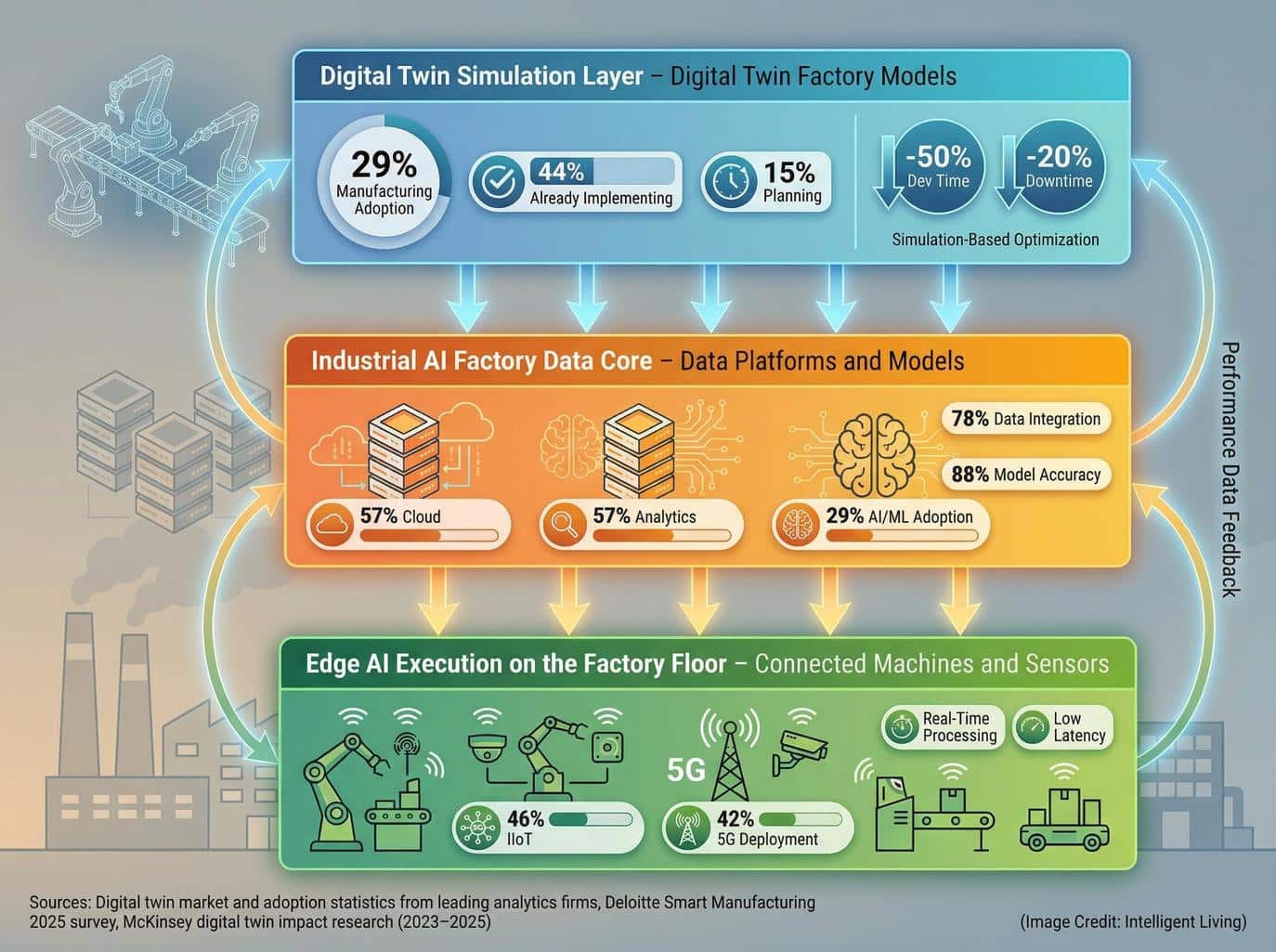
High-Performance Edge AI and Jetson Thor Integration
Edge AI is where Caterpillar’s digital ambitions become physical. The Jetson Thor computing platform allows heavy equipment and manufacturing systems to process data locally rather than relying only on cloud connections. In industrial settings where milliseconds can determine productivity and safety, minimizing latency is critical. Edge AI ensures that decision-making happens at the source, even in environments with limited connectivity.
By embedding Jetson Thor modules into machines and factory devices, Caterpillar enables localized AI inference. This hardware integration allows industrial equipment to perform several critical tasks at the source of data.
- Identify potential mechanical issues before they lead to failure.
- Adjust operational parameters automatically in response to environmental shifts.
- Optimize performance almost instantly to maintain peak efficiency.
Operating at the edge ensures that manufacturing remains stable even when network connectivity is intermittent. This autonomy is essential for maintaining safety and throughput in complex industrial environments.
Optimizing Energy Efficiency with Local Inference
Such capabilities support predictive maintenance, operational safety, and automation with minimal downtime. These functions utilize robotic automation in modern contract manufacturing and bridge the gap between digital and physical systems, creating what engineers describe as cyber-physical integration.
The impact of edge computing extends beyond performance gains. Local AI inference significantly reduces the energy costs associated with transmitting large volumes of sensor data to the cloud. For large-scale manufacturers operating across multiple sites, this approach improves both efficiency and sustainability. Implementing integrated ERP and edge computing architectures ensures that intelligence reduces unnecessary data loads while enhancing responsiveness across interconnected systems.
Human-Centered AI for Stable Industrial Operations
Despite the rise of automation, human expertise remains central to Caterpillar’s approach. The company’s partnership with NVIDIA includes workforce training programs designed to help operators collaborate with AI systems instead of competing against them. In practical terms, this means that engineers and technicians can supervise AI-driven processes, intervene during anomalies, and use AI insights to guide continuous improvement.
Human-in-the-loop systems enhance accountability and transparency. When digital twins or edge devices detect a potential fault, the human operator validates or overrides AI recommendations. This balance prevents automation from running unchecked and keeps decisions aligned with safety standards and ethical guidelines. Maintaining essential human oversight within advanced manufacturing ensures that technology performs best when paired with informed supervision.
Upskilling the Workforce for the AI Era
Workforce adaptation represents one of the most significant hurdles in manufacturing transformation. As automation trends redefining industrial work continue to evolve, training programs tied to the Caterpillar and NVIDIA initiative aim to upskill employees in AI literacy, data interpretation, and digital tool operation. By turning operators into digital supervisors, factories gain both agility and resilience.
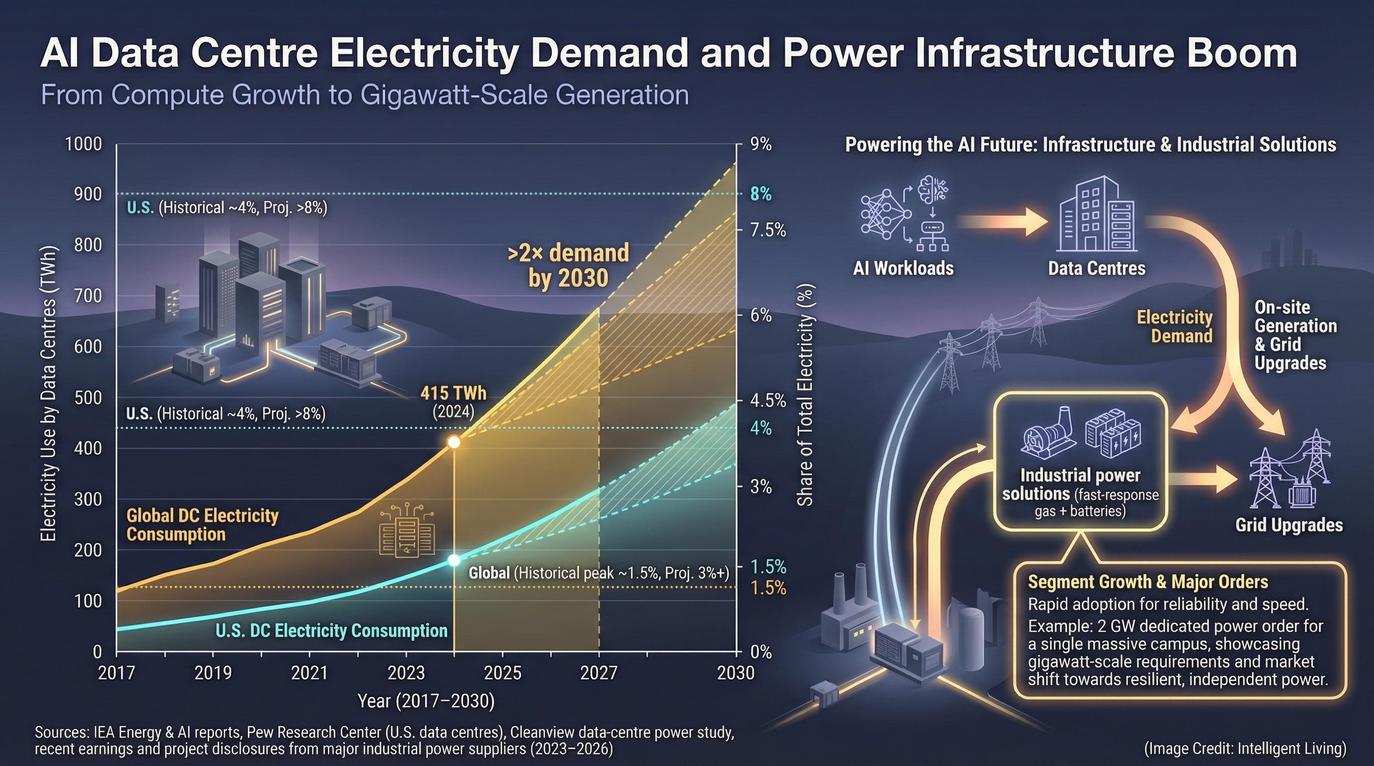
Power Infrastructure Demands and AI Sustainability Realities
Behind every AI-driven factory is an invisible layer of power infrastructure. As AI adoption grows, Caterpillar’s Power and Energy segment has seen increased demand for generators that support energy-intensive data centers. Recent industrial performance reports show that this surge in data center construction has boosted Caterpillar’s profits, although tariffs and supply chain pressures could slow growth in 2026.
This trend highlights how industrial AI innovation also fuels upstream energy markets and reinforces the strategic role of data centers in global infrastructure. The same company building digital twins for manufacturing is simultaneously supplying the power systems that keep AI infrastructure running. It is a dual role that positions Caterpillar as both an enabler and a beneficiary of the AI boom.
Addressing Cybersecurity and Operational Risks
The expansion of AI infrastructure also brings challenges. Operational technology systems remain vulnerable to cybersecurity threats. Implementing cybersecurity principles for operational technology involves segmenting networks, enforcing strict access control, and maintaining continuous monitoring to safeguard critical systems. For manufacturers adopting edge AI, this means balancing innovation with rigorous protection protocols.
Implementation Strategies for Smart Manufacturing Adoption
Manufacturers interested in adopting AI-driven systems can start with small, focused pilots. The first step is identifying a single production line or process that is suitable for simulation. Using digital twin software, teams can model operations, test adjustments, and track measurable outcomes such as downtime reduction or throughput improvement. Early success with these pilots builds confidence and offers the data needed to expand these systems across the enterprise.
Establishing Data Readiness and Oversight
Next, assess data readiness. Many factories collect large volumes of sensor data but lack the infrastructure to manage and interpret it, which is why scaling technological capabilities efficiently is a competitive priority. Investing in a robust data platform similar to Caterpillar’s Helios environment ensures consistent data quality and accessibility.
Introduce human-in-the-loop controls from the outset to ensure expert supervision. Combining AI automation with expert supervision helps prevent missteps and strengthens long-term adoption. Identifying production constraints through smart connectivity ensures that the key to a successful transformation lies in connectivity with purpose. When AI, human oversight, and real-time data work together, the result is not just automation but genuine intelligence.
Future Outlook for the Intelligent Manufacturing Sector
Stakeholders can anticipate a future where heavy machinery and high-performance computing function as a single, unified industrial nervous system. This convergence prioritizes human-in-the-loop oversight to maintain safety and ethical standards while reaping the rewards of autonomous optimization.
As Caterpillar and NVIDIA continue to refine this infrastructure, the global manufacturing sector will reach a level of agility that was previously confined to the world of software development. This evolution ensures that the factories of the future are not just places of production but centers of continuous digital innovation.
Advanced FAQ: AI-Driven Factory Systems
What defines an AI-driven factory system?
An AI-driven factory system utilizes connected sensors and predictive algorithms to automate complex decision-making processes. These systems optimize production schedules and maintenance cycles based on real-time data inputs rather than static reports.
How do digital twins function within manufacturing?
Digital twins serve as virtual replicas of physical production lines, allowing engineers to test configurations in a risk-free digital environment. This simulation-first approach reduces downtime and minimizes material waste during reconfiguration.
Why is edge AI necessary for industrial machinery?
Edge AI processes data locally on the machine to minimize latency and ensure immediate responsiveness. This capability is critical for safety-critical tasks and autonomous operations where cloud delays are unacceptable.
What role does OpenUSD play in factory simulation?
OpenUSD provides a universal language for 3D data exchange, enabling different design and simulation tools to work together. This interoperability ensures that digital twins remain consistent across various software platforms and engineering teams.
How does the Helios platform manage industrial data?
Helios serves as a centralized data foundation that integrates millions of connected assets into a single analytical hub. It provides the high-fidelity data needed to train AI models and drive accurate production forecasting.


