
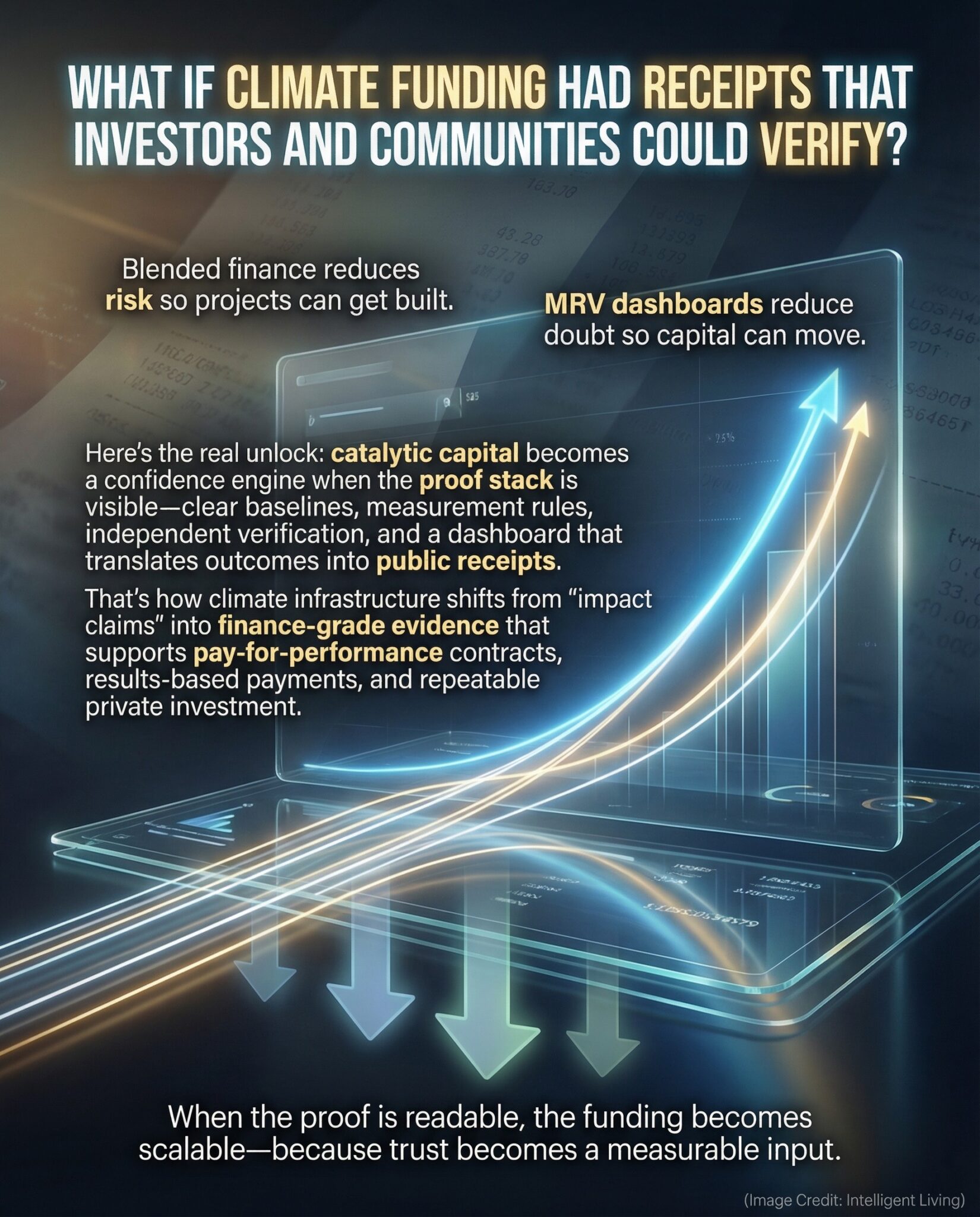
Blended finance combines public, philanthropic, and private money to fund climate infrastructure that would not be bankable on its own. Practitioners define this financing model as leveraging catalytic capital from public or philanthropic sources to increase private investment in sustainable development. Credible outcome measurement serves as the structural glue for durable capital stacks. When measurement is built with verification and transparency, dashboards stop being decorative reports and start acting like risk-reduction infrastructure for investors and plain-language accountability for the public.
Market-rate investors frequently hesitate to fund climate projects when perceived technology or policy risks remain unmitigated. Strategically placed public funds act as a safety valve, improving risk-adjusted returns for private investors and enabling projects that would otherwise stall.
High-quality data turns these theoretical benefits into bankable evidence. This evidence shifts the conversation from speculative impact to verified performance.
Climate dashboards function as the primary interface for this transition. By presenting complex MRV data as clear, navigable stories, these platforms provide the transparency required to scale climate solutions. Effective dashboards transform raw metrics into public receipts, ensuring that every dollar spent contributes to a measurable, verifiable outcome.
Catalytic Capital and the Blended Finance Stack: Strategic Frameworks
Why Dashboards Accelerate Capital Mobilisation:
Accelerating capital mobilisation requires platforms that translate complex data into actionable insights for all stakeholders. These dashboards serve as the primary interface for tracking catalytic capital and verifying its impact on sustainable development.
- Establishing a clear definition of blended finance allows private investors to participate in projects that would otherwise stall due to high-risk profiles.
- Implementing MRV protocols turns estimated climate benefits into evidence that can support results-based payments, covenants, and public accountability.
- Public-facing portals and inventory tools make outcomes legible with trend lines, methods, and downloadable data rather than vague claims.
Centralising these metrics allows organisations to provide the transparency needed to unlock larger pools of capital. Clear data visualisation ensures that every stakeholder understands the project’s progress and its contribution to global climate goals.
Executing Blended Finance through Real-World Infrastructure Pilots
Defining Bankability Criteria for Sustainable Development Projects
Bankable projects maintain future cash flows that satisfy lender criteria while ensuring risks are priced or contractually managed.
Strategically allocated catalytic funds function as risk-mitigation buffers that make the overall package financeable for climate projects with strong public value but uncertain or delayed cash flows.
Strategic Finance Instruments for Risk Mitigation and Scaling
Managing the diverse risks associated with climate-related infrastructure involves a sophisticated suite of financial instruments. Core financial instruments remain consistent across diverse projects, regardless of specific branding or nomenclature.
- Guarantees: A backstop that covers some losses if things go wrong, similar to insurance for lenders and investors.
- First-Loss Capital: Money that absorbs losses before other investors do, acting like a shock absorber in the capital stack.
- Concessional Debt: Loans with better-than-market terms that lower borrowing costs and stabilise cash flow.
- Technical Assistance Grants: Early-stage funds that pay for project preparation, permitting, community engagement, and monitoring systems.
Strategic application of these instruments minimises the need for broad subsidies by targeting the specific constraints of a project. This precision allows for the efficient use of public funds to maximise the mobilisation of commercial investment.
Verified data distinguishes theoretically sound projects from those ready to sign enforceable contracts:
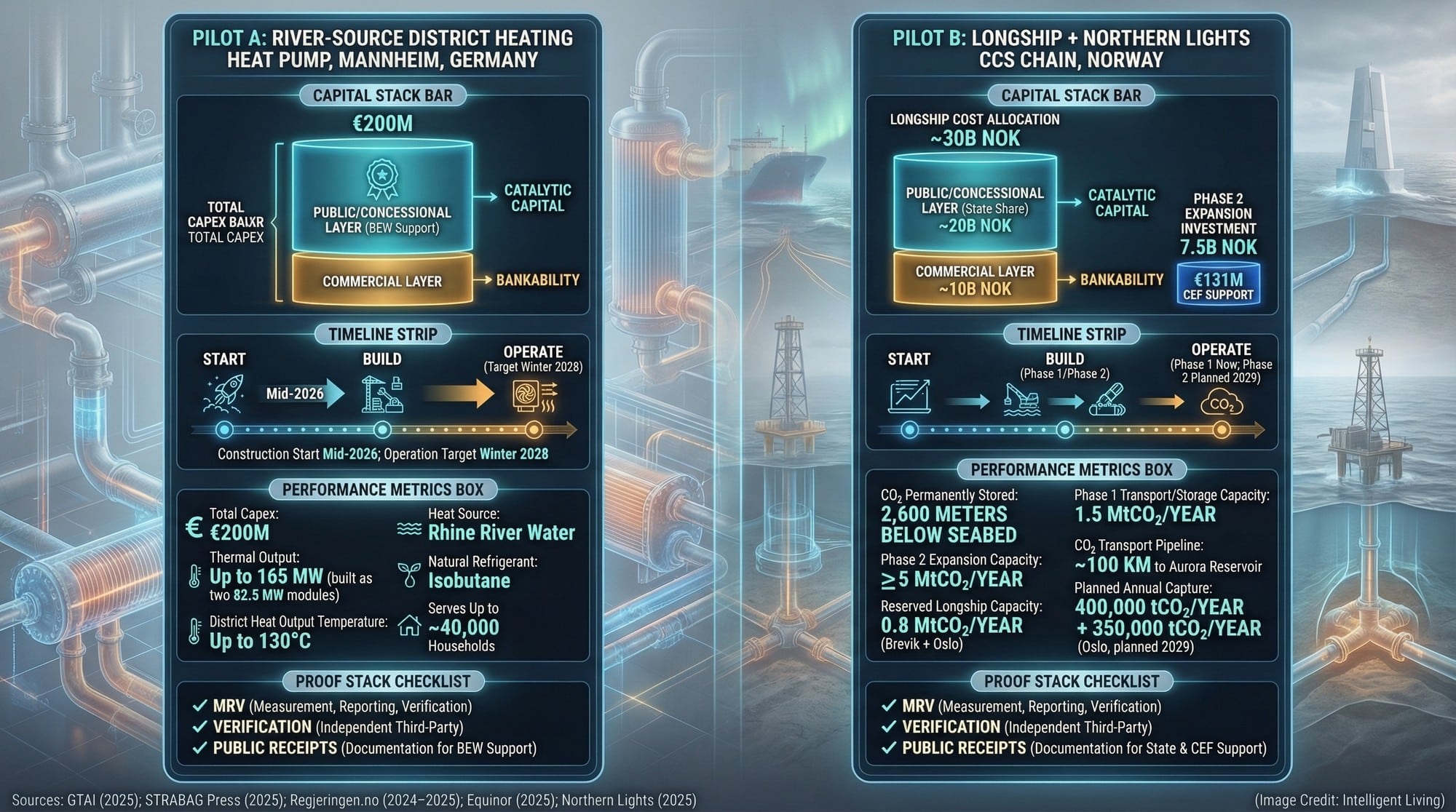
- District Heating (Germany): Deploying heat pumps alongside customer commitments and measurement plans stabilises long-lived assets for financing.
- Carbon Infrastructure (Norway): Establishing transport and storage buildouts reduces risk for major industrial participants through shared systems.
Targeted risk-rebalancing ensures that instruments address a specific barrier rather than subsidising the entire project. Utilising concessionality and risk-sharing tools encourages the minimum support needed to crowd in commercial capital.
Integrating Public Receipts into the Project Procurement Lifecycle
When public or philanthropic money helps unlock a project, the public deserves a readable record of what it paid for and what changed as a result. Public receipts address the foundational questions of stakeholders: what was funded and how it was verified?
Standardised open contracting data ensures project transparency, allowing receipts to function as verifiable audit trails across the project lifecycle.

Mobilising Private Investment: Empirical Evidence from Global Infrastructure
Analysing Aggregate Data for Blended Finance Infrastructure Deals
Blended finance maintains a growing empirical record, though results fluctuate across different sectors and structures.
Convergence data illustrates wide variation in the private capital mobilised per dollar of concessional support. These findings reflect the unique risk profiles found in various emerging market infrastructure deals.
Expanded infrastructure datasets now make it easier to compare how structures, geographies, and sectors perform over time.
Interpreting Mobilisation Ratios in Maturing Decarbonisation Markets
The mobilisation ratio is the private capital that shows up per public or concessional dollar. Median mobilisation levels below 1.0 indicate maturing markets rather than systemic failure in blended finance structures. These levels often suggest that catalytic capital is being used to build models that can eventually run with less support.
Successful mobilisation strategies align with bond market norms where green bond rules require issuers to track allocation and describe impact measurement. Neighbourhood-scale decarbonisation packages further demonstrate how stacking loans and risk-sharing makes upgrades pencil out.
Case Study: Verifying Retrofit Savings in Municipal Decarbonisation
A mid-sized town started with a pilot retrofit of three public buildings. Once verified savings matched forecasts, lenders treated the next phase as a repeatable pattern instead of a gamble. In everyday terms, the proof made the loan feel normal.

The Proof Stack: Enhancing Investment Security Through Verified Data
Distinguishing Decision-Grade MRV from Communication Metrics
Establishing Transparent Baselines and Emission Reporting Boundaries
MRV is designed to produce decision-grade evidence. Marketing metrics can be helpful for communication, but without baselines, methods, and verification, they do not reduce investor uncertainty.
Documenting assumptions and measuring baseline deviations allows teams to generate decision-grade evidence. Professional accounting standards define boundaries for corporate emissions, while value chain frameworks make upstream and downstream impacts comparable.
Technical Standards for Finance-Grade Climate Metrics
Simplifying complex technical terminology requires aligning formal carbon accounting standards with concrete operational milestones. This alignment ensures that public dashboards maintain consistency and clarity for all users.
Prioritising Independent Verification Over Subjective Self-Reporting
Atmospheric approaches like carbon-14 analysis demonstrate the necessity of independent measurement when incentives to overstate progress exist.
Engineering Transparent Systems for Finance-Grade Climate Data
Ensuring Data Quality through Robust MRV Checkpoints
Understanding the internal mechanics of a public receipt is essential for ensuring accountability in climate finance. These receipts provide a structured breakdown of how public funds are utilised and the specific outcomes they generate.
- Defining the baseline clearly and explaining its appropriateness.
- Documenting every physical or technical change within the project boundary.
- Verifying outcomes through independent third-party audits.
Maintaining this level of detail prevents the common pitfalls of self-reporting and opaque data structures. Rigorous documentation serves as the final guardrail for the integrity of the proof stack.
Operational Efficiency through Real-Time Performance Signals
Near real-time signals help teams catch performance drift early. Datasets like carbon-intensity APIs make it possible to connect operational choices to emissions outcomes.
Remote sensing and open datasets ensure that industrial pollution remains transparent to global auditors and enforcement agencies, reinforcing trust through transparency.
Stabilising Measurement Methods for Third-Party Verification
Verification is what turns a dashboard into proof. Third-party audits, standardised rules, and transparent logs all increase confidence. The goal is not perfection. The goal is a method that is stable enough to be trusted.
Dashboards as Performance Contracts: Pay-for-Outcome Models
Mitigating Uncertainty via Performance-Based Contracting and M&V
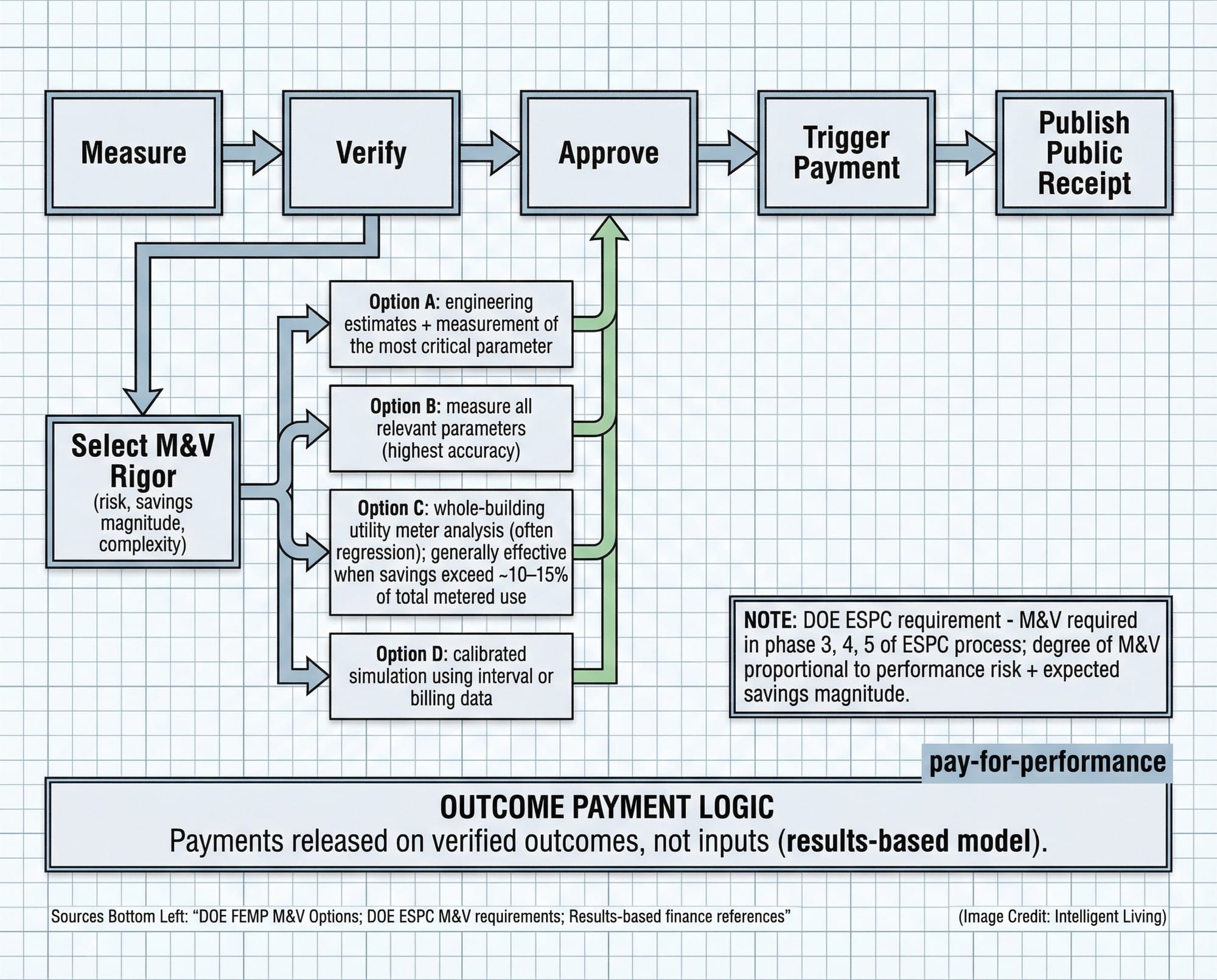
Energy efficiency has long used pay-for-performance logic. Utilising mandatory M&V protocols in performance contracting allows repayment to be structured around verified outcomes rather than promises.
Scaling Programmatic Finance through Results-Based Payments
Results-based finance pays for verified outcomes rather than inputs. The Program-for-Results model links disbursements directly to achieving specific programme results rather than funding activities without checks.
Industrial transition programmes frequently utilise technical milestones as activation mechanisms for public support in sectors like hydrogen deployment.
Converting Operational Data into High-Value Impact Units
Leveraging Device Telemetry for Defensible Carbon Value
Telemetry can convert activity data into impact units when methods are transparent. Bundling debt with results-based payments ensures finance responds to measured performance.
Continuous sensing technologies are currently transforming logistics, replacing manual spreadsheets with audit-ready emissions metrics derived from fleet telemetry.
Automating Capital Disbursement via Verified Performance Triggers
Once measurement rules and verification steps are agreed upon, finance can be designed so payments release on the same cadence as proof. This reduces administrative lag and makes it easier to manage performance problems early.
Case Study: Performance Triggers in Rural Microgrid Deployment
A rural microgrid pilot structured operator payments around verified uptime and delivered energy. When the first month underperformed, the data made the failure obvious, and a remediation plan became part of the contract rather than a dispute.
Transforming Compliance Metrics Into Actionable Narrative Data
Elevating Reporting Quality Through Global Disclosure Standards
Disclosure standards push reporting toward comparable, auditable metrics. Standardised reporting elevates corporate dashboard quality through sustainability disclosure frameworks that treat climate-related targets as decision-useful information.
Dynamic tools like ESG compliance dashboards refresh metrics as new operational data arrives, moving beyond year-end scrambles.
Evolving Static Compliance into Dynamic Performance Updates
Implementing Milestone-Based Reporting for Stakeholder Engagement
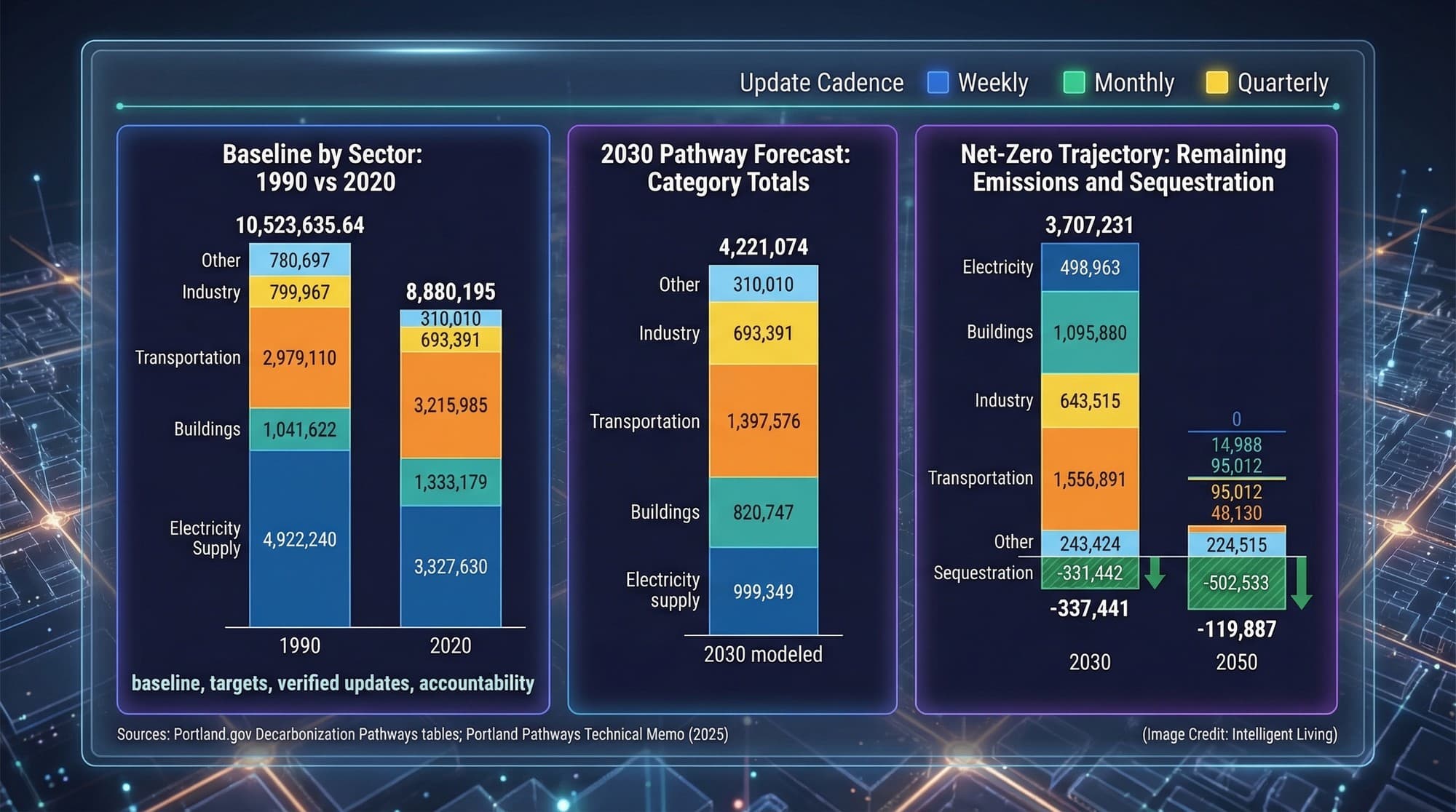
Instead of a static annual report, dashboards can publish rolling updates that read like short episodes: a maintenance fix that improved efficiency, a milestone hit on schedule, or a verified dip in emissions tied to operational change.
Synthesising Technical and Plain-Language Impact Reports
Investors prioritise methods and verified totals, while communities look for plain-language summaries and concrete maps of local benefits.
Tethering claims to disclosure structures avoids the trap of vague slogans while maintaining consumer trust.
Case Study: Municipal Transparency and Resilience Data Loops
A city published weekly updates during a heat season that tracked energy demand, resilience actions, and verified progress. Residents used the maps to find resources, and finance teams used the same data to build a stronger case for the next phase of resilience upgrades.
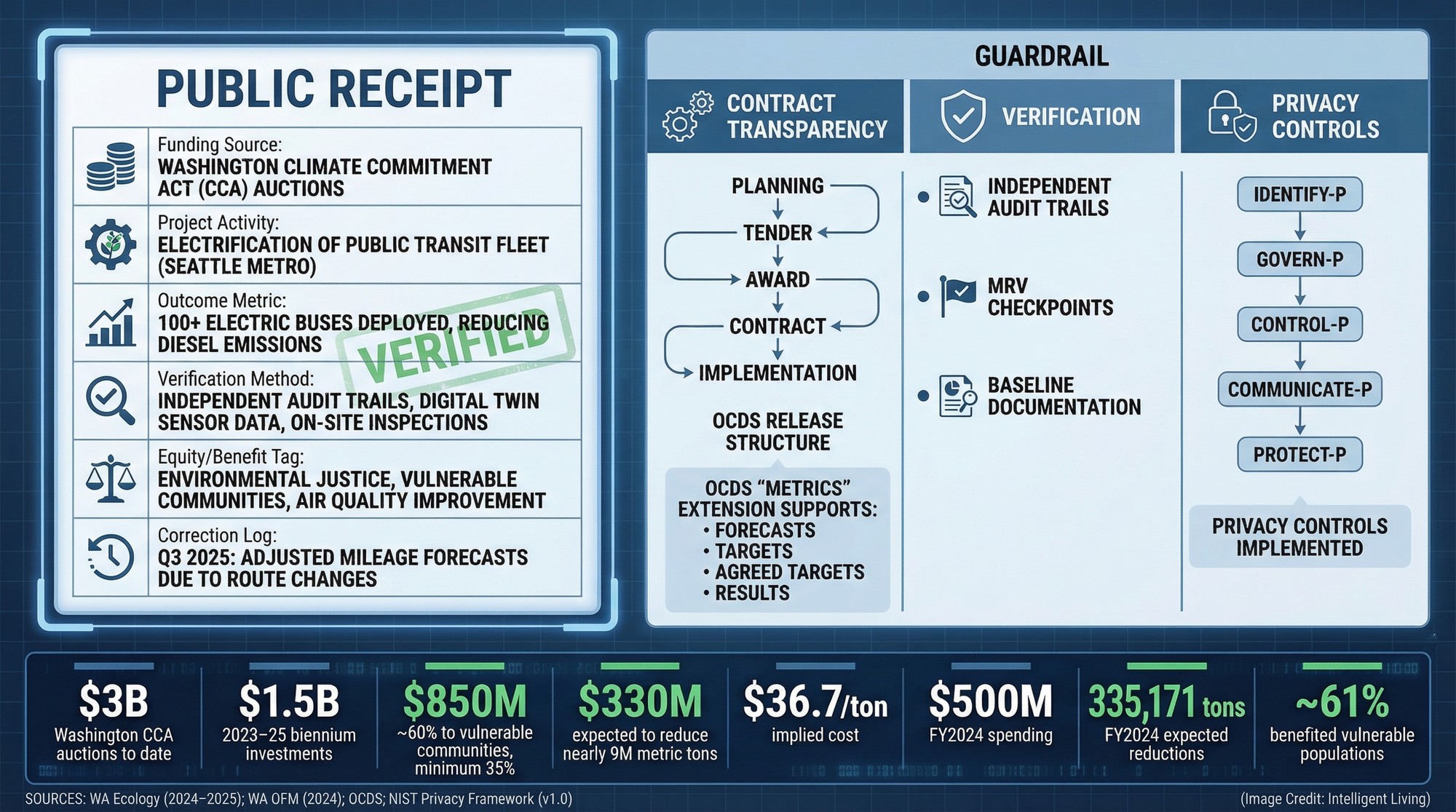
Public Receipts and Risk Guardrails: Ensuring Data Integrity
Defining the Essential Components of a Public Receipt
Sustaining the integrity of a proof stack requires a proactive approach to identifying and mitigating data vulnerabilities. Organisations must establish clear rules for disclosure to prevent the erosion of investor and public trust.
- The original funding source and capital stack configuration.
- Specific project activities tied to the disbursement.
- Measurable outcomes verified by independent MRV.
- The specific verification method used for the report.
Continuous monitoring and independent audits remain the most effective strategies for securing these data systems. By prioritising transparency, project leads can ensure their dashboards remain powerful tools for capital mobilisation.
Benchmarking Accountability via State-Level Climate Dashboards
State-level investment tracking pairs spending with benefit context to make accountability evidence-based.
Economic stability and climate risk are increasingly monitored via global indicators to facilitate cross-country comparisons.
Evidence-Based Accountability as a Mitigation for Political Risk
When citizens can see what was funded and what changed, political friction drops. Clear receipts make it harder to argue in slogans and easier to argue with evidence.
Managing Proof Stack Integrity: Failure Modes and Solutions
Identifying Structural Vulnerabilities in Data Disclosure
Proof stacks fail when they rely on opaque data or unverified claims. Avoiding these pitfalls is essential for maintaining investor confidence.
Common failure modes include:
- Bad Baselines: Optimistic or inconsistent baselines inflate perceived impact.
- Weak Verification: Self-reported metrics without checks invite scepticism.
- Privacy and Data Rights: Telemetry can reveal personal patterns; safeguards matter.
- Complexity Without Meaning: Excess data without method and narrative defeats engagement.
Addressing these gaps early ensures that blended finance dashboards remain credible tools for capital mobilisation.
Implementing Strategic Guardrails for Credible Capital Mobilisation
International guidance on concessionality in blended finance emphasises documenting additionality to ensure support remains targeted.
Credibility breaks when outcomes do not match stated targets, as seen in recent performance penalties for missed carbon-capture requirements.
Case Study: Correcting Baselines through Independent Verification
A water savings programme discovered, after independent verification, that a large share of reported gains came from counting change rather than a physical improvement. Correction of the baselines and updates to the dashboard allowed future contracts to incorporate better performance data.

Deployment Blueprint: Executing a 90-Day Public Receipts Pilot
Staged Implementation for Initial Transparency Pilots
Phase 1: Establishing Scope and Metric Baselines
- Financial metrics: track all dollars disbursed across the capital stack.
- Outcome metrics: verify emissions reductions and energy savings.
- Equity indicators: measure households served and community reach.
Publishing baseline assumptions and measurement methods in plain language ensures that all stakeholders understand the starting point of the pilot.
Phase 2: Deploying Metering and Visualisation Infrastructure
- Deploy metering and telemetry where needed and set a predictable update cadence.
- Build one public page that shows the current values, short explanations, and the verification approach.
Phase 3: Finalising Verification and Public Disclosure
- Use independent verification where appropriate or establish documented verification rules.
- Publish the first public receipt and incorporate stakeholder feedback as method improvements, not marketing edits.
Critical Readiness Checklist for Transparency Pilots
Monitoring progress during a transparency pilot requires consistent adherence to technical and procedural standards. These steps provide the necessary structure for converting initial data into long-term financial proof.
- Define methodology in plain language
- Choose a verification approach
- Test dashboards for clarity and accessibility
- Publish, correct, and iterate
Teams looking for a proven performance-contract workflow often start with the same steps used in federal energy savings performance contracts to adapt measurement rules to climate outcomes.
Closing Perspective: Strengthening the Synergy of Capital and Proof
Publicly readable proof serves as the foundational bridge that allows public dollars to catalyse private finance. Credible dashboards ensure that the relationship between public funding and private mobilisation remains transparent. When measurement becomes verification and dashboards become public receipts, the capital stack and the proof stack work together to scale climate solutions across global markets.
Verified data mitigates policy-related volatility while fostering the institutional trust required for sustained investment. Robust monitoring systems allow stakeholders to see exactly where capital flows and what impact it delivers. This transparency creates a repeatable pattern of success, ensuring that future climate infrastructure projects are easier to fund, audit, and support.

Core Knowledge: Blended Finance, MRV, and Public Receipts
1. What Defines Blended Finance?
Blended finance uses concessional public or philanthropic tools to improve risk-return profiles, allowing commercial capital to participate in sustainable development projects.
2. Why Is MRV Vital for Climate Projects?
Measurement, reporting, and verification (MRV) provide the documented evidence required to support performance contracts, public accountability, and results-based payments.
3. How Fast Can Dashboards Trigger Payments?
Properly designed programmes can establish credible payment triggers within 90 days once metering, baselines, and verification protocols are defined.
4. Do Climate Dashboards Protect User Privacy?
Anonymised datasets, aggregate metrics, and strict access controls ensure that transparency coexists with data protection and privacy rights.
5. What Makes a Dashboard Trustworthy?
Trust stems from clear baselines, stable measurement methods, third-party verification, and prompt corrections when operational assumptions change.


