
In the intricate tapestry of public health, the thread of vaccination confidence weaves a complex pattern that does not always align with the image presented by the media. A discerning eye is needed to unveil the contradiction between the media’s narratives of widespread vaccine hesitancy and the statistical evidence that suggests otherwise. It’s become increasingly important to dissect the role of media, especially social media, in molding public perception—often with a brush soaked in hyperbole rather than fact.

I. The Distorted Picture of Vaccine Hesitancy
Recent years have accentuated the chasm between reality and representation, where tweets and headlines foster a skewed specter of a vaccine-hesitant society. Unfortunately, this digital smoke and mirrors act can substantially influence the layperson’s health choices, causing ripples of consequence throughout the delicate ecosystem of societal health measures. Thus, understanding the true narrative is more than an intellectual pursuit—it’s a public imperative that safeguards our collective well-being.
In the pursuit of that collective well-being, it becomes essential to bridge this chasm with beams of transparency and education. Media entities have a responsibility to illuminate rather than obscure, to clarify rather than confound. Year by year, as vaccines continue to play a crucial role in protecting our global village from the onslaught of both old diseases and new pathogens alike, our societal narrative must evolve.
The portrayal of vaccines in the public and digital domains should not echo unfounded fears but instead resonate with the chorus of consensus among health experts worldwide. Recognizing the strength in unity, the community of nations, healthcare providers, and media must join forces to amplify a message that resonates with reason and is grounded in verified scientific empiricism.

II. Understanding Vaccine Confidence: Busting Myths with Solid Evidence
To ground our notion of vaccine confidence in reality, we unearth statistics from an unexpected ally—solid, unbiased evidence. A Pew Research Center poll, referenced by experts at the University of Colorado Anschutz Medical Campus, found that a solid 88% of adults possess robust confidence in childhood vaccines, such as those combating measles, mumps, and rubella. This statistic stands as a testament to the inherent trust most individuals have in the merits and safety of vaccination, challenging the inflated perception of apprehension and defiance.
The Centers for Disease Control and Prevention (CDC), a cornerstone of disease management and prevention, has contributed additional compelling data to this dialogue. A recent study illuminated that 93% of kindergarten students meet state-required vaccine coverage, a statistic that shines a light on reality in the shadows cast by media-induced hesitancy hysteria. These figures reveal a very different narrative—one where the majority of parents trust and adhere to vaccination schedules recommended by healthcare authorities, an act of silent conviction that unfortunately does not scream as loud as sensationalist headlines.

III. Erosion of Trust: Media Focus Fuels a False Narrative
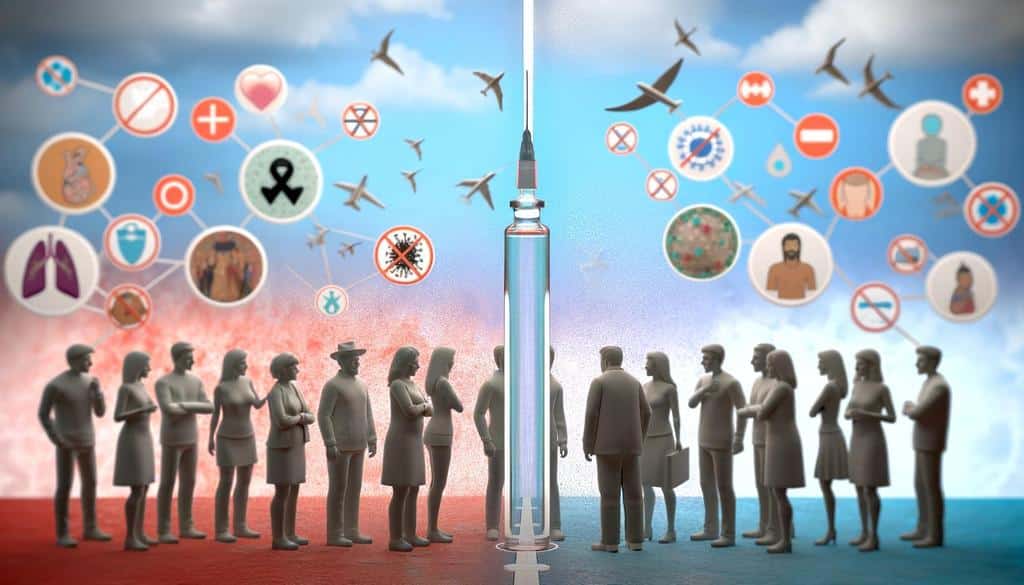
This article’s pulse beats with urgency in counteracting the “sky is falling” rhetoric that pervades media coverage of vaccination trends. The constant focus on vaccine hesitancy echoes through the virtual chambers of the digital world, further reinforcing a false narrative—a looming sense of imminent danger that, in reality, may not be as pervasive as suggested. This framing risks embedding a norm within the public consciousness where hesitation and refusal take precedence over broad compliance.
An analysis of the social media ecosystem exposes this echo chamber effect, as detailed in a study featured in the reputable journal Nature. Online social networks often self-segregate into ideological clusters, with users retweeting and favoriting content that reinforces their predispositions. When these clusters skew towards vaccine skepticism, they insulate themselves from scientific discourse and evidence-based health recommendations, undermining the effectiveness of public health strategies seeking to bolster vaccine uptake.
As you navigate through these digital corridors, it’s paramount to tread with a critical mind, recognizing the dissonance between the magnified voices of few and the grounded actions of many.
IV. Vaccination Attitudes and Political Polarization
The discourse surrounding vaccine hesitancy is not solely a product of individual health concerns but is deeply entrenched within the fabric of political polarization. Research published on PubMed Central illustrates that individuals who follow political figures and partisan sources, particularly in the United States, often exhibit a marked shift in their outlook on vaccinations. The virtual company we keep, especially on platforms such as Twitter, indeed has the power to sway our perspectives; individuals embedded in networks dominated by influencers tend to display pronounced hesitancy towards the COVID-19 vaccine.
This phenomenon of polarization, however, exhibits a starkly different pattern across the Atlantic. Unlike in the United States, where political persuasion and vaccine outlooks are noticeably aligned, the research reveals that in the United Kingdom, this entanglement is far less apparent. Media in the US tends to mirror, if not amplify, the divisive tones of its political landscape, thus exacerbating vaccine hesitancy narratives. Understanding these national dichotomies is crucial, as they underscore the unique blend of cultural, societal, and political ingredients that contribute to the public health stew of each nation.

V. The Actual Vaccination Scenario: Most Parents Play It Safe
Despite the tumult of media frenzy and the cacophony of voices that seem to spell doom, a significant narrative remains largely unheard—the one where most parents diligently play it safe. Beyond the smokescreen of vaccine aversion lies a realm where the majority choose compliance with CDC-recommended vaccination schedules—the silent majority whose actions may lack sensational appeal for headlines but bear the most significance for communal health.
A beacon of factual reporting from the University of Colorado Anschutz Medical Campus garners attention to this very fact, emphasizing that most parents are indeed ensuring their children are protected against preventable diseases in alignment with professional health guidelines. Pediatricians actively engaged in this silent revolution attest to their collaborative and enlightening discussions with parents—conversations centered around the well-being of children and the community at large. It is in these everyday interactions that the real story unfolds, one of continued trust and deliberate action against the backdrop of alarmist narratives.

VI. The Impact of Online Behavior on Vaccine Hesitancy
Mirroring the intimate link of the offline world with online sentiment, the behavior we exhibit on digital platforms holds remarkable influence over public health decisions, especially concerning vaccine hesitancy. The correlation between low-quality information sharing and hesitancy is not simply a correlation of convenience but is substantiated by empirical findings detailed in PubMed Central. It emphasizes the critical role of digital consumption habits in shaping public perception and action towards health initiatives.
The digital dissemination of hyper-partisan news coaxes the reader into a state of doubt, where the veracity of information is ambiguous and trustworthy sources are overshadowed by the din of clickbait content. As our engagements with such media intensify, so does the propensity to view vaccination through a lens of skepticism and misinformation. This situation underscores an urgent need for strategies that not only combat misinformation but promote a culture of critical media literacy among the populace.

VII. Strategies for Positive Vaccine Communication
In a climate where fear and hesitation can easily propagate, embracing effective strategies for positive vaccine communication becomes paramount. Experts from CU Anschutz News emphasize the importance of normalizing immunization as a societal norm. It is essential to move away from portraying vaccination as a topic mired in controversy and towards one that is an ordinary, widely accepted facet of healthcare. This shift requires active reframing in the way health narratives are delivered, relying on evidence and expert input rather than sensationalist rhetoric.
Healthcare providers, armed with the scientific rigor and trust of their patients, are at the frontline of this communicative crusade. Studies suggest that framing vaccine recommendations with an expectation of acceptance is more effective than approaching the conversation anticipating skepticism. Clear, compassionate, and confident communication can dissolve barriers of doubt, laying down the foundations for a healthier, well-vaccinated public.

VIII. Building Trust through Partnerships and Transparency
To successfully address vaccine hesitancy and enhance public confidence in immunization, there must be an emphasis on fostering multidisciplinary partnerships and strategies that build trust. As noted by physicians O’Leary and Higgins, tackling the complexity of vaccine hesitancy isn’t just a medical challenge—it’s a collaborative effort involving academia, community leaders, policymakers, and the general public.
Creating an environment where transparency prevails and where the histories of injustice felt by specific communities are not just acknowledged but actively addressed plays a significant role in cultivating trust. The path forward requires inclusive dialogue, empathetic outreach, and a concerted effort to ensure that vaccine information is not only accessible but also resonates with the diverse needs of communities.

IX. Case Studies: From Media Frenzy to Grounded Facts
It’s through case studies we see the tangible impact that accurate, engaging health communication has on public behavior. One compelling example reported in Nature illustrates the efficacy of using virtual reality to improve vaccination intentions. Participants in the study were transported into an immersive world where they could actively experience the benefits of herd immunity. This novel approach leveraged the power of technology to shift perspectives and depicted how tech can become an ally in public health education rather than a conduit for misinformation.
Such instances underline the potential of creative, science-backed campaigns that shift the narrative from one characterized by uncertainty to one steered by clarity and evidence. By pushing beyond the conventional limits of health communication, these initiatives offer glimpses of a future where trust in vaccines is strengthened not by fear but by understanding and experience.

X. Conclusion: The Truth about Vaccine Hesitancy
As we traverse the multifaceted discourse surrounding vaccination, it becomes evident that critical examination of media narratives is more than a necessary exercise—it is a civic duty. The pervasive myths surrounding vaccine hesitancy, amplified by media and compounded by the echo chambers of social networks, require us to advocate for a data-driven approach. This approach upholds the reality of a mostly compliant, health-conscious public that trusts in the protective powers of vaccines.
The journey through this complex landscape—from uncovering misconceptions to identifying the root of misinformation and presenting evidence-based truths—illuminates the path to a healthier society. The evidence points overwhelmingly to a public that is largely aligned with scientific and medical recommendations, even though this reality is often obscured by the dust kicked up by sensationalist reporting and polarized online discourse.
In our resolve to combat vaccine hesitancy, we recognize that the quiet majority of individuals making prudent health decisions for themselves and their children deserve to be acknowledged and supported. It is imperative that we continue to spotlight the strides made in public health, the unwavering commitment of parents to vaccination, and the diligent efforts of healthcare providers who imbue the process with trust and transparency.
This is a call to all stakeholders—media professionals, healthcare providers, policymakers, and the public—to embrace a narrative informed by facts, to support initiatives that articulate the value of vaccines, and to engage in dialogue that fosters understanding. Let us collectively endeavor to equip our communities with the knowledge to discern truth from fiction, to reinforce the actual narrative of vaccination, and to solidify a foundation for a robust and well-informed public health framework.


