
COVID-19 studies have been appearing in medical research journals or made available in pre-print form since January. SARS-CoV-2, the virus that causes COVID-19, has had a profound impact on human society in every facet. In a way, you could say this pandemic is responsible for a lot more than sickness and death. The virus is causing a reaction to global societal lockdowns, market disturbances, and political unrest. Yet there is one thing we are all, at least somewhat, aware of; a great mass of unreliable information has flooded our lives.
It seems to be in every place that we look. Our computers, phones, televisions, and radios seem to be vying for our attention. We are struck with opinion, moved by ideology, and influenced by advertising and pushing our own thoughts onto one another. In conversations that we have with friends and family, there is such a great myriad of differing opinions.
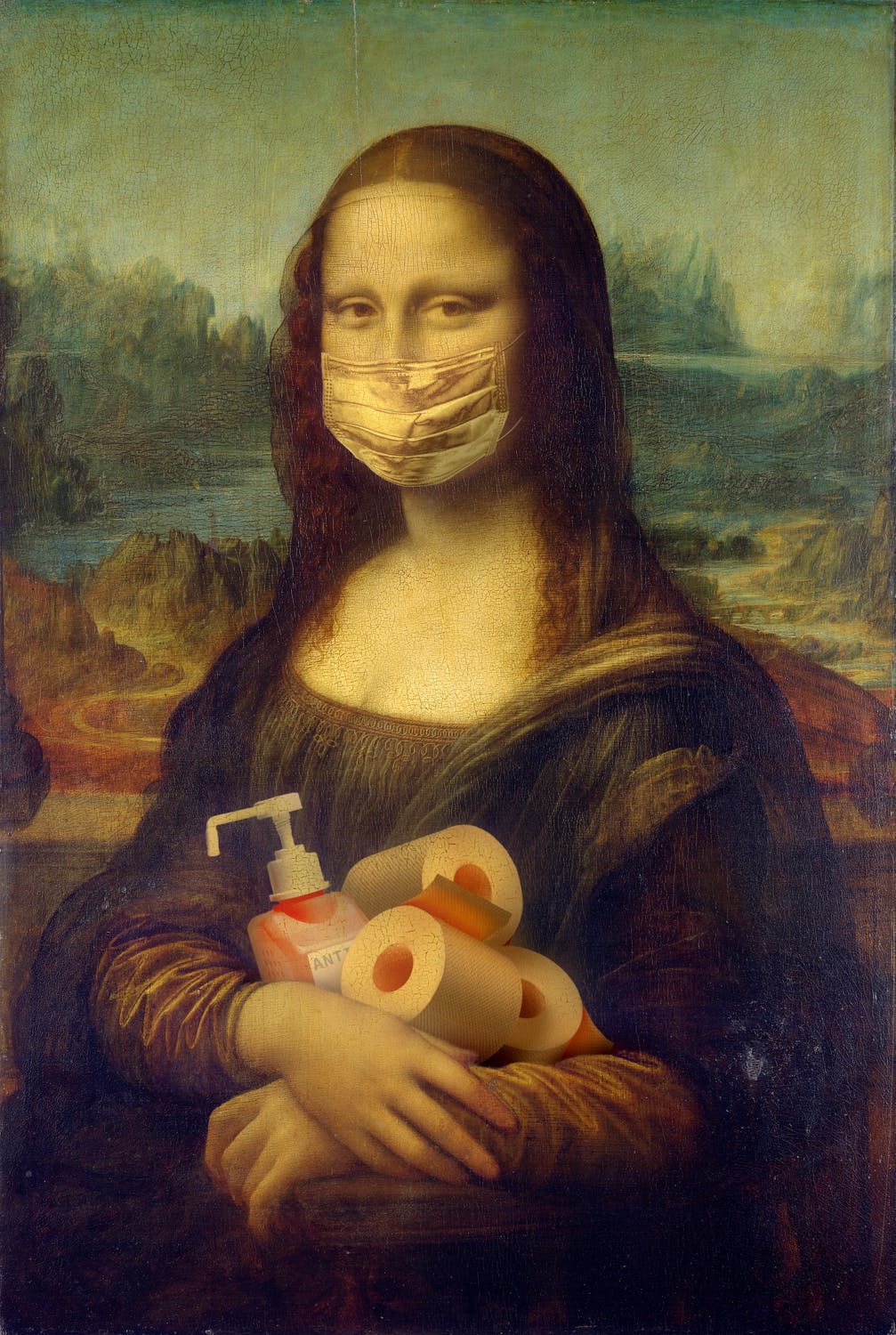
How is it that, in the case of a global pandemic, there seem to be so many different versions of the truth? Therein lies at least part of the issue; we tend to see truths as subjective to the individual. However, this is no time for a philosophical or existential argument. A better way to phrase the question could be, “How is it that with an issue involving medical data and research, there is such difficulty with agreeing on a set of simple facts?”
Perhaps theoretical science is open to opinion, but medical research deals with actual subjects who are being studied. There are actual people who are sick across the planet, and the only way to solve our problem is for those people to be studied. We can garner a lot of information from the sick that can help people across the planet.
Every country in the world should want this; it’s how we learn to protect our people from harm. Am I right for thinking in this way?
With such an important issue, you would think that the facts of these studies are what matters. You might be shocked to learn there are many reasons why scientific fact is replaced with a personal interpretation. That same frustration may grow even larger when looking a bit deeper into why this might not always be the case.
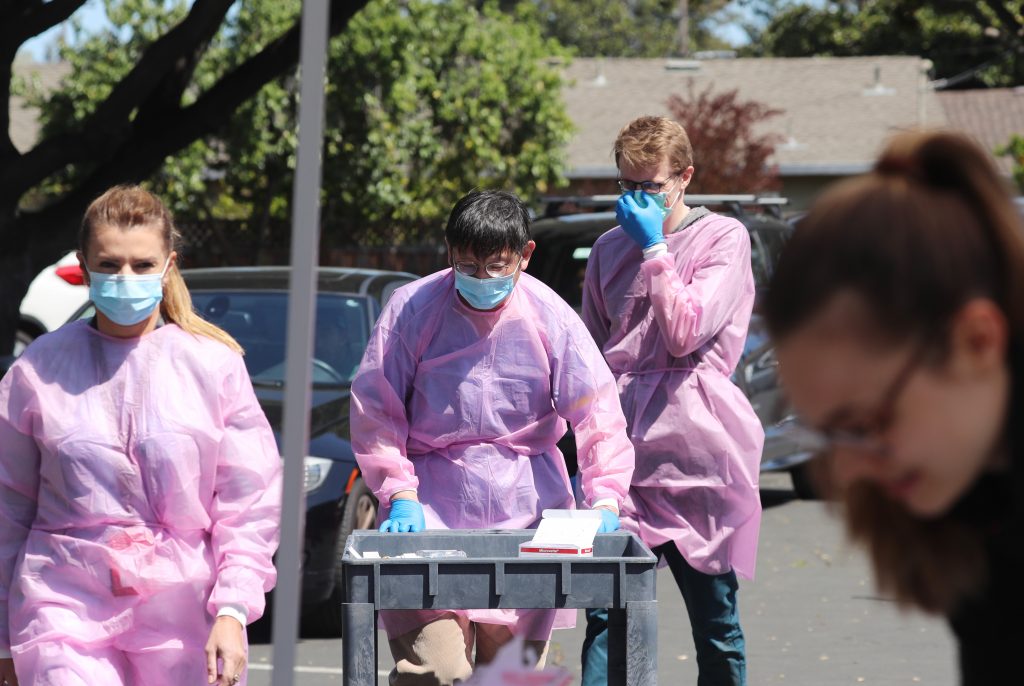
1. All Research Is Not To Be Treated Equal
There is a general understanding among people who perform research that all study is not to be considered equal. A myriad of problems surround the issue of whether or not research has looked at all of the potential variables, or in this case medical information, that can be looked at. An example of this problem continually arises with COVID-19 testing accuracy, which is proven in studies indirectly.
Stanford University Paper
Stanford University recently published a research paper on infection rates in Santa Clara, California. They evaluated a test kit they used in their study against blood drawn tests. The kit recorded 2 false positives out of 371 true negative samples. That same kit had also initially only discovered 68% of positive test results. Later they adjusted their method, but the kit still missed 2 out of 30 true positive results. They pooled people from the area for testing and, after adjusting for error, came to the conclusion that far more people had contracted the virus than were reported as confirmed cases. Still, they concluded presence of antibodies in Santa Clara were just between 2.49% and 4.16% by early April.
One of the study’s limitations is that only one manufacturer’s test was used; researchers could have tested several kits. RT-PCR tests detect active viral genetic material; if someone was infected by SARS-CoV-2 earlier and has recovered, then this test would likely miss them. A serologic test would sample a person’s blood and be able to check for more than a current infection; you’d be able to see if a person has antibodies then as well. Some have asserted that another limitation was pooling the study group from social media advertising, almost assuring that those who anecdotally thought they may have had the virus would apply.

The Stanford researchers stated the PCR tests used are ‘the gold standard’ of tests. Who decided that? What is the point of including such a statement in your research paper? Does it prove something to anyone? If anything, Stanford researchers have proven it is not ‘the gold standard.’ And if the tests are that great, then it could mean other PCR tests in the United States are even less reliable! That doesn’t sound like a positive situation to me.
It is customary for medical research to end with a list of declared “limitations”; the Stanford study didn’t include one. Throughout the Stanford paper are examples of why the research could have been less than perfect; it simply left out a detailed analysis of other reasons why or how it could be improved upon by another researcher. The researchers concluded, based on one manufacturer’s test, that much more of the population was infected. It seems a missed conclusion is that RT-PCR testing is inaccurate and shouldn’t be used for conclusions in any COVID-19 studies.
During the time that this article is being written, concerns have risen about this study in particular, which has even prompted one of the authors, Dr. Jayanta Bhattacharya, to reply, “We have received a vast number of constructive comments and suggestions on our working paper over the past couple of days… This is exactly the way peer-review should work in scientific work, and we are looking forward to engaging with other scholars as we proceed in this important work”

Inability to Reproduce Studies and Entirely Fictional Studies
Yet another issue with other studies is that study authors simply don’t write up a reproducible experiment, which means that nobody can perform their own version of the same experiment to check whether or not the original results are correct. The methodology alone could skew data; researchers even tend to search through study databases to prove their hypothesis by cherry picking. That makes the study a representation of a bias instead of valid scientific research.
In 2011, multiple researchers had found that very few studies were reproducible. After attempting to replicate studies, as detailed in their methodology, the results of a vast majority were found to be very different from the original. This is a well known problem in the scientific community that has multiple names, the ‘replication crisis’ or ‘reproducibility crisis,’ and it is still ongoing in 2020.
Some issues in this scientific crisis could be solved by study authors including ‘limitations’ sections in their research papers.
Shockingly enough, poorly done, or even fake studies are often accepted into widely accredited research journals. Three researchers submitted 20 fake studies to accredited journals, which made completely evident erroneous claims. 7 of those 20 studies were accepted into the scientific journals. Does this mean that they were barely reviewed before their publications?
Could this be a factor in the reproducibility crisis?

2. Politics Impedes COVID-19 Studies
These failings, in research alone, can play a significant role in why some COVID-19 studies may be a misrepresentation all on their own. A rather unfortunate contributor, which essentially closes the door to global scientific advancement, is politics.
Ideology and Political Machina
Some nations may have less funding available for science. The United States government has been reducing its funding for environmental and medical studies in recent years. Sometimes decisions such as these may be a result of more efficient planning, yet in other situations it might be for a political agenda that supports an ideological narrative.
One such ideology concerns free-market narratives; that companies and people who do business should not have a government regulation impeding them. The current political landscape of the US is supportive of this narrative. Earlier this year the Environmental Protection Agency was sued for allowing companies a pass on reporting chemical additives to the public, something the companies are legally bound to do. In fact, the United States is proposing cutting funding to science programs for the fourth year in a row.
This could be why the Centers for Disease Control (CDC) was unable to create a good batch of test kits for SARS-CoV-2 the first time around. As it turns out, 2 of the 3 CDC labs making them had contaminated the testing agent with the virus! The lack of funding could currently be impacting the severe lack of testing kits available in the United States at the present moment as well. A good lesson here might be that preparedness saves a lot of money and pain in the long run. If our scientists were well funded, then a lot of the current issues we face might not be happening.
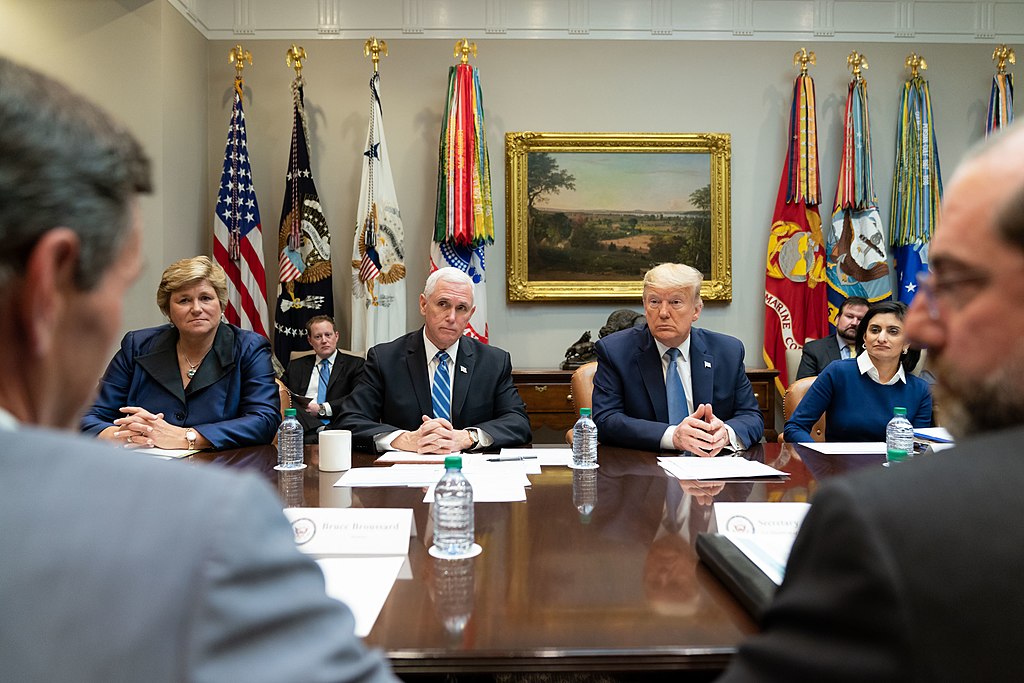
Country of Origin and Nationalism Fuel Science Denial
My colleagues and I have been very concerned about the people in the world. We have collectively read, with great discernment, a large number of COVID-19 medical studies, going as far back as January. We took note of a few very alarming global reactions to the studies. Major institutions, including the World Health Organization (WHO), have denied medical studies on the subject coming from China for months.
On January 15th, a man in Seattle began spreading the virus to other people, but a New York Times report 8 days later stated that the WHO said there is no evidence of human-to-human transmission outside of China. When Chinese researchers stated that the virus could be spread while a person was asymptomatic, global authorities rejected the premise until they saw it across the globe later. As China locked down Hubei as a preventative measure, global authorities labeled their moves as draconian. Still, those same authorities followed suit 2 months later. Even after Chinese researchers declared that it could be spread through the air, global authorities asserted this as preposterous. Now a supercomputer model shows how aerosolized droplets can cause the spread of the virus.
Basic denial of science, based on the country of origin, has fueled the global pandemic. That problem could still be affecting COVID-19 studies today. One could argue that other nations simply didn’t have the ability to study this on their own, but the argument wouldn’t have a foundation to stand upon. While all of these things had already been happening in their own countries, they merely weren’t studying it. Rather than take a precautionary stance, validating claims coming out of China, global authorities had become science denialists.
Nationalist sentiments weren’t the only reason why COVID-19 studies out of China were being rejected. Chinese scientists have been caught, worldwide, in attempts to remove research materials from laboratories and bring them back to China. This includes schemes that involve Harvard University professors receiving vast sums of funding from China to assist. These actions are rumored to be part of a scientific spying program led by China, and the paranoia about it doesn’t help our situation at all.
Both science and politics seem to have a profound effect on economics when the world experiences a pandemic.
3. Economics and COVID-19 Studies
COVID-19 has had a particularly powerful impact on global economics. All economies, from the most local to the most global, have been affected in one way or another. In certain ways, there have been benefits, but in others, we’ve seen great detriment. Free market economics has shown who will do what during a global crisis.
Corporate Responsibility
An artificial intelligence monitoring the internet for danger picked up a dangerous trend. On December 31st, 2019, BlueDot was able to pick up on the trajectory of SARS-CoV-2 and send a powerful alert. This alert, which would be sent to clients worldwide, was a warning for a global pandemic. Some of the people who received that alert were corporations and governmental representatives. A few weeks later, medical information and research began flooding the internet from China. Other companies have likely been monitoring for this kind of information and providing clients with it.
The CDC posted an alert for travel advisories and began screening in a handful of American airports on January 17th. Prior to that, multiple major airlines in other areas of the world had ceased flights to and from Wuhan as a whole. It wasn’t until nearly 2 weeks later that the CDC advised against all travel to China. Following this advisory, only a few days later, multiple US airlines decided to cancel and cease all flights to and from China. For some reason, the WHO was calling these moves entirely unnecessary.
By the middle of March, vast numbers of retailers announced they would temporarily close all of their stores globally. Microsoft, TJ Maxx, Best Buy, and dozens of others had all decided not to risk causing people to become sick in their stores. All the while, governments were complaining to no end about what this is doing to the economy and denouncing them.
While many of these companies have their own problems to deal with, this is what I would call corporate responsibility. Without being prompted by government entities, these corporations had actually begun the lockdown all on their own. This is also backed by many individuals and corporations stepping up to assist in global relief efforts.

Predatory Opportunism
In many ways, it seems as if companies had trusted COVID-19 studies a lot more than government institutions. However, trusting COVID-19 studies doesn’t always lead to corporate responsibility.
Price gouging on many items had begun globally. Amazon was prompted to remove predatory sellers and products from its platform. GrubHub and Seamless have somehow forced restaurants to offer clients discounts, thereby reducing revenue for essential services. Democrats in the United States introduced a bill into legislation to stop price gouging.
A great number of scams, and the potential for far more dangerous crime, has grown substantially. People across the world, such as a man in Brooklyn, New York, have been arrested for hoarding stockpiles of personal protective equipment acquired through a black market to sell to others. Even Italian Mafioso are gaining an edge during the pandemic, donating food to families or lending money to businesses for favors down the road.
While this topic certainly deserves to be expanded upon, it’s not within the scope of this particular piece to delve further into it. Can you imagine the combined effects of poorly done science, ideological politics, and economics on journalism?

4. Journalism Follows Narrative
During this global pandemic, no other kind of institution has such a profound, double-edged sword effect as journalism does. It works in two directions too. Journalism can empower great change in the populace, but it can also affect economics and politics. For all the power it does have, those groups can have the same effect on global media.
Politics, Economics, and Journalism
Many groups, both political and economic, have a very powerful tool at their disposal, which can help them to influence the masses: the media. At the very forefront of this entire global crisis has been media and journalism. This can be a very good thing or a very bad thing. Unfortunately, at the moment, the media hasn’t necessarily been presented in its most raw and independent nature of simple information reporting.
From January through April of 2020, going back through media archives presents a very clear image. To make matters even worse, it didn’t, and still doesn’t, matter whether your source was mainstream, alternative, conspiratorial, or a letter published in a scientific journal.
During the small epidemic phase, global media had been discussing what sounded like an atrocity by China upon its citizens. Outlets described, from self-proclaimed “China experts”, that the nation was in the middle of a downplaying cover-up situation, based on the feelings of individual reporters alone. As discussed earlier, major global institutions have denied science from China, and they did so using the media to report.
Although our great artificial intelligence machinations had provided institutions with the evidence required to see the potential impact, this information was ignored or at least downplayed in the media. Western nations had, in many ways, succumbed to the very same tactics that they publicly accused China of.
Market crashes are now occurring often, leading the media to report sensationalist headlines and short, out-of-context clips. Largest Crash “Since 1987”, or Not Since “The Great Depression”. There have been very clear examples of market trends following both good and bad news reported on the crisis. Certain drug makers have been experiencing great rises in stock market prices, and entire global markets are seeing a range of collapses based on reported infectivity and death rumors.
What makes this situation even more odd is that much of this media was presented without having studies on COVID-19. Nothing to fully support or deny that there even was a reason to crash or support a certain market. Some of this media is coming directly from NASDAQ itself!

Pandering to Audience While Lacking COVID-19 Studies
Narratives provide people with stories to motivate them in a certain direction. To many people, it seems as if the media has been overhyping the virus. In another article, we’ll prepare you a reason for why we believe that may not be the case. That it seems the media is attempting to protect people from the truth of its severity. Its primary focus will be the damage the virus causes to healthy people; it won’t be centered around deaths.
Pandering to the audience is sometimes a delicate balance of offering just enough information. Enough proof that our problem is serious but not enough to incite public chaos. What’s strange about the pandering, this time around, is how it seems to be providing bad information. Asserting information it either does not have or cherry-picking to generate a public opinion of the virus.
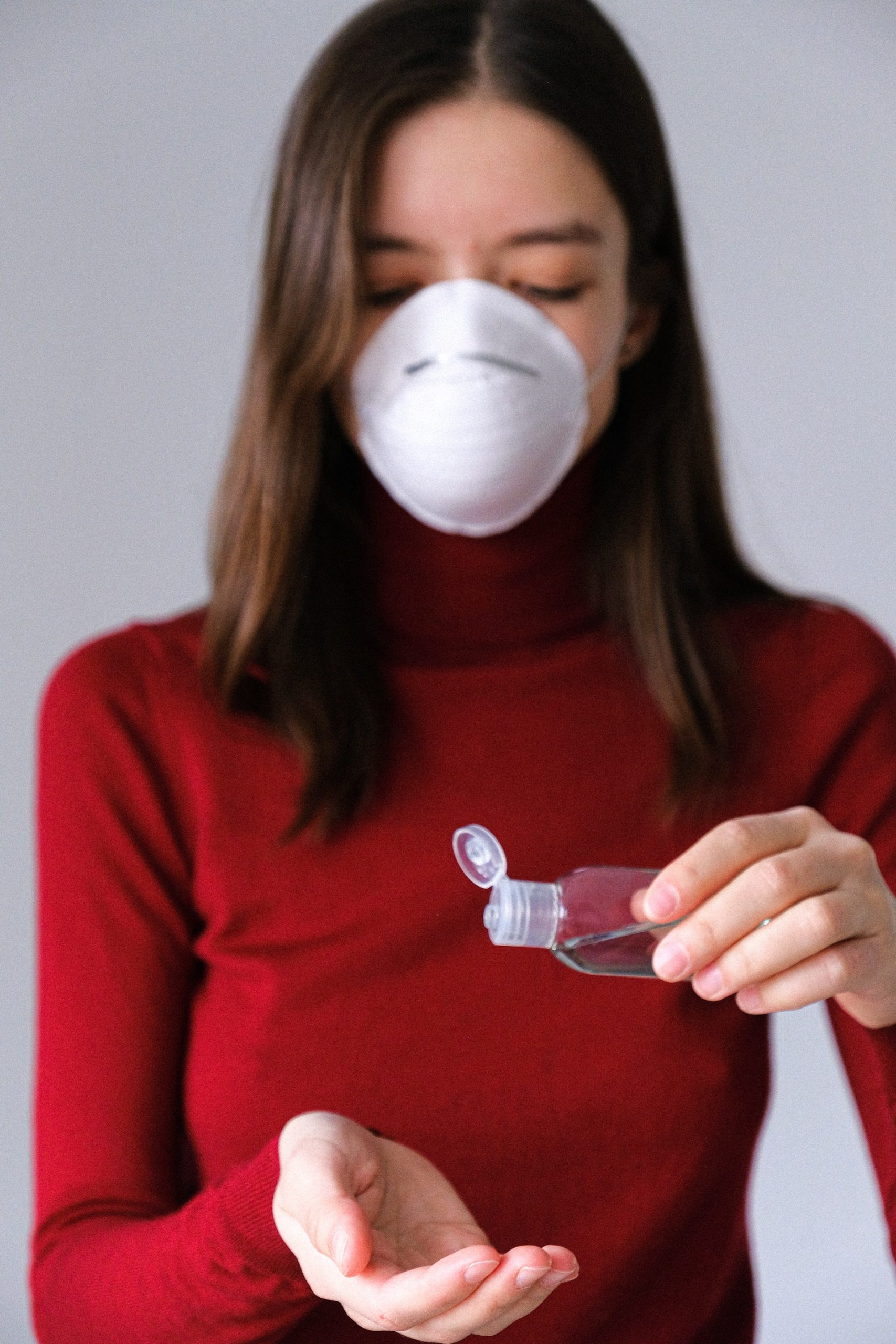
How could the WHO assert that SARS-CoV-2 does not spread asymptomatically prior to studying the virus? Why would the CDC and US media insist for months that protective facial coverings were not helpful? Only to backpedal entirely and for some US states to now mandate it by law?
The truth is these organizations were not prepared to share meaningful information and merely stated their collective opinion. But with such an important circumstance, why is this happening? What does this prove to people? Was it an effort to keep people calm and reveal facts little by little that the human psyche could handle? Or could it have been something even more?
On other occasions, pandering to the audience is done because there is an agenda behind it. That doesn’t have to mean something shady; it could very well mean something important is needed, but the information is sensitive. How do you get the masses to move, because you need them to, without telling them the reason why?
One potential reason for pandering about not needing facial protective coverings is that the world does not have enough masks for healthcare workers and first responders. If global economics can’t even support first responders, then there is no way it can support hundreds of billions of masks.
As seen with the NASDAQ article, the media is also pandering to investors. Newsreels light the stock market up anytime a company is suggested to be producing a medication or potential vaccine to help us fight against the virus. Even though there are no studies that support specific medications to treat or cure the infection beforehand.
Everything needed to save people’s lives needs funding, but there will be no funding without a functioning economy. With people in lockdown, much less of the economy is still running. Governments want people to go back to work, and they could revolt if they were told to work but knew the virus was more dangerous.
Could this be why the virus is downplayed, in some media, as just a seasonal flu even though studies state differently? Multiple articles referred to the Stanford study, mentioned earlier, as evidence that the virus is not that deadly. Since the study is not based on death rate information at all, it is yet another falsely asserted claim. One that took the media by storm.
Speaking of downplaying the virus through science denialism, what people have been doing to one another takes the cake.
5. What Society Thinks and Does Impacts Everything
Poorly done studies, political ideology, economically driven agendas, and a highly confusing media landscape are enough to confuse anyone. Nobody knows what to believe anymore. People have been pushed more and more into subjective beliefs. It makes sense, seeing as even the CDC and the WHO have been reporting inaccurate information about the virus from the start.
This is creating a problem among the masses. When you don’t know what to believe, then you’re more likely to begin searching for information. Often enough we simply search for information that fits our own narrative or worldview. And now, people have begun to enter a particularly impressionable state of mind that is very dangerous. One that could easily cause susceptibility to even more disinformation and further science denial. The difference is that it will be the information they prefer subjectively.
Many people have taken to creating videos, gaining an advantage of the susceptible state of mind the masses are experiencing. People who seem like informed doctors but who may be running for political office are pandering to what people want to hear in order to gain votes. Some are attempting to gain credibility for their companies, publishing poorly performed COVID-19 studies that aren’t peer-reviewed and that don’t prove anything. Others are selling items that promise protection against the viral infection but have no studies performed to prove it. Surprisingly enough, there are folks simply spreading misinformation for fame and popularity, cashing in on media capital alone.
The highest level of danger, however, is people going out into the streets and protesting protective measures. Fueled by ideology, they are doing one of the most dangerous things that people could do right now, gathering in proximity close enough that ensures if one person is sick, they will spread it to many.
What we’re witnessing now in the US and Europe resembles mass hysteria, fueled by misinformation from all angles and embraced by politics. Folks have been pushing their ideals onto others, which are based on subjectivity alone. Bandwagons of ideological misconception are formed, which could harm all of us and ensure the pandemic becomes an endemic. Or is it already endemic? All of these issues stem from one place: science denial.

How Can We Avoid Science Denial?
Even as the United States and Europe each approach 1 million ‘confirmed’ COVID-19 infections, and Asia approaches 500 thousand, denial of science remains rampant. As shown by the Stanford study, our tests are wildly unreliable, and, unfortunately, the global market cannot produce enough of them in time. Even if we had better tests, it wouldn’t mean that we could ever produce enough of them.
So what can we do? SARS-CoV-2 is still spreading every single day, and it looks like a stronger second wave is arriving soon. We’re currently surrounded by echo chambers, and many of us have ousted friends and family members. What are our options, as people with a choice, from here on out?
Study
Many free resources have been available to the public online since January.
Some of them are COVID-19 infection trackers:
- Johns Hopkins University has had a map tracker up for months.
- Worldometers displays just numbers, using bots that crawl websites for the information.
- Our World In Data allows you to make your own graphs for global comparisons.
Many medical journals and databases have COVID-19 studies in open access:
- Examine.com has a beautifully laid out information tree that aggregates study data.
- CellPress, Elsevier and The Lancet are a few of many COVID-19 Resource Hubs for studies.
- LitCovid is a database of COVID-19 studies compiled by NCBI, NLI, and NIH.
- The New England Journal of Medicine has updated briefings daily.
- Springer Nature, too, has a long list of study articles to read.
- Biomed-sanity is a helpful archive following biorxiv and arxiv.
- There are many more out there too, let us know if there are others you like.
Use Discernment and Think Critically
As we have learned earlier, not all research and media are up to standard. It is of great value and importance to look through information with an open, yet skeptical, mind. In the age of information, you too can be part of the scientific method!
Compare studies against one another, find common themes or contradicting ones, and think critically. It may not always be easy to discern when something simply requires more study before it can be accepted as fact. Yet at the same time, too much skepticism might be harming how quickly we trust information that is truly reliable.
During this emerging and ever-evolving crisis we have often taken too long to trust information. People in the world don’t have a lot of time, denying legitimate science can lead us to not caring for the sick as they require. Yet, trusting the wrong information might harm people more than help.
This is why discernment and critical thought are so important.

Build Awareness and Stay Vigilant
The entire point of this piece is to illustrate that it is difficult to know who to trust. We hope that it can help you become more sensitive to realizing when information is manipulated or simply not right.
However, we can do a lot more than just be skeptics of the media. We can remain aware of potential dangers even before global authorities sound the alarm. They are large and complicated groups, and they move far slower than the virus does.
Many of your friends, colleagues, and family might have been warning you in January about dangers the WHO or CDC only accepted in April. 90 days of waiting for potential answers on a virus that spreads this quickly is entirely unacceptable.
If you don’t understand the studies you’re looking at or need a second opinion, you may know someone with a degree in biology, medicine, or another related scientific field who can help you understand. Crowdsourcing our understanding of COVID-19 studies will help all of us in the long run.
You never know, maybe our general understanding of the virus can actually assist healthcare workers and researchers across the globe.


