
Soviet scientists found an alternative to the South American rubber tree (Hevea brasiliensi) in 1931 after testing over 1,000 species of plants. The new natural source of rubber – dandelion (Taraxacum koksaghyz) found on the steps of Kazakhstan – would help the USSR become self-sufficient in the critical material. A decade later, it supplied 30% of the country’s rubber.
Other countries (including Britain, United States, and Germany) started using dandelion rubber during the Second World War due to shortages of Havea rubber. However, when the war ended, and supplies returned to normal, every country switched back to the South American rubber tree because it was cheaper.

But today, demand for rubber is steadily increasing. About two-thirds (65%) of all rubber consumed worldwide is synthetic because it’s the least expensive option, and it’s more hardwearing. It comes from fossil fuels.
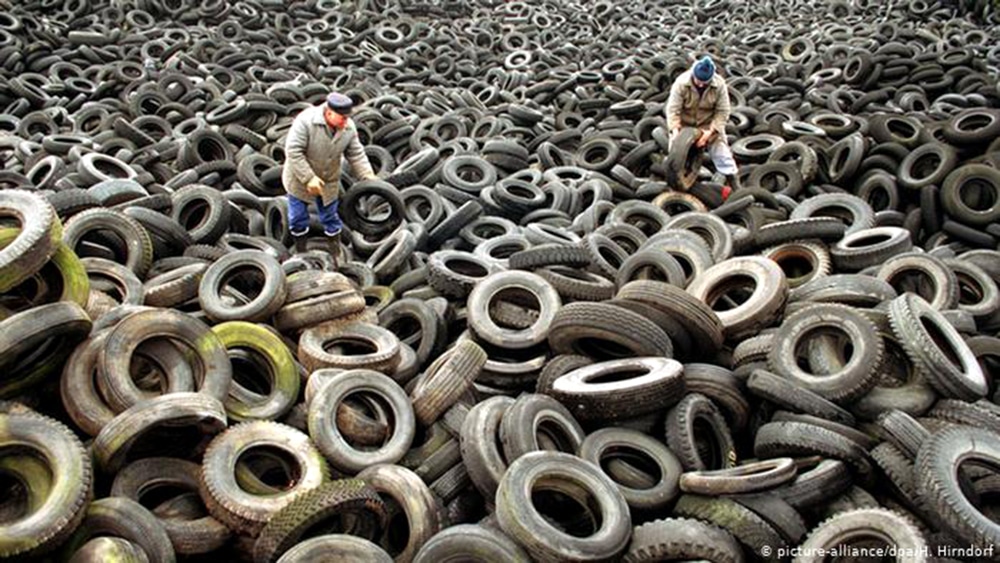
So, there’s a renewed interest in the Russian dandelion or other alternative rubber sources. The tire industry, which uses up 70% of the global rubber supply, is particularly interested. Fossil-fuel-derived rubber is cheaper and more robust, but natural rubber disperses heat better and grips better. That’s why tires are made with a mix.
Havea plantations in Southeast Asia have been linked to deforestation. Unfortunately, 90% of natural rubber comes from there. There are also commercial reasons the industry is eager for an alternative. Rubber trees are liable to a fungal leaf blight that can consume plantations in South America – a real threat since all the world’s natural rubber supply comes from that one crop.
Recent projects to make dandelion rubber commercially viable have sprung in the US and Europe. Taraxagum is one such initiative. It’s a collaboration between Continental Tires and Germany’s Fraunhofer Institute of Molecular Biology and Applied Ecology.

Plant biotechnologist Dirk Prüfer, from the Taraxagum team, said:
Continental Tires tested the performance of the material and said that it was brilliant — in some cases better than Hevea rubber.
Another good feature is that the Russian dandelion thrives in temperate climates, whereas the rubber tree only in a tropical region. Meaning it can be produced regionally, reducing transportation needs and lowering carbon emissions.

Ingrid van der Meer, the coordinator of DRIVE4EU, said:
We cultivated the dandelion in Belgium, the Netherlands, and Kazakhstan. Other researchers had previously cultivated the crop in Sweden, Germany, and the United States.
The Russian dandelion can even be grown on poor soils, so it doesn’t have to compete with agriculture. Plus, its extraction doesn’t require the use of solvents, unlike Hevea, which does, leaving behind chemical waste to be dealt with.


