
From the design file to the finished ring, where workshops save metal at each step, and what a recycled label on gold can tell a buyer.
Gold recycling reached 1,404 tonnes in 2025, its highest level since 2012, according to the full-year supply figures of the World Gold Council. Total supply that year was 5,002 tonnes, so more than one ounce in four came from scrap. The council still found the rise smaller than expected, given a 44% jump in the average price.
The source of the metal is only part of the picture. Inside a workshop, waste builds up in quieter ways, such as a model cast in gold that turns out to be wrong, or a sample made for a client who wanted something slightly different. Fine jewelry production has gradually adopted a digital sequence that runs from a 3D file to a printed pattern and then to casting. Each stage gives the maker a chance to catch a mistake before it costs metal.
Where the waste starts, on screen
A design built in CAD software can be measured and checked before anything physical exists. The program calculates wall thickness and the depth of each stone seat, and it estimates how much a ring will weigh once cast in 18-karat gold. A piece too heavy to wear or too thin to survive casting gets corrected as a file. Moving a prong on screen uses no metal, while the same change after casting usually means cutting, soldering, or starting over.
How much this saves depends on the person building the model. A file with walls that are too fine, or a setting with no room for the stone, simply pushes the error down the line. For this reason, training in jewelry CAD tends to focus on production software and on how a digital model becomes something wearable. In Rome, for instance, the 3D Jewelry Design course at the Accademia delle Arti Orafe works in Rhinoceros 8.0 and MatrixGold, from simple shapes to complex models and photorealistic renders, up to the steps that turn a project into a piece of jewelry.
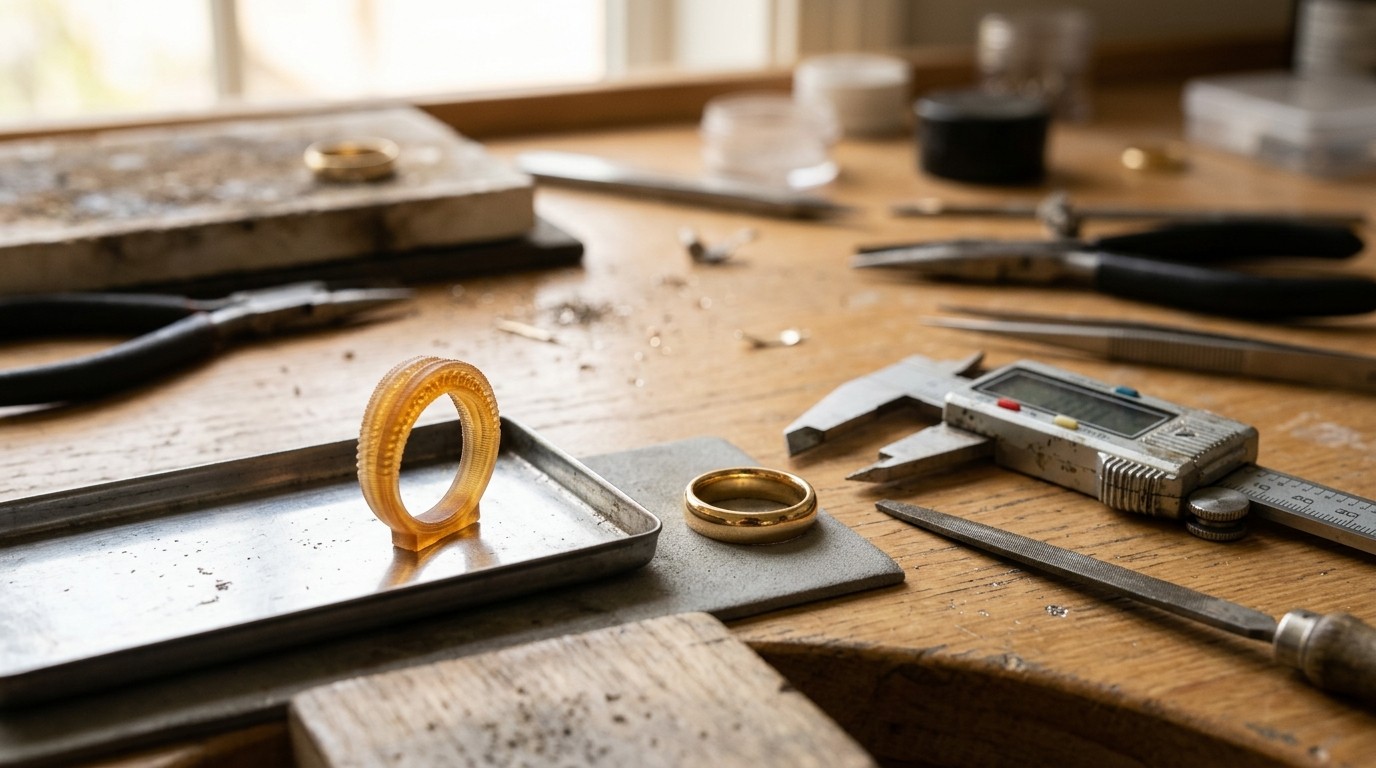
A printed pattern before any gold is melted
Once the file is approved, the piece is 3D printed in castable resin or wax. The pattern can be tried on or checked against the stones it will hold, and if something is off, a new print costs a little resin and a few hours of machine time. Before printers reached the bench, the same test meant days spent carving a wax model by hand or a first version cast in metal and corrected afterward.
The pattern then enters the lost-wax process. It is attached to a wax tree, encased in investment plaster and burned out in a kiln, leaving a cavity that molten metal fills. Several pieces can share one pour. The sprues that feed the metal into each piece are cut off and melted again, while careful workshops also collect filings and polishing dust for the refiner.
What recycled gold means and how it is checked
Recycled gold is chemically identical to mined gold. Refiners recover it from old jewelry, manufacturing scrap, and electronics, and once refined, nothing in the metal records where it came from. A recycled label therefore rests on documents, because no bench test reveals the history of a bar.
One scheme the trade relies on is the Chain of Custody standard of the Responsible Jewellery Council for gold, silver, and platinum group metals, a voluntary certification verified by independent auditors. Its 2024 version, in force since January 2025, revised the definition of eligible recycled material and tightened the rules on how recycled sources and product claims are communicated to customers. In practice, a certified recycled claim holds only while the metal moves between certified companies, each passing the documents on to the next.
Frequently Asked Questions (FAQ)
Can 3D-printed jewelry be cast in gold, and how does printing in resin differ from printing in wax?
In most workshops the printer makes a pattern, which burns out during lost-wax casting so that gold takes its place in the mold. Wax-based materials burn away very cleanly, while castable resins are harder and easier to handle, so the choice depends on how fine the design is. Printing directly in precious metal exists but remains uncommon.
Is recycled gold lower in quality than gold from a mine?
No. Refining strips out other metals and returns gold of the same purity, so an 18-karat ring made from recycled metal wears and can be repaired like any other 18-karat ring.
How can a buyer check where the gold in a piece of jewelry comes from?
Ask the seller whether the metal is covered by a recognized chain of custody certification and who supplied it. The Responsible Jewellery Council publishes an online directory of its members and their certification status, so a buyer can see whether a brand is certified under the Chain of Custody standard. Words such as “ethical” or “eco” on a tag, with no named certification behind them, say little about the metal.


