
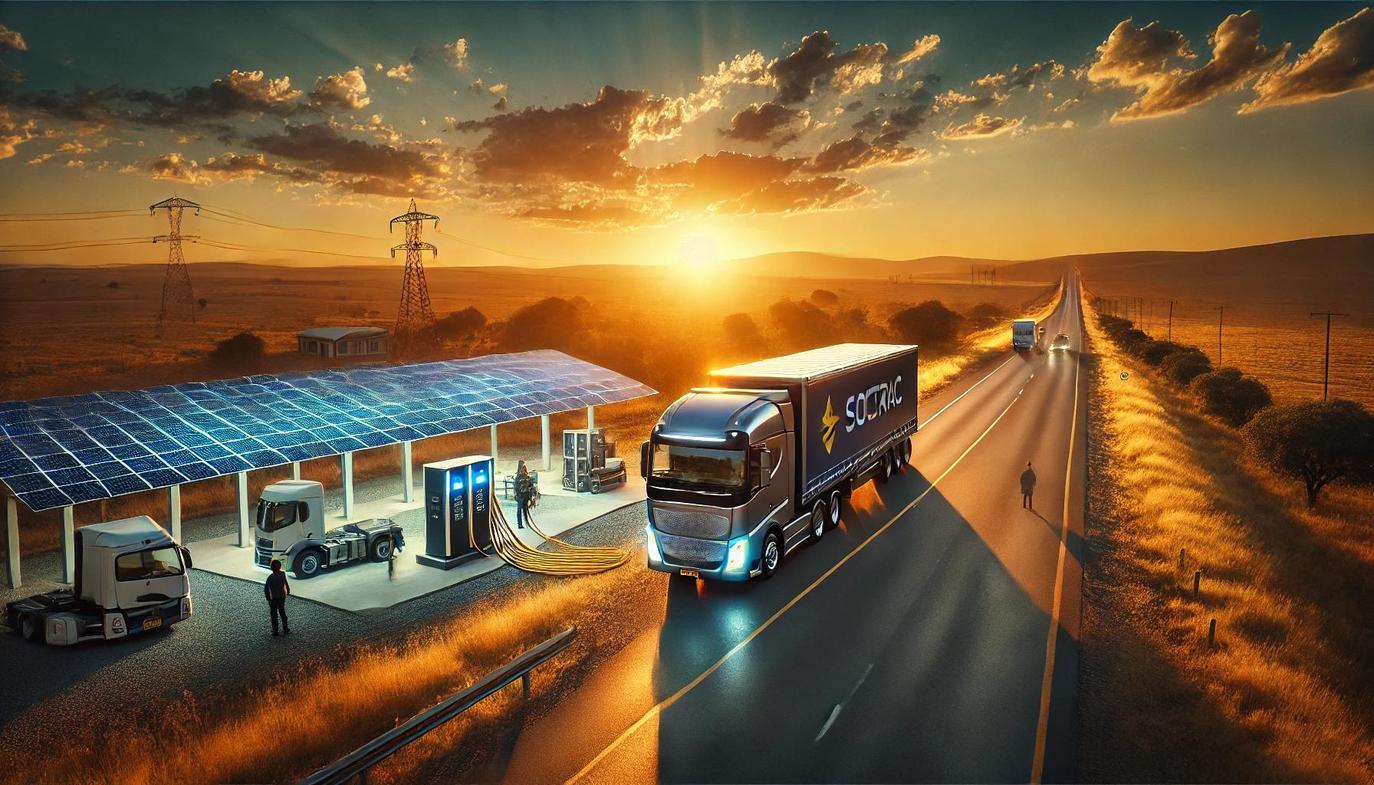
A few hours outside Johannesburg, a traveler pulls off the N12 for coffee and finds a dedicated array of fast chargers beside a farm stall. The canopy overhead is a field of solar panels, and the hum comes from batteries, not the national grid. This site represents the first node in a strategic initiative to integrate South Africa’s trade routes into a renewable solar highway freight spine, designed to keep traffic moving regardless of grid instability.
A Belt and Road Summit project listing details this nationwide initiative, which aims to knit the country’s main arteries into a fully renewable highway. By spacing charging sites roughly every 150 kilometers, the network ensures that passenger cars and, increasingly, electric trucks can cross the country with confidence. The focus is on resilience: creating a dedicated infrastructure that operates independently of the coal-heavy national system.
Standalone architectures utilize strategies for going off the grid to combine solar and storage for reliable power. That choice turns a reliability problem into a resilience feature while aligning with the broader shift toward solar microgrids serving remote communities that are already transforming rural services across the continent.
The other departure is social. Stations are being sited with landowners and farm stalls in mind, creating new revenue streams and steady footfall for rural businesses. The result is more than a string of plugs on a map. It is an infrastructure story that belongs to freight operators and local families alike.

On a Highway Where the Grid Stops, Solar Generation Becomes the Primary Energy Source
- Nationwide Off‑Grid Plan: A dedicated network of solar‑powered fast‑charging sites spaced at about 150 kilometers on key national roads, engineered for passenger EVs and electric trucks.
- Provincial Flagship: The Free State program outlines 120 sites across the province, pairing passenger and freight charging to anchor the national spine.
- Development Finance: The Development Bank of Southern Africa has publicly signaled support for climate‑aligned EV infrastructure through its investment and mandate.
- Freight Backbone: The N3 corridor between Gauteng and Durban carries the majority share of container road freight, with the N1 linking Cape Town, Bloemfontein, and the northern border.
- EV Market Baseline: South Africa’s battery‑electric sales remain small but are growing from a low base according to the national automotive association.
- Why Off-Grid: Microgrids reduce exposure to load-shedding and cut lifecycle emissions per kilometer when powered primarily by solar and batteries.
Strategic Mapping of the 120-Station Solar Freight Network
The 120‑Station Network at 150‑Kilometer Intervals
The strategy places solar‑powered, battery‑backed charging sites at intervals that match how people drive and how fleets schedule rest stops. A spacing of about 150 kilometers allows motorists to plan single‑leg intervals, including in winter and at highway speeds, while creating predictable logistics windows for light and medium electric trucks.
As outlined in the public project brief, the national plan envisions a first wave of roughly 120 off‑grid charging sites, with additional heavy‑vehicle hubs added on freight‑intensive routes to increase throughput and parking capacity.
From an engineering perspective, the layout treats each station as a small power plant. This decentralized approach serves three distinct functions:
- Solar Generation: Feeds a battery bank sized for daily peaks, evening travel, and overnight fleet top‑ups.
- Energy Storage: Meets most charging sessions from stored solar energy rather than from a fossil‑based grid.
- Scalability: Allows the highway to function as a distributed micro‑grid that can grow site by site without waiting for transmission upgrades.
Why The N3 and N1 Corridors Come First
Two national routes explain the strategy. The N3 corridor connects Gauteng’s industrial heartland to the Port of Durban and carries a dominant share of containerized road freight. The N1 corridor links Cape Town, Bloemfontein, and Gauteng before running north to the Zimbabwean border.
Concentrating early stations on these corridors maximizes carbon reductions per charger because the sites intercept the highest‑volume traffic. High-volume traffic data from the N3 Toll Concession shows where freight flows are densest and explains why reliable rest-stop charging is crucial for haulers.
This corridor-first approach also reflects a global shift toward green trade routes where clean power, modern logistics, and predictable charging or bunkering are co-planned to cut emissions without slowing commerce, mirroring the logistical logic of green shipping corridors.
Building for Passenger EVs and Electric Trucks Together
Designing for both cars and trucks raises different constraints. Passenger EVs need high‑power DC chargers that can recover most of a battery in the time it takes to get a snack. Fleet operators need space for long‑wheelbase vehicles, turnaround lanes, and charging bays that fit duty cycles.
The plan addresses this by pairing passenger‑focused sites with freight‑oriented hubs along the same routes so that personal travel and commercial logistics adopt new technologies simultaneously rather than competing for scarce infrastructure. That pairing makes the spine a better candidate for development finance and private capital, which look for high utilization and clear social co‑benefits, a focus reflected in the Development Bank of Southern Africa’s published mandate and investment themes.

Empowering Rural Communities: From Farm Stalls to Power Hubs
How Landowners Earn from Site Hosting
The solar highway is built on private and municipal land, which turns site hosting into a local business model. Landowners enter long‑term agreements that pay a share of station energy revenues and grant predictable lease income. The model aligns landowner incentives with traveler experience and uptime, as it ties cash flows to actual charging sessions. Public project descriptions frame those objectives as an explicit goal so that rural communities capture value, not just traffic.
Farm Stalls, Cafés, and New Roadside Micro‑Economies
Many sites are co‑located with farm stalls and small hospitality businesses. Since a typical fast charge for a modern EV takes 20 to 30 minutes, this dwell time generates consistent revenue for local vendors by encouraging:
- Browsing and Dining: Drivers have ample time to browse produce, order a meal, or buy supplies.
- New Services: The consistent footfall supports new offerings such as craft markets, play areas, and secure parking.
Establishing renewables as a source of skilled rural jobs ensures projects are designed with local supply chains in mind.
Jobs, Skills, and Youth Opportunities Along the Route
Construction creates short‑term jobs in civil works and electrical installation. Operations create steady roles in site management, maintenance, security, landscaping, and food service. Over time, communities benefit from hands‑on technical skills in solar, batteries, and power electronics.
That skills base supports microgrids beyond the stations themselves and adds resilience when public services are strained. Technicians following a step‑by‑step off‑grid guide can better integrate arrays, inverters, and batteries, which mirrors the station architecture at a smaller scale.
Why Community‑Scale Energy Matters for Public Services
Rural clinics, schools, and municipal depots increasingly rely on distributed generation to keep essential services running during grid outages. Stations that operate as microgrids model the same principle at roadside scale and can catalyze follow‑on projects.
Understanding how clean energy is reshaping the global landscape clarifies why distributed power has become a practical development tool rather than a niche technology. The positive community impact of solar energy proves that local services benefit when power is produced near demand.

Achieving Eskom-Free Mobility with Distributed Microgrids
Why Off-Grid Solar Matters in a Coal-Heavy, Load-Shedding System
South Africa’s electricity mix still leans heavily on coal, which raises the carbon intensity of any charging that depends on the national grid. Frequent load-shedding also interrupts travel and logistics, since outages can disable public chargers.
By designing the highway as a chain of off‑grid micro‑grids, the network supplies power from solar arrays and batteries even when the central system is constrained. The same core components used in household systems scale to these highway sites, with PV arrays and batteries supplying most charging sessions.
Inside a Typical Station: PV, Batteries, and Backup
A station functions like a compact power plant. Solar photovoltaic panels feed a battery bank sized for midday peaks and evening travel, supported by standard off‑grid solar battery bank installation protocols. Power electronics convert stored energy into the high-voltage direct current that fast chargers require. Proper engineering requires choosing the right inverters for solar systems to convert stored energy effectively.
Where resilience standards call for it, sites include liquid-fuel backup that can run on hydrotreated vegetable oil rather than conventional diesel. The aim is to keep charging available during prolonged cloud cover while ensuring the primary energy remains sourced from the sun. Public project descriptions emphasize this off‑grid design so that range planning remains predictable for drivers and fleet managers.
Emissions, Reliability, and What “Green” Really Means
Real climate benefit depends on the electricity mix behind each kilometer traveled. Charging that draws mostly from solar and batteries generally lowers lifecycle emissions compared with grid power where coal dominates. Data from the Global EV Outlook confirms that cleaner power raises the advantage of electric drivetrains over internal combustion and explains why coupling EV infrastructure to renewables matters for long-haul use cases.
Establishing a Blueprint for Green Trade Corridors Across Africa
From South African Highways to AfCFTA Trade Routes
A corridor approach makes the project relevant beyond national borders. The same logic that prioritizes the N3 and N1 can extend along the North–South routes used by Southern African Development Community members. In practice, that means siting hubs where cross-border freight already concentrates and planning for harmonized standards so that trucks can charge, clear customs, and continue without delay. Parallels from maritime trade show how corridor planning links climate targets to trade competitiveness.
Climate-Aligned Finance and Development Bank Backing
Large corridor projects work best when public and private capital move together. The Development Bank of Southern Africa frames investments in clean transport as a way to reduce emissions while stimulating jobs and regional competitiveness, a position reflected in its public strategy and project notes. Development finance can de-risk early sites, after which usage data helps unlock commercial funding for expansion along adjacent routes. Shifts in policy across the renewable energy sector often unlock blended finance models that mobilize private capital.
How Green Freight Corridors Could Reshape African Trade
Reliable fast charging for trucks can shorten delivery times, reduce fuel imports, and cut exposure to volatile diesel prices. Over time, a network of solar-powered hubs can encourage modal shifts where appropriate, with cleaner trucks feeding intermodal rail and port systems. The African Development Bank and regional partners have long supported corridor upgrades, and the same toolkit can apply to low-carbon logistics as standards and supply chains mature, a goal shared by the Program for Infrastructure Development in Africa.

Infrastructure First: Building the Highway Before the EV Fleet
South Africa’s EV Numbers Today
Battery-electric sales remain a small share of the national fleet, although growth has picked up as more models arrive and charging options improve. The automotive industry association NAAMSA tracks registrations and model availability, which helps put the current market in context for readers and policymakers.
The Leapfrog Strategy: Infrastructure First, Fleet Second
The highway embodies a familiar development pattern where critical infrastructure is built to unlock demand rather than waiting for demand to justify the build. Early stations send a signal to fleet operators and vehicle manufacturers that long-distance routes will be supported by predictable, renewable power.
That in turn makes it easier for logistics firms to trial electric trucks on specific lanes. It also allows financiers to evaluate the total cost of ownership using real duty-cycle data. This strategy aligns with global shifts in renewable energy’s share of power consumption, which strengthens the case for coupling EVs to clean supply.
Policy Gaps, Risks, and What Success looks like by 2030
Policy still needs to align with the infrastructure vision. Import duties on electric vehicles, charging standards, driver training, and grid interconnection rules for complementary depots all shape adoption. South Africa’s Green Paper on the Advancement of New Energy Vehicles outlines pathways for local manufacturing, fiscal measures, and skills development that could accelerate uptake if implemented in full.
Success by 2030 would mean reliable charging on the main corridors, a visible share of electric delivery fleets on high-frequency routes, and measurable emissions cuts per ton-kilometer.
Rewiring African Trade via Solar Highways
The experiment underway on South Africa’s highways pairs clean power with the rural locations that depend on those roads most. A solar freight spine effectively keeps goods moving during grid shortfalls, reduces carbon per shipment, and gives rural communities a stake in the value chain. If the template proves itself on the N3 and N1 corridors, similar combinations of off‑grid EV charging, local enterprise, and corridor finance could spread along major routes that already interconnect African markets.
Ambition at this scale works best when it is locally integrated as well as national. This is why farm stalls, land leases, and training programs matter as much as kilowatts and cables. By decentralizing energy and democratizing the benefits, South Africa is not just building a charging network; it is establishing a blueprint for green trade corridors that could power the continent’s future logistics.

Frequently Asked Questions About the Solar Freight Spine
Is the solar highway only for passenger cars?
Stations are designed for both. Passenger sites focus on high-power DC bays for short stops, while freight-oriented hubs add larger parking areas, maneuvering space, and charging infrastructure tailored specifically to the duty cycles of electric trucks.
How do rural landowners benefit from hosting a station?
Site hosts receive lease income and a share of station electricity revenue. This structure ties local earnings to traveler throughput and uptime, ensuring that value stays in the community rather than flowing entirely to centralized utilities.
What happens during cloudy periods or load-shedding?
Stations prioritize energy from solar arrays and batteries, effectively operating as independent microgrids. Where resilience standards require it, sites include backup generation using hydrotreated vegetable oil to maintain service during adverse conditions without relying on the national grid.
Does off-grid charging really cut emissions vs diesel?
Yes. Because these stations draw primarily from solar and batteries, the lifecycle emissions per kilometer are significantly lower than diesel trucks. This advantage grows as the network utilization increases, bypassing the carbon-heavy national electricity mix.
Will the network expand beyond South Africa?
The corridor logic is highly transferable. Funding from development banks is helping de-risk early phases, creating a model for green trade corridors that can extend into the wider Southern African Development Community, where cross-border freight density is high.


