
Spacecraft may seem big, especially since they’re portrayed as such in movies, but the biggest rocket to launch so far (the Saturn V) is only around 111 meters (364 feet) long. Furthermore, academics don’t expect humans to be cruising in Star Trek-like ships, even ones modestly only seven times the length of Saturn V, till around the mid-2200s.

Nevertheless, some Chinese researchers are currently putting their minds toward figuring out how we get there from here. They’ve declared to the world their interest in building a mile-long spacecraft through a South China Morning Post publication. According to the initial report, the National Natural Science Foundation of China received a proposal that calls for analysis regarding the mechanics of constructing an ‘ultra-large spacecraft spanning kilometers.’
The project would involve a team of researchers investigating the possibility of assembling a spacecraft in orbit, as that’s the only way such a large spacecraft could come into being. It’s part of the nation’s ambitions to expand space exploration, encompassing crewed missions operating on long-term timescales.
The proposal got the funding body investigating the feasibility of building vast spaceships up to 1 kilometer (0.6 miles/3280.8 feet) long. In the report, the foundation describes such vessels as:
…major strategic aerospace equipment for the future use of space resources, exploration of the mysteries of the universe, and long-term living in orbit.
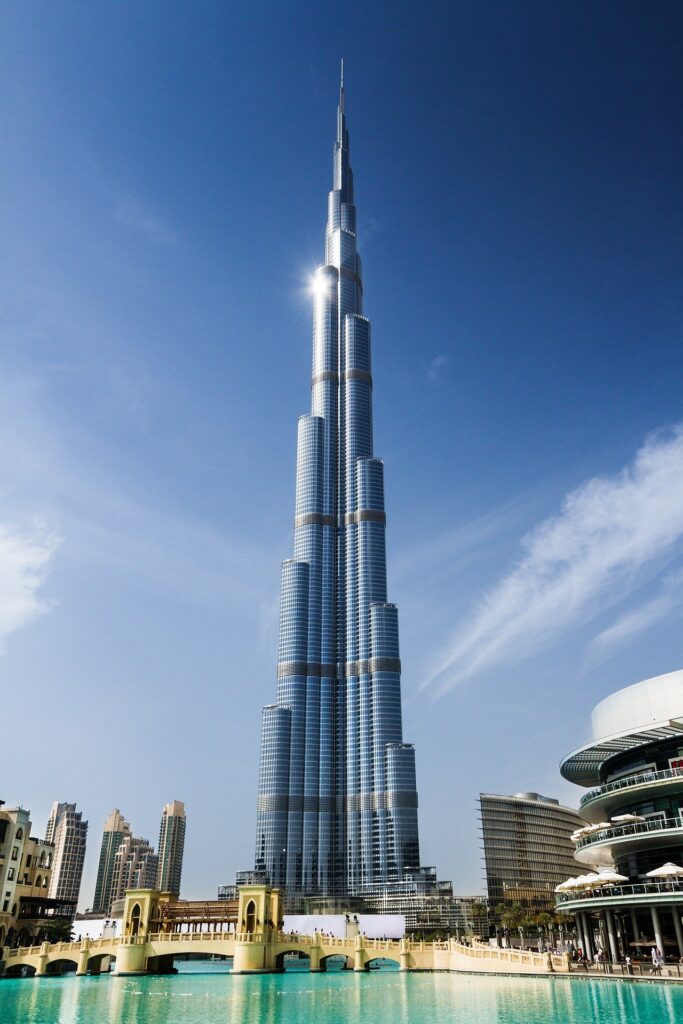
For comparison, the tallest structure in the world (the Burj Khalifa skyscraper) is only 828 meters (2,716.5 feet) long.
Mason Peck, a former NASA chief technologist and currently a professor of aerospace engineering at Cornell University told LiveScience:
I think it’s entirely feasible. I would describe the problems here not as insurmountable impediments but rather as problems of scale. The biggest of those problems would likely be cost, due to the huge expense of launching objects and materials into space.
For perspective, the International Space Station cost around $115 billion to build, and it’s only approximately 110 meters (361 feet) crosswise at its widest point. So, constructing something ten times larger would try even the most generous national space budget.

This colossal research effort is part of a significant strategic aerospace feasibility study that will involve four other projects with a total budget of $2.3 million (15 million yuan). The money is for the preliminary work conducted by the scientists, such as an analysis of the mechanics of constructing the craft. It doesn’t include expenses to create and launch the mega-ship.
If funded, the foundation will ask scientists to research novel, lightweight design methods to limit the amount of construction material lofted into orbit and new techniques for the safe assembly of such massive structures in space. Peck said:
The conventional approach would be to build components on Earth and then assemble them like Legos in orbit, but 3D-printing technology could potentially turn compact, raw materials into structural components of much larger dimensions in space.
But what would such a giant spacecraft be used for? Peck said:
Perhaps the most promising application for such a large space structure would be scientific. A space telescope of that scale could potentially see features on the surface of planets in other solar systems. That could be transformative for our understanding of extrasolar planets and potentially life in the universe.

However, even if the project goes ahead and is successful, nobody knows how long it’ll be before we actually see thousand-meter spaceships in the sky. It may well be in the mid-2200s as predicted after all. And for now, we may see a significant shift in which countries dominate space missions – from the US and its partner countries to China as it continues to step up its ambitions.


