
In a world teeming with information, the human brain’s ability to store and recall vast amounts of data remains one of its most awe-inspiring feats. This incredible power has long been harnessed through ancient techniques like the memory palace, a method once used by great minds such as Cicero to memorize epic speeches and elaborate texts. Now, as we stand at the intersection of history and modern technology, these timeless skills are finding new life in the digital age—where artificial intelligence, augmented reality, and neuroscience converge to reshape our understanding of memory.
The journey from ancient mnemonic practices to cutting-edge innovations is not just a testament to human creativity but a reflection of our continuous quest to enhance cognitive capacity. In this column, we explore how traditional memory techniques and modern advancements join forces, unlocking new potential within our minds. By integrating tools like AI and AR into these classic methods, we’re not only preserving a piece of cognitive history but also pioneering new ways to boost memory, learning, and everyday efficiency.
Learn about the fascinating evolution of memory palaces, from their beginnings to the role they play in today’s technologically advanced society, and discover how they might soon change the way we think, learn, and interact with the world around us.

Understanding the Memory Palace Technique
The “memory palace” is a technique that has stood the test of time, dating back to ancient civilizations where orators and thinkers, like Roman philosopher Cicero, used it to memorize vast amounts of information. But what exactly is a memory palace, and how can it help the modern mind tackle today’s data-rich challenges?
Origins and Basic Principles
The term “memory palace” refers to an ancient mnemonic device that involves visualizing a familiar place to store and retrieve information through mental imagery. Also known as the “method of loci,” this practice involves associating pieces of information with specific physical locations within an imagined space—your very own mind palace. This technique leverages the human brain’s inherent ability to remember spatial information with outstanding accuracy. To create a memory palace, one typically chooses a well-known environment—like your home or office—and mentally walks through it, placing vivid, exaggerated images at various loci (points) to represent the information they wish to remember.
By making the mental images bizarre or humorous, they become more memorable. For example, if you need to remember a shopping list, you might imagine giant carrots dancing at your doorway. These creative associations not only anchor information within your memory but also make recalling it an engaging and interactive process.

Scientific Foundations of Memory Enhancement
The brain’s processing and storage of information forms the foundation of the science behind memory palaces. Researchers have discovered that synapses, the connections between neurons in your brain, play a crucial role in memory storage. They act like the brain’s “communication bridges,” constantly adapting as we learn new things or memorize data. This adaptability, known as synaptic plasticity, is what allows each synapse to hold vast amounts of information—far more than previously believed possible.
For instance, recent studies suggest that the brain’s storage capacity can reach about 2.5 petabytes, comparable to holding three million hours of television. Such findings explain why repeated practices, like memorizing songs or languages, result in stronger memory pathways.
Application in Modern Training and Cognitive Science
Today, the memory palace technique is continuously evolving with help from cutting-edge technology. Augmented reality tools, such as MIT’s NeverMind, amplify the traditional method by offering interactive, virtual spaces where users can construct and explore memory palaces. This combination of classical mnemonic techniques with modern digital interfaces can significantly enhance memory retention, making this practice more accessible to a tech-savvy audience.
Beyond individual memory enhancement, these techniques are also influencing how we understand human memory’s expansive capabilities. By studying how augmented memory functions, researchers can better grasp how to harness the brain’s potential for educational and therapeutic purposes.
Merging Ancient Mind Palaces with Modern Technology for Ultimate Recall Mastery
The memory palace is not just a relic of the past. It continues to adapt, integrating the strengths of historical methods with modern advancements to offer effective memory solutions. Whether through the clever use of mental imagery or the integration of new technologies, building a memory palace is a step toward improving memory in a world where data is king. Explore your own memory palace today by blending the ancient with the innovative to discover new dimensions of cognitive capability.

Modern Innovations Supporting Memory Palaces
The memory palace technique, a centuries-old mnemonic device, continues to thrive in our modern world, not only through its timeless efficacy but also due to technological advancements that amplify its potential. As technology evolves, so too does our ability to enhance memory and learning through innovative applications. Let’s explore how modern tools are transforming the age-old memory palace into a dynamic and even more powerful cognitive tool.
Integrating Augmented Reality
In recent years, augmented reality (AR) has emerged as a groundbreaking tool in enhancing memory palaces. Projects like MIT’s NeverMind illustrate how AR can bring memory palaces to life by overlaying digital information onto the physical world. This technology allows users to visualize their memory palaces in real time, interacting with them in a way that traditional methods could not support.
Imagine walking through a digitally augmented childhood home with images and information unfurling before your eyes, directly linked to your study material. This immersive experience not only makes learning more engaging but also taps into the brain’s natural spatial memory capabilities, providing a richer context for information storage and retrieval. Early experiments with such AR systems have shown that they can significantly improve memory recall compared to traditional, paper-based methods.

Virtual and Digital Memory Palaces
In addition to AR, virtual environments have vastly expanded the potential applications of memory palaces. People are now utilizing digital spaces—like video game environments or virtual tours—as loci for their memory journeys. Platforms allow individuals to craft bespoke memory palaces using software to simulate an endless array of settings, from historical landmarks to fantastical landscapes.
For instance, recreating the layout of a favorite video game world as a memory palace can leverage the familiarity of the digital landscape to better anchor information. Games like Minecraft even allow users to build their custom memory palaces brick by brick, offering a personalized and deeply interactive way to engage with complex data.
Benefits and Future Advancements
The use of digital memory palaces provides several benefits. It enables people with limited physical mobility to traverse expansive cognitive landscapes. Moreover, virtual environments eliminate the constraints of geographical familiarity, allowing users to imagine and interact with vast worlds beyond their immediate reality. This flexibility not only enhances one’s capacity for memory retention but also opens new avenues for learning and discovery.
The future of memory palaces lies in the continued integration of these digital and augmented tools. As cognitive sciences advance alongside digital technologies, the potential to customize and enhance these memory techniques will grow exponentially. Innovations such as AI-driven interfaces that respond to users’ emotional cues or adaptive learning algorithms that tailor the memory palace to each individual’s learning style are on the horizon, promising to make memory palaces more effective than ever before.
Modern Learning Revolution: Unlocking Collective Intelligence with Memory Palaces and Cutting-Edge Technology
Embracing these tools can lead to enhanced educational practices and professional training, where memory palaces are used not just for individual learning but for collaborative projects and group learning experiences as well. As these innovations unfold, the bridge between ancient mnemonic techniques and modern technology will offer unprecedented opportunities for cognitive development and knowledge retention, transforming how we think about and utilize the mind’s potential.

AI, Predictive Speech, and Memory Technologies
In our increasingly digital world, the intersection of artificial intelligence (AI) and human cognition is more relevant than ever. AI technologies are making significant strides in understanding and enhancing our cognitive abilities, especially in areas like predictive speech and memory. Here’s how these cutting-edge advancements are reshaping what’s possible in both technology and everyday life.
AI’s Predictive Speech Capabilities
Historically, speech has been a domain defined by human cognitive ability—complex, nuanced, and deeply tied to our identities. However, advancements in AI have brought us closer to machines that can predict and process human speech with remarkable precision. At Massachusetts General Hospital, researchers have made groundbreaking discoveries using Neuropixels probes to study how our brains predict language patterns before we even speak. These studies show that as neurons fire in preparation for speech, AI can mimic these processes, offering transformative solutions.
Such insights have profound implications for developing AI speech prosthetics and brain-machine interfaces. These technologies promise to give a voice to those who have lost theirs due to medical conditions, effectively translating neuronal activity into speech and bridging communication gaps.
AI Models Mirroring Human Memory
The brain’s hippocampus, crucial for memory consolidation, has found its technological counterpart in the AI Transformer’s memory processing capacities. Like the hippocampus’ NMDA receptors, which play a pivotal role in memory formation, AI models now incorporate similar selective processes to enhance their learning and memory capabilities.
By integrating this brain-like nonlinearity, AI systems can now manage information far more efficiently, requiring less energy to process vast amounts of data. This parallels the brain’s own efficiency and opens new avenues for AI applications—potentially reducing the computational power needed for tasks while increasing accuracy and relevance in fields requiring complex data handling, such as healthcare diagnostics and environmental modeling.
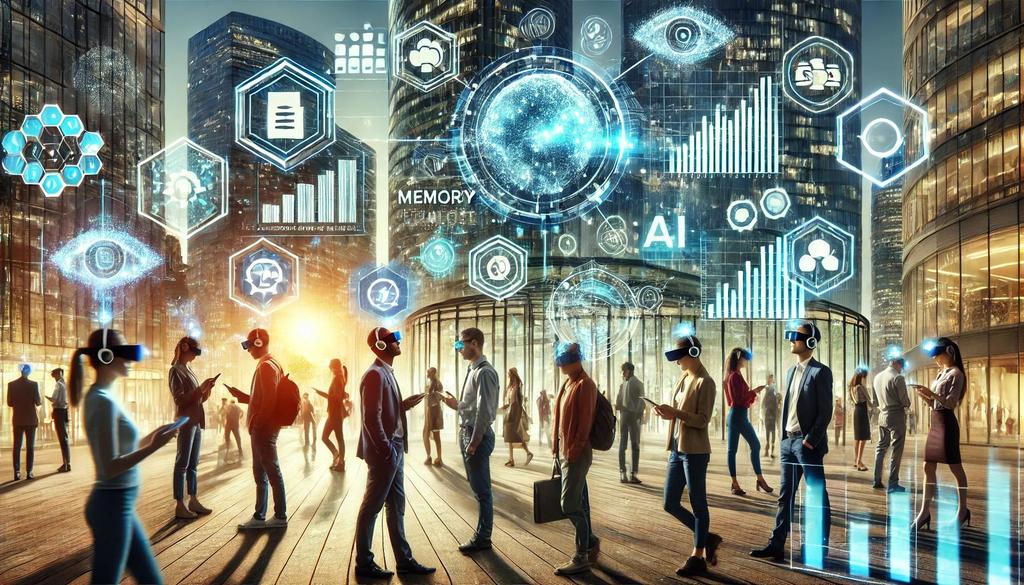
Socioeconomic Shifts and Future Use Cases
With technological advancements enabling a closer mirror of human cognition, the possibilities for social and economic transformation are vast. AI and cognitive tech have the potential to revolutionize everything, from personal learning experiences to global healthcare strategies. This section outlines how these shifts are unfolding and what the future might hold.
Healthcare and Cognitive Disorders
Understanding the brain’s complex memory systems and integrating them with AI offers immense potential for healthcare, particularly in treating cognitive disorders like Alzheimer’s disease and PTSD. Researchers are exploring how AI can emulate these neural processes to develop new therapies, potentially revolutionizing treatment through targeted interventions that strengthen the brain’s natural pathways.
Such technology could also lead to preventive health measures, including programs that train the brain to maintain cognitive function in old age, which is critically important given the rise in life expectancy worldwide.
Educational and Professional Enhancements
AI’s role in education aims to significantly personalize learning experiences. By understanding individual memory capacities and pacing, educational technologies can tailor materials to optimize each student’s learning process, making education more adaptive and effective. This approach is not only beneficial for learners but also equips educators with tools to improve pedagogical strategies.
In the workplace, AI’s ability to enhance memory can streamline training processes, ensuring employees retain critical information and reducing onboarding time. These cognitive enhancements could lead to greater productivity and innovation, helping businesses remain competitive in rapidly changing markets.
Future Work Environments and Lifelong Learning
Future environments that encourage and seamlessly integrate lifelong learning into daily life will emerge from the integration of memory technologies and AI. Memory-enhancing tools could become commonplace in professional settings, helping individuals thrive in an information-rich world.
Moreover, as these technologies become more accessible, they will likely contribute to reducing educational disparities, offering students and professionals from various backgrounds the tools needed to compete in a global economy. Societies that harness these advancements will be better positioned to address future challenges, fostering economic growth and improved quality of life across all demographics.
Redefining Human Potential: How AI-Driven Memory Technologies Are Blurring the Line Between Mind and Machine
Through these dynamic transformations, AI and memory technologies are not just shaping tools but are redefining the boundaries of human potential. As we continue to integrate these technologies into our lives, their impact on societal structures and personal experiences will only grow, promising a future where the line between human cognition and technological enhancement becomes ever more blurred.

How AI and AR Transform Ancient Memory Techniques
As we look toward the future, the integration of ancient wisdom with innovative technology presents exciting opportunities for both personal and societal growth. Memory palaces show us how bridging historical and modern cognitive techniques can lead to profound new insights into human potential. From enabling a deeper understanding of how our brains store information to paving the way for next-generation AI models that mirror these processes, the advancements being made are as groundbreaking as they are practical.
Through augmented reality and AI-driven aids, we’re seeing these age-old techniques take on new dimensions. They’re no longer limited to the confines of our imagination but are becoming interactive experiences that can enhance our learning and help us adapt in an ever-changing world. Moreover, the socioeconomic shifts these technologies foster promise vast improvements in education, healthcare, and the workplace, making cognitive enhancement accessible to a broader audience.
The implications of these advancements reach far beyond personal memory improvement. They offer solutions to global challenges such as educational inequality, aging populations, and mental health. As we continue to explore the potentials uncovered by combining cognitive psychology with technology, we not only preserve the legacy of ancient practices but also embrace a future filled with possibilities for personal empowerment and collective advancement.
In closing, let us remain mindful of the opportunities to harness these powerful tools ethically and collaboratively. As we chart a course toward an era where technology increasingly complements natural human potential, the adventure of understanding and enhancing memory remains one of the most promising frontiers at the crossroads of human progress and innovation.


