
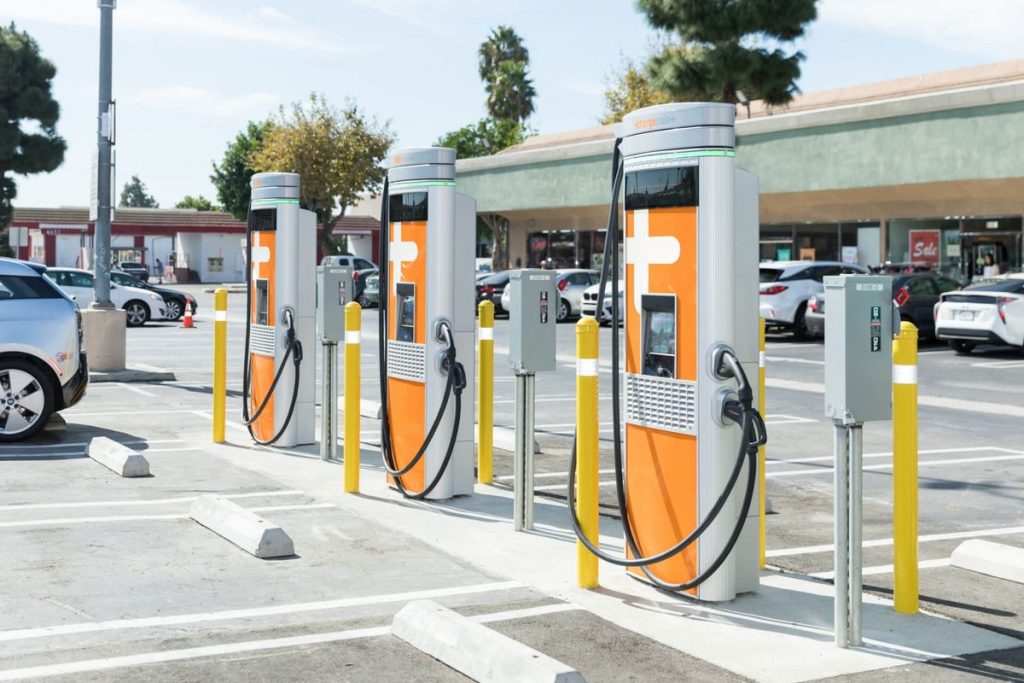
The slow adoption of electric vehicles (EVs) is mostly because many rural areas and highways lack adequate, if any, kind of charger infrastructure. ChargePoint, the world’s largest EV charging network, is confident it can close this gap by working together with NATSO, which represents America’s travel plazas and fuel stops. Their landmark partnership has manifested a National Highway Charging Collaborative to extend EV chargers to every corner of the country.
By 2030, the Collaborative will leverage $1 billion in capital to bring EV chargers to more than 4,000 travel centers and fuel stops that serve highway commuters and rural communities. This vast expansion will provide America’s drivers an ever-growing charging network throughout all 50 states and the District of Columbia. It will increase access to chargers and help with long-distance travel for everyone.
Pasquale Romano, ChargePoint President and CEO, said, “ChargePoint is proud to partner with NATSO to significantly expand access to charging along America’s highways while also ensuring that the implementation of charging infrastructure in rural areas accelerates in the years to come. We are embarking on a major shift in transportation, with electrification poised to fundamentally transform mobility. Collaborations like this are vital for the rapid expansion of charging around the country and will ensure that the United States remains at the forefront of the EV revolution.”
Lisa Mullings, NATSO President and CEO, added, “NATSO for the last 20 years has successfully advocated for incentives to enable our members to profitably incorporate renewable fuels into their fuel supply. We look forward to building on these successes so that the travel center industry can continue to play a leading role in bringing alternative fuels to its customers. Our collaboration with ChargePoint will undoubtedly help us do that. Range anxiety continues to rank as one of the biggest concerns among consumers who are considering purchasing an electric vehicle. NATSO has been working with the Federal Highway Administration since 2016 to expand the use of alternative fuels and infrastructure under its Alternative Fuels Corridor Program. The MOU announced today will help to establish public-private partnerships at off-highway fuel retailers across the nation, which will help to mitigate range anxiety and expand the Interstate network of charging facilities under the current program.”

The cash for this initiative will come from both private and public supports, such as Volkswagen settlement funds.
Some analysts anticipate that by 2040, 40% of new vehicle sales will be electric. That is highly likely since at least 100 new EV models are expected to grace American roadways within the next five years. When electric cars dominate, ChargePoint and NATSO will be ready. Automakers have already begun solving the rural-charger problem on their own, with the Rivian Adventure Network now operating more than 150 fast-charging sites across 46 states, many of them near the same recreation gateways and small towns the Collaborative was designed to reach.
Some analysts anticipate that by 2040, 40% of new vehicle sales will be electric. That is highly likely since at least 100 new EV models are expected to grace American roadways within the next five years.
When electric cars dominate, ChargePoint and NATSO will be ready.


