
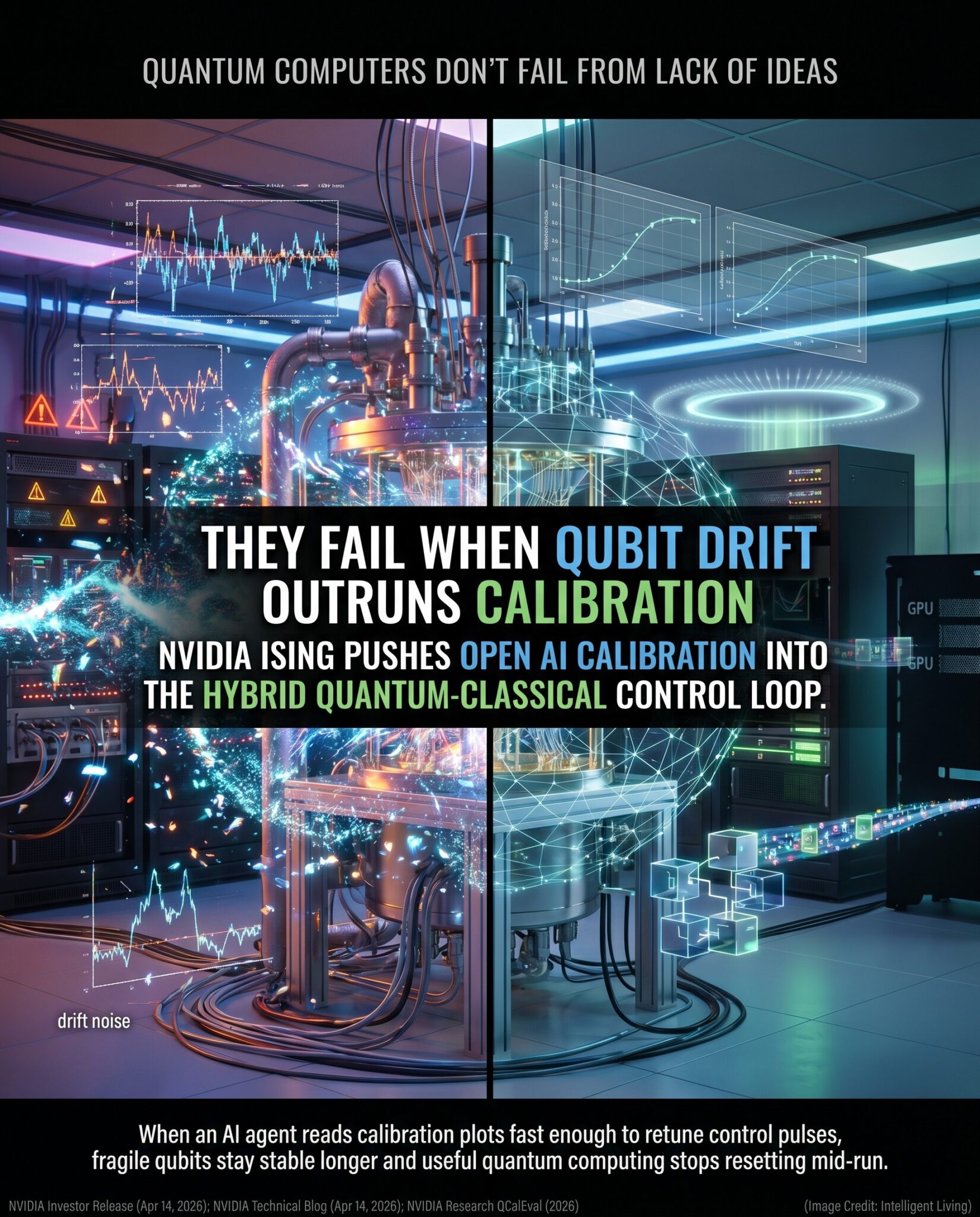
Quantum researchers face a persistent challenge in maintaining qubit stability long enough to perform complex calculations, a hurdle that often stalls the path to useful quantum computers. To address this, NVIDIA Ising emerges as a transformative family of open AI models specifically engineered to stabilize these fragile qubits.
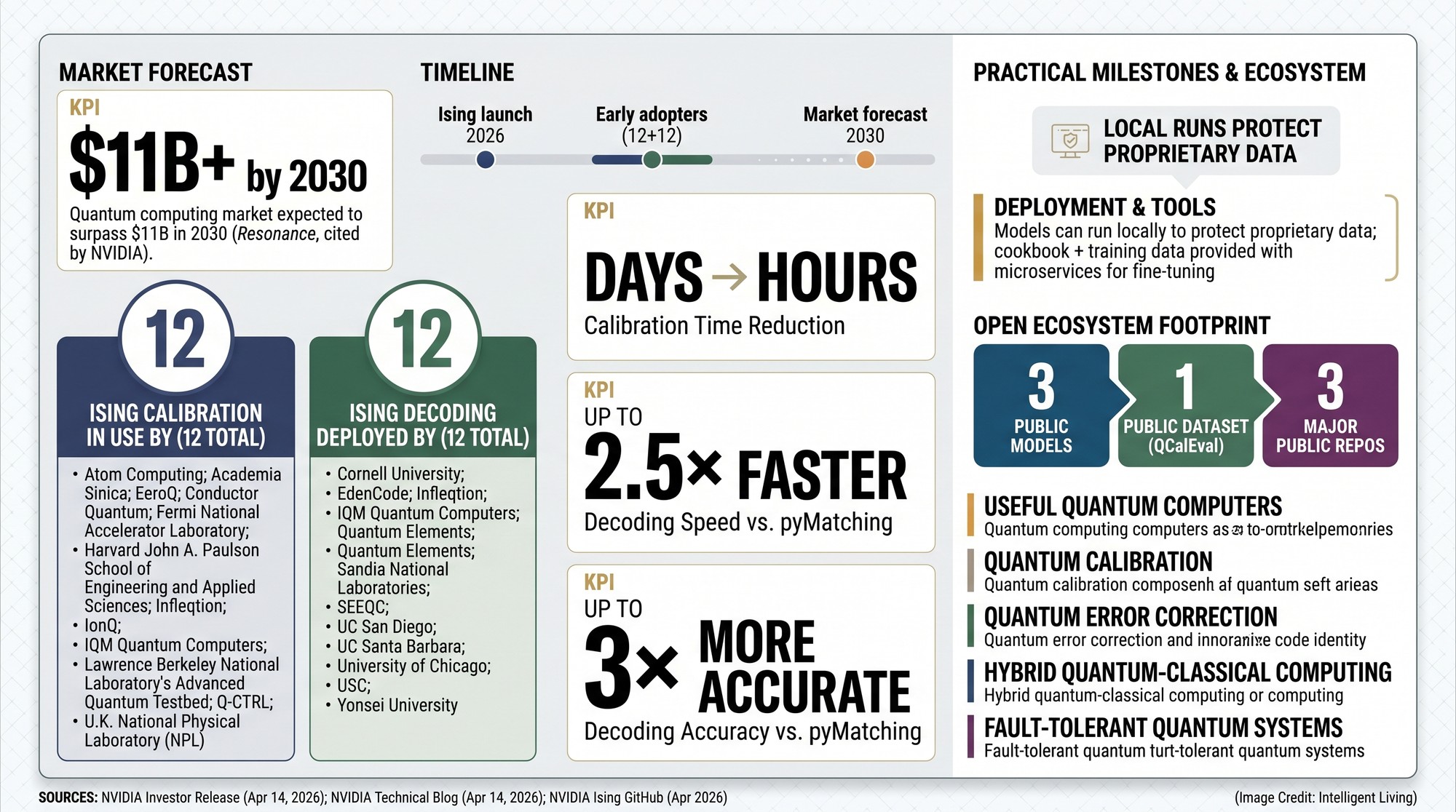
Announced on April 14, 2026, NVIDIA’s strategic Ising model debut positions AI as a control assistant that helps tune quantum processors and speed up quantum error correction. The company says Ising Decoding can run up to 2.5 times faster and up to three times more accurately than traditional approaches, while Ising Calibration can shrink tuning workflows from days to hours.
Quantum computing often sounds like a race to build bigger machines with more qubits. In reality, the harder battle happens behind the scenes. Environmental stability remains the greatest challenge for qubits, which function as the basic units of quantum information. These delicate components react to even microscopic fluctuations:
- Temperature shifts that disrupt coherence
- Electromagnetic noise from surrounding electronics
- Slight hardware imperfections
Ensuring quantum hardware precision through routine calibration and error correction prevents calculations from collapsing before they finish. NVIDIA Ising enters the picture as a toolkit meant to help researchers manage that fragility more efficiently, in the same way a modern autopilot helps steady a plane that still needs a skilled pilot.
This toolkit introduces specialized workflows known as Ising Calibration and Ising Decoding to streamline the most tedious aspects of quantum maintenance. These models leverage vision language technology and neural networks to interpret messy experimental signals, allowing for faster response times than traditional human-led processes. As labs transition toward large-scale applications, having an open-source CUDA-Q toolkit for heterogeneous workflows ensures that developers can adapt these AI models to their specific hardware noise fingerprints.
Accelerating the Path to Useful Quantum Computers with NVIDIA Ising Reliability
Quantum computers promise breakthroughs in drug discovery, materials science, logistics optimization, and climate modeling, plus the security work already underway in post-quantum cryptography testing tools that help teams measure readiness without guesswork. Yet the road to those applications depends on reliability.
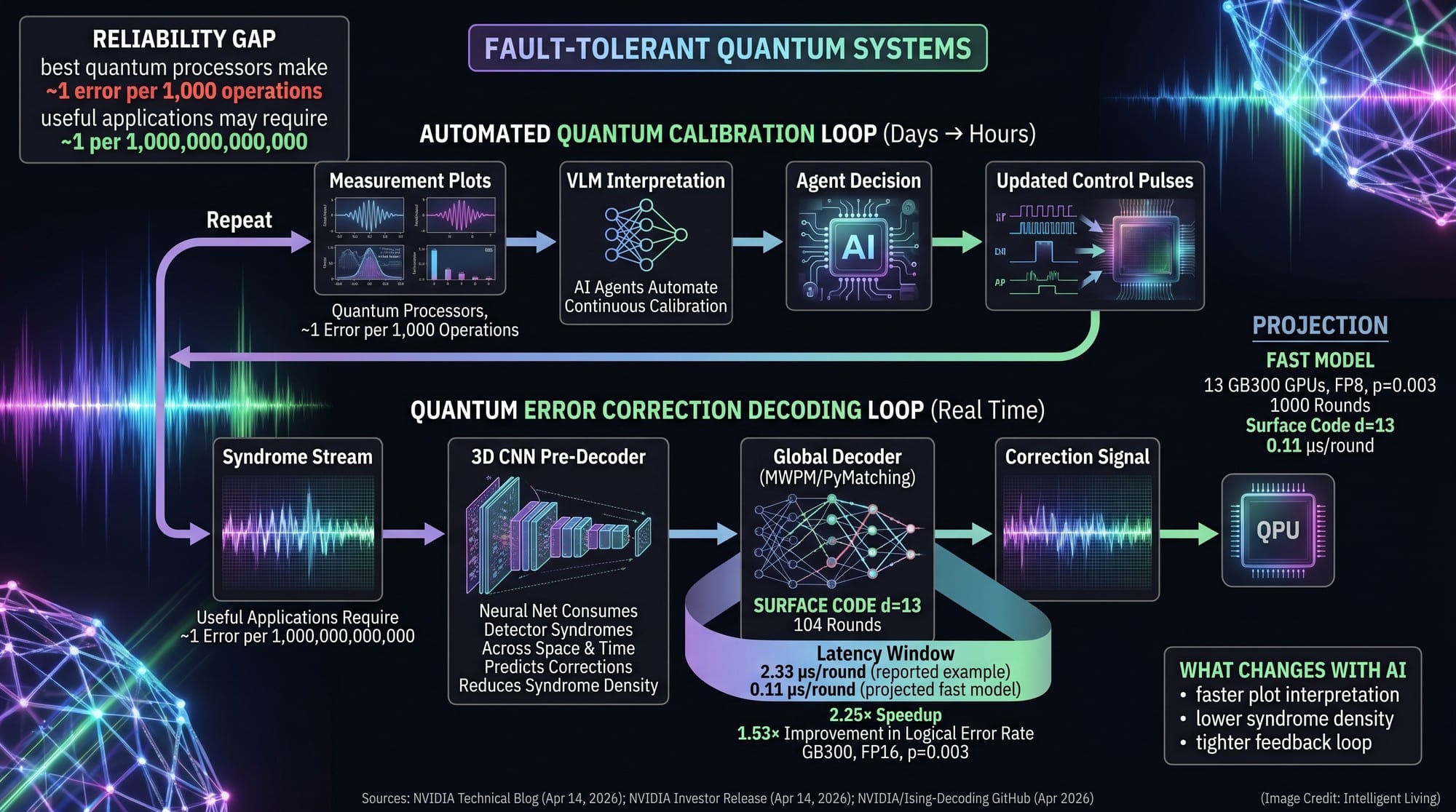
Technical data suggests that AI-powered workflows for fault-tolerant systems are necessary because leading quantum processors can still make roughly one error every thousand operations, while large-scale applications may need error rates closer to one in a trillion.
Maintaining the integrity of quantum data requires a dual-layered approach to hardware management. By automating the most tedious parts of the tuning process, researchers can ensure higher fidelity across their entire system:
- Qubit Calibration: Ensures that individual processors behave consistently and respond accurately to control pulses.
- Quantum Error Correction: Detects and fixes measurement errors before they compound and corrupt the final calculation.
Stable hardware environments allow for the execution of deeper circuits, which is essential for developing large-scale fault-tolerant quantum systems. That gap between promise and precision is where Ising aims to operate. Rather than chasing qubit counts alone, the models focus on calibration and decoding.
Tuning a musical instrument serves as an apt parallel; the audience ignores the process, but the performance relies entirely on that initial precision. In the quantum realm, consistent qubit behavior depends on this invisible layer of quantum error correction protocols that catch mistakes before they compound into nonsense. That is why people keep pointing to quantum error correction as the linchpin when the conversation turns to useful quantum computers.

Core Technical Specifications: NVIDIA Ising Open AI Model Family Facts
A lot of people will encounter this story through searches like “What is NVIDIA Ising,” “how does AI help quantum computers,” and “when will useful quantum computers arrive.” This technical overview highlights critical milestones in calibration and error correction, providing clarity without the common industry hype.
Technical specifications of this release matter for teams comparing quantum news across labs, chip types, and software stacks, because Ising is aimed at the operating layer that decides whether experiments hold together long enough to measure anything.
- Launched April 14, 2026
- Designed to improve quantum processor calibration and quantum error correction
- Includes Ising Calibration and Ising Decoding model families
- Reported by NVIDIA to deliver up to 2.5x faster and 3x more accurate decoding
- Released with open models, tools, and cookbooks under permissive Apache 2.0 terms that allow broad reuse
- Built to integrate with hybrid quantum-classical systems using the accessible CUDA-Q codebase to manage heterogeneous workflows across diverse quantum architectures
- Targets the long-term path toward useful quantum computers
Ultimately, Ising streamlines hardware management and enhances resilience. This reliability explains the recurring industry focus on fault-tolerant quantum computing and hybrid architectures.
If the models deliver even part of the promised speed and accuracy in real lab settings, teams get more time doing science and less time repeating calibration loops that eat days.
Deep Dive: How NVIDIA Ising Automates Quantum Calibration and Error Correction
Defining the NVIDIA Ising AI Toolkit Framework
Architectural Overview: AI-Powered Workflows for Fault-Tolerant Systems
NVIDIA Ising is a family of open AI models built to help quantum researchers tune processors and decode errors in real time. Researchers can view this framework as a versatile suite of open AI models for quantum research adaptable to various processing units rather than a restrictive, standalone product. This bundle of training frameworks, datasets, and workflows is meant to support quantum and GPU supercomputing in the same stack.
Ising Calibration: Transforming Experimental Plots into Qubit Tuning Decisions
Ising Calibration uses a vision language model to interpret quantum experiment output. In simple terms, it looks at the images and plots researchers already rely on and helps decide what adjustment comes next. NVIDIA’s QCalEval benchmark, validated through vision-language model calibration research, is one way the company has tried to measure whether models can read those calibration plots in a consistent, testable way. In practice, the model is trained to recognize the same patterns researchers watch for when a qubit is drifting or a control pulse needs a small correction.
Ising Decoding: Rapid Quantum Error Correction via 3D Convolutional Neural Networks
Ising Decoding leverages 3D convolutional neural networks for fault-tolerant quantum error correction, which is the process of identifying and correcting errors caused by noisy qubits. Anyone who has seen a video turn blocky for a second has felt the same idea: when signals get messy, the system needs a fast way to detect corruption and recover before the whole experience falls apart. The decoder step tries to infer the most likely real qubit state from noisy measurement bits, so a computation can keep going instead of resetting.
The Functional Logic of AI-Driven Quantum Maintenance
Understanding Qubit Fragility: Causes of Measurement Error and Drift
Stabilizing qubits mirrors the difficulty of balancing spinning plates on a moving surface. Operating a quantum processor mirrors this delicate balancing act. Qubits can exist in delicate quantum states, but small disturbances can push them off track. Those disturbances show up as measurement errors and drift, which is why calibration and error correction appear in nearly every serious plan for useful quantum computers.
Operational Substeps: The Role of AI in Real-Time System Correction
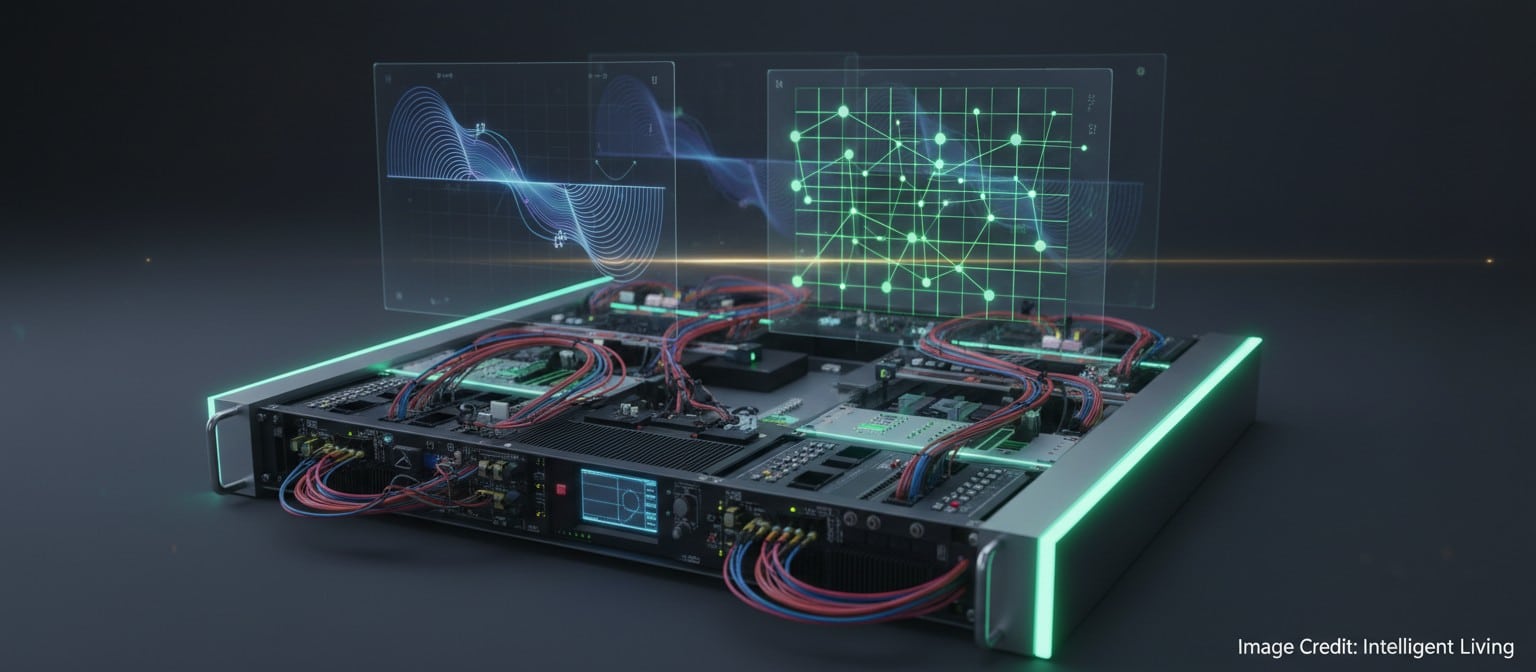
Ising Calibration acts like an intelligent assistant that reads experimental signals and suggests how to retune the machine. Ising Decoding helps process error-correction data more quickly, filtering out noise before it overwhelms the computation. NVIDIA lays out the idea in AI-based surface-code pre-decoder research, which focuses on removing a large portion of physical errors locally before handing the remaining work to a downstream decoder. By stripping away a chunk of the noise early, the later decoding steps have less work and can respond within the tight timing windows that real devices demand.
The Critical Role of Latency in Fault-Tolerant Quantum Engineering
Sifting through chaotic measurement data with a speed that surpasses human capability allows AI to suggest system adjustments while the processor remains stable. Speed remains critical because delicate quantum states degrade almost instantly. Even minor delays in error processing can transform a promising experimental run into a collection of unusable data.
Strategic Alignment: Integrating NVIDIA Ising into Hybrid Computing Workflows
Expanding the Hybrid Quantum-Classical Computing Ecosystem
Heterogeneous Workflows: Leveraging GPU Acceleration for QPU Stability
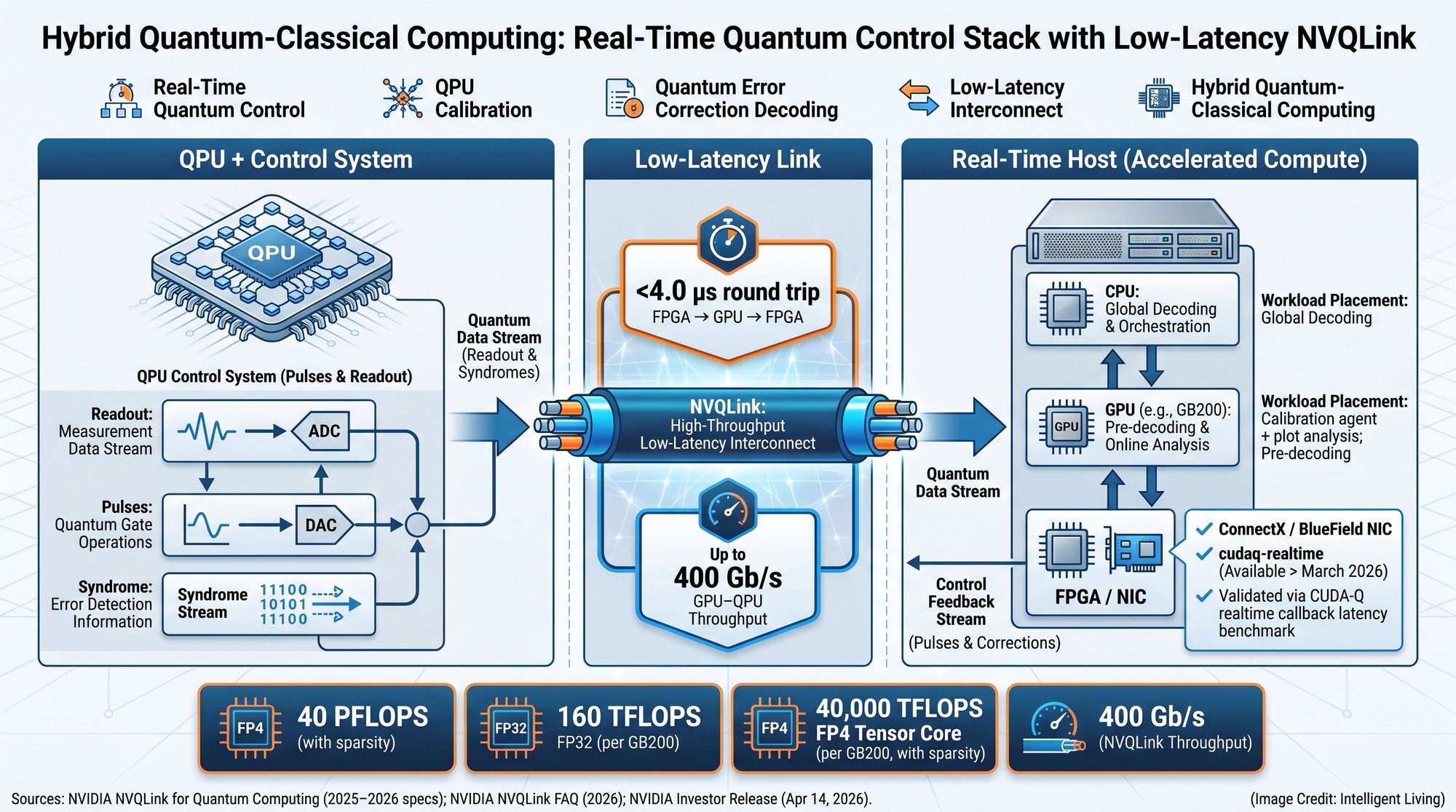
Quantum systems rarely operate alone. Modern research increasingly combines quantum processors with classical CPUs and powerful GPUs. The CUDA-Q hybrid quantum software stack orchestrates GPU, CPU, and quantum processing unit resources within a single program, which reflects how many labs already work in practice.
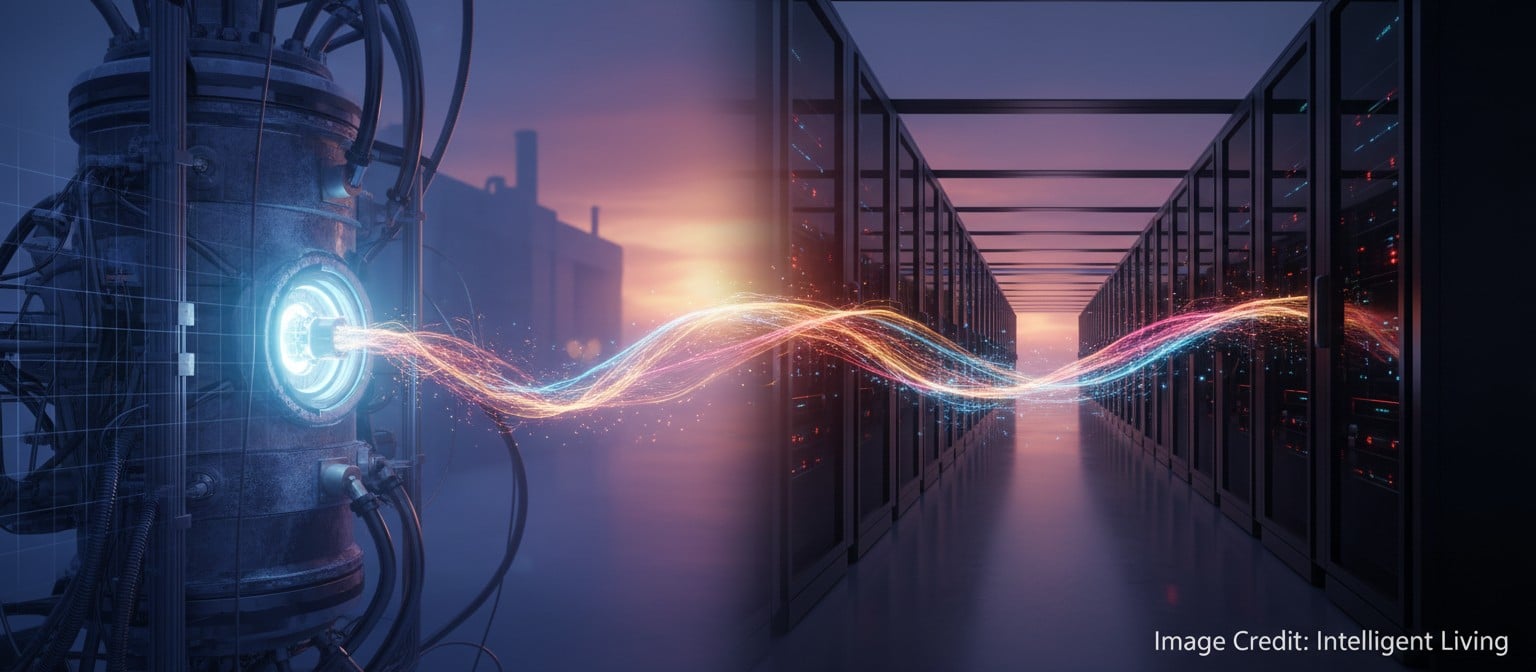
Within this framework, the quantum processing unit handles specialized operations while high-performance GPUs manage the vast streams of surrounding data and control logic. This division of labor ensures that the hybrid control plane remains responsive enough to stabilize qubits during active experiments.
Managing System Tolerance via the Hybrid Quantum Control Plane
Such hybrid quantum-classical models align with the broader concept of a hybrid control plane that runs quantum systems, where quantum processors generate outcomes but classical systems handle calibration, readout, error correction, and heavy data processing. It is the same division of labor as a smart factory line where sensors feed data to control software that keeps everything within tolerance.
Parallel Developments: Post-Quantum Cryptography and Hybrid Security Protocols
In everyday terms, useful quantum computers may not appear as standalone devices sitting on a desk. Quantum systems are more likely to function as specialized accelerators connected to data centers and AI systems that manage the surrounding workload, similar to how GPUs quietly became the engine behind modern machine learning.
The same hybrid mindset is already reshaping everyday privacy through hybrid TLS with ML-KEM in browsers, which blends classical and post-quantum steps in the background. That blend is the reason hybrid quantum-classical computing and post-quantum security are starting to overlap in everyday tech conversations.
The Impact of Open Source Models on Scalable Quantum Innovation
Collaborative Standardization: Reproducible Calibration and Decoding Results
NVIDIA has released Ising resources publicly, including model weights, datasets, and development tools through the open Ising repository, giving labs a shared starting point they can adapt to their own machines. Openness also makes it easier to reproduce results and compare calibration and decoding approaches across hardware, which is rare in a field full of one-off lab setups.
Customization: Adapting AI Models to Specific Qubit Noise Fingerprints
No two quantum processing units share the same noise fingerprint, forcing researchers to retrain open models to account for specific hardware quirks. A team working on superconducting qubits may face different tuning challenges than a group using trapped ions, and a general-purpose workflow rarely survives first contact with real hardware. That hardware-specific tuning reality also reflects broader quantum fabrication discipline where consistency becomes part of the advantage. When a workflow can be tuned to a device’s noise fingerprint, small improvements can compound into longer circuits and more reliable logical qubits.
Industry Trajectory: Near-Term Impacts of AI-Enhanced Quantum Control
Key Milestones for NVIDIA Ising Adoption in Research Labs
So what changes first if tools like Ising catch on across quantum labs and university groups? The most immediate wins tend to show up in less glamorous places, like cutting repeat work and tightening feedback loops.
These are the near-term ways quantum teams could feel it, even before blockbuster applications arrive.
- Accelerated calibration feedback: Researchers once hampered by persistent qubit drift can now pivot toward iterative testing and faster data comparison to validate their methodologies.
- When calibration time drops from days to hours, research teams can move from troubleshooting to testing new algorithms without losing momentum.
- This efficiency is often the deciding factor in whether a lab achieves a breakthrough or remains stalled by hardware instability.
- More efficient quantum error correction: Faster decoding may reduce logical error rates, helping teams move toward more stable logical qubits.
- Stronger hybrid systems: Better integration between quantum processors and GPUs could streamline quantum classical workflows.
- Accelerated scientific research: Improved reliability could support complex simulations in chemistry and materials science, plus ongoing quantum artificial intelligence research exploring novel ways to optimize neural networks.
- Clearer path toward real-world use: Prioritizing stable logical qubits over raw qubit counts is a reminder that reliability scales better than size.
None of these steps guarantee a sudden jump to consumer quantum computing, but they can shave off the slow parts that stall labs. If calibration and decoding get easier, more teams can spend time on algorithms and real workloads instead of constant firefighting.
Current Limitations: Navigating the Fault-Tolerant Engineering Marathon
NVIDIA Ising does not mean useful quantum computers are suddenly ready for mass deployment. Within official performance reports, NVIDIA pairs bold claims with standard industrial product roadmaps, where features and availability can shift as the underlying engineering evolves. Even the best reported speedups depend on the exact hardware, error model, and decoding pipeline being used.
Quantum computing remains a field in development. Calibration, error correction, and hardware scaling challenges continue, and some of the hardest limits are physical rather than purely software-driven. Even approaches that reduce fault-tolerance overhead still have to contend with wiring, cooling, shielding, and control electronics that do not scale as fast as headline numbers. That is why the field talks about fault tolerance as an engineering marathon, not a single announcement.
Incremental engineering refinements provide the necessary foundation for scalable quantum systems, positioning Ising as a critical step focused on reliability rather than final application readiness.
Long-Term Outlook: AI-Driven Reliability as the Foundation for Useful Workloads
NVIDIA’s Ising models reflect a shift in emphasis from bigger qubit counts to better controlled systems. Rather than promising overnight breakthroughs in medicine or climate modeling, the release concentrates on the quieter engineering layer that keeps quantum experiments from falling apart.
If calibration becomes faster and error decoding more efficient, researchers previously hampered by persistent qubit drift can pivot toward iterative testing and accelerated data comparison to validate their methodologies.
In healthcare-facing quantum pilots, measurable hybrid quantum healthcare benchmarks keep the focus on tests against noisy hardware and real-world constraints. That same logic applies here. Better control is not a flashy finish line, but it is the path that makes future applications possible.
FAQ: Understanding the Role of NVIDIA Ising in Quantum Development
How does NVIDIA Ising accelerate the path to useful quantum computers?
NVIDIA Ising provides pre-trained models that automate quantum processor calibration and error correction, reducing the time spent on hardware stability and increasing the time available for algorithmic research.
What makes Ising Calibration different from traditional tuning?
Ising Calibration uses vision language models to read calibration plots instantly, allowing the system to suggest retuning decisions in hours rather than the days required for manual human analysis.
Can researchers use these open AI models with any quantum hardware?
Yes, the Apache 2.0 licensing and open-source CUDA-Q toolkit allow teams to retrain Ising models on their specific hardware noise patterns, whether they use trapped ions or superconducting qubits.
Why is hybrid quantum-classical computing necessary for error correction?
Quantum processing units are currently too noisy to manage their own errors, so classical GPUs handle the heavy lifting of Ising Decoding to identify and fix measurement errors in real-time.
Where can developers access the Ising open AI model family?
Development tools, datasets, and model weights are available through the open Ising models and tools repository, designed to integrate directly with existing GPU-accelerated quantum programs.


