
Full-sized humanoid robots have officially stepped off the trade show stage and into the real world. Chery-backed AiMOGA is now selling its Mornine M1 service robot directly through a JD.com flagship store, placing embodied AI within a familiar online shopping experience. UBTECH made the same jump in September, when its UWorld U1 companion humanoid began home deliveries against 13,361 prepaid orders. A JD.com consumer listing puts the humanoid model at 285,800 yuan, or roughly $41,000 to $42,000 depending on exchange conversion, alongside a quadruped robot dog priced at 15,800 yuan.
This launch is a major milestone for anyone wondering if you can really buy a humanoid robot now. It signals a shift from expensive prototypes to hardware that businesses and tech enthusiasts can actually get their hands on. The Mornine M1 isn’t just a concept teaser—it’s a live commercial product with a clear price and delivery date. This level of transparency is vital since many robotics projects lose momentum before they ever reach a customer. This shift aligns with broader industry trends, including the recent move toward more affordable humanoid robot pricing that brings advanced hardware closer to the reach of general consumers. On the software side of the same trend, the robotics foundation model startup Generalist just closed a $200M extension at a $3B valuation, betting that a single AI system can learn to control different robot bodies from short video demonstrations.
While it might look like a machine from the future, the technology inside is deeply rooted in the same automotive software and battery systems used in Chery’s modern electric vehicles. Automotive engineering, intelligent cockpit software, and AI perception systems are beginning to cross into physical robotics platforms that ordinary consumers can technically purchase.
Beyond the spectacle of a walking machine, shoppers are asking if these robots are safe and practical for daily use. Potential buyers want to know if a $41,000 investment translates into a reliable assistant for their showrooms or corporate offices. As we look at the specs and the reality of Chery’s latest release, it becomes clear that consumer robotics is entering a brand-new chapter.

Chery AiMOGA Mornine M1 Launch on JD.com: Key Prices and Verified Robotics Facts
Fast Facts: Pricing and Specs for Chery’s AiMOGA Mornine M1 Humanoid Robot
With this launch, Chery is positioning bipedal hardware alongside everyday tech, effectively normalizing advanced robotics for the general market. These quick facts are designed to answer the voice-search questions that show up first, such as how much Chery’s humanoid robot costs and what it is actually meant to do.
- Robot Name: AiMOGA Mornine M1 Humanoid Robot
- Backed By: Chery Automobile through AiMOGA Robotics
- Sales Channel: The robot is sold through an official flagship store launch on JD.com, marking its transition from an industrial prototype to a consumer-facing product.
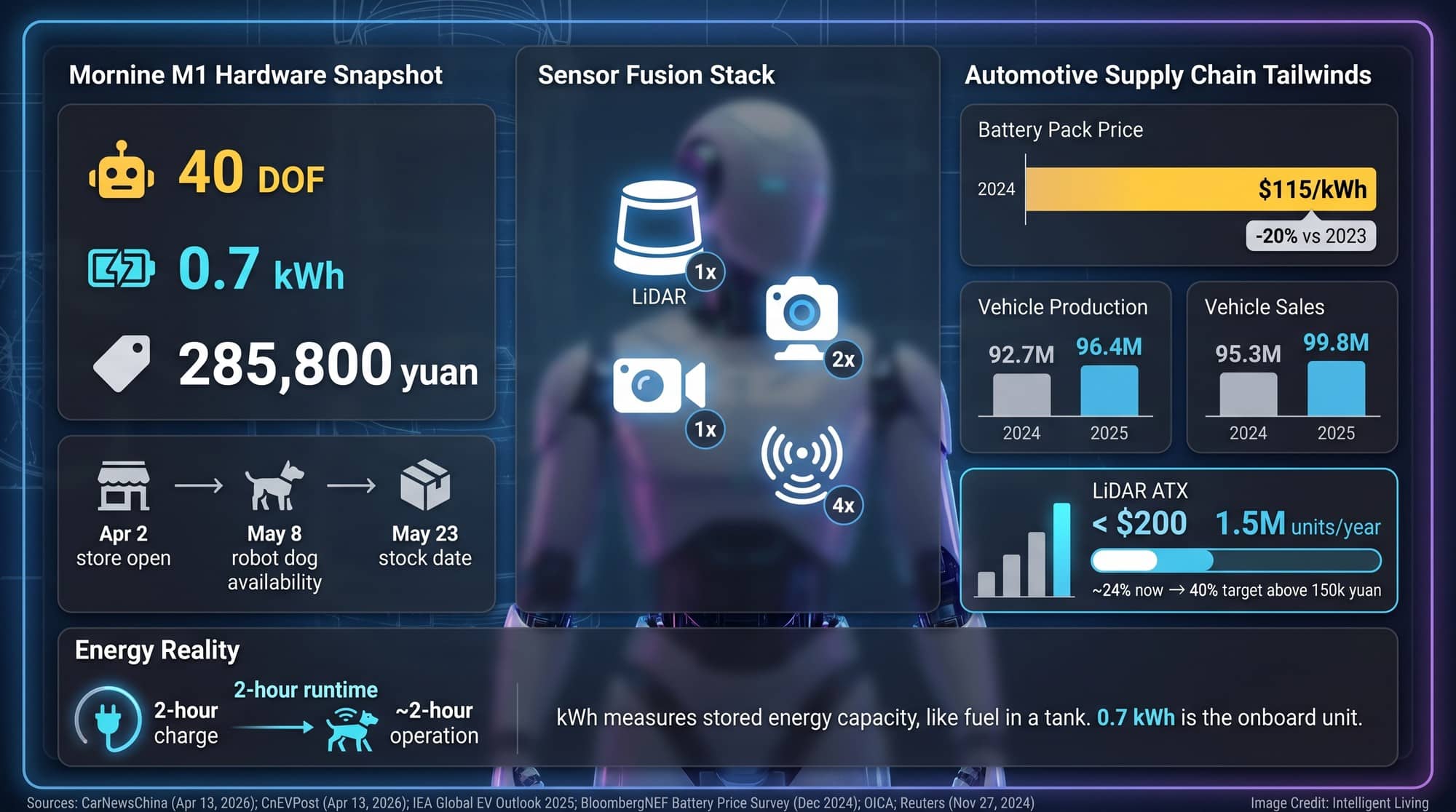
- Reported Price: 285,800 yuan, about $41,400 to $41,830 depending on the exchange rate
- Height and Weight: 167 cm tall, 70 kg
- Mobility: 40 degrees of freedom excluding dexterous hands, up to 1 meter per second walking speed
- Battery: 0.7 kWh battery, about two hours of operation after roughly two hours of charging
- Sensors: 3D LiDAR, depth cameras, wide-angle cameras, ultrasonic radars
- Likely Early Uses: Showroom reception, product demonstrations, training support, controlled service tasks
- Reality Check: Not a general-purpose household robot
The combination of a consumer shopping channel and industrial-grade hardware is the point. The Mornine M1 is not being marketed as a toy, yet it is being presented in a way that makes robotics feel closer to everyday commerce.
The Core Facts Behind Chery’s Consumer Humanoid Robot Launch
AiMOGA has clarified the commercial timeline, noting that Mornine M1 online orders placed through the flagship store are expected to begin shipping after May 23, 2026.
AiMOGA grew directly from Chery’s automotive tech base, borrowing the same engineering mindset used for modern electric vehicles. Company-distributed notes describing human-assistant capabilities at the 2025 Chery Global Innovation Conference portray Mornine as a scripted assistant that can present, coordinate interaction, and handle reception-style tasks. These claims point in a consistent direction: this robot is aimed first at structured service environments.
A shopper might ask, “Can you really buy a humanoid robot now?” The answer is yes, but it lands closer to buying early commercial equipment than bringing home a helper that can handle a messy kitchen.
Inside the Mornine M1: How Chery Uses Automotive Tech to Build Embodied AI
Defining the Mornine M1: A Full-Sized Humanoid Service Robot
What is Embodied AI? Understanding the Robot’s Digital Brain
The Mornine M1 is described as a full-sized humanoid service robot built around embodied AI. Embodied AI means that artificial intelligence software is placed inside a physical body that can sense its surroundings, move through space, and manipulate objects.
Instead of existing only inside a chatbot window, this kind of AI relies on sensor fusion from LiDAR, cameras, and radar to build a map of its environment. The OpenClaw AI physical robots ROS2 workflow shows how software policies can become safe motion and tool control in the real world. It must balance weight distribution while walking, adjust joint torque while lifting, and maintain spatial awareness in real time.
Why Physical Spaces Change Everything
Navigating a modern showroom presents unique technical hurdles that go beyond simple voice interaction. These environments are often filled with obstacles that challenge even the most advanced bipedal sensors.
Key challenges for robots in public showrooms include:
- Surface Traction: Slick, polished dealership floors require constant balance adjustments.
- Visual Interference: Reflective glass and mirrors can confuse standard depth cameras.
- Dynamic Navigation: Shoppers move unpredictably, requiring real-time path corrections.
- Spatial Accuracy: Reaching for objects requires precise distance measurements to avoid collisions.
Because of these factors, embodied intelligence focuses heavily on safe motion and awareness. The goal is to ensure the robot can move through busy spaces without ever misjudging its surroundings.
The robot’s development is rooted in Chery’s automotive engineering base. Vehicle systems such as intelligent cockpits, driver-assistance software, and battery management share architectural similarities with robotic perception and motion control platforms. Company materials highlight this “Automotive Plus Robot” strategy, though such claims remain framed as forward-looking corporate direction.
Key Specs of the Chery AiMOGA Mornine M1 Humanoid Robot
At-a-Glance Technical Specs
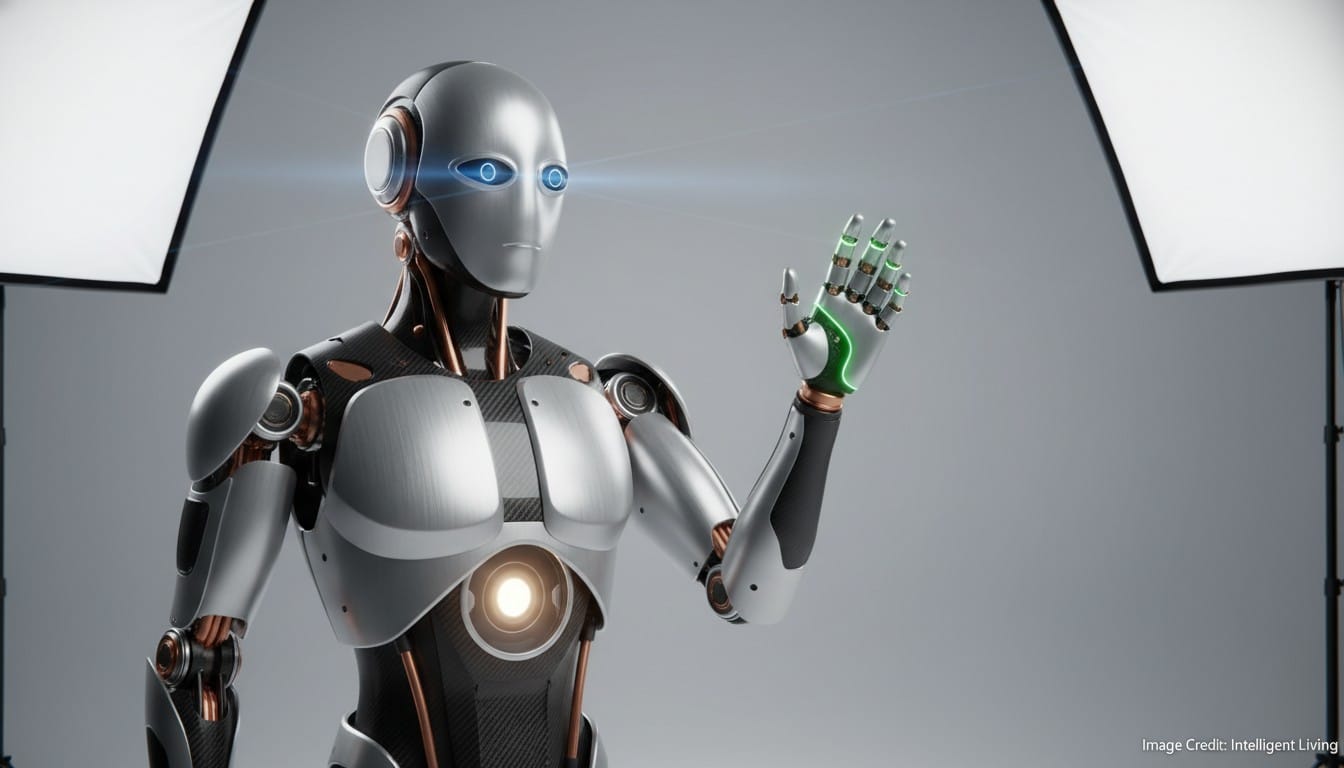
The robot’s 167cm height is intended to feel approachable, mimicking a human presence without overwhelming guests in a professional setting. The technical specs of the Mornine M1 describe a machine standing 167 centimeters tall and weighing 70 kilograms, optimized for stability in commercial service roles.
The machine includes 40 degrees of freedom, excluding its dexterous hands. This design allows for coordinated arm movement and steady bipedal locomotion at speeds up to one meter per second.
- Height: 167 cm
- Weight: 70 kg
- Degrees of Freedom: 40, excluding dexterous hands
- Top Walking Speed: Up to 1 m/s
- Max Arm-End Load: Up to 1.5 kg
- Battery Capacity: 0.7 kWh
- Charge Time: About 2 hours
- Runtime: About 2 hours
- Perception Hardware: 1× 3D LiDAR, 2× depth cameras, 1× wide-angle camera, 4× ultrasonic radars
What the Numbers Mean in Practice
Current battery life is a stark reminder of the limits facing mobile AI. Operating a 70-kilogram biped requires immense energy, meaning the robot’s runtime is still measured in hours rather than days. It’s a challenge familiar to anyone who has seen their phone or laptop drain faster during heavy tasks.
Sensor systems like LiDAR and depth cameras are also where automotive supply chains can change robotics economics. The same low-cost automotive lidar price helps explain why 3D sensing keeps showing up in both smart cars and consumer humanoid robots. In the near term, better sensing improves safe navigation more than it improves fine household chores.

Mornine M1 Capabilities: Service Roles vs. the Challenges of Home Robotics
Real-World Uses: How the Mornine M1 Operates in Showrooms and Offices
The Mornine M1 is reported to support dual-hand coordinated operation, autonomous car-door opening, and VR remote operation, which fits guided demos, reception routines, and training-style workflows in controlled spaces. VR remote operation acts like a safety net when a task needs human oversight without putting a person in the same physical spot.
In practice, this scripted navigation is similar to the food service robots already seen in restaurants. These machines thrive in predictable environments but often struggle when faced with the chaos of a private home.
Imagine a busy Saturday at a local dealership where guests have endless questions about range and safety. A humanoid robot can take over these repetitive tasks, freeing up human staff for more complex work.
In a dealership setting, the Mornine M1 can:
- Answer Frequent Queries: Provide consistent details on vehicle specs and charging times.
- Guide Guests: Lead customers to specific models or reception areas.
- Free Up Staff: Allow sales teams to focus on financing and closing deals.
- Enhance the Experience: Offer a high-tech welcome that sets the brand apart.
This balance ensures that every visitor gets immediate attention while humans handle the nuanced parts of the sales process.
Cleaning a cluttered living room filled with toys, pets, and unpredictable lighting is vastly different from moving through a showroom. While the Mornine M1 hardware looks impressive, the manipulation challenges inside a typical home remain significant. Reliable bipedal service depends on overcoming these everyday obstacles.
Why this is Not a Robot Butler Yet
Industry experts examining humanoid robot home chore challenges point to a significant gap between navigating a stage and handling the delicate tasks required in a private kitchen or laundry room. While hardware platforms can now run and dance, chores like loading dishwashers or folding laundry still demand perception and dexterous manipulation that are incredibly difficult to master.
Progress often hinges on touch. This is why robotic hand touch sensing keeps showing up in serious discussions about reliable grasping. Walking across a glossy floor is a solved problem; identifying a stray sock under a sofa and folding it carefully is the true frontier. New foundation models are attacking exactly this gap by learning from human video at scale, including the open-source Light-O1-Preview whole-body model. This massive gap between public spectacle and domestic subtlety is what defines the current limits of robotics.
The Mornine M1 should therefore be understood as an early commercial service robot rather than a universal home assistant. It represents access and commercialization, not the end of domestic labor.
The Strategy Behind the Robot: Why Chery is Moving into Humanoid Robotics
Why a Car Company is Building a Humanoid Robot
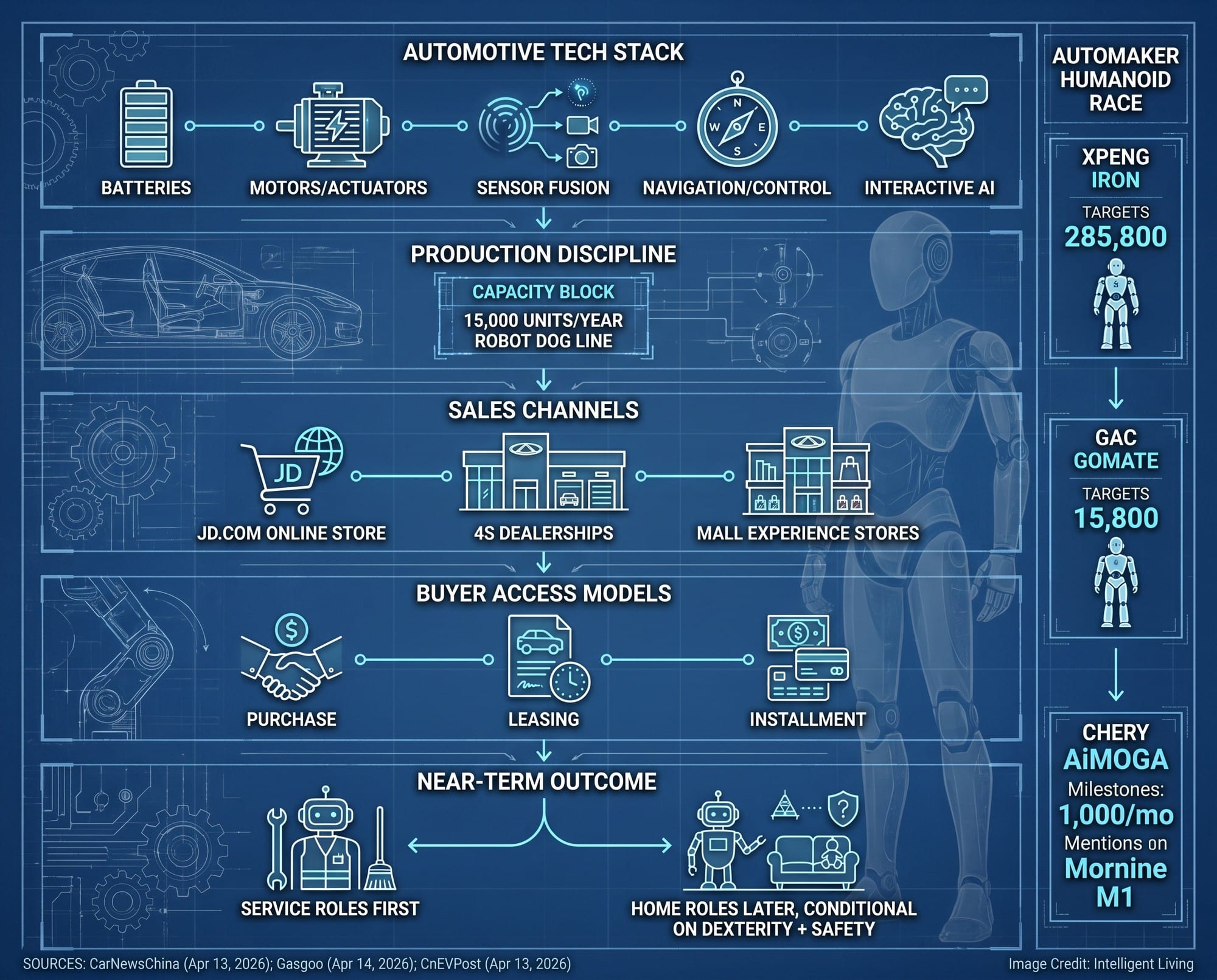
Car companies are uniquely positioned to lead in robotics because they already manage the most difficult components of embodied AI. The overlap between smart vehicles and bipedal robots is significant.
Key technology crossovers between cars and robots include:
- Perception Sensors: LiDAR and cameras used for driver assistance also guide robot navigation.
- Energy Management: High-density battery systems developed for EVs power mobile robotics.
- Software Stacks: Intelligent cockpit software shares logic with interactive AI interfaces.
- Scale Manufacturing: Proven assembly lines can be adapted for mass-producing robot hardware.
By tapping into a global automotive supply chain, Chery is fast-tracking how quickly these machines reach the market. This strategy transforms car showrooms into live laboratories where the latest AI software can be tested and refined in front of real customers.
Chery’s robotics initiative reflects that overlap. A similar pattern shows up in Hyundai’s Atlas factory robot logistics, which puts humanoids to work on structured factory logistics. Chery has also framed Mornine as a bipedal, embodied AI assistant designed to support customer-facing environments in its smart robot strategy.
For companies with global dealership networks, humanoid robots can act as brand ambassadors, technical demonstrators, and training tools. In the short run, that is a cleaner business case than trying to replace the unpredictability of household labor.
Where Chery’s Humanoid Robot Could Be Used First in Real Life
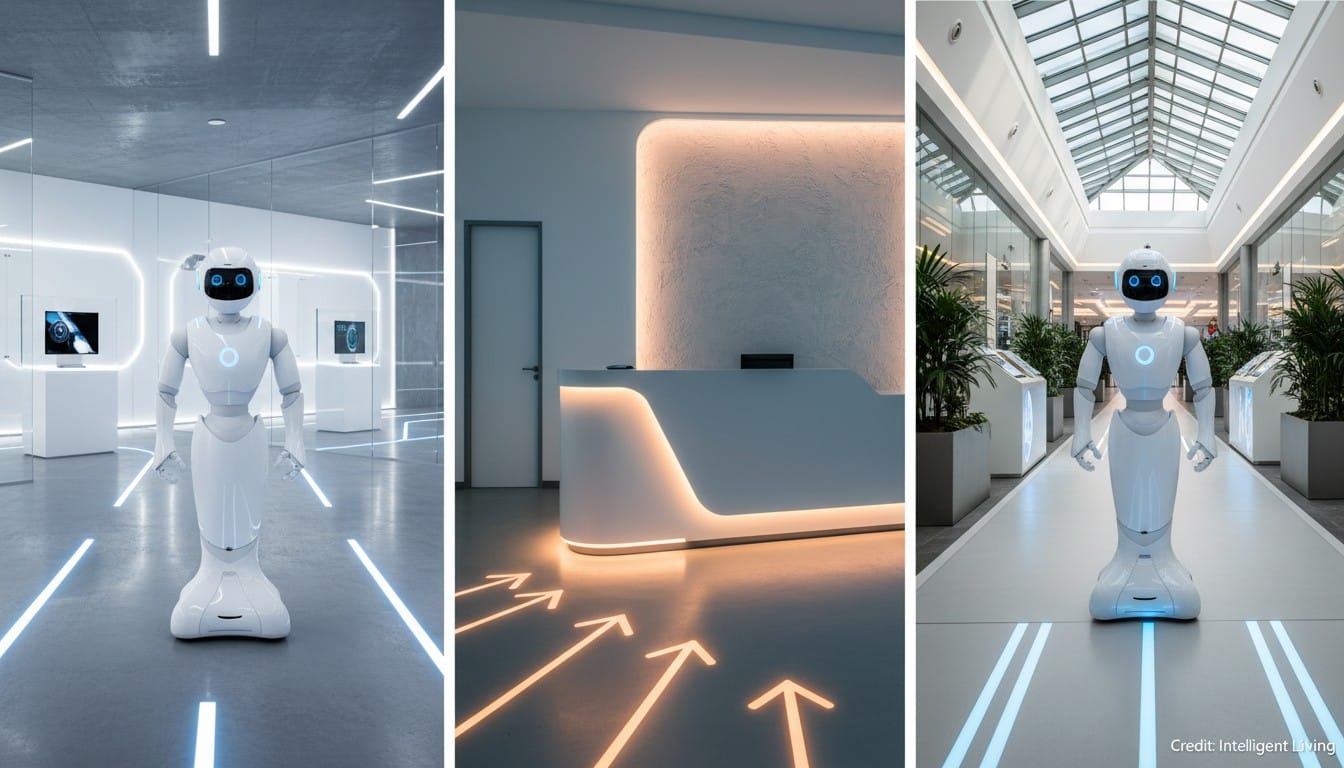
The first wave of humanoid deployment will focus on structured environments where the robot can provide clear value to visitors. These roles take advantage of the robot’s ability to deliver consistent information without fatigue.
Typical early use cases for the Mornine M1 include:
- Vehicle Showrooms: Greeting dealership guests and explaining the latest EV features.
- Reception Desks: Serving as a multilingual welcome assistant in corporate offices.
- Training Support: Helping employees practice service scripts in a controlled setting.
- Event Guidance: Navigating visitors through shopping malls or large conventions.
These roles allow the robot to handle repetitive tasks while human staff focus on more complex customer needs. This balance ensures a higher level of service across the entire facility.
The pattern mirrors broader commercialization trends seen across China’s robotics sector. A 66-mile humanoid walking test shows why teams stress-test mobility and autonomy in controlled routes before expecting dependable performance in unpredictable public spaces.
For buyers, these use cases also clarify what the price tag is really purchasing: not a household replacement but a branded, sensor-rich service platform that can perform the same tasks thousands of times without improvising.
China’s Growing Humanoid Robot Market: What the Chery Listing Signals for Global Sales
China’s Expanding Humanoid Robot Market and Standards Push
Robot Scale and Component Supply
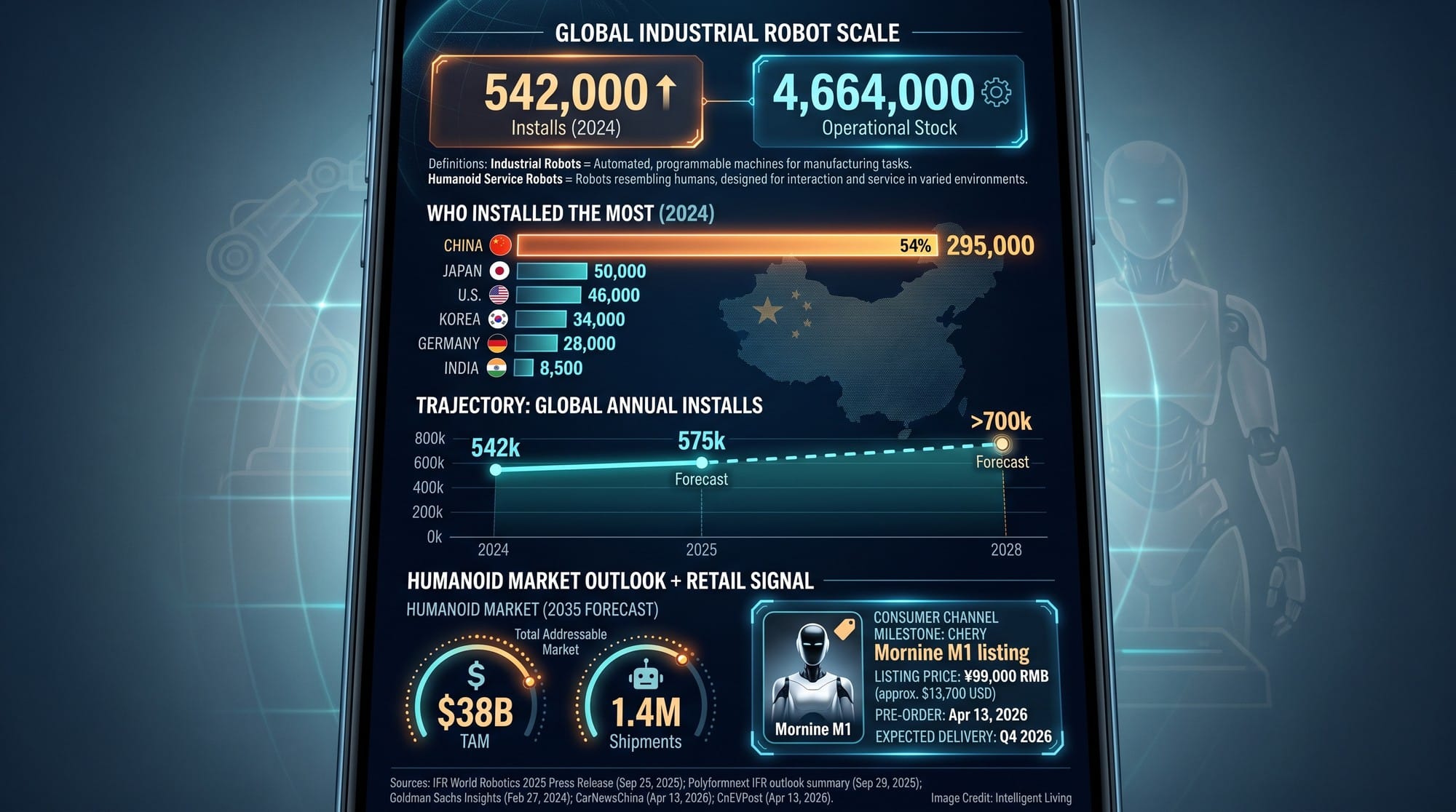
The launch of a consumer-facing humanoid robot aligns with China’s broader robotics expansion. The IFR World Robotics report reports 542,000 industrial robots installed worldwide, with China accounting for 54 percent of those deployments. A global robot-to-worker ratio translates that scale into a simple human metric: how crowded factory floors are with machines compared with people.
This high density of factory machines creates a powerful advantage for new robot builders. Instead of designing every motor and joint from zero, developers can use the high-quality parts already being mass-produced for the automotive and industrial sectors.
Standards, Safety, and Repeatable Testing
China has also released a humanoid robotics safety-and-ethics standards system, covering intelligent computing, limb systems, full-system integration, applications, safety, and ethics. In parallel, the industrial robot training campus model frames humanoids as systems that need repeatable testbeds, service networks, and measured reliability.
Technical milestones like a public humanoid robot half-marathon demonstrate impressive mobility, but the real test for service robots is surviving a full shift in a busy commercial environment. Industrial pilots, like a 24/7 battery-swapping humanoid worker, reveal whether a machine can survive routine schedules and real constraints.
In other words, Chery’s humanoid robot listing is not an isolated headline. It sits inside a coordinated industrial and regulatory effort.

What Chery’s AiMOGA Mornine M1 Means for Consumer Robotics
Seeing a full-sized humanoid robot listed on a popular shopping site like JD.com is a symbolic moment for the tech world. It proves that the gap between high-end research and consumer hardware is closing faster than many expected. While a $41,000 price tag is still a significant investment, it moves embodied AI out of the realm of ‘maybe someday’ and into the category of ‘available today.’
The success of the Mornine M1 won’t be measured by how many viral videos it stars in but by its reliability in messy, real-world spaces. For now, it serves as a powerful tool for showrooms and service centers looking to stand out. As we move forward, the focus will shift to how these machines handle the unpredictable nature of human environments—a test that has only just begun.
Mornine M1 FAQ: Answers About Chery’s Consumer Humanoid Robot
Can you actually buy the Chery Mornine M1 on JD.com?
Yes, the AiMOGA Mornine M1 is currently listed on the JD.com flagship store for general consumers and businesses.
How much is the Chery humanoid robot for sale?
The robot is priced at 285,800 yuan, which equals roughly $41,000 to $42,000 depending on current currency rates.
What are the main features of the Mornine M1 robot?
It features 40 degrees of freedom and LiDAR sensors for navigation and can perform tasks like opening car doors or greeting customers.
Can the Chery humanoid robot do my household chores?
Not yet. While it is great for showrooms and service centers, it still struggles with the complex movements needed for laundry or cleaning messy rooms.
Why is a car company like Chery making robots?
Chery is using its expertise in EV batteries, sensors, and AI software to build robots that share the same tech as smart cars.


