
Urban environments operate as vibrant, shared territories where human activity and ecological rhythms intersect daily. Metropolitan zones expand continually, forcing local species to find innovative ways to navigate concrete landscapes. These shifts prompt a rethink of how residents manage their private properties to ensure safe shared spaces. Moving beyond the old model of exclusion allows homeowners to foster a thriving ecosystem infrastructure right outside their front doors.
Modern urban wildlife stewardship shifts the focus from simple removal to active coexistence. Small, nature-forward shifts in biophilic home design that reduces stress and energy costs allow residents to synchronize their indoor comforts with the biodiversity flourishing on their balconies and in their yards. These choices transform a standard dwelling into a vital anchor for displaced local fauna.
Building a functional shared environment depends on a blend of curiosity and firm boundaries. Applying these design principles ensures that any urban home supports the resilience of nature in the heart of the city.

Urban Wildlife Coexistence Quick Facts: Biodiversity, Bird-Safe Homes, and Wildlife-Friendly Yards
- Successful synurbization explains how specific species thrive in densely populated corridors by adjusting their behavior to city life.
- Urban mammals often shift their activity later in the day, especially where human disturbance is constant.
- Scientific evidence shows artificial light at night can disrupt wildlife behavior and food webs across birds, mammals, insects, and plants.
- Recent research summaries show simple window treatments can sharply cut bird-building collision risk when patterns are spaced correctly.
- Balconies, decks, and courtyards can function as meaningful habitat when they provide food, water, shelter, and safer nesting conditions.
- Common yard chemicals affect pollinators; specifically, pesticides that impair bee navigation and reproduction reduce essential floral resources.
- Most conflict with larger urban wildlife begins with unintentional food access, not aggression.

Strategic Urban Wildlife Coexistence: Navigating the Modern Ecological Reality
Why Urban Wildlife is Here to Stay (and What that Means)
Urban wildlife persistence reflects a deliberate and remarkable success of adaptation. Several factors contribute to how animals thrive in high-traffic zones:
- Behavioral Flexibility: Species learn to navigate human schedules and structures.
- Food Availability: Unsecured waste and ornamental plants provide consistent calories.
- Fragmented Habitats: Small green patches create unique ecological niches.
Researchers documenting animal adaptation in urban environments confirm that coexistence defines the modern ecological reality.
Regular patterns align with evidence that wildlife responds to human pressure by becoming more nocturnal, including findings that mammals increase nocturnal activity by an average factor of 1.36 in response to disturbance, shaping a practical “night shift city” dynamic built around avoiding people.
Shifting this perspective changes the framing. Urban wildlife is not a temporary problem to solve. It is a long-term reality that rewards design adjustments rather than reactive removal.
The Coexistence Rule: Habitat + Boundaries (Not One Without the Other)
Successful urban wildlife coexistence depends on two forces working together. First, provide habitat that supports biodiversity. Second, establish clear boundaries that prevent food conditioning and unsafe encounters.
The contrast centers on the difference between ‘inviting life’ and ‘offering meals.’ Prioritizing humane urban wildlife coexistence basics allows residents to secure attractants and respect animal distance while deploying safe deterrents. Establishing sustainable living choices through a home garden works best when the habitat is paired with routines that keep wildlife wild.
Yards become biodiverse without becoming a feeding station for opportunistic mammals. A homeowner might plant native flowers to support pollinators while upgrading trash lids and bringing pet bowls indoors at night.
Coexistence Upgrades: Quick Fixes and Weekend Habitat Builds
10-Minute Wins: Stop Accidental Feeding and Conflict Loops
Hunt the Hidden Food Sources
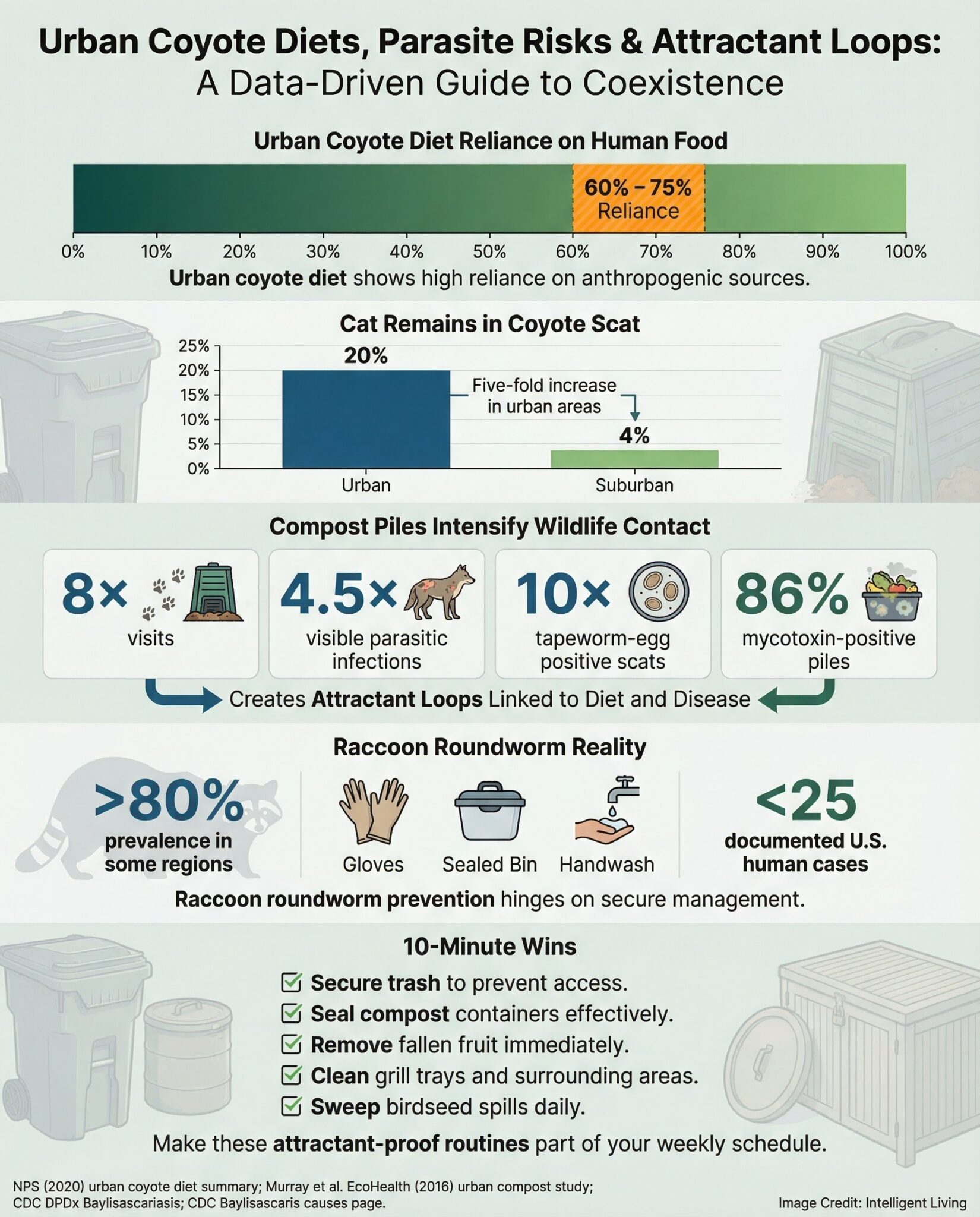
Recurring wildlife conflicts often start unintentionally due to overlooked attractants. Homeowners frequently ignore several specific biological signals that invite conflict:
- Uncleaned Grill Trays: Grease and food residues emit strong odor signals.
- Fallen Fruit: Accumulating debris under trees provides easy calories for opportunistic scavengers.
- Scattered Birdseed: Overflow from feeders draws rodents and larger mammals to patios and decks.
Wildlife management departments routinely emphasize securing trash and reducing attractants to prevent habituation. When residents ask, “How do I stop raccoons from coming into my yard,” the solution consistently points toward rigorous attractant control.
Recognizing that neonicotinoids in residential gardens pose a pollinator risk allows for safer plant selection. This prevents disease spread and aggression while ensuring feeding wildlife doesn’t backfire for people and animals.
Basic yard hygiene matters too, especially where raccoons may leave droppings. Simple steps like preventing raccoon roundworm exposure involve avoiding contact with feces and washing hands after outdoor work.
Seal Compost and Trash in Small Spaces
A renter-friendly version matters. Small-space living often means compost buckets, balcony planters, and trash rooms, so it helps to use urban composting techniques like vermicomposting or Bokashi bins that stay sealed and low-odor.
The 10-Minute Checklist
Execute these immediate actions to interrupt food conditioning patterns and secure your property:
- Use wildlife-resistant trash containers to prevent scavenging.
- Store compost in sealed bins to reduce odor trails.
- Bring pet food indoors at dusk to avoid nighttime visits.
- Sweep up birdseed daily to prevent ground accumulation.
- Remove fallen fruit promptly to eliminate sweet attractants.
These routines take minutes but interrupt long-term conflict patterns effectively.
Weekend Upgrade: Build a Balcony or Yard Micro-Reserve that Actually Works
Build a Micro-Reserve with Structure
A micro-reserve functions as a small, intentionally designed habitat patch within a human-dominated space. These zones prioritize complex structure to support local life. Rather than requiring vast acreage, success depends on layering vegetation and resources to mimic natural ecosystems in limited footprints.
Start with the Four Habitat Essentials
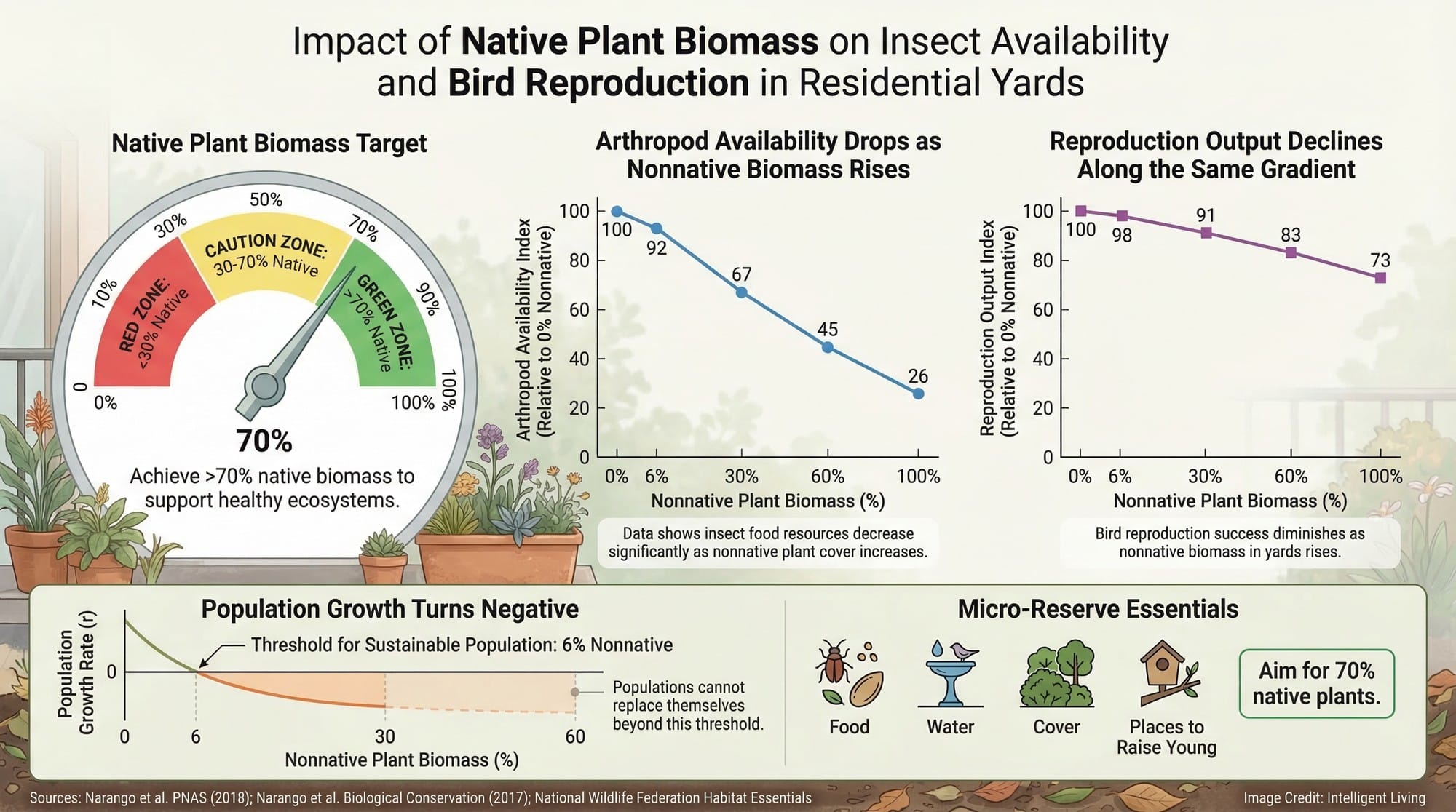
The four habitat essentials are food, water, shelter, and places to raise young. Prioritizing small-space wildlife gardening that works on balconies and courtyards helps homeowners build these basics before adding complex features.
Choose Native Plants that Feed the Food Web
Selecting the right plants accelerates local biodiversity recovery. Research indicates that native plants that support more caterpillars for yard birds are essential for supporting the broader food web.
Landscape studies show that environments dominated by nonnative ornamentals often reduce the insect prey needed for nesting success. These findings suggest that purely decorative plants fail to provide the energy required for local avian reproduction.
One study in PNAS specifically links nonnative plant dominance to reduced bird reproductive success. This evidence underscores why native plant structure matters for breeding birds in neighborhoods where yards and street trees shape local habitat.
Build Layers for Shelter, Shade, and Insects
A practical way to apply that science is layering. Mixing groundcovers, mid-height flowers, and taller shrubs provides several key benefits:
- Shelter and Cover: Denser foliage offers protected nesting and hiding spots.
- Heat Reduction: Plant layers lower ambient temperatures and reduce soil evaporation.
- Insect Support: Increased plant diversity in the garden sustains a wider range of essential pollinators.
This structured approach enriches the local food web without turning the space into a messy tangle.
What Success Looks Like in Real Life
Planting native species that enrich the garden ecosystem makes ecological changes visible within weeks. Residents often observe immediate shifts:
- Increased Pollinator Activity: A sudden surge in bee visits confirms the availability of nectar resources.
- Avian Recruitment: Small birds begin scouting the space for forage and nesting sites.
These visible changes validate the transition toward a wildlife-friendly environment.
Targeted Home Fixes: Bird-Safe Windows, Pollinator Power, and Calm Wildlife Boundaries
Bird-Safe Home Retrofit: Glass, Reflections, and Night Lighting
Why Birds Collide with Glass
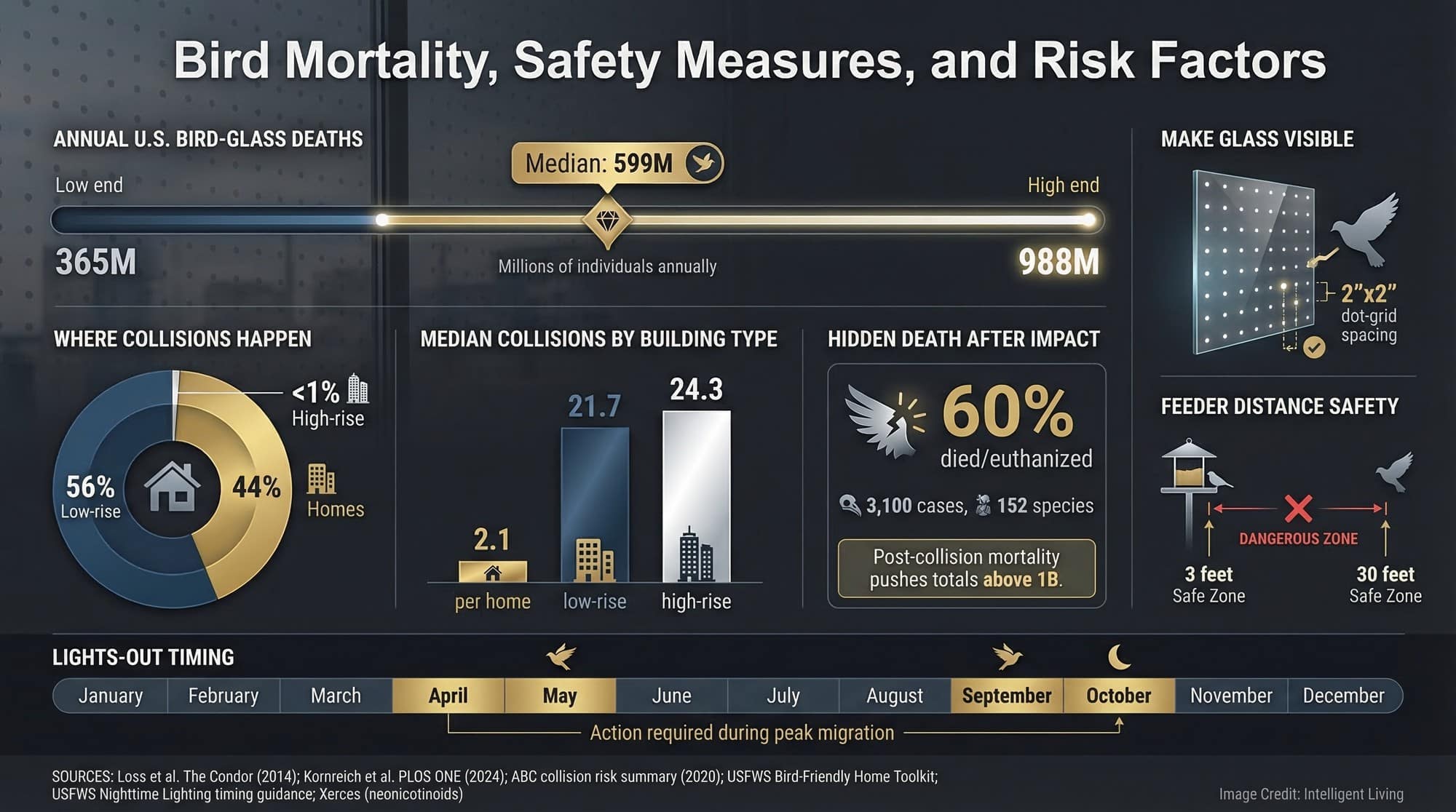
Reflective glass poses a severe danger for birds because the mirrored sky and vegetation look like open flight paths. Recognizing the mechanics of bird collisions with buildings and glass is the first step toward reducing residential threats.
Window Fixes that Reduce Collisions
Mitigation can be highly effective when done correctly. Properly applying safer home windows for birds can become the single fastest biodiversity upgrade a household can make.
For residential properties, dense visual patterns offer superior protection compared to isolated large decals. A simple rule of thumb involves tight spacing so birds never see a clear flight path through reflections.
Implementing bird-friendly window patterns for homes allows residents to translate these scientific principles into immediate, effective property upgrades.
Reduce Night Lighting During Migration
Night lighting also matters. Adopting lights-out practices that reduce bird disorientation ensures that exterior fixtures don’t disrupt migration routes while still keeping the home functional.
In everyday terms, it helps to treat nighttime brightness as a design choice, not a default, because artificial light behaves like pollution in ecosystems.
Residents who start with “How can I stop birds from hitting my windows?” often find that multiple adjustments solve the problem effectively:
- Visual Patterns: Tight spacing on glass breaks up deceptive reflections.
- Shade Management: Adjusting interior blinds reduces transparency.
- Lighting Control: Smarter outdoor fixtures prevent disorientation at night.
These steps significantly cut bird mortality without dimming the home’s comfort.
Pollinator-First Planting (Without the Pesticide Trap)
Choose Plants for Continuous Bloom
Pollinator-friendly gardens depend on plant choice and chemical awareness. Native flowers that support biodiversity and pollinators ensure that gardens provide food for species that evolved alongside native flora.
Avoid Neonicotinoids and Systemic Insecticides
Consumer awareness is critical because some home garden products containing neonicotinoids can be applied at concentrations far exceeding agricultural uses. It is vital to recognize that neonicotinoids in residential gardens pose a pollinator risk before purchasing new plants.
Add Water Without Creating Mosquitoes
For renters searching “how to create a pollinator garden on a balcony,” container planting with pesticide-free native species offers a practical starting point. Providing a bee water dish with safe landing stones ensures insects hydrate safely without drowning.
Living With Bigger Urban Wildlife (Coyotes, Raccoons, Foxes) Without Panic
Prevent Habituation Before it Starts
Encounters with larger mammals can trigger fear, but coexistence guidance emphasizes prevention and calm response. Taking steps for preventing coyote conflicts near residential properties establishes a baseline of removing attractants and protecting pets.
Hazing that Reinforces Boundaries
If animals linger or approach closely, consistent hazing techniques can reinforce boundaries without harm. Effective methods include:
- Auditory Deterrence: Making loud noises or clapping to startle the animal.
- Visual Posturing: Appearing large and maintaining eye contact.
These signals align with municipal coyote management and coexistence plans designed to teach wildlife that humans are not a food source.
Pet Safety Basics at Dawn and Dusk
Proactive pet supervision remains a cornerstone of urban safety. Keeping cats indoors and leashing dogs during dawn and dusk minimizes encounter risks while safeguarding local birds.

Automating Urban Wildlife Stewardship: A 30-Day Plan for Resilient Results
Your 30-Day Coexistence Plan
Week 1: Conduct an attractant audit. Secure trash and compost. Adjust lighting schedules.
Week 2: Integrating bird-safe feeder placement and window-collision prevention steps makes daily bird activity safer around glass.
Week 3: Introduce native plants and confirm they are pesticide-free.
Week 4: Lock in seasonal routines such as migration-season lights-out and fruit cleanup. Adopting outdoor care that reduces chemical loads supports healthier soil long-term.
Upgrades compound when they incorporate sustainable landscaping that reduces chemical dependency. These staged changes improve drainage and soil structure, fostering lasting environmental stability.
Staged changes build long-term resilience.
Strategies for Resilient Urban Wildlife Stewardship
Developing a sustainable relationship with local fauna requires consistent attention to property boundaries and habitat health. Neighborhood-scale efforts ensure that the ‘night shift city’ remains a safe harbor for all species. These staggered changes build long-term resilience and improve the biological value of the entire community.
Scaling these individual actions across city blocks creates a cumulative effect where urban gardening converts grey streets into green habitat to restore local biodiversity. Embracing this role as a steward ensures that the future of city living remains both vibrant and biologically diverse for every resident.

Urban Wildlife Coexistence FAQ: Bird-Safe Windows, Pollinator Gardens, and Conflict Prevention
1. What is the fastest way to make windows safer for birds?
Applying exterior visual markers with tight spacing remains the most effective method, and simple DIY bird-safe window improvements can be completed in a single weekend.
2. Can a small balcony really support local wildlife?
A native plant container garden for balconies and decks provides essential nectar and cover for insects navigating dense urban corridors.
3. Should wildlife ever be fed intentionally?
Feeding increases the risk of habituation and disease spread, resulting in more human-wildlife conflicts and unsafe encounters.
4. Are all pollinator plants sold at nurseries safe from pesticides?
Homeowners must check labels to identify common pesticide risks in home gardens before purchasing new plants.
5. Why do animals seem more active at night in cities?
Species often shift their active hours to avoid human noise and traffic; this nocturnal adaptation serves as a vital survival pattern for urban wildlife.


