
Municipalities across the globe are deploying aggressive policies to reduce private vehicle dominance and reclaim the public realm. These 2026 initiatives serve as a repeatable playbook for car-free cities, transforming streets from vehicle storage into shared civic assets. By prioritizing sustainable urban planning, we are finally dismantling the negative externalities of driving that have hampered urban growth for a generation.
High-density environments are undergoing a fundamental structural rethink. Urban centers are pivoting away from car-dependency toward a breathable reality where moving through the city feels intuitive rather than exhausting. This evolution proves that pedestrianized city centers thrive when integrated with robust multi-modal transit hubs.
Advocates and city officials can now look to these milestones as proof that reclaiming urban space is no longer a distant dream—it is a 2026 reality. This guide breaks down exactly why specific shifts succeed while others stall. We outline actionable starting points for teams, provide a practical toolkit for navigating traffic demand management, and map a step-by-step path toward adopting high-impact tactics.

Strategic Framework for 2026 Car-Free Urban Mobility
Global Case Studies: 2026 Milestones in Sustainable Urban Planning
- Paris lists early April 2026 pedestrian hours for the Champs-Élysées in its Paris Respire pedestrian-day calendar, with timing and perimeter adjusted when city logistics require it.
- Philadelphia expanded its 2026 calendar to 20 car-free dates and reported measured impacts in the Philadelphia Open Streets impact findings, including typical event-day changes in foot traffic and spending.
- London confirmed a January 2, 2026 fee increase and a new discount structure for cleaner vehicles in the London congestion charge rule changes, signaling that street space is being managed beyond tailpipe emissions alone.
- Amsterdam’s 2023 to 2026 policy roadmap frames how zones, permits, and enforcement are coordinated under its citywide clean air action approach, a useful model for cities that want rules to land in a predictable sequence.
- New York sets a 35 percent zero-emission vehicle sales requirement beginning with model year 2026 following the Advanced Clean Cars II adoption decision, a move that pushes supply into the market before city infrastructure is even fully funded.
- New York City’s DOT describes Car-Free Earth Day as a recurring program and notes that the 2026 schedule will be posted on the NYC Car-Free Earth Day program schedule once final locations and partners are confirmed.
The Urban Mobility Stack: Integrated Traffic Demand Management
Reducing car dependence works when cities treat the problem as a stack of integrated levers rather than a single policy. Each component targets a distinct layer of urban life to ensure that the transition feels seamless and supported.
- Short-term behavior: Engaging residents through temporary pilots and events.
- Daily demand: Using pricing to nudge habitual travel decisions.
- Freight and service flows: Managing delivery access via zero-emission zones.
- Vehicle supply: Implementing mandates like Advanced Clean Cars II.
- Political legitimacy: Building public trust through visible results.
Strategic alignment of these levers causes their effects to compound exponentially. A successful pilot day generates the political permission required for pricing reforms, which then funds the infrastructure needed to make car-free living a practical daily choice.
A block that used to feel like a fast lane can start to feel like a front porch when cars stop dominating the first ten feet outside every doorway. That is the emotional hook cities are quietly designing for.

Lever 1: Implementing Open Streets as Urban R&D Hubs
Operational Impact of Pedestrianized City Centers
Pedestrian-first initiatives like Open Streets programs prioritize walking, biking, and local commerce by temporarily restricting motor vehicle access. This strategic use of pavement effectively transforms congested arteries into breathable public spaces that stimulate small businesses and active mobility. Beyond the physical change, regular programming helps residents imagine a future where short neighborhood trips are no longer dominated by heavy traffic.
The following weekend typically sees the street evolve into a vibrant civic hub, functioning more like a front porch for the entire community than a temporary closure. The initial car-free Sunday brings an unexpected, resonant silence—the relentless urban roar replaced by a hushed, breathable stillness.
Technical Requirements for Open Streets Execution
Regulatory Framework for Permits and Access
Establishing a clear permit workflow serves as the operational foundation for any street closure. These permits define legal access, set specific hours, and assign safety responsibilities to organizers. New York’s DOT spells out how recurring closures are structured through its Open Streets partner program rules, which is useful even for cities building their own version from scratch.
Deployment of Tactical Urbanism and Hardware Solutions
Temporary closures require hardware. Durable barriers, cones, and removable posts allow a team to test a closure that can be scaled or reversed. In many quick-build pilots, sturdy street-edge protection using durable bolt-down bollards provides the safety and permanence required for successful long-term pilots.
Staffing and Street Marshalling
Ensuring safety during these events requires dedicated crews who maintain open lines of communication with local vendors and emergency responders. The most successful municipalities treat street marshalling as a critical public service rather than an afterthought.
Programmed Activation and Local Programming
Engagement thrives through programmed activities that convert empty pavement into a social destination. Effective activation levers include:
- Local Markets: Inviting neighborhood vendors to boost commerce.
- Live Performances: Creating space for local artists and musicians.
- School Programming: Integrating outdoor education and safe play zones.
This social proof transforms a temporary pilot into a repeatable car-free policy.
Assessing Outcomes and Identifying Implementation Risks
Success in Open Streets depends on an incremental approach to risk. By gathering measurable outcomes—such as local sales data and noise reduction—city teams can prove the project’s value without committing to permanent construction. Imposing closures without tangible community benefits often generates localized friction. Sustainable programs succeed by offering visible alternatives and ensuring that pilots are integrated into a broader street-safety framework.
The most durable pilots also sit inside a broader street-safety framework. Philadelphia’s Complete Streets approach sets design priorities across modes, which helps a weekend closure turn into lasting safety upgrades.
Starter Kit for a Neighborhood Group (90 Days)
- Identify and map a high-traffic, two-block corridor anchored by popular neighborhood destinations.
- Secure a permit from the city, even if only a short pilot.
- Rent modular barriers and recruit 6 to 10 marshals.
- Program two weekend activations and measure footfall and local sales.
- Debrief stakeholders and publish a visual summary that provides a compelling comparative analysis of the street’s transformation.

Lever 2: Managing Demand via Congestion Pricing Models
How Congestion Pricing Works in Practice
Modern demand management relies on a streamlined technical loop that makes the cost of congestion visible to drivers. The process involves:
- Automated Recognition: Cameras capture license plates at zone entry points.
- Account Verification: Software checks account status against the central database.
- Fee Application: Systems automatically apply daily charges or issue penalties.
This continuous feedback loop encourages a fundamental shift in daily travel habits. By making the cost of congestion visible, cities can effectively rebalance the use of shared road space. Transport for London explains how enforcement relies on a camera-based evidential record in its road user charging camera operations overview, where plate matching, account checks, and penalties are handled as a single system.
Why Some Cities Tightened EV Discounts
We must acknowledge a simple physical reality: an electric car occupies the exact same lane space as a combustion vehicle during rush hour. Planners in car-free cities are increasingly pivoting away from blanket exemptions in favor of rules that manage total traffic volume and curb space availability.
TfL spells out the cleaner-vehicle discount rules in its cleaner-vehicle discount policy update, framing the change as a way to keep congestion management effective as the vehicle mix shifts.
Switching to an EV feels like a win when you pass the gas station, but that feeling fades when you’re still stuck in the school pickup queue. The mismatch between drivetrain technology and congestion levels is forcing agencies to refine how they price access for all vehicle types.
Best Practices for Scalable Pricing Implementation
Successful implementation requires a transparent account model and a clear commitment to reinvesting fees into visible urban improvements. To maintain public trust, planners should focus on the following:
- Transparent Hours: Ensure the pricing schedule is predictable and easy to find.
- Visible Reinvestment: Direct funds toward faster buses and protected bike routes.
- Simple Discount Rules: Eliminate complex loopholes that confuse drivers.
When the public cannot predict the price, the financial nudge stops shaping behavior. Clarity is the most effective tool for managing traffic demand management. Clean-air compliance rules can scale across a metro area without becoming a patchwork, and London’s Ultra Low Emission Zone expansion shows how boundaries and timelines can change behavior without requiring everyone to stop driving overnight.
Lever 3: Decarbonizing Logistics via Zero-Emission Zones
Zero-Emission Freight Logistics and Transition Cycles
Regulating delivery access through zero-emission zones requires tying vehicle certification to specific entry windows. These transition cycles provide fleet operators with the necessary time to adapt without disrupting the city’s logistical supply chain. Amsterdam’s freight rules show the mechanics clearly in its zero-emission lorry access rules, including what counts as compliant, how transitional access works, and how enforcement is handled.
Enforcing Emission-Free Sailing on Urban Waterways
Cities with active canal networks are prioritizing fleet transitions to cleaner propulsion to mitigate localized pollution and acoustic disturbance. Commercial and passenger vessels often idle combustion engines throughout the day, creating concentrated pockets of noise and pollution in sensitive waterways. Amsterdam’s emission-free sailing zone requirements show how waterways can be treated like streets, with access tied to propulsion type and permits rather than informal norms.
Why these Rules Sometimes Cut Emissions Faster than Passenger Policies
Emissions reductions often arrive faster in the freight sector than in passenger markets due to several key factors:
- Duty Cycle Density: Service vehicles run intensive daily schedules, magnifying the impact of every clean mile.
- Concentrated Volume: Replacing a small number of heavy-polluters yields immediate, localized air quality gains.
- Regulatory Pressure: Tying city access to vehicle certification accelerates fleet-wide electrification.
High-usage examples, such as the electrification of municipal garbage trucks confirm that vehicle usage matters as much as total count.

Lever 4: Driving Market Change via Supply-Side Mandates
Deciphering Advanced Clean Cars II Compliance Timelines
Market mandates like Advanced Clean Cars II force manufacturers to prioritize zero-emission models in their sales mix. By signaling a definitive shift in production, these rules ensure that cleaner vehicles are available to consumers long before charging networks are fully realized. Manufacturers must navigate the strict Advanced Clean Cars II program requirements, which establish the necessary timelines for market-wide electrification before local charging projects are completed.
Market transparency empowers consumers and fleet managers to align their procurement cycles with predictable long-term compliance targets. The long-term trajectory becomes clearer when aligned with California’s 2035 gas-car phaseout timeline, which directly connects industrial market rules to everyday consumer choices.
Program Details and Enforcement Nuance
Navigating early-year compliance requires technical flexibility, as demonstrated in the ACC II enforcement discretion memo from Massachusetts. This practical guide helps public agencies time their procurement while maintaining program integrity. Some jurisdictions use temporary enforcement discretion during early years to avoid shocks while still keeping reporting and program structure intact.
What That Means for Cities and Employers
Facilities managers no longer face indefinite wait times for electric service vans. With regional dealers stocked to meet compliance targets, the gap between a sustainability pledge and a functional fleet is finally closing. Integrating transit-linked affordable housing incentives ensures that daily needs remain within a short walk or frequent ride, shrinking car-dependency faster than vehicle technology alone.
Lever 5: Utilizing Referendum Pathways for Urban Reform
How the Signature Threshold Works and the 2026 Timeline
Referendum pathways offer citizens a direct route to legislative action when city councils stall on popular reforms. This process centers public attention on a binary outcome, often breaking the political gridlock surrounding contentious street changes. Berlin’s elections office posts its running updates in the 2026 elections press release archive, which is where signature thresholds and deadlines are tracked as the campaign progresses.
What the Specific Proposal Would Change
Direct democracy requires absolute structural clarity. When a policy is put to a popular vote, any ambiguity in the rules—or the exceptions—quickly becomes a focal point for political opposition. A local statistical review summarizes practical implications such as limits on private driving time and how exceptions might interact with services in its Berlin autofrei factsheet.
When a policy becomes a yes or no vote, every detail matters, and every unclear exception becomes a headline.

Actionable Strategies for Scalable Car-Free Implementation
12 Ways to Apply the Car-Free Stack in Your City (or Your Life)
For City Teams and Planning Authorities
- Initiating a two-block pilot with a modest budget allows city teams to prove demand through a clear perimeter and basic barriers far faster than a multi-year planning phase.
- Establish a comprehensive measurement plan before the first barricade is placed. Tracking pedestrian counts and local sales data is the only way to prove the pilot’s long-term viability.
- Tie Any Pricing Scheme to Visible Upgrades: Pair fees with improvements people can feel, such as faster buses, safer crossings, and protected bike routes.
- Create a Freight Transition Desk: Make it easy for delivery operators to understand timelines, permits, and exemptions.
For Neighborhoods and Business Districts
- Curate a local programming calendar to ensure the car-free street provides sustained community value beyond the initial novelty of the closure.
- Fund the First-Hour Safety Crew: A reliable start reduces conflict with drivers and builds trust with residents.
- Offer Microgrants for Small Businesses: Small grants for signage and outdoor setup can ease the transition when parking temporarily shifts.
For Employers and Developers
- Coordinate fleet replacement by aligning procurement with model-year updates and evolving local access rules.
- Close the Last-Mile Gap Car-light commuting becomes realistic when bike-share connections to public transit are optimized to reduce the everyday friction that keeps residents in private vehicles.
For Schools and Civic Groups
- Formalize a School Street pattern by closing pickup corridors during peak hours to measure immediate improvements in safety and air quality.
- Publish a One-Page Pilot Report: Keep it visual, local, and concrete.
For Individuals
- Choose Geography and Mobility Together: Proximity to daily needs and frequent transit serves as the most effective anchor for car-light living. When the easiest trip no longer requires a key, car dependence naturally begins to fade. We see this transition accelerating as micromobility trips replacing car journeys become the norm for short hops, provided the infrastructure feels safe and practical.
Critical Analysis: Addressing the Limits of Car-Free Policy
While the car-free stack offers a powerful blueprint, city planners must account for inherent policy limitations:
- Regional Traffic: Local pilots cannot eliminate commuter congestion that originates outside city boundaries.
- Curb Scarcity: Shifting to electric vehicles reduces pollution but fails to resolve the physical competition for road space.
- Reinvestment Backlash: Revenue generation through pricing often fails to satisfy the public without a visible and immediate reinvestment strategy.
Success depends on the political narrative; change that ignores local residents inevitably faces deep-seated resistance. Entrenched auto-oriented expectations can make even modest sidewalk upgrades feel threatening to some residents. These dynamics are particularly evident in the suburban resistance to sustainable transit observed in regions where daily routines depend entirely on high-speed arterials.
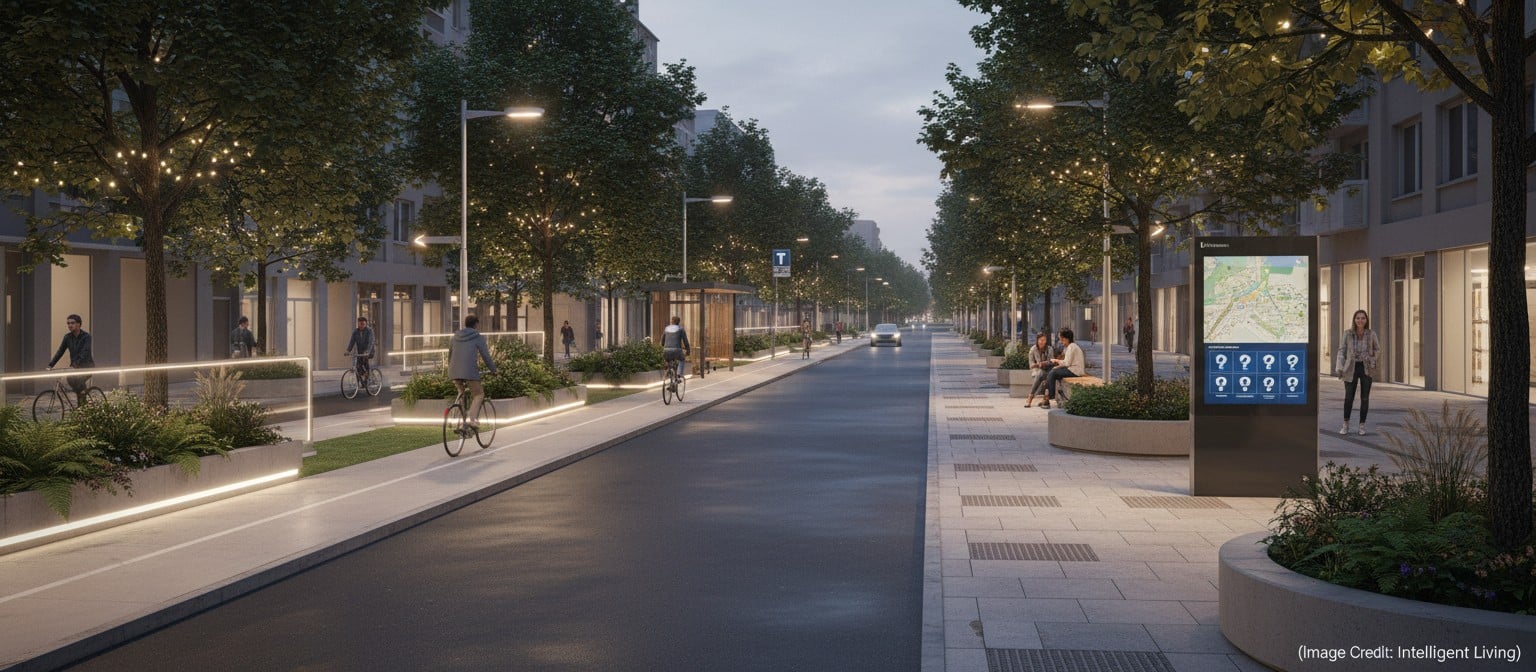
The Future of Urban Mobility: Why Quiet Streets Define 2026 Success
Quieter urban corridors serve as the most visible evidence of successful road user charging systems and efficient curb space management. In 2026, the most effective urban centers proved that combining local pilots with market pressure to create a self-reinforcing cycle of improvement. This stack is entirely replicable for any city willing to prioritize public health over parking convenience.
A more connected, human-scaled reality now takes shape—a future where the city belongs to the people who move through it rather than the machines they park behind.
Common Questions on Reclaiming Urban Space
What cities are going car free in 2026?
Cities such as Paris, Amsterdam, and London are currently pioneering the implementation of permanent pedestrianized city centers, demonstrating that climate goals can be met while improving urban livability.
How does congestion pricing work in London?
License plate reading cameras identify vehicles entering the central cordon. The resulting fees are reinvested into sustainable urban planning projects and public transit improvements.
Where can I find open streets near me?
Most major municipalities now host dedicated Open Streets programs; check your local DOT schedule or community board for upcoming 2026 dates and location maps.
Is my electric car exempt from congestion fees?
Exemption rules are evolving rapidly. Urban centers are adopting tiered discount models to ensure that electric vehicle traffic does not undermine broader urban mobility goals.
What are the rules for zero emission zones?
Zero-emission zones restrict access based on specific vehicle certification and type. By targeting freight and delivery fleets first, cities can accelerate the transitioning from car ownership to cleaner, localized logistics.


