
Logistics and manufacturing sectors are currently navigating a high-stakes transition toward decarbonizing heavy industry. While batteries dominate light transport, the race for zero-carbon shipping and industrial heat focuses on two distinct, plausible pathways: distributed ammonia-to-power systems and nuclear-electric propulsion for ultra-large container ships. Ammonia and nuclear solutions solve the same engineering challenge of delivering energy-dense, reliable power where stored electricity fails, yet they follow vastly different infrastructure trajectories.
The shift from theoretical modeling to real-world hardware is accelerating as the 2023 IMO GHG Strategy pushes for zero-emissions shipping solutions. Industry leaders are no longer just comparing engine designs; they are evaluating the entire value chain through the lens of well-to-wake emissions accounting. Separating proven milestones from conceptual proposals highlights the health, safety, and lifecycle caveats that will decide which energy vector achieves mainstream adoption by 2030.
A successful transition between these paths requires more than just comparing energy density math. It requires a grasp of how catalytic ammonia cracking compares to small modular reactors in terms of port acceptance, insurance frameworks, and daily operational reliability. As 2026 pilot projects approach, data from these deployments will finally replace polished narratives with measurable performance indicators.

Energy Density Challenges In Heavy Industry And Global Shipping
Industry Summary: Ammonia Cracking and Nuclear Maritime Rules
- Ammonia serves as an effective hydrogen carrier, but tradeoff modeling across production pathways shows climate outcomes depend on production choices and nitrogen emissions controls.
- Developers are advancing ammonia-to-hydrogen conversion for industrial power to replace tailpipe-focused fuel swaps with clean electricity generation.
- Testing at the Pohang ammonia-to-power pilot in 2026 aims to validate real-world reliability, efficiency, and safety before scaling to larger systems.
- Strategic research on nuclear-electric propulsion concepts provides a conceptual design feasibility framework rather than a launch-ready build program.
- Maritime emissions pricing and well-to-wake accounting are becoming mandatory under international net-zero shipping rules targeting 2030 milestones.
Why Heavy Industry Keeps Running into the Same Wall
Energy Density and Duty Cycles Set the Baseline
Heavy industries and ocean freight share a fundamental constraint: they need energy-dense power delivered reliably for long durations. While batteries excel in short-haul uses, physical and economic realities make them impractical for continuous industrial duties. Major industrial sectors—including steelmaking furnaces, kilns, and transoceanic container vessels—depend on specialized hydrogen freight corridors to maintain 24/7 operations.
Energy density requirements drive molecules like ammonia and systems like compact nuclear reactors back into policy discussions. Energy-dense solutions answer the baseline requirement, yet they carry very different trade-offs in supply chains, safety, regulation, and emissions.
Why Batteries Break Down at an Industrial Scale
Consider the practical stakes: a regional steel plant operating 24/7 cannot afford a multi-week pause for battery recharging. Likewise, a container ship on a fixed schedule cannot swap out batteries mid-ocean without large port-side infrastructure.
Maintaining high-intensity uptime forces engineers and planners to prioritize energy-dense molecules and long-duration power systems over short-cycle storage. Identifying net-zero industrial pathways helps anchor the need for reality-based reporting in hard-to-abate sectors.
The On-the-Ground Lens Behind the Engineering Math
A short, human vignette: an operations manager once described choosing energy systems the way a mechanic chooses tools, because the wrong choice creates daily workarounds that drain both time and money. Professional insights echo this pragmatic mindset, justifying why these two options warrant careful, reality-based reporting.
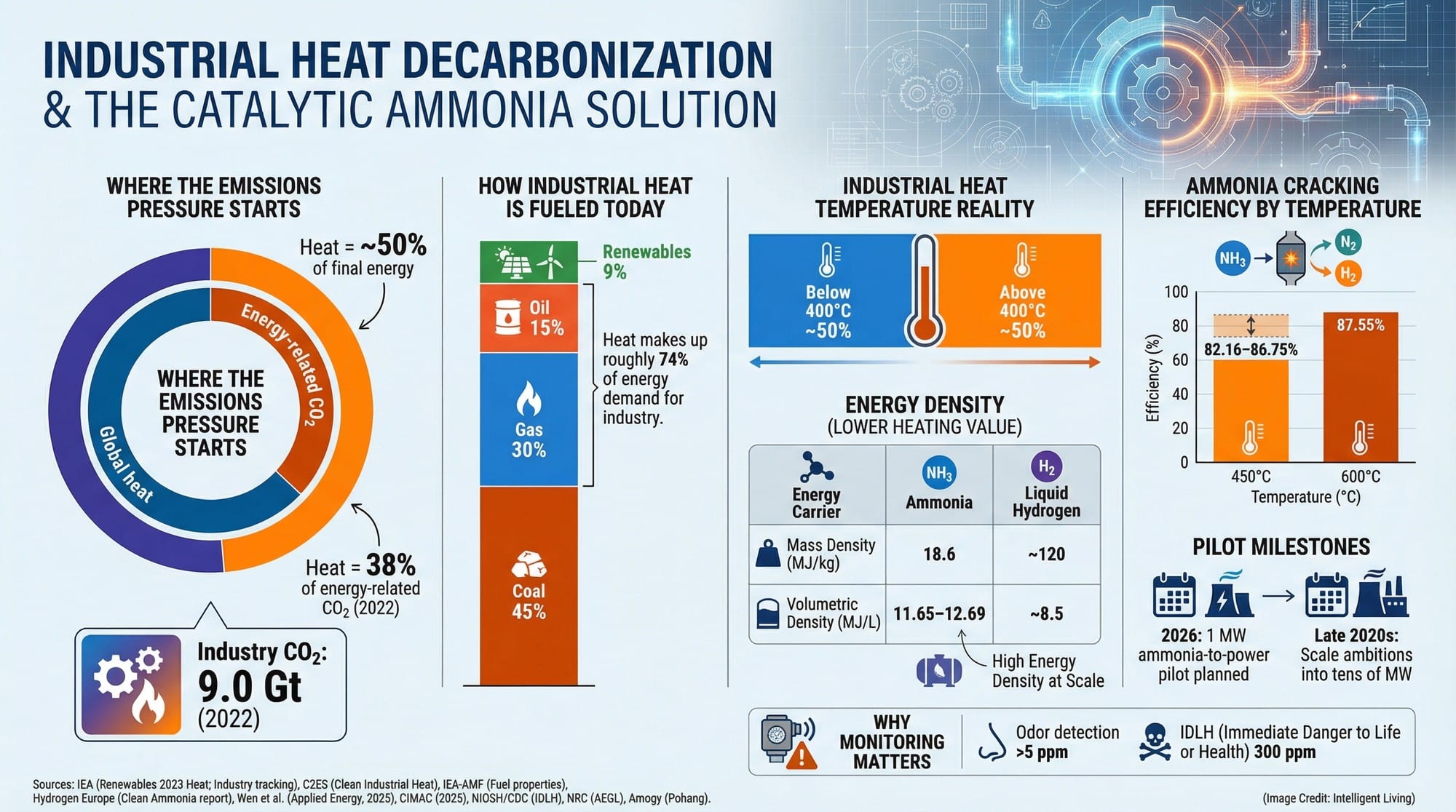
Decarbonizing Industrial Heat with Catalytic Ammonia Cracking
Leveraging Existing Infrastructure for Industrial Ammonia Fuel
Ammonia is attractive because it can carry hydrogen in a chemically dense, transportable form. Existing global infrastructure for fertilizer production and transport makes ammonia reuse and repurposing a conceptually appealing strategy.
Advancing green fuel strategies that pair ammonia with e-fuels allows for greater flexibility. When green hydrogen is limited by cost or geography, ammonia acts as a vector moving low-carbon hydrogen over vast distances.
Truly ‘clean’ ammonia demands rigorous lifecycle qualification. Most ammonia today is produced from fossil fuels, and the greenhouse-gas impact depends on how the hydrogen feedstock is made and how emissions are managed across the supply chain. Successful adoption depends on low-carbon production routes, as detailed in the decarbonization roadmap for ammonia technology.
International logistics strategies prove critical to the hydrogen economy. Many credible near-term hydrogen plans involve converting hydrogen into ammonia for export, then cracking it back at the destination, which supports maturing green hydrogen supply chains.
Ammonia Catalytic Cracking: Technical Mechanism and Efficiency
The core technical idea is to split, or crack, ammonia (NH3) into hydrogen (H2) and nitrogen (N2), then use the hydrogen in a fuel cell or hydrogen engine to make electricity. Catalytic cracking eliminates direct ammonia combustion, preventing the generation of nitrogen oxides and reactive pollutants. Lab claims must survive rigorous field conditions where contamination, thermal cycling, and maintenance constraints reveal true commercial performance.
Industry leaders utilize a cracking catalyst designed to boost efficiency, a claim that must be validated in long-duration field operation.
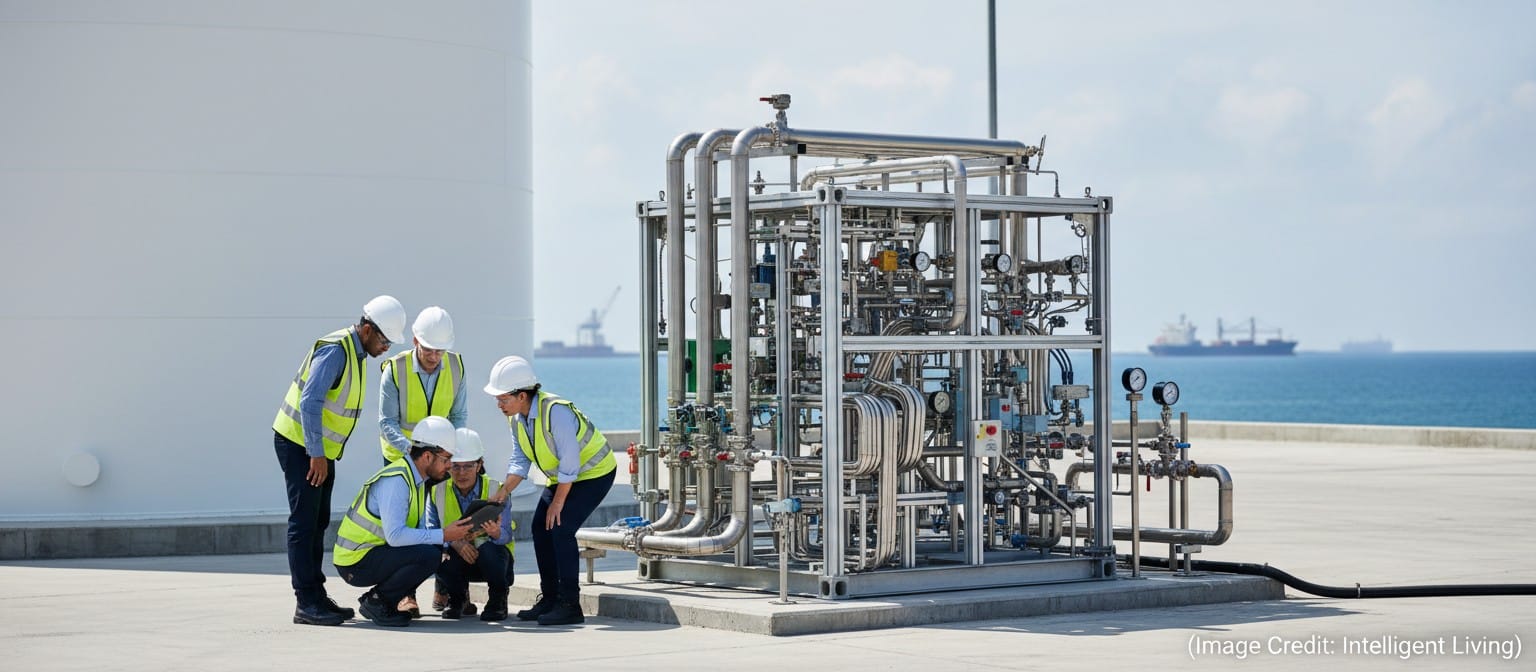
Validating Catalytic Cracking Performance: The 2026 Pohang Pilot
Amogy has described a plan centered on partnerships for ammonia-based distributed power built around a 1 megawatt pilot in 2026, with public-facing scale goals reaching tens of megawatts later in the decade. Field testing provides the only reliable path to validate critical performance metrics. The Pohang demonstration specifically targets:
- Conversion efficiency across varying thermal cycles
- Operational uptime in industrial environments
- Safety protocols for high-pressure handling
- System integration with hydrogen engines and fuel cells
These data points determine if catalytic cracking can move from a controlled lab setting into a commercial power plant.
A practical scene to anchor the stakes: an industrial plant manager assessing a distributed ammonia-to-power unit will ask not only about efficiency but also about training requirements, spare parts, sensor reliability, and what happens during a fault. Operational performance metrics—rather than headlines—determine whether pilots scale for industrial use.
Early Adoption Sectors for Distributed Ammonia-To-Power
Localized industrial sectors provide ideal operating profiles for early catalytic cracking adoption. These sectors prioritize localized energy security over large-scale grid connections.
- Industrial backup power for continuous manufacturing
- Portside auxiliary generation for docked vessels
- Remote facilities lacking access to low-carbon electricity
- Microgrids requiring long-duration resilience
Logical early destinations provide the controlled environments necessary to refine the technology before a broader commercial rollout. Large-scale green ammonia projects on the Texas Gulf Coast also matter because they decide whether fuel supply can become dependable at industrial scales.
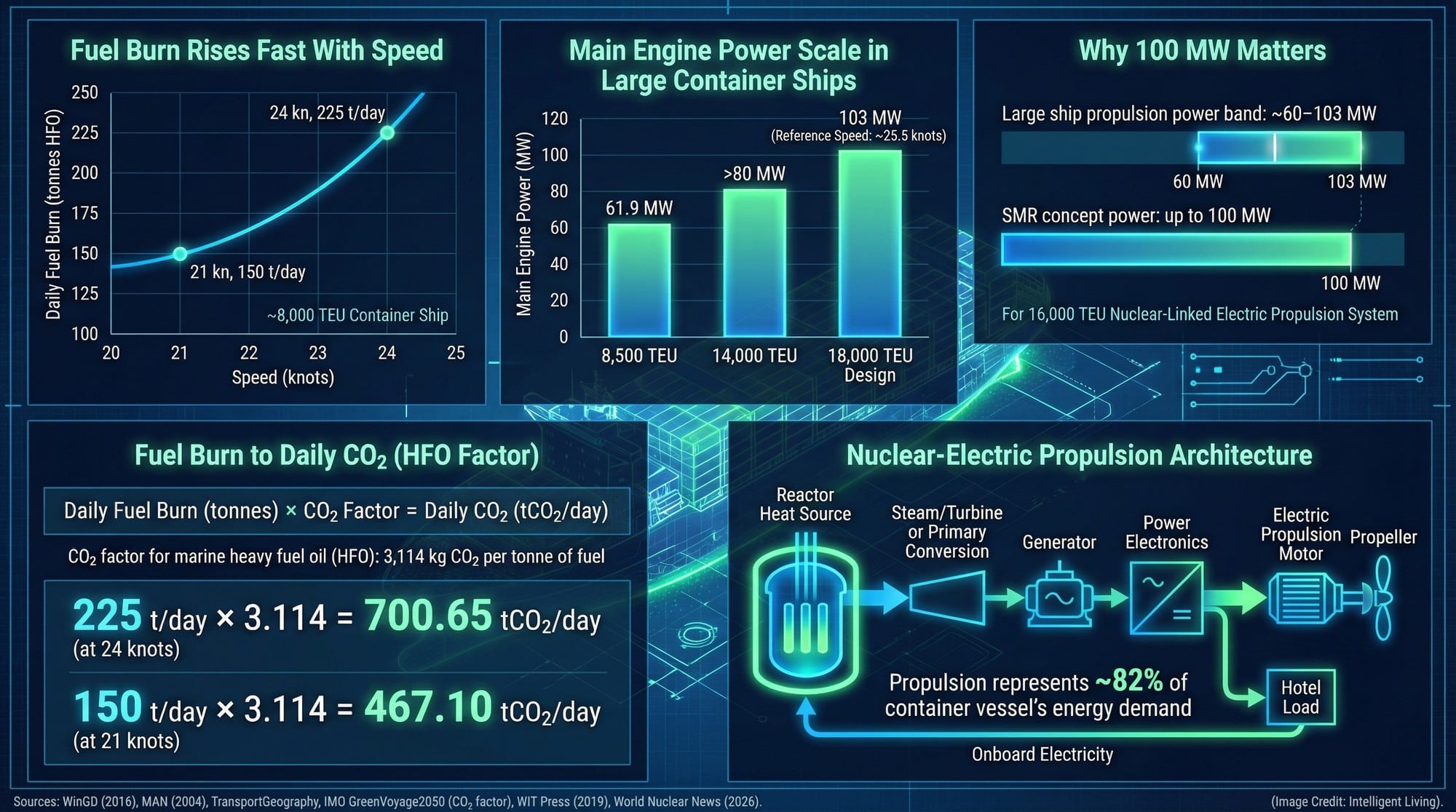
Nuclear-Electric Propulsion for Ultra-Large Container Vessels
Assessing Nuclear Propulsion Feasibility for Cargo Vessels
Strategic research is advancing a nuclear-powered electric propulsion study focused on a 16,000 TEU container ship. The announcement describes a feasibility study and an engineering assessment rather than a build program.
Engineering teams evaluate reactor siting, electric propulsion architecture, and redundancy to establish safety cases. This assessment aims to determine if the concept can meet compliance, insurance, and operational standards within modern maritime frameworks. The baseline legal scaffolding sits inside international conventions for nuclear ship safety, referencing a dedicated nuclear merchant ship safety code written for an earlier era of reactor technology.
Why Nuclear Shows Up Here: Energy Density, Range, and Electric Propulsion Architecture
Modern small modular reactors provide continuous, high-power output without the volumetric penalties of chemical storage. Steady electricity generation allows for efficient distribution across electric propulsion systems. This architecture also grants finer control over shipboard power requirements and system redundancy.
Industry planners chase small modular reactor designs aimed at reducing construction complexity through repeatability and easier certification.
A brief human-scale note: ship crews judge technology by daily operations, maintenance routines, and port reception. The operational lens remains crucial when the system involves a reactor, even if the unit never emits CO2 at point of use.
Scaling Maritime SMRs: The Impact of 100 MW Power Units
Power levels define everything from propulsion architecture to safety systems. Current engineering targets describe modular reactor power supplies around 100 megawatts, signaling a design scale comparable to large conventional marine propulsion systems.
Developing power units at the 100 megawatt scale raises critical engineering questions regarding shielding mass and refueling cycles. It also tests the reliability standards required by global shipping liners.
Navigating diverse regional nuclear policies creates a regulatory landscape as challenging as the engineering itself. This tension is visible in broader planning for mini nuclear stations targeting late-decade commissioning.
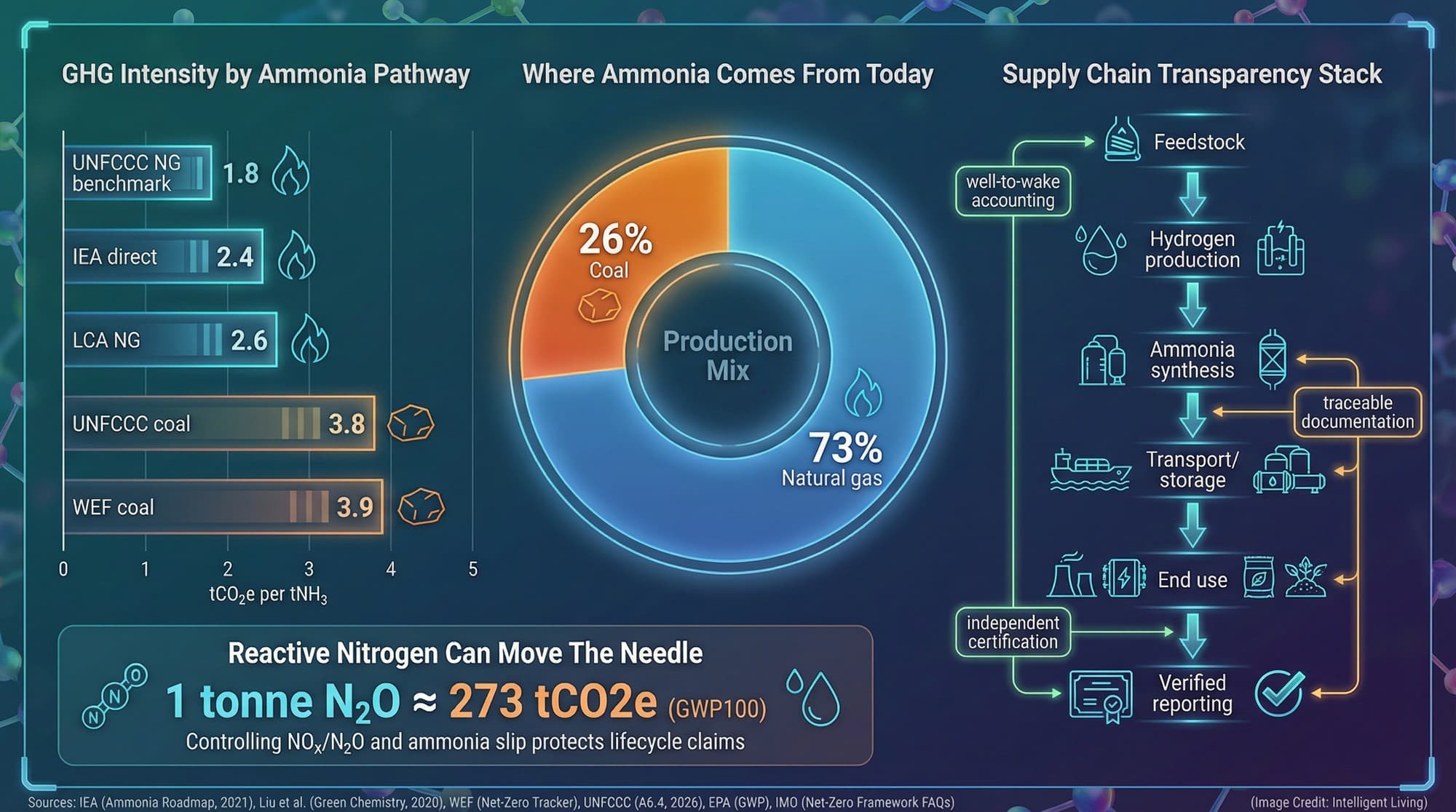
Lifecycle Emissions and Supply Chain Transparency
Managing Carbon Intensity in Ammonia Fuel Supply Chains
Ammonia serves as a useful energy carrier, but its climate credentials depend on how its hydrogen feedstock is produced. Production routes utilizing fossil-based hydrogen erode any point-of-use carbon benefit. Success requires tight nitrogen emissions controls and carbon capture throughout the supply chain.
Procurement officers often ask for batch-level carbon intensity documentation rather than relying on generic claims. New guidance for sustainable fuels prioritizes verification and lifecycle accounting to validate regional trade analysis.
Nitrogen Emissions and Environmental Risks: NOx, N2O, and Slip
If ammonia is combusted, or if significant ammonia slips from handling systems, it can produce nitrogen oxides and nitrous oxide, which drive air pollution and contribute strongly to greenhouse warming.
Nitrogen oxides and nitrous oxide drive significant air pollution. Unchecked ammonia combustion risks specifically threaten air-quality outcomes without robust control technology. Detailed analysis of emissions across the ammonia fuel value chain underscores why small leakage rates matter at scale. Cracking-and-fuel-cell approaches serve as a cleaner alternative to burning ammonia directly. Operational guidance on toxicity and bunkering is advancing through DNV’s ammonia-as-a-marine-fuel assessment and a marine fuel safety handbook focused on onboard handling risks.
A minimal, relatable note: anyone who has dealt with a strong ammonia smell in an industrial setting knows it is not a fuel you want leaking. Safety and monitoring are not side issues; they are the project.
Logistical Barriers: Nuclear Safety, Port Access, and Insurance
Nuclear propulsion avoids direct CO2 emissions at point of use but introduces a governance and liability chain including port access policies, insurance frameworks, and emergency planning assumptions.
Modernizing the nuclear ship safety code remains a priority for industry leaders. Outdated 1981 rules currently block port acceptance and commercial underwriting, regardless of engineering soundness.
The practical barrier involves more than engineering. A ship that cannot enter major ports or secure standard insurance cannot run a global schedule.
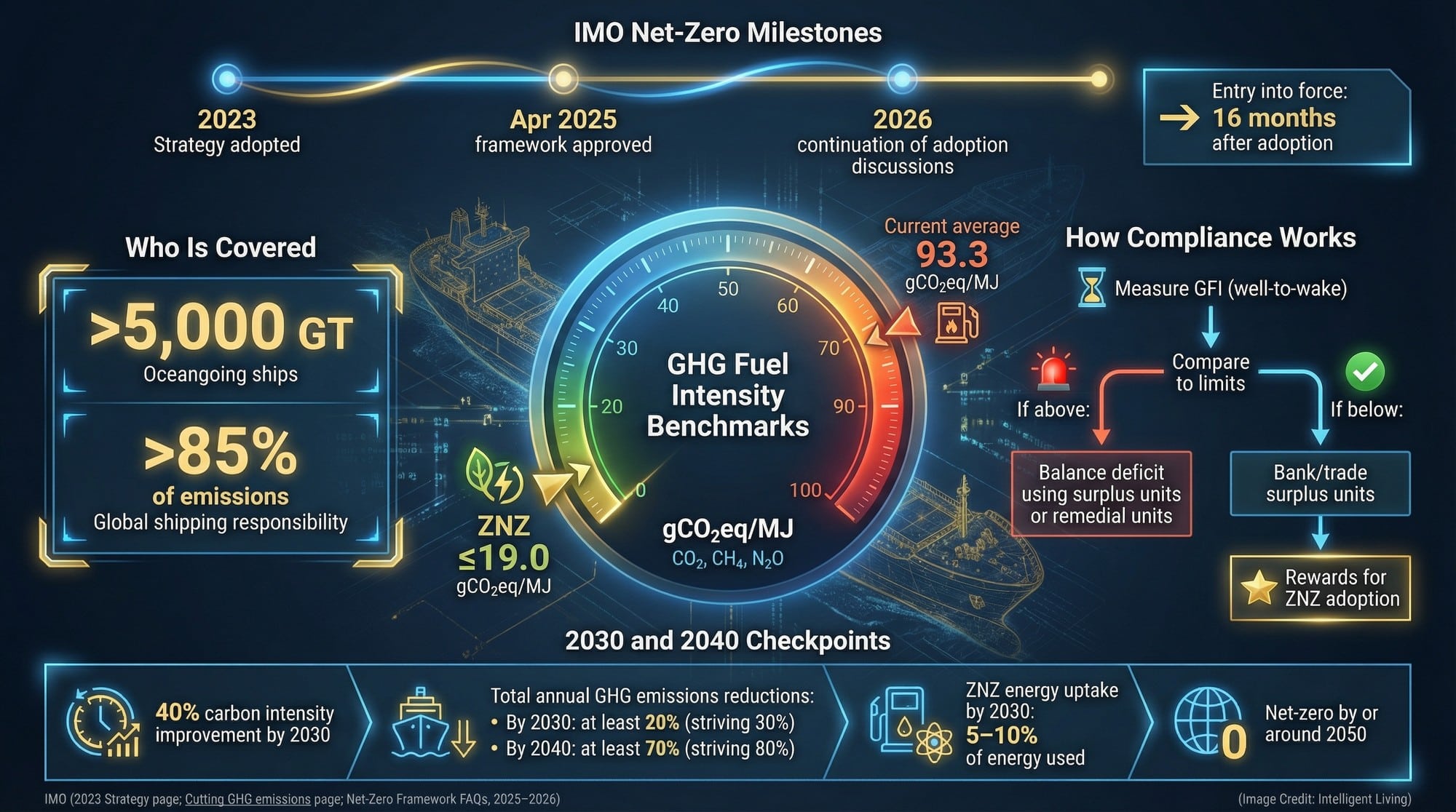
IMO Zero-Emissions Regulations and Technical Milestones
IMO GHG Strategy and Global Regulatory Pressure
Regulatory frameworks across the maritime sector simultaneously drive and constrain progress in the energy transition. For most operators, compliance math now aligns with the shipping industry’s role in the global energy transition.
The International Maritime Organization is moving toward a net-zero framework that blends lifecycle fuel standards with pricing pressure. This forcing mechanism requires operators to adopt well-to-wake accounting rather than focusing solely on tailpipe emissions.
How the Rules Push Ammonia and Nuclear in Different Directions
For ammonia, lifecycle accounting will favor low-carbon production routes and tight emissions controls, increasing the value of genuinely low-carbon ammonia supply chains. For nuclear, regulatory modernization and international harmonization determine whether ships with onboard reactors can call at major ports.
The Compliance Math Operators Actually Run
A practical example: a shipping company will not select a propulsion technology that increases its risk of detention at port unless the compliance math clearly outweighs those obstacles. Shipping explores multiple tracks, including e-fuel deployment milestones for e-methanol and synthetic fuels.
Upcoming Milestones in Zero-Carbon Industrial Energy
Keeping an eye on these milestones will reveal which technology is gaining true market traction:
- Pohang Pilot Performance: Tracking reliability and conversion efficiency from the 1 megawatt pilot will indicate if catalytic cracking works in the field, as described in industry coverage of the Pohang ammonia-to-power demonstration.
- Scale Demonstrations: Success depends on whether systems reach multi-megawatt reliability, following the pathways in the IEA ammonia technology roadmap.
- Ammonia Fuel Rules: New bunkering protocols will determine if handling can scale responsibly, matching baselines in SGMF’s introduction to ammonia as a marine fuel.
- Nuclear Code Revision: The prerequisite for deployment is the MSC-110 tasking to revise nuclear ship safety frameworks.
- Port Acceptance Signals: Clear statements from regulators regarding nuclear-propelled ship calls will be the final deciding factor for commercial viability.
Milestones Note
Technology and governance are moving in parallel, clustering both stories into current headlines. Pilot projects push engineering risk into the field, while international bodies revise the rules that decide whether those engineered solutions can operate commercially.
Trust also changes when claims become hardware. The pattern is familiar in climate tech, where measurable performance data tend to outperform polished narratives in building credibility.

Zero-Carbon Industrial Outlook: Comparing Feasibility and Timelines
Ammonia-to-power systems utilizing catalytic cracking currently lead the near-term race, primarily due to existing global fertilizer infrastructure and the 2026 Pohang pilot milestones. If these systems prove reliable and clean ammonia feedstocks scale, they offer a versatile solution for both industrial microgrids and auxiliary maritime power. However, their success remains tethered to rigorous nitrogen emissions controls and the transparency of the green hydrogen supply chain.
Nuclear-electric propulsion remains a high-potential contender for the largest transoceanic routes, yet it faces a more complex timetable. Beyond the engineering of small modular reactors, the path to zero-carbon shipping via nuclear power requires a modernized safety code for nuclear merchant ships and broad port acceptance. Ultimately, the choice between these energy vectors will be decided not just by technical efficiency but by the ability of operators to secure insurance and earn the trust of the communities where these reactors will dock.
Common Questions About Ammonia, Nuclear Ships, and The Energy Transition
Is Ammonia Truly a Clean Fuel for Industrial Use?
Ammonia is carbon-free at the point of use, but its climate value depends on the hydrogen feedstock. Truly green outcomes require renewable energy for production and strict controls to prevent nitrogen oxide emissions.
How Does Ammonia Cracking Support Zero-Carbon Shipping?
Cracking splits ammonia into hydrogen and nitrogen, allowing the hydrogen to power fuel cells or engines without combustion. This method avoids the air quality risks associated with burning ammonia directly.
What are the Main Barriers for Nuclear-Electric Cargo Ships?
While technically feasible, these ships face significant hurdles in port acceptance, maritime insurance, and outdated international safety codes. Regulatory harmonization is required before commercial deployment can begin.
Why are Energy Density and Duty Cycles Important for Industry?
Heavy industries like steelmaking and long-haul shipping require massive power for weeks at a time. Batteries currently lack the density to sustain these cycles, making energy-dense molecules or reactors necessary.
What is the Significance of the 2026 Pohang Pilot?
The Pohang pilot is a one-megawatt demonstration of ammonia-to-power technology. It will provide the first real-world data on conversion efficiency and operational safety at an industrial scale.


