
The recent signal from the Bank of England regarding the flexibility of the UK cryptoasset regulatory regime has shifted the focus of digital asset issuers toward long-term structural resilience. As officials explore alternative methods to meet financial stability goals, firms building payment rails must anticipate a landscape where innovation and regulation are inextricably linked. Strategic workstreams, as assessed by COREDO, currently centre on the granular requirements of the BoE consultation paper, specifically focusing on how backing assets and licensing perimeters will evolve before the June 2026 draft rules are finalised.
Product architects now face the challenge of designing systems that remain compatible with shifting systemic stablecoin standards without requiring constant, expensive refactoring. Establishing a bank-grade foundation requires a proactive approach to reserve management and holding limits, ensuring that new financial products can scale smoothly within the broader UK payments infrastructure. Strategic integration of regulatory intent into current design cycles secures a competitive edge for issuers awaiting the formal publication of the Bank’s formal Codes of Practice.

Key Facts and Context Regarding the Bank of England Stablecoin Regulation
Core Technical Requirements for Systemic Sterling Stablecoins
- Senior officials confirmed to the House of Lords that alternative methods for meeting financial stability goals remain under consideration. Publication of the formal draft rules remains scheduled for June 2026.
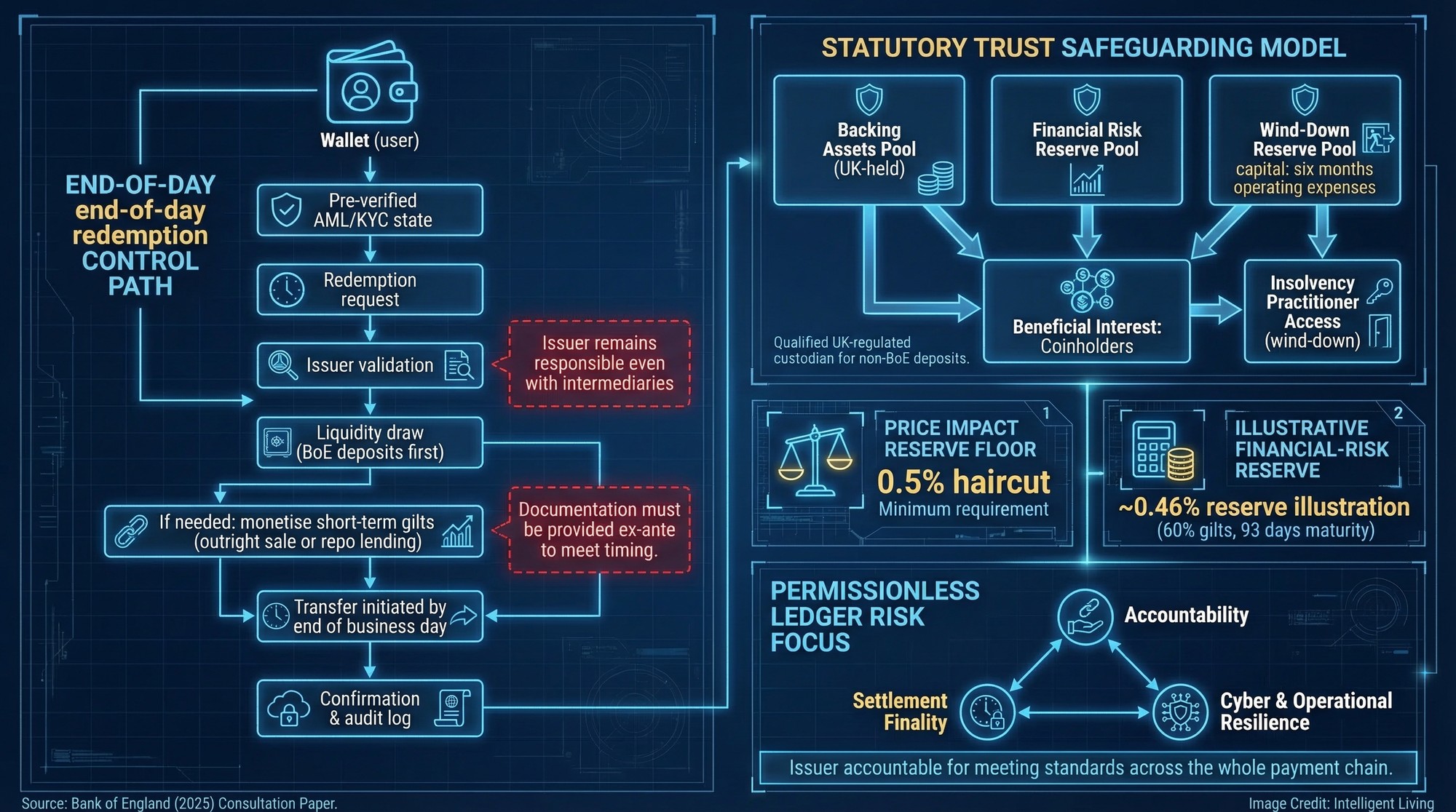
- The BoE’s consultation paper outlines a specific reserve structure for systemic sterling stablecoins. Under these proposals, issuers may hold up to 60% of backing assets in short-term UK government debt. The remaining 40% must be maintained as unremunerated deposits at the Bank of England to ensure timely redemption.
- The same consultation sets out proposed holding limits of £20,000 for individuals and £10 million for businesses, shaping wallet UX, monitoring logic, and business exemption workflows.
- EU supervisors are sharpening expectations for stablecoins functioning as payment services, necessitating early licensing perimeter mapping.
- The Czech National Bank’s first MiCA authorisations show that authorisation packs, internal controls, and documentary evidence are already being assessed in practice.
Strategic Implications of the Recent Bank of England Consultation Paper
Recent signals from senior Bank of England officials indicate a willingness to revisit earlier sterling stablecoin proposals, transitioning the policy process into a decisive consultative phase. Foundational consultations on systemic sterling stablecoins established the current regulatory trajectory. Technical teams must now prioritise the June 2026 draft rules publication as the next major milestone.
Speculative delays pose a significant operational risk for entities awaiting finalised mandates. Proactive mapping of regulatory intent into current design cycles allows firms to operationalise at pace once draft rules are finalised. Lessons from testnet-to-pilot transitions confirm that late-stage wallet UX adjustments usually result from overlooked holding limits. Advance planning prevents the high costs associated with retrofitting these constraints post-launch.
Current policy movements suggest that digital asset firms must track several technical milestones to remain compliant with emerging standards. Effective planning depends on integrating these specific indicators into the product development lifecycle.
- Timeline for draft rules publication in June 2026.
- Technical mechanics governing reserve composition and redemption.
- AML and KYC expectations at the intersection of bank rails and stablecoin wallets.
- Reviewing expert legal evaluations of digital asset policy provides a necessary snapshot of long-term supervisory expectations.
Monitoring these variables ensures that engineering and legal teams remain aligned with the Bank’s supervisory expectations. This proactive stance facilitates a smoother transition once formal Codes of Practice are enacted. The BoE consultation paper lays out the proposed reserve structure, holding limits and redemption rights that sit behind these debates.

Technical Architecture for Bank-Grade Sterling-Denominated Stablecoins
Resilient, partner-ready sterling stablecoin development requires treating compliance and product design as a unified technical stack. Core architectural components must address specific regulatory mandates from the outset.
Optimising Backing Assets for Transparent Redemption Procedures
Auditable and conservative reserve policies underpin institutional trust. Synchronising reserve policies with the systemic sterling stablecoins consultation paper ensures treasury controls reflect official regulatory language.
Comprehensive on-chain and off-chain record-keeping provides the transparency required to verify how reserves are held and realised on demand. Because the Bank treats systemic stablecoins as payment infrastructure at scale, operational readiness and governance are as critical as the underlying code. Audit-ready ledgers provide essential clarity for stakeholders. When banking partners demand proof of redemption capabilities, a dated, transparent record eliminates operational friction and satisfies regulatory expectations for documentary discipline. Treasury policy and engineering teams must align on evidentiary standards before deployment. Concrete data, rather than theoretical models, prepares the product for rigorous stakeholder review.
Practical Steps for Reserve Policy
- Define permitted asset classes and maximum concentration limits.
- Maintain daily reconciliation routines and publish periodic attestation reports.
- Ensure custodial arrangements are contractually clear and include rapid redemption procedures.
Integrating Stablecoin Holding Limits into Core Product Architecture
Holding limits proposed in the consultation are a product constraint that affects wallet design, customer onboarding and AML thresholds. Because holding limits ensure financial stability for both systemic stablecoins and a potential digital pound, product teams must integrate these constraints into their core architecture from the outset. Modelling user journeys around differentiated limits for retail and business users ensures product scalability.
Merchant payout testing reveals that holding limits fundamentally alter batch settlement routing. Early modelling of these constraints prevents the need for extensive payout flow re-engineering. Operationalising holding limits requires specific user interface adjustments to maintain a seamless customer experience while meeting regulatory mandates. Technical teams should prioritise the following features during the early design phase:
- Clear visual indicators within the wallet UI for balance thresholds.
- Automated notification systems triggered when accounts approach holding limits.
- Segmented exemption workflows designed for verified business entities.
- Real-time reporting hooks for internal transaction monitoring systems.
Implementing these controls reduces operational friction for users and strengthens the firm’s compliance posture. This approach ensures that systemic sterling stablecoins remain functional even under strict prudential oversight.
Strengthening Operational Resilience and Token Redemption Mechanics
Redemption mechanics are the operational guarantee that a token will convert back to fiat at par. Design for predictable redemption windows, failover settlement rails and transparent fund flows. Standardised enterprise information controls ensure consistent evidence for redemption testing and third-party audits. Objective controls simplify incident response within fast-moving business environments. Standardised control discipline remains essential for navigating the complex intersection of cybersecurity and regulatory compliance. Operational resilience planning should include scenario tests that mirror likely stress events.
Establishing a binding redemption policy within official documentation provides a framework for regular stress case simulations. Maintaining detailed logs of these outcomes supports the requirements of both internal risk committees and external reviewers.
AML and KYC Compliance Within the Stablecoin Wallet Perimeter
AML and identity controls remain central. Ongoing UK Parliamentary scrutiny regarding KYC and AML controls for hosted and self-custodied wallets directly influences technical design choices for wallet providers.
Across Europe, the centralisation of European financial crime oversight signals a push towards more consistent expectations, making audit-ready monitoring rules, governance ownership and evidencing controls more important for partnerships and authorisation packs. Effective risk and compliance functions bridge the gap between policy and practice by coordinating the governance and controls necessary for consistent operating discipline.
How to Show Programme Quality
- Maintain a living risk assessment with documented mitigations.
- Keep transaction monitoring rules and false positive metrics on file.
- Document governance owners for KYC, AML and incident response.
Mapping Regulatory Perimeters and Operational Checklists
Evaluating the Intersection of MiCA and Systemic Payment Systems
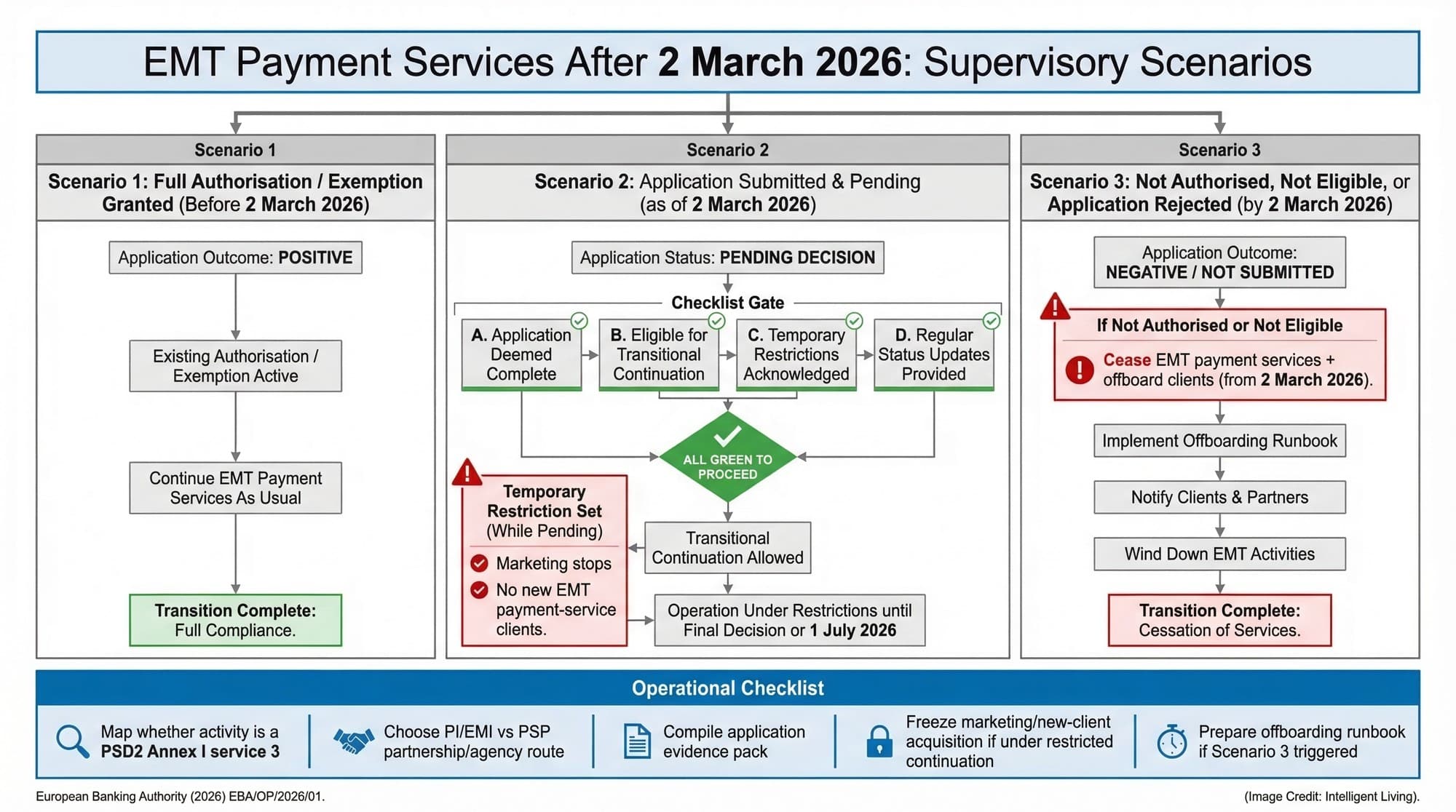
Tokens functioning as payment mechanisms operate at the intersection of MiCA and PSD2. Strategic classification of these assets determines the necessary authorisation and monitoring framework. The European Banking Authority’s guidance on the PSD2-MiCA transition emphasises that tokens used for checkout or peer transfers are subject to strict supervision.
Supervisors evaluate tokens used for checkout or peer transfers based on several core factors:
- Regulatory authorisation status under MiCA or PSD2.
- Real-time transaction monitoring capabilities.
- Guaranteed redemption at par.
- Integration with established fraud prevention standards.
Early mapping of the payments perimeter mitigates the risk of late-stage licensing complications and ensures alignment with modern digital transaction processing protocols. Stablecoin-based checkout systems must therefore replicate these established standards for fraud prevention, chargeback management, and settlement accountability. In online retail, e-commerce payment processing that balances speed, fraud controls and checkout trust shows how quickly payments-like features trigger compliance expectations.
Architectural trends positioning stablecoins as invisible infrastructure mirror embedded payment models, enabling seamless transactions within the primary product experience.
Weekly Strategic Checklist for Stablecoin Issuers
- Map Activities and Perimeter: List which product actions might be treated as payment services and which remain purely portfolio utilities.
- Draft Reserve and Redemption Policy Pack: Include asset composition, custodial agreements and attestation cadence.
- Design Holding Limit Monitoring: Add UX signals, alerts and exemption workflows for verified business users.
- Tighten AML/KYB Evidence Trail: Produce a compliance bundle with risk assessments, monitoring thresholds and governance owners.
- Prepare a Partner Diligence Bundle: Compile policies, operational resilience tests and the IT controls that keep systems aligned with industry regulations that a bank or partner will ask for when evaluating integration.
Well-curated partner diligence bundles significantly reduce follow-up requests and regulatory friction. Efficiency in documentation often determines the speed of market access and onboarding.
Long-Term Impact on the Global UK Payments Infrastructure
Accelerating Global Adoption of Sterling-Denominated Stablecoins
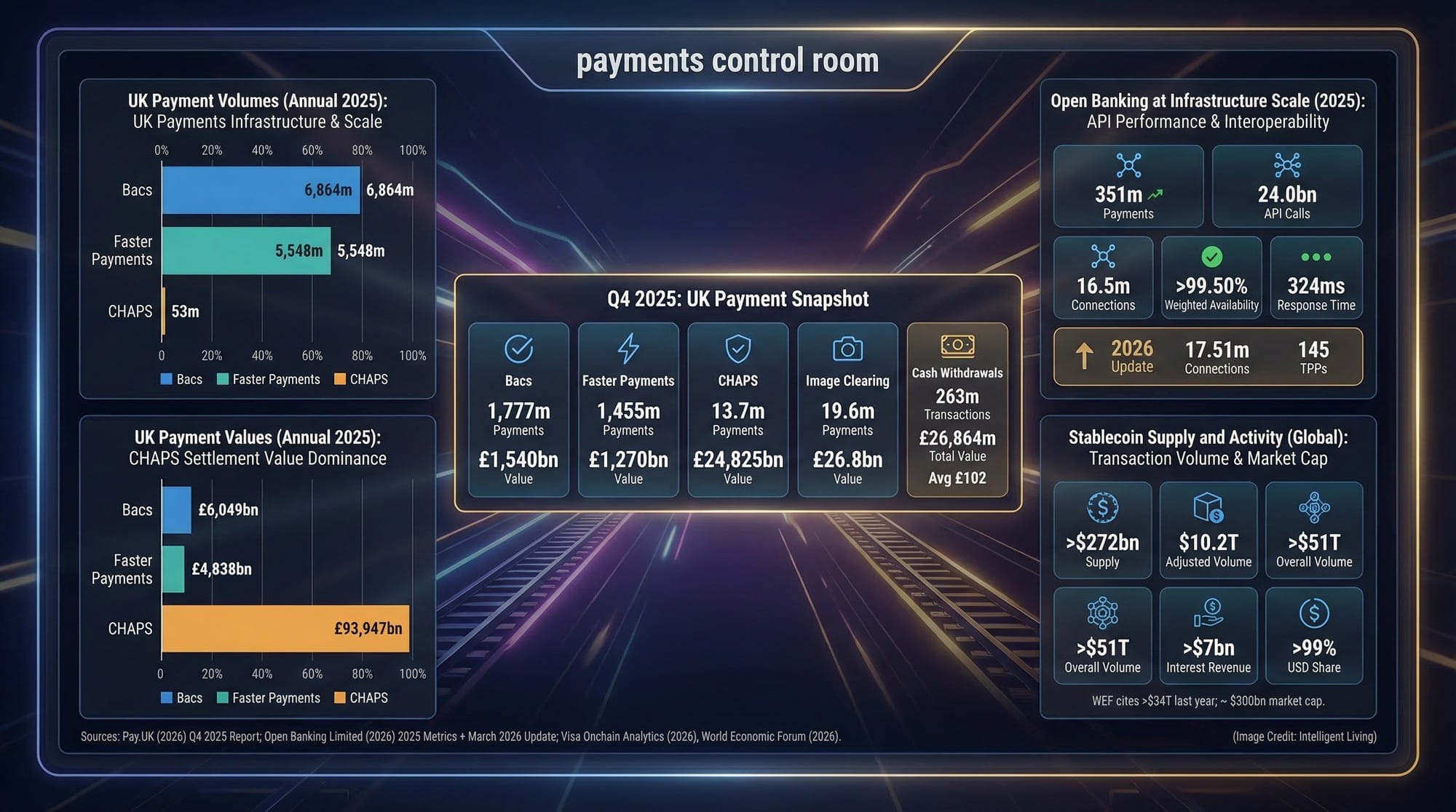
Systemic stablecoins represent a core pillar of modern finance. Institutional interest in merchant settlement, cross-border transfers, and platform money continues to drive the adoption of systemic stablecoins. Keeping the regulatory and product architecture aligned reduces the likelihood that useful payment innovation runs into preventable licensing or operational issues.
Global payment systems now integrate stablecoins to achieve faster settlement times, providing predictable value units for cross-border transfers and platform commerce. New payment rails achieve mass adoption only after settlement rules and consumer protections reach full maturity. Building institutional trust in systemic sterling stablecoins requires a robust approach to fraud control and regulatory compliance.
Shareable transaction trails within interoperable open banking frameworks now convert real-time cash flow into credit signals. This evolution confirms that modern payments innovation is increasingly governed by data-driven insights.
Strategic Conclusions: Advancing Financial Stability in Systemic Stablecoins
The evolving stance of the Bank of England offers a vital opportunity for issuers to align their operational models with the upcoming UK cryptoasset regulatory regime. Building a resilient product requires more than meeting baseline compliance; it demands a commitment to transparency in backing assets and a sophisticated approach to systemic payment systems. Prioritising auditable reserves and robust redemption procedures ensures stablecoins function as reliable payment infrastructure, preparing firms for the formal arrival of BoE draft rules in June 2026.
Bank-grade standards require continuous stress testing and perimeter mapping to safeguard against liquidity-related risks during the transition toward digital-first financial systems. Rigorous standards for AML evidence and custodial clarity defend an issuer’s trust and operational longevity within the competitive landscape of systemic sterling stablecoins.

Frequently Asked Questions Regarding the UK Cryptoasset Regulatory Regime
How Does BoE Backing Asset Rules Affect Reserve Management?
Issuers must maintain a 40:60 split between unremunerated central bank deposits and short-term UK government debt to ensure immediate liquidity and financial stability.
What is the Impact of Stablecoin Holding Limits on Wallet UX?
The proposed limits of £20,000 for individuals and £10 million for businesses require product teams to integrate automated monitoring and clear balance signals directly into the user interface.
Why is Regulatory Perimeter Mapping Essential Prior to Launch?
Mapping activities early identifies whether a stablecoin falls under MiCA or payment-service regimes, preventing late-stage licensing delays and ensuring compliance with the BoE’s systemic framework.
What Documentation is Required for a Partner Diligence Bundle?
A standard bundle must include daily reconciliation logs, custodial agreements, attestation reports, and a living risk assessment to satisfy banking partners and regulatory auditors.
When Will the Bank of England Finalise Draft Rules for Stablecoins?
The BoE is scheduled to release its formal draft rules and Codes of Practice in June 2026, following the current consultation period for sterling-denominated systemic stablecoins.

