
The neighborhoods that once depended on distant power plants are increasingly being backed up by something closer to home: local solar and battery networks designed to keep lights, elevators, and medical devices running when the wider grid fails. In Washington, D.C., this shift toward housing resilience is accelerating through the PowerPath initiative, where transactive energy systems use value signals to coordinate local supply. When a blackout hits at the wrong moment, the stakes become very ordinary and very real, like keeping insulin cold or making sure a top-floor resident is not trapped without an elevator.
Microgrids function as local power systems that serve defined areas independently during main grid failures. The federal government frames these systems as coordinated generation, storage, and controls acting as a single, controllable unit.
Washington, D.C. is now testing that idea at neighborhood scale through a PowerPath microgrid solicitation. The effort sits inside the broader PowerPath D.C. grid modernization initiative, and it adds a modern twist: a transactive system that coordinates local energy supply and demand using value signals.
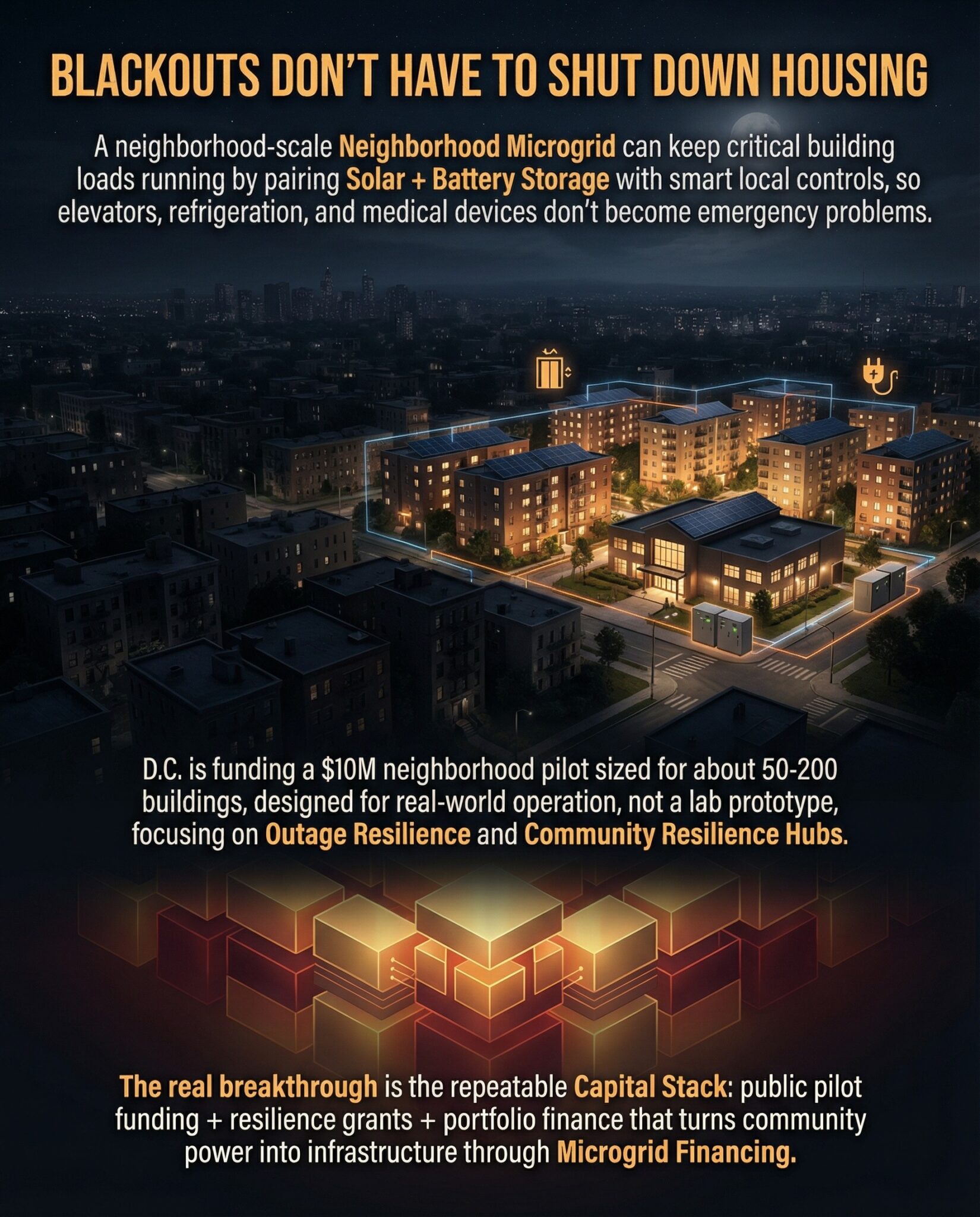
D.C.’s Neighborhood Microgrid Pilot: Advancing Grid Modernization and Housing Resilience
Core Specifications of the D.C. Transactive Neighborhood Renewable Microgrid Pilot
D.C.’s solicitation establishes a concrete framework for testing transactive renewable energy at scale. The project parameters prioritize high-impact results through the following requirements:
- Funding Cap: The pilot sets a funding cap of $10 million for a transactive neighborhood renewable microgrid demonstration.
- Scale Target: The solicitation targets about 50 to 200 residences and buildings across residential, commercial, and municipal sites.
- Core Components and Technology Gate: Solar PV, battery energy storage, and the D.C. neighborhood microgrid RFP requirements define the project’s scope and screening rules.
- Proposal Deadline: After extensions, proposals are due September 25, 2025.
Scaling Microgrids from Institutional Campuses to Neighborhood Infrastructure
City planners now frame these systems as neighborhood infrastructure capable of shielding housing clusters from heat waves, severe storms, and grid instability.
Instead of powering a single facility, this model supports dozens to hundreds of occupied units and shared building systems.
Scaling this technology is vital because neighborhood resilience hinges on everyday details. Maintaining refrigeration and elevator service during a crisis ensures safety for residents in high-density housing.
PowerPath aims for impact beyond headlines. The District’s PowerPath pilot governance board oversees a structured selection process to align projects with reliability, equity, and modernization goals.
When power failures occur, buildings with managed community microgrids maintain heat and medical equipment like oxygen concentrators while adjacent blocks await utility restoration.
Defining Transactive Energy Benefits for Local Residents and Tenants
Transactive energy coordinates local supply and demand by integrating value signals with technical controls. This framework enables load prioritization and local settlements between distributed assets during periods of high grid stress. NIST’s definition of transactive energy emphasizes that value becomes an operating parameter, not an afterthought.
Neighborhood conversations become more concrete at this intersection of technology and policy. Some cities are experimenting with local market logic that looks like energy trading at a community scale, shaped by policy choices similar to local climate exchanges.
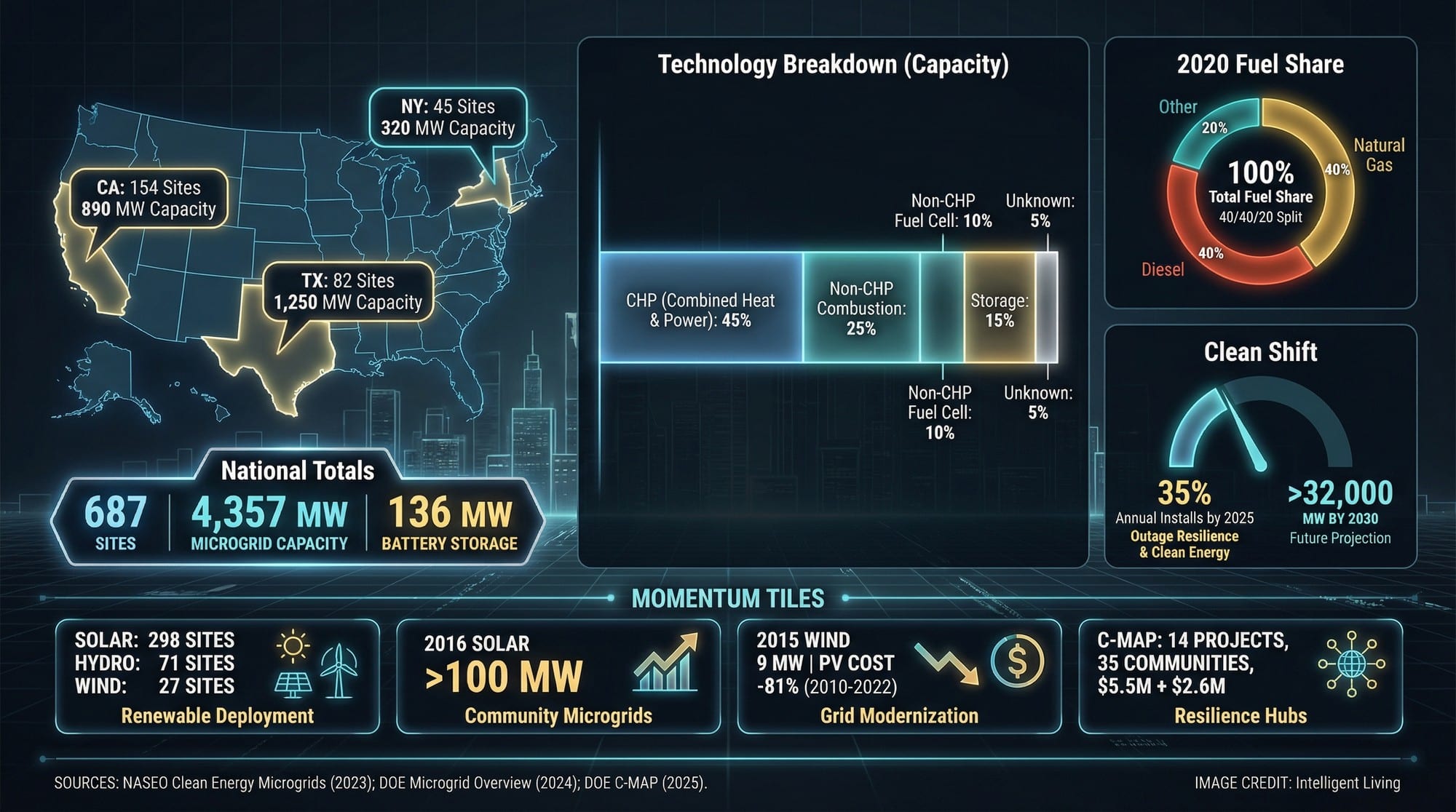
National Momentum in Community Microgrid Deployment and Resilience Hubs
These projects reflect a broader transition toward distributed infrastructure, integrating micro-scale systems into essential services like markets and residential housing.
Establishing Community Resilience Hubs in Multifamily Housing and Shared Spaces
Financing a neighborhood microgrid requires stacking different types of capital to cover various stages of development. No single source usually covers the entire cost, making these layered structures essential for success.
- Minneapolis: City officials are advancing a state regulator bulletin on Minneapolis microgrid resilience hubs that includes multiple community sites designed for emergency support.
- Arlington, Texas: Developers are applying multifamily resilience hub models to affordable housing through targeted solar and battery deployment.
- Sisters, Oregon: An affordable housing project is using a modest solar and battery buildout, including about 30 kW PV and 240 kWh of storage.
Local governments are finding that these smaller, targeted deployments are easier to finance and faster to build than traditional grid upgrades.
Expanding Resilience through Networked Systems and Mobile Microgrid Solutions
Regional initiatives are expanding the definition of resilience by connecting individual sites into larger, more flexible networks. These programs test how modular technology handles diverse climate risks from wildfires to urban heat waves.
- California: Statewide funding pathways for resilience and community microgrids sit under the CPUC resiliency and microgrids portfolio.
- Networked Microgrids: The ORNL and EPB milestone toward networked microgrids involves coordination across multiple microgrids to enhance broader grid stability.
- Mobile Microgrids: Disaster response is also becoming modular, with new mobile microgrid fleets providing rapid solar and battery power.
Deploying these diverse systems ensures that communities remain functional even when centralized infrastructure is compromised.
Distinguishing Between Neighborhood Microgrids and Utility-Scale Storage
Neighborhood microgrids differ from grid-scale batteries. While utility-scale storage stabilizes the broader electrical network, neighborhood microgrids prioritize local continuity for specific housing clusters.
Residents frequently link resilience concepts to household solar battery storage for home energy continuity through these local storage options.
Distributed infrastructure and off-grid corridors are scaling globally as well, including South Africa’s off-grid solar highway, which shows how resilience and access can be designed into daily systems.
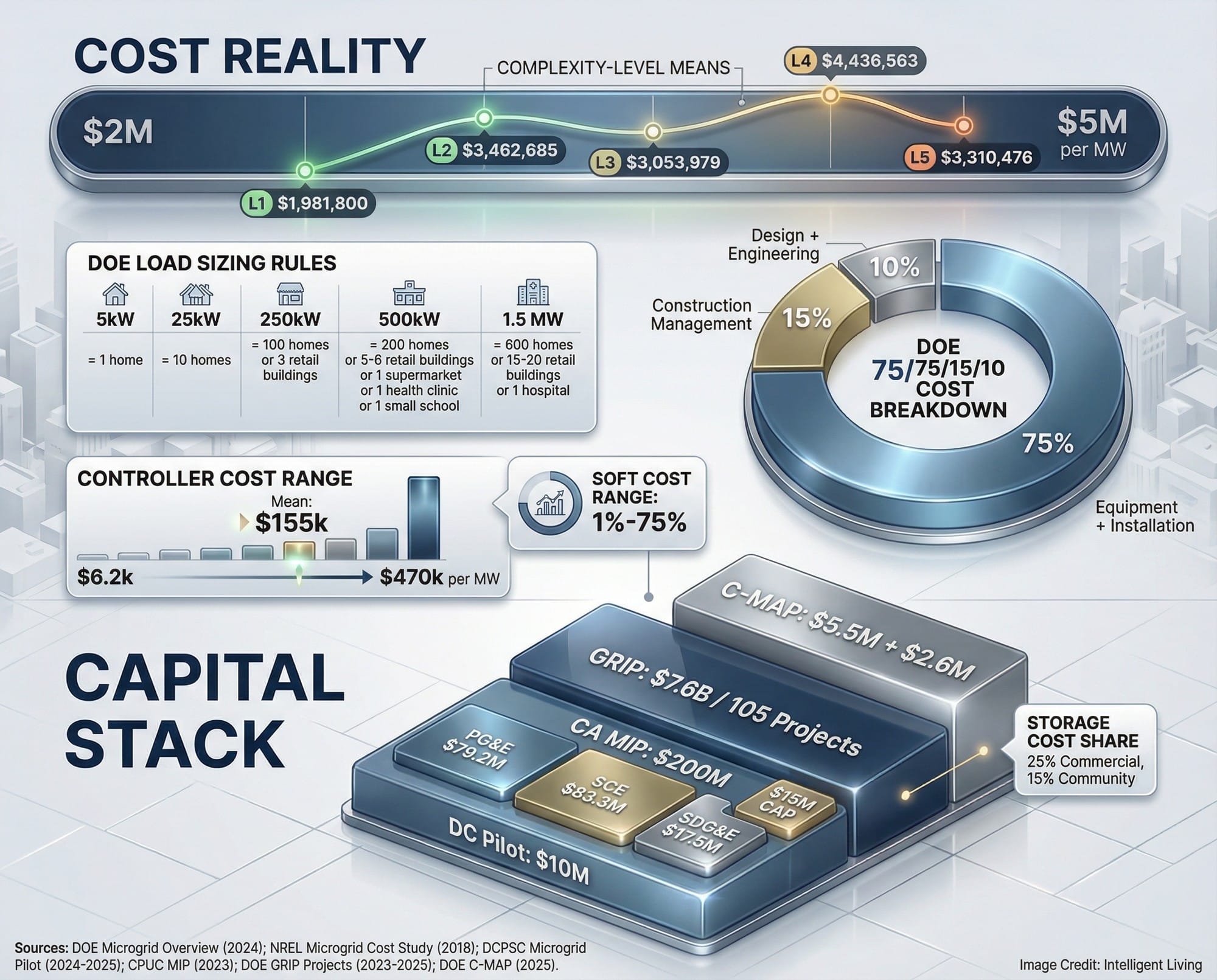
Financing Neighborhood Microgrids: Why the Capital Stack is Finally Maturing
Financing traditionally bottlenecked community microgrids because most projects were too small or complex for conventional lenders. Layered capital structures now solve this by combining public anchor funds, regulated utility spending, and dedicated credit facilities into a single project budget.
Using Portfolio Finance to Scale Resilience Across Affordable Housing Communities
Public pilot funding, such as D.C.’s cap, works as early risk capital that lowers upfront exposure and helps projects reach bankable maturity. At the portfolio level, financing vehicles are emerging that support repeat deployments across multiple housing communities rather than a single one-off build.
Innovative structures, such as a $4.5 million revolving credit facility for affordable-housing solar and storage, allow developers to scale these systems across entire property groups. This shift from one-off builds to repeatable models is what makes community resilience bankable.
Leveraging Federal Grid Resilience Grants and the DOE GRIP Program
Federal involvement brings concrete financial support to local neighborhood discussions. The DOE GRIP program is one of the major channels driving grid hardening and resilience investments, and it has helped put community-scale reliability into the same funding conversation as transmission and distribution upgrades.
Efficiency gains emerge when housing operators standardize maintenance across entire portfolios. This approach relies on blended capital design, where catalytic money incentivizes private participation. Developing transparent finance dashboards ensures that investment outcomes align with funding flows, connecting naturally to the way net-zero neighborhoods are financed through layered capital stacks.
Structural Components of a Typical Neighborhood Microgrid Capital Stack
Financing a neighborhood microgrid requires stacking different types of capital to cover various stages of development. No single source usually covers the entire cost, making these layered structures essential for success.
- Public Anchor Funding and Grants: seed-risk reduction, planning, and demonstration costs.
- Regulatory or Utility Investment: modernization budgets and approved spending that support larger deployments.
- Portfolio Finance Facilities: revolving structures that spread operational risk across multiple sites.
- Catalytic Capital: mission, philanthropic, or corporate funding that de-risks early adoption in high-need communities.
Coordinating these diverse funding layers allows project developers to lower the cost of capital while securing long-term maintenance budgets using a NASEO and NARUC financing options briefing for resilient microgrids.
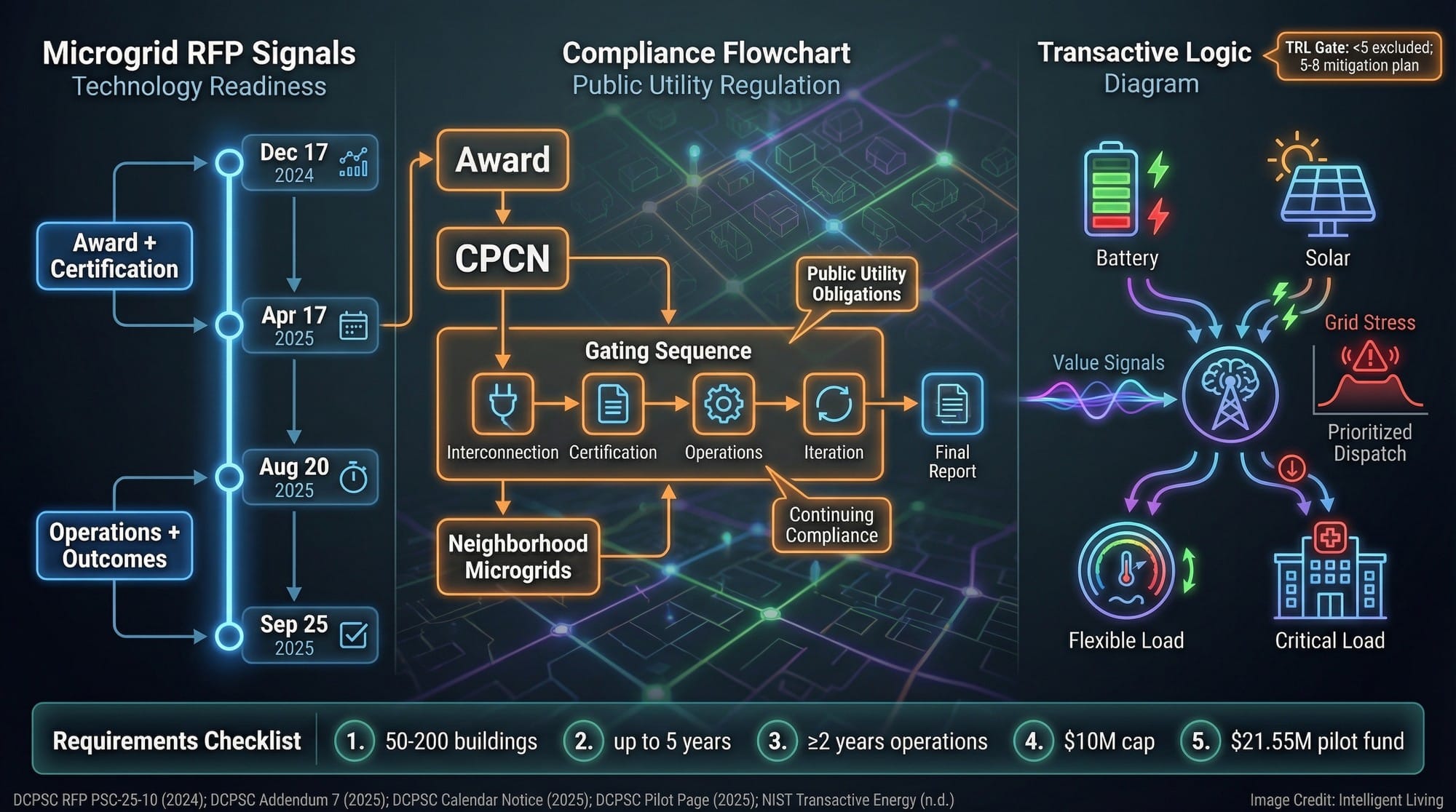
Interpreting Microgrid RFP Signals and Transactive Energy Regulations
Using Procurement Records to Forecast Local Resilience Infrastructure
Procurement documents signal upcoming resilience infrastructure early. Award calendars, addenda, and technical scopes reveal project pipelines months before official public announcements.
Analyzing the Timeline Between Procurement Records and Project Deployment
D.C.’s microgrid solicitation is a straightforward example because the procurement record is public and easy to track. The public solicitations record reveals the addenda trail and attachments that precede an award decision.
Early RFP visibility empowers residents and advocates to influence critical load prioritization, cost allocation, and long-term continuity plans. When a neighborhood sees an RFP early, residents can ask better questions sooner, such as how critical loads will be chosen, how costs will be allocated, and how continuity will be maintained after the first demonstration period.
D.C.’s Unique Integration of Transactive Platforms and Utility-Style Oversight
D.C.’s approach stands out by using transactive coordination to align batteries, solar arrays, and flexible loads under a single operating language. Real-time energy exchange between distributed resources and responsive loads provides a practical framework for these interactions.
Integrating these elements establishes the D.C. pilot as a replicable model for other urban centers. Market-coordinated, resident-protective microgrids are easier to replicate in regions where reliability is paramount but operational complexity must remain minimized.
Future Benchmarks for Evaluating Microgrid Pilot Success
Key Performance Indicators to Track Following the PowerPath Award
- Award Signals and Project Scope: The operator choice and governance model will indicate whether the system behaves like a utility-managed resilience asset or a community-directed energy service.
- Interconnection and Operations: The specifics of how the microgrid interfaces with Pepco and operates during grid stress will shape reliability outcomes.
- Equity and Resident Protections: Cost allocation, dispute resolution, and continuity after the demonstration window are the practical issues that determine whether residents trust the model.
Strategic framing aligns the pilot with grid modernization and reliability goals. Strategic positioning typically unlocks the multi-year funding required to ensure procurement follow-through and long-term project viability.
Neighborhood resilience extends beyond the electrical grid. During extended outages, neighborhood mesh network connectivity ensures basic coordination even when traditional cellular service fails.
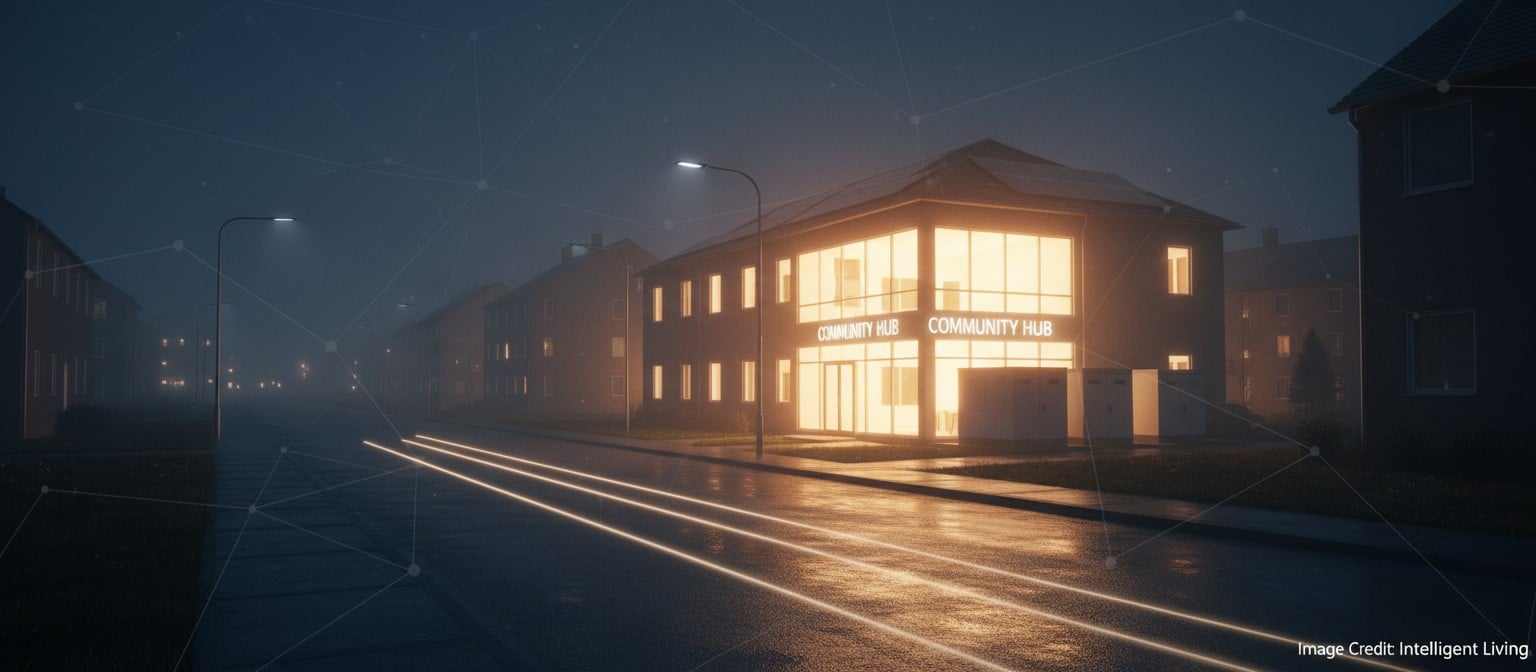
Integrating Durable Housing Infrastructure with Neighborhood Resilience Goals
D.C.’s PowerPath microgrid solicitation serves as a scalable blueprint for neighborhood resilience rather than just a technology showcase. Merging clear anchor funding with standardized operations and governance that protects residents allows cities to turn pilot projects into permanent community assets. These systems prove that reliability is a measurable outcome of smart planning rather than a fortunate accident of geography.
Reliability becomes tangible when neighborhood-scale projects align with household reality. Residents often first connect with these concepts through familiar tools like solar panels and solar battery backup systems. When local projects demonstrate durable benefits and predictable finance, they provide a repeatable playbook. Other housing clusters can then adapt this model to secure their own energy future.
Frequently Asked Questions: Community Resilience Hubs and Solar Storage
How Does a Neighborhood Microgrid Handle a Blackout?
Systems use microgrid islanding to separate from the main grid, powering prioritized local loads with on-site solar and batteries until the utility service returns.
Do These Microgrids Lower Monthly Electricity Bills?
Resilience remains the primary goal of these systems. However, coordinated demand and transactive tariffs can improve efficiency and reduce peak costs under specific local regulatory rules.
What Organizations Pay for Neighborhood Microgrid Projects?
Funding usually involves a mix of public pilot grants, federal grid resilience investment, utility modernization budgets, and private portfolio finance facilities that spread operational risk.
Is This System Intended to Replace My Utility Company?
No. These systems operate alongside the existing grid under utility-style oversight to augment local reliability without severing residents from standard service.
How Long Do the Batteries and Control Systems Last?
Modern stationary storage systems are designed for long service lives, with performance managed through degradation modeling to match specific duty cycles and local temperature limits.


