
Researchers find the small synthetic particles stay aloft for nearly a week, carried via wind large distances. Meaning, microplastic pollution is spiraling around the globe in a cycle. Biology students usually have to learn the carbon cycle, water cycle, and perhaps the nitrogen cycle – but now they may have to learn about the plastic cycle too as part of the Earth’s list of biogeochemical processes. The researchers said that this global synthetic cycle generated by humans is similar to standard processes such as the carbon cycle, with plastic going through the atmosphere, oceans, and land.

The authors associated with the new study write:
Microplastic particles and fibers generated from the breakdown of mismanaged waste are now so prevalent that they cycle through the Earth in a manner akin to global biogeochemical cycles.
The airborne microplastics are now spiral around the globe with distinct atmospheric, oceanic, cryospheric, and terrestrial residence times.
This implies that the billions of tons of plastic discarded into the oceans and land and divided into tiny pieces are increasingly being tossed back in the air by road traffic and winds over oceans and farmland.
Other studies have already shown how people breathe, eat and drink a teaspoon of microplastics per week.

Meanwhile, further research suggests levels of air pollution levels will continue to rise steadily. This substantial rising level of airborne microplastic pollution raises concerns about the impact on people’s health, specialists say. Furthermore, the analysis calls plastic pollution one of the most pressing environmental dilemmas of the 21st century.
The scientists said:
This raises questions on the impact of accumulating plastics in the atmosphere on human health. The inhalation of particles can be irritating to lung tissue and lead to serious diseases.

Professor Natalie Mahowald from Cornell University, who is a member of the research team, said:
What we see right now is the accumulation of mismanaged plastics just going up. Some people think it’s going to increase by tenfold [per decade]. But maybe we could solve this before it becomes a huge problem if we manage our plastics better before they accumulate in the environment and swirl around everywhere. We thought population centers would be a much better source, obviously, but it just didn’t work out that way. Resuspension [of microplastics] makes the most sense with this set of data.
She added that clearing up ocean plastic could help reduce the number of particles thrown back up into the atmosphere, and more biodegradable plastics could also be part of the solution.
The Study
- The team examined airborne microplastics, which have been far less studied than those in oceans and rivers.
- They collected well over 300 samples of airborne microplastics from 11 sites across the western US – the most extensive gathering of data in the world to date.
- Then, they fed the information into an atmospheric modeling program that calculated the contribution from different sources. This is the first analysis to do such a thing.
The Results
- All the airborne microplastics came from plastic particles already in the environment, not from new plastic being discarded in towns and cities. The particles were whipped up from road traffic and winds breezing through farmlands and across oceans.
- Some 84% of that comes from roads where cars and trucks kick microplastics up in their wakes.
- Another 11% wafts up from sea mist.
- And the remaining 5% comes from dust from agricultural soils.
- One of the significant implications realized is that much of the plastic suspended in the environment does not come from new sources.
Mahowald said:
We thought population centers would be a much better source, obviously, but it just didn’t work out that way. Resuspension [of microplastics] makes the most sense with this set of data.
The analysis’s models suggest around 1,100 tons of microplastic (particles smaller than 0.2 inches) are swirling over the western United States and stay afloat for about a week.
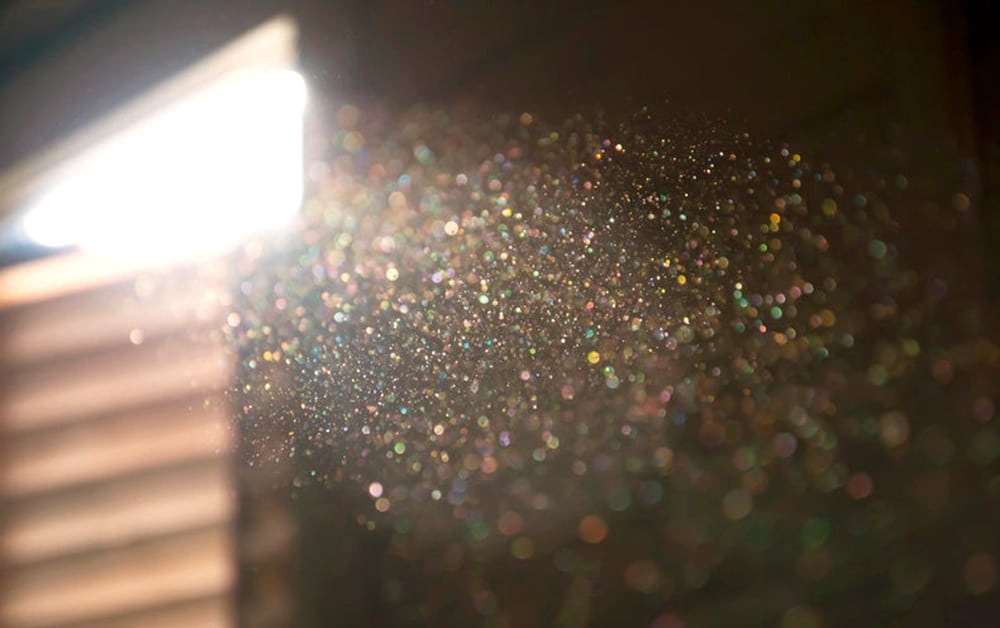
Janice Brahney, an environmental scientist based at Utah State University, who is the study’s lead author, said in a statement:
We found a lot of legacy plastic pollution everywhere we looked; it travels in the atmosphere, and it deposits all over the world. This plastic is not new from this year. It’s from what we’ve already dumped into the environment over several decades.
Microplastic pollution has been detected across the Earth, from Mount Everest to the deepest parts of the ocean.
Professor Andreas Stohl from the University of Vienna’s Faculty of Earth Sciences, who was not part of the team, said:
What humans have been doing for decades now is what I call a ‘plastification’ of the landscape and oceans.
The study confirms the global-scale nature of microplastic transport in the atmosphere and does a good job in highlighting highly relevant and concerning possibilities, but more measurement data is needed to get a better idea of the sources.
People should be concerned about airborne microplastics. Firstly, because they will inhale it, it is very likely that this will have some health impacts. And secondly, because the atmosphere is a great distributor. It transports plastic particles to regions where we don’t want to have them: agricultural fields, national parks, oceans, the Arctic, even Antarctica. Eventually, we will have extremely high concentrations of plastics everywhere.
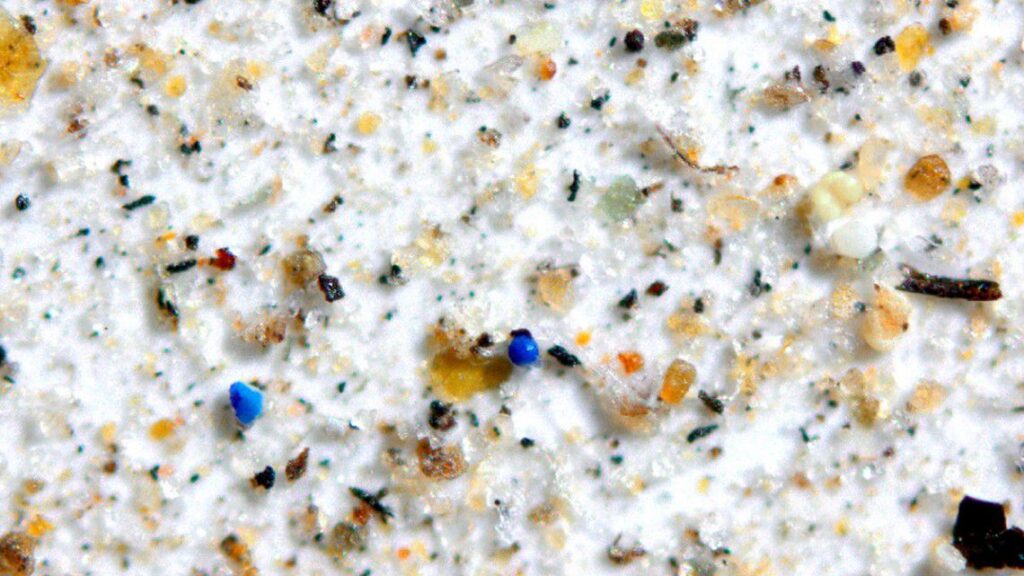
The study cautions these airborne plastics can even travel far enough to fall on Antarctica in significant quantities. Previous research has found microplastic pollution in several of the most remote locations on Earth, including the French Pyrenees, the Mariana Trench, and the Arctic snow.
So far, nearly 10 billion metric tons of plastic have been produced globally since the beginning 1900s, and somewhere between 12-18% of it isn’t accounted for by landfills, incinerating, or recycling. Much of it is probably floating in the sky and underwater – a disturbing image for sure.


