
A house that quietly shifts color with the seasons may sound like science fiction, but it rests on solid building science. Industrial designer Joe Doucet has prototyped a climate-responsive exterior paint that appears darker in cooler weather to soak up warmth and turns lighter in heat to reflect sunlight.
The effect relies on thermochromic pigments, which change their optical properties at a target temperature. This helps the building absorb more solar energy in winter and shed it in summer. Space heating and air conditioning typically account for the largest share of a home’s energy use, so even modest reductions can add up over a year.
The emerging paint concept is part of a broader wave of smart envelope technologies that aim to lower energy demand without moving parts or electricity. Examples include cool roofs, reflective coatings, and high-emittance surfaces that redirect heat away from buildings.
The color-changing paint takes that idea a step further by adapting to the season automatically. Early estimates suggest meaningful energy savings are possible, though independent field trials will ultimately determine real-world performance. Homeowners should note: surface choices are not cosmetic; they are climate tools.

Climate-Adaptive Paint: A Smart Paint for All Seasons
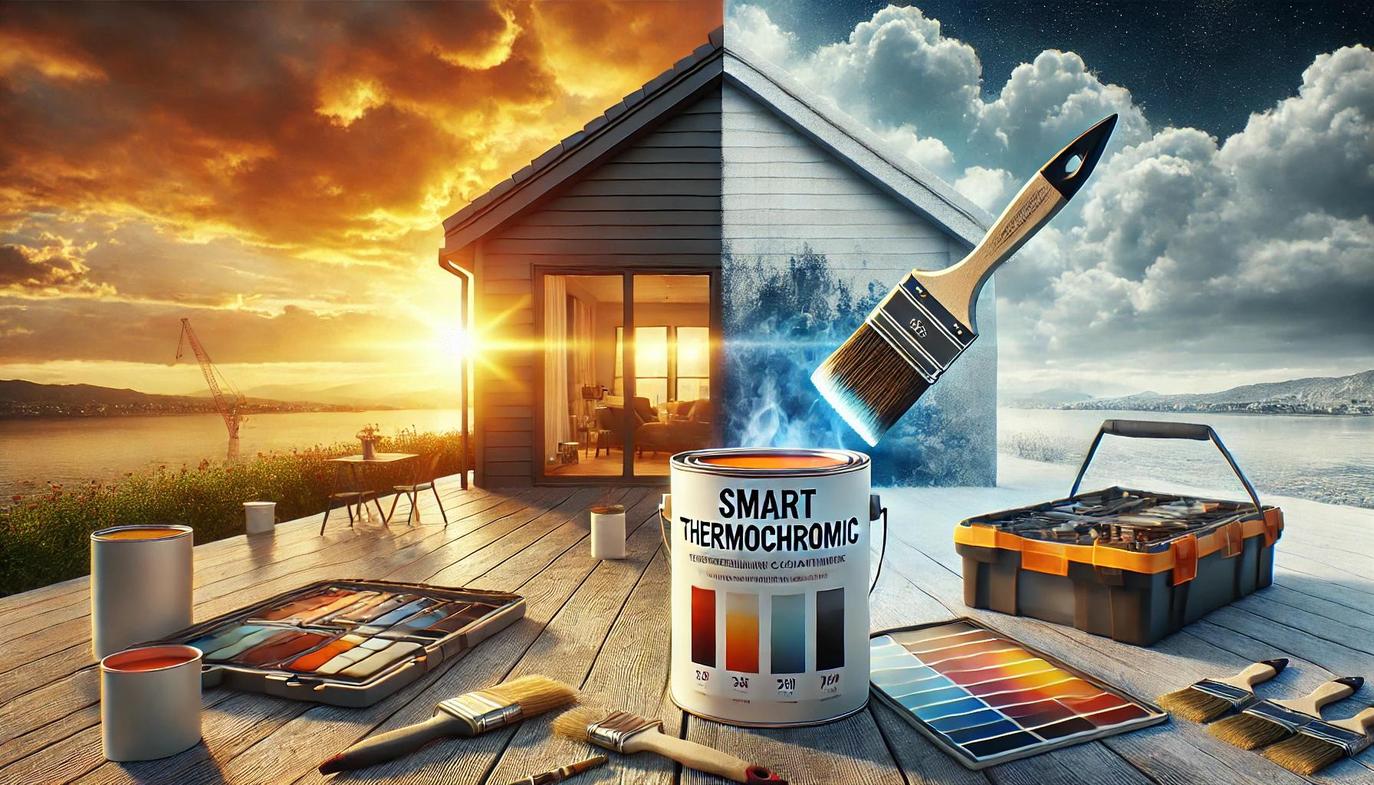
This climate-adaptive paint uses thermochromic pigments to change a building’s solar absorptance with the weather. This passive technology aims to lower energy demand by helping a home absorb heat in the winter and reflect it in the summer.
- What it is: An exterior paint that uses thermochromic pigments to shift from darker to lighter tones as outdoor temperatures change.
- Why it matters: Heating and cooling make up a large share of residential energy use. In the United States, more than half of household energy goes to space heating and air conditioning, according to the U.S. Energy Information Administration.
- How it works: Pigments change structure around a specific transition temperature, altering how much solar energy the surface absorbs or reflects. The mechanism is passive and does not require sensors or power.
- Potential savings: Media reports cite designer estimates in the range of double-digit percentage reductions. Peer-reviewed studies on thermochromic and reflective coatings commonly show single-digit to low double-digit savings.
- Maturity level: Prototypes exist. Commercial availability will depend on manufacturer testing for durability and UV stability. Comparable cool-roof and reflective coatings are already on the market.
- Best results: Sun-exposed facades in climates with strong seasonal swings and buildings that combine smart paint with cool roofs, insulation, and shading.
This technology is a promising addition to a whole-house climate strategy.

How Surface Color Affects Heating and Cooling Loads
Color influences how a surface handles sunlight. Darker colors typically have higher solar absorptance, meaning they take in more of the sun’s energy. Lighter colors have higher reflectance, sending more sunlight back into the sky. Two identical walls can reach very different temperatures on a summer day solely because of color and reflectivity. This temperature difference transfers inward, raising or lowering the load on your air conditioning.
The Physics of Solar Absorptance
Cool-roof standards have been guided by this principle for years. Highly reflective roofs can run significantly cooler than dark roofs under the same sun, which helps reduce attic temperatures and cuts air-conditioning demand. Government resources report that reflective roofs can trim cooling use by notable amounts in hot climates while also easing peak load on the grid. Reflective and high-emittance coatings on the wall plane operate on the same physics, limiting heat gain during the hottest months. Roof choices are a key part of home energy efficiency and influence how much heat the structure absorbs or sheds.
The importance of this is clarified by the energy context. Buildings are responsible for a substantial portion of global final energy use, and in typical U.S. homes, more than half of total energy consumption goes to space heating and air conditioning. Lowering the amount of heat your home absorbs in summer and raising beneficial solar gain in winter means your equipment does less work. Color is not just an aesthetic decision; it is a choice that directly affects operating costs, resilience during heat waves, and indoor comfort.
Roofs as a Key Control Layer
Because roof design is a key factor in home energy efficiency, roof color and reflectivity directly shape heat gain and loss. In practice, a roof-centered strategy clarifies the roof’s role in eco-friendly living, with color and reflectivity shaping both comfort and costs.
A Whole-Envelope Upgrade Strategy
A practical sequence for readers planning upgrades is to treat the building envelope as a system. Start with roof choices and attic insulation, address air sealing and window shading, and then consider wall surfaces.
Climate-adaptive paint fits best in this context: it complements established measures rather than replacing them. When used alongside eco-friendly roofing options, modern roofing materials, and basic weatherization, an adaptive facade becomes part of a whole-house climate strategy.

How Climate-Adaptive Color-Changing Paint Works
The Thermochromic Pigment Mechanism
Thermochromic coatings are defined by pigments that alter their molecular arrangement as temperatures cross a designed threshold. Below that point, the surface presents as darker, which increases solar absorption and helps warm the building when sunlight is available. Above the threshold, the same pigments shift to a lighter appearance, boosting reflectance to limit heat gain.
A climate-responsive exterior paint would be formulated so that its transition point aligns with local weather patterns. In a hot-summer, cold-winter climate, a threshold around typical spring and fall temperatures allows the facade to track the season. The mechanism is passive. No sensors or controls are required to maintain; the chemistry does the work by toggling optical properties as the weather changes.
From Prototype to Market Validation
Prototypes demonstrate the visual change and offer an early look at performance. Designer materials and interviews describe year-long panel exposure and scale-model tests that show meaningful indoor temperature differences between dark and light surfaces. The climate-responsive paint concept outlines the design intent and visual behavior.
While those results are promising, full validation requires manufacturer-grade testing over multiple years, including UV exposure, color stability, dirt pickup, and adhesion under real weather. As with any exterior coating, warranty terms, maintenance cycles, and compatibility with primers and substrates will be key questions for buyers.
How Much Energy Could This Smart Paint Actually Save?
Designer Estimates vs. Peer-Reviewed Data
Separating early estimates from independent evidence is helpful. Designer communications and media coverage suggest that shifting a facade from dark to light can yield double-digit percentage reductions in heating and cooling energy. These savings, however, depend on favorable conditions. Those figures align with intuition. Each degree you keep a home cooler in the summer or warmer in the winter reduces HVAC work, and a large surface temperature shift can translate into less running time for equipment.
Peer-reviewed studies of thermochromic and reflective coatings provide a realistic range. Modeling and field data commonly show single-digit to low double-digit reductions in annual energy demand, with the largest benefits in cooling-dominated climates or in buildings with modest insulation. Temperature-adaptive or radiative-cooling roof coatings have achieved similar results in simulations and demonstrations, with higher savings reported in specific prototypes under ideal conditions. Federal guidance on cool roofs explains how reflective surfaces cut heat gain and reduce peak loads.
Real-World Performance Factors
Outcomes will ultimately depend on climate, building orientation, shading from trees or neighboring structures, surface area, insulation levels, and the transition temperature baked into the paint. Variability is to be expected.
Approaching climate-adaptive paint as an add-on to a solid envelope, not as a substitute for fundamentals, is the most reliable path. When the product reaches market with verified performance data and warranties, the best candidates will be sun-exposed homes in regions with strong seasonal swings or compact dwellings where surface behavior strongly influences indoor comfort.
Stacking Upgrades: Smart Paint, Cool Roofs, and Exterior Fixes
A home should be treated like an energy system rather than a collection of parts. Climate-adaptive paint delivers the biggest benefit when it is paired with other envelope upgrades that reduce heat gain in summer and conserve warmth in winter. The process should begin at the top. A reflective roof lowers roof deck and attic temperatures, forcing your air conditioner to do less work on the hottest days. Modern roofing materials for energy savings are available. These materials combine reflectivity, durability, and weather resistance in a single assembly.
Climate-adaptive paint on walls can complement exterior insulation, ventilated cladding, and strategic shading from trees or awnings. Windows and doors are as critical as wall surfaces. Low-e glazing and tight weather-stripping limit heat flow and air leaks, allowing the coating’s seasonal behavior to translate into measurable indoor comfort.
Understanding the stack effect is simple. Emerging roofing technologies for energy efficiency can extend these gains. They provide better surfaces and assemblies to improve performance. Each upgrade trims a portion of the heating and cooling load. Combined, they shift your home toward lower energy use, fewer temperature swings, and a quieter HVAC routine.
Tiny Homes, Containers, and Recycled Structures as Testbeds
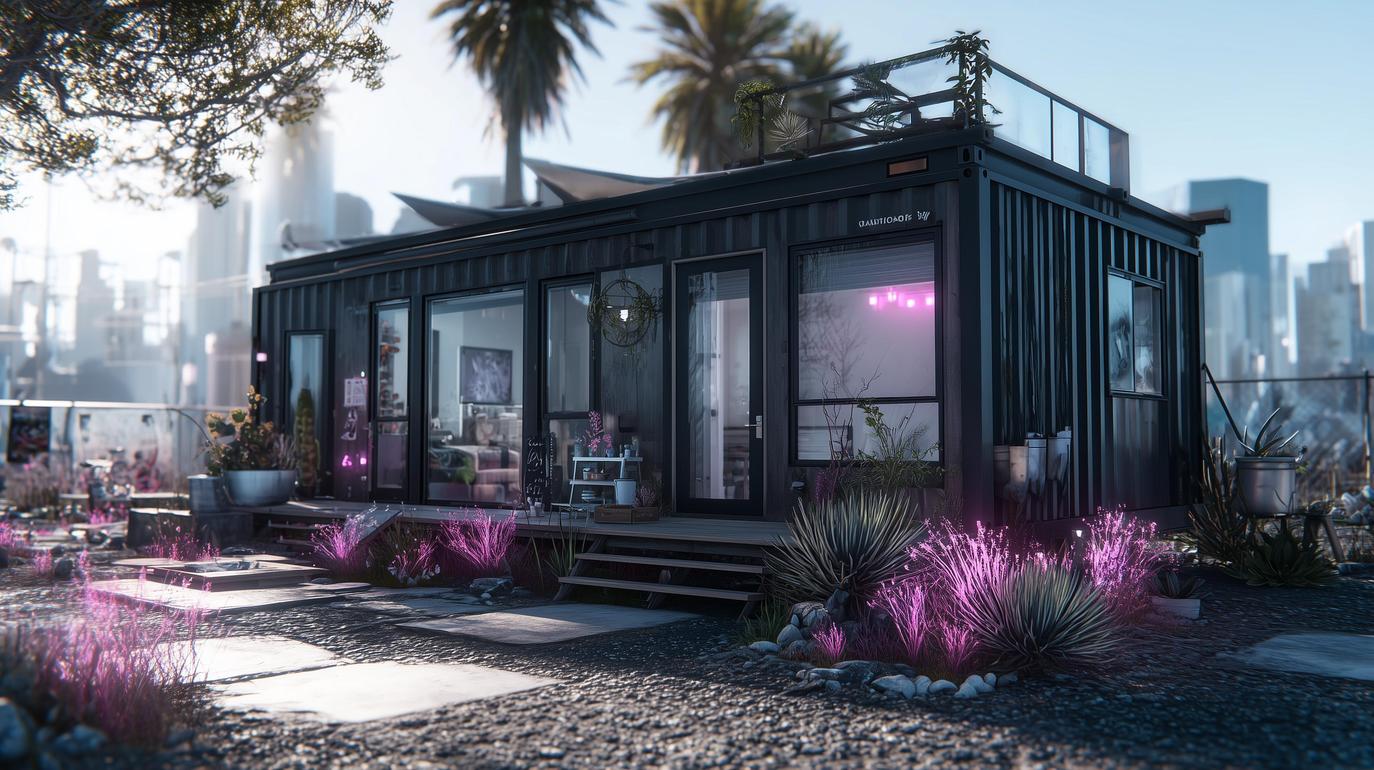
Compact dwellings have a high surface-area-to-volume ratio, so exterior behavior strongly influences indoor comfort. Climate-adaptive coatings are therefore a natural fit for tiny homes and modular structures.
Examples include a tiny home made from recycled wind turbine components and the FLEXSE tiny home made from recyclable materials. Both show how material choices and compact footprints can amplify the effect of smart coatings. In small interiors, a cooler facade on hot days and a warmer facade on sunny winter afternoons can noticeably reduce equipment cycle times.
Metal shipping containers are another strong testbed. Bare steel can absorb and radiate heat rapidly, which makes temperature control challenging without insulation and surface treatments. Preparing a shipping container shelter is a practical starting point.
Pairing that preparation with reflective or temperature-adaptive coatings can help manage midday temperature spikes and evening cooldowns. Real-world modular housing at scale includes the solar shipping container dorms at Roanoke College, where surface performance and energy design work together.
From Single Home to City Block: Cooling Cities and Cutting Energy Burden
Neighborhoods become more livable in extreme weather when many buildings reduce heat absorption. Reflective roofs and smart facades can help cool streets and courtyards, which lowers peak electricity demand and reduces the risk of heat-related illness. The same principle is behind urban heat island reduction efforts documented by the U.S. Environmental Protection Agency.
Communities with older housing and higher energy burdens have the most to gain. Lower indoor temperatures in these areas can shrink summer bills and improve comfort, especially for residents who may not have access to efficient air conditioning. Coating strategies scale quickly for cities because they do not require new appliances or complex wiring.
Schools, libraries, community centers, and multifamily buildings can apply reflective or temperature-adaptive surfaces as part of scheduled repainting or roof replacement. Compounding benefits include cooler roofs easing strain on the grid during heat waves and lighter facades reflecting more sunlight into the urban canopy, supporting public-realm comfort.

How to Prepare Your Home for Climate-Adaptive Paint
Useful steps can be taken before the product reaches retail shelves. An envelope checkup is the first step. Assess roof condition, attic insulation depth, and air sealing around windows and doors. Evaluate reflective options and verify that ventilation and flashing details are sound if a roof replacement is on the horizon. Confirming that existing paint is well adhered and that water management is working, including gutters, downspouts, and grade slope. Routine care is also essential, and following practical tips for roof care can keep surfaces performing as designed.
Ask practical questions when adaptive paint becomes available. What is the transition temperature range? How does it fit your climate? Is there verified performance data for homes similar to yours in orientation and shading? What primers and topcoats are recommended, and what are the cleaning and repaint intervals? The product’s warranty should align with local weather conditions and your maintenance plan. The benefits will be easiest to notice in a compact dwelling or a sun-exposed home.
Costs, Durability, and Market Readiness
Climate-adaptive paint could debut at a premium, according to early estimates, compared with standard exterior paint. Payback will depend on local energy prices, climate, and how well the coating integrates with other upgrades. The track record of cool-roof and protective roof coatings is a helpful reference point, which already provides energy and maintenance benefits in the field.
For metal roofs, following best practices for longevity helps maximize performance. For service life and upkeep, advanced protective coatings can boost a roof’s lifespan. Financially, envelope improvements often return value through lower utility bills and deferred equipment replacement; The economic benefits of smart roofing illustrate those dynamics.
How temperature-adaptive paints handle UV exposure, color stability, dirt pickup, and adhesion will be determined by durability testing over multiple seasons. Manufacturers are expected to publish third-party data and offer clear warranty terms before widespread release. Perspective is important. Adaptive coatings are not a replacement for insulation, air sealing, or high-performance window choices. They are part of a balanced strategy that uses materials science to support comfort and efficiency.
The Future of Paint: A Climate-Adaptive Tool
How buildings feel has always been shaped by color. Now it can shape how they perform. Climate-adaptive paint translates a familiar idea into a practical tool by letting facades absorb heat when it helps and reflect it when it hurts. With straightforward physics and a compelling promise, the smartest path is to pair this coating with proven measures such as reflective roofs, solid insulation, and good shading.
A coat of paint, in this context, is more than a finish. It is part of a system that keeps homes comfortable, lowers energy use, and makes neighborhoods more resilient during extreme weather. As durability data and manufacturer warranties arrive, adaptive coatings can move from eye-catching prototypes to everyday materials. Treating the envelope as a whole remains the surest way to turn walls into climate allies.
Frequently Asked Questions About Smart Paint
What Are Thermochromic Pigments?
Thermochromic pigments are materials that change their chemical structure, and therefore their color and reflective properties, when they reach a specific temperature. In climate-adaptive paint, these pigments are engineered to turn darker in the cold (to absorb heat) and lighter in the heat (to reflect it), all without any electricity or sensors.
How Is This Different From a Cool Roof?
A cool roof is a static solution: its high solar reflectance is designed to reflect sunlight all year, which is highly beneficial for cutting air conditioning costs in hot climates. Climate-adaptive paint is a dynamic solution: it aims to be reflective like a cool roof in the summer but becomes dark and heat-absorbing in the winter to help reduce heating costs.
Can Smart Paint Replace Insulation?
No. Climate-adaptive paint is a surface treatment that manages solar gain (heat from the sun). Insulation is a material within the building envelope (walls and attic) that slows heat transfer (heat moving from hot to cold). Smart paint is a complement to good insulation, not a replacement for it.

